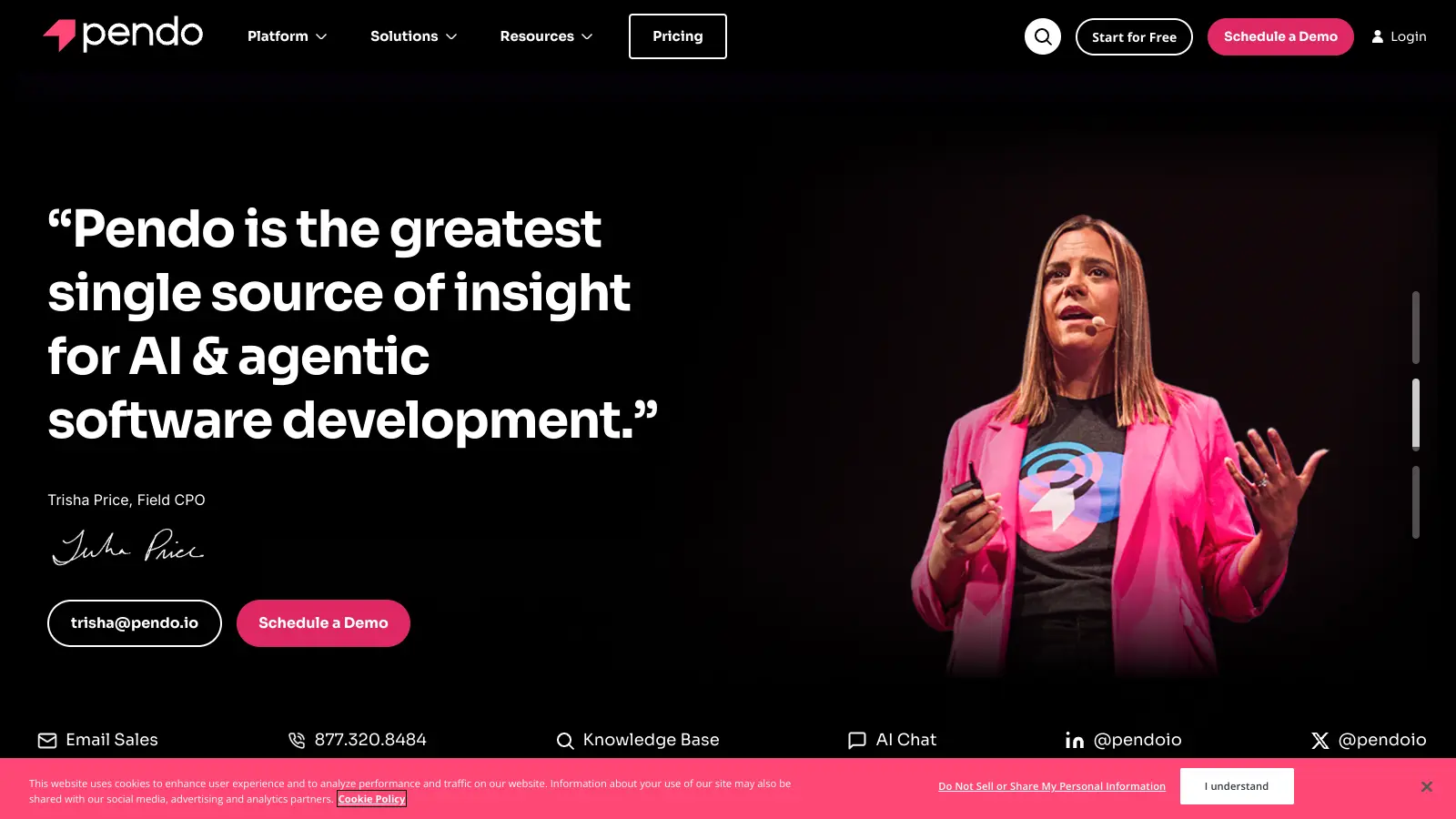
Pendo helps businesses understand how users interact with their products while providing tools to enhance the product experience. This platform combines analytics, in-app guidance, user feedback collection, and product planning in one solution.
The software tracks user behavior across web, mobile, and AI interfaces. Product teams can create customized guides and walkthroughs without coding, making it easier to onboard new users and highlight features. The platform includes AI-powered features like conversational Agent Mode, which uses Model Context Protocol for querying insights and automating tasks.
The platform includes tools for gathering feedback through surveys and polls, plus options for roadmap planning based on user data. Session replays let you watch how users navigate your product, and AI analyzes feedback to identify themes and summarize NPS data.
Pendo offers several pricing tiers, starting with a free plan for up to 500 monthly active users. Paid plans scale based on user count and feature requirements, with enterprise options available for larger organizations. Entry-level plans provide core functionality, but advanced features like session replay and journey orchestration require higher-tier subscriptions.
Common use cases include product analytics, user onboarding, feature adoption tracking, and collecting customer feedback. The platform integrates with tools like Salesforce, Slack, and Segment. Organizations building AI agents can use Pendo to monitor agent performance and validate ROI.
Pendo is for product teams and business leaders who need to understand user behavior while improving their digital product. The platform delivers analytics and engagement tools that help companies make product decisions without requiring technical expertise.
Pendo is used across SaaS companies, financial services, healthcare organizations, and enterprise software providers.
Users appreciate Pendo for easy setup and integration with existing tools. The platform gets praise for tracking user behavior and engagement metrics, with many highlighting the value of session replays and heatmaps in optimizing product experience. Customer support and onboarding receive positive feedback, and teams find the analytics helpful for identifying drop-off points and improving retention.
Cost is a major complaint. Many users find Pendo expensive, particularly smaller teams and startups who struggle with the pricing structure as they scale. The platform has a steep learning curve for advanced features. Some users report performance issues on high-traffic sites. Limited customization options frustrate teams looking for more flexibility. Occasional bugs pop up in surveys and NPS features. The lack of transparent pricing makes budgeting difficult.
The free plan includes basic features like product analytics, in-app guides, branded NPS surveys, and roadmaps for up to 500 monthly active users with one-year data retention. Paid plans start with the Base Plan, which allows for more monthly active users and adds one integration core. The Core Plan adds session replays, Pulse includes white-labeled NPS and product discovery tools, and Ultimate adds journey orchestration, data sync, and advanced in-app guides. The main differences are in user limits, available integrations, and access to premium features like AI-powered insights and Agent Mode.
How much does Pendo cost for a growing startup?Pricing scales based on monthly active users (MAUs) and isn't publicly displayed. User reports suggest the Base Plan costs around $7,000 to $35,000/year depending on MAU count, with some startups quoted up to $30,000 annually for basic plans. Annual costs typically range from $25,800 to $132,400 depending on scale and features. Multi-year commitments can get you 5-20% discounts. A 30-day free trial is available. For exact pricing, you'll need to contact Pendo's sales team for a custom quote.
Can I install Pendo without help from developers?Pendo is designed as a no-code solution that reduces the need for engineering involvement. However, the initial installation requires adding a snippet of JavaScript code to your application, which typically needs developer assistance. Once installed, product managers and marketing teams can create guides, surveys, and analyze data without coding skills. The platform offers a user-friendly interface for building in-app messages, analyzing user behavior, and creating dashboards without technical expertise. AI features can even help you create and localize guides using simple text prompts.
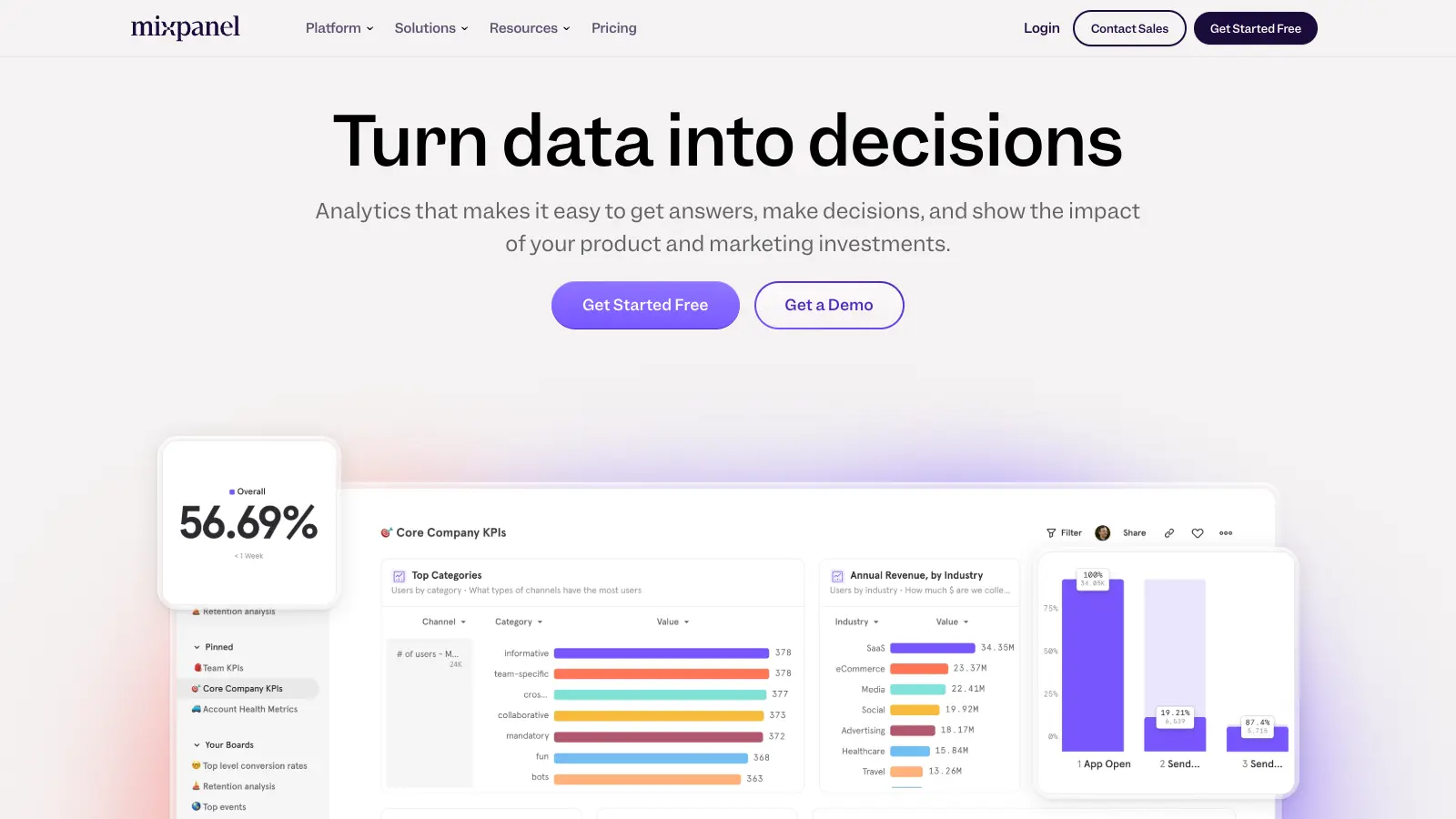
How does Pendo compare to similar tools like Amplitude or Mixpanel?Pendo combines product analytics with in-app guidance and feedback tools in one platform. While Amplitude and Mixpanel excel in deep analytics capabilities, they don't offer the same level of in-app guide creation without additional tools. Pendo's Product Engagement Score provides a metric for measuring engagement, and features like AI-powered insights and Agent Mode set it apart. However, Pendo is generally more expensive than alternatives and may have a steeper learning curve. The choice often depends on whether you need the all-in-one approach Pendo offers or prefer specialized tools for specific functions.
What are the biggest complaints about Pendo?Users most commonly complain about Pendo's pricing structure, which can be expensive and unpredictable as businesses scale. The lack of transparent pricing makes budgeting difficult. The platform has a steep learning curve that might require substantial training, especially for non-technical teams. Some users find the customization options limited, restricting their ability to create user journeys. Performance issues can occur on high-traffic sites, and occasional bugs affect surveys and NPS features. Others mention that lower-tier plans lack essential integrations, forcing upgrades to access what they consider basic features.


Our newsletter comes with exclusive discounts, trials and practical insights from within the industry