Best Project Management Software for Real Estate Development (2026)
7 tools reviewedlast reviewed 20 march 2026
Editorial note:this was originally published in september of 2024
Real estate development projects involve more moving parts than most general project management tools are built for: phased budgets, contractor coordination, municipal approvals, draw schedules, and change orders that ripple across your whole pro forma. A generic task board won't cut it.
This list covers seven tools worth considering, from purpose-built development platforms to flexible general tools that adapt well to construction and real estate workflows. Each pick is assessed on cost control features, budget tracking depth, ease of onboarding for field teams, and realistic pricing.
Whether you're managing a single ground-up development or a portfolio of mixed-use projects, there's a tool here that fits your team size and complexity.
We collect first-hand reviews from people who use these tools every day — what works, what doesn't, whether it's worth paying for. We research pricing, features, and comparisons so that feedback has real context behind it. For this guide, tools were selected based on construction scheduling, budget tracking, and multi-stakeholder collaboration capabilities specific to development projects. Read our full research methodology.
help us improve this guide
tell us what you're looking for, what you're using now, and what caught your eye — takes 30 seconds.
What is real estate development project management software?
Real estate development project management software helps developers, owners, and their teams track the full lifecycle of a development project: from acquisition and pre-development through construction and stabilization. It centralises budgets, schedules, contracts, vendor communication, and approvals in one place instead of across spreadsheets and email chains.
The core problem it solves is visibility. On a mid-size development, budget variances, contractor delays, and approval bottlenecks can compound quickly. Software that ties your schedule to your budget and surfaces exceptions in real time gives project managers and principals the information they need to make decisions before small problems become expensive ones.
Users range from boutique developers managing two or three projects to institutional platforms overseeing large mixed-use portfolios. The right tool depends heavily on project complexity, team size, and how tightly the software needs to connect with accounting systems.
Affordable project management with Gantt charts and time tracking built in.
Small development firms already in the Zoho ecosystem
FreemiumFree plan available; paid from $5/user/mo
our top pick
1
Northspyre
Purpose-built financial and project management for real estate developers.
Custom
Best for · Mid-size to institutional real estate developers managing multiple active projectsPricing · Pricing on request
Northspyre is designed around the real estate development lifecycle, covering acquisition modeling, pre-development budgeting, construction cost management, and portfolio reporting in one platform. It connects project data with financial data so developers can track budget variances, manage vendor invoices, and produce reports for capital partners without switching between systems. Its AI-assisted features flag scope gaps and cost anomalies during pre-development.
Pros
✓Built specifically for development financial workflows
✓Real-time budget variance and draw schedule tracking
✓Portfolio-level reporting for capital partners
Cons
✗No transparent pricing — requires a sales call
✗Likely too complex and expensive for single-project developers
Construction project management with deep financial and field tools.
Custom
Best for · General contractors and developers with active construction phasesPricing · Pricing on request
Procore is built for construction and development teams that need to manage RFIs, submittals, change orders, and inspections alongside project schedules. It has strong integrations with accounting platforms including Sage, QuickBooks, and Yardi, making it practical for development teams that need project and financial data to reconcile. Pricing is based on annual construction volume rather than per seat, which can work out favorably for larger teams.
Pros
✓Native integrations with Yardi, Sage, and QuickBooks
✓Handles RFIs, submittals, and change orders natively
✓Volume-based pricing suits larger construction teams
Cons
✗Steep learning curve for teams new to construction software
✗Overkill and expensive for small or pre-construction-phase teams
Flexible work management that adapts to development project workflows.
Freemium
Best for · Developer teams managing schedules and approvals without heavy financial tracking needsPricing · From $9/user/mo
monday.com is a configurable project management platform with Gantt charts, workload tracking, and automation features that real estate development teams can shape around their own processes. It ships with real estate-specific templates for property development timelines and approval workflows. It won't replace a dedicated financial management tool, but it handles scheduling, stakeholder communication, and task coordination well for teams that don't need deep construction financials.
Pros
✓Real estate and construction workflow templates included
✓Automation cuts repetitive status update work
✓Clean interface with low onboarding friction
Cons
✗No built-in budget or cost management features
✗Per-seat pricing adds up quickly for larger project teams
High-customisation task and project management with a generous free tier.
Freemium
Best for · Small development firms and independent developers watching software costsPricing · Free plan available; paid from $7/user/mo
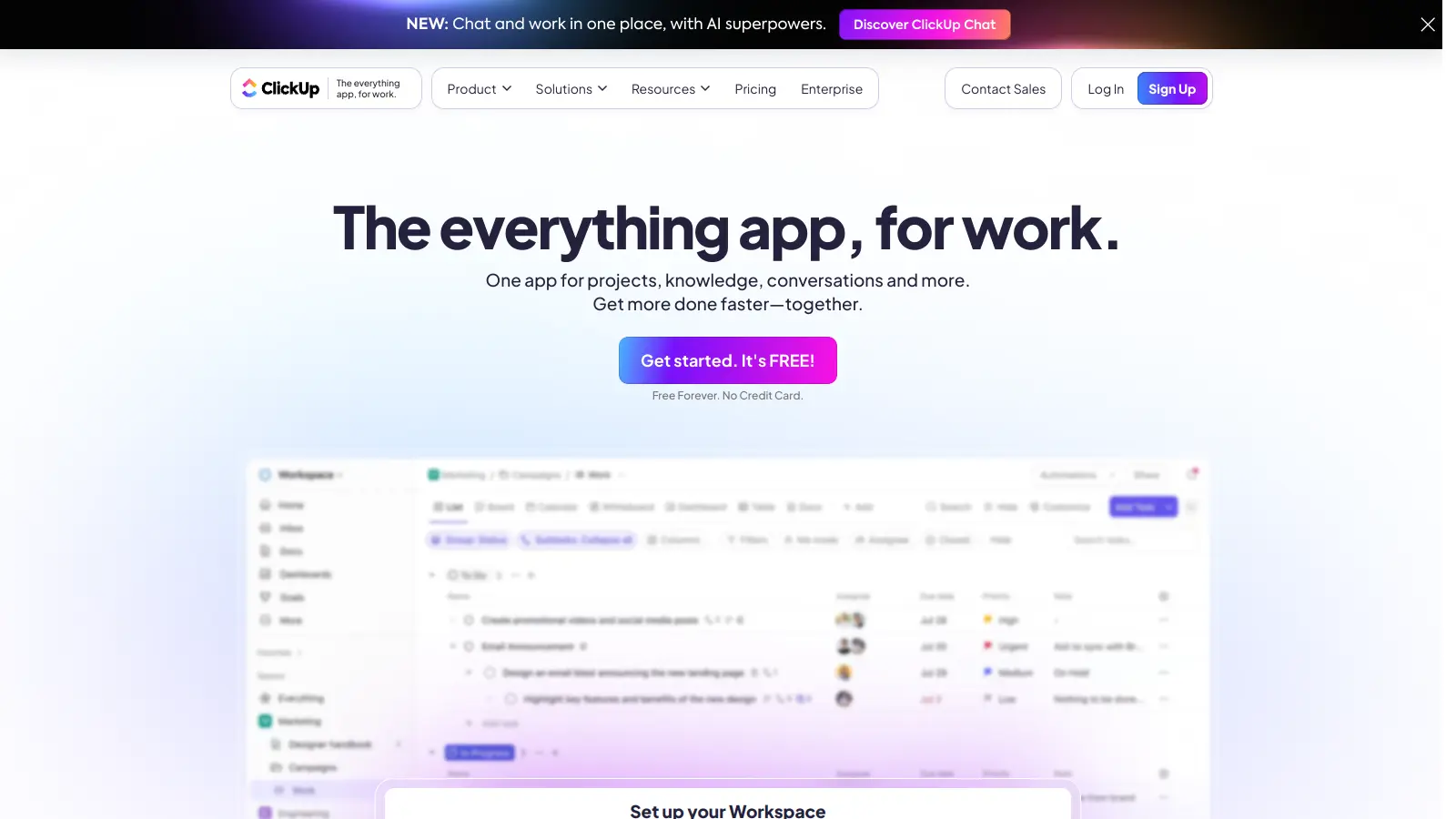
ClickUp packs an unusually wide feature set into its free plan, including custom fields, multiple project views, and time tracking. For real estate development teams on a tight budget or managing smaller projects, it can handle milestone tracking, document storage, and team communication without the cost of a specialist platform. Custom fields and templates let teams model their own development checklists and approval workflows.
Pros
✓Free tier is genuinely functional for small teams
✓Highly customisable fields and views
✓Built-in docs and whiteboards reduce tool sprawl
Cons
✗Feature depth can create a cluttered, overwhelming interface
✗No native construction or real estate financial features
Structured task and timeline management for development project coordination.
Freemium
Best for · Development teams that need structured milestone planning and stakeholder coordinationPricing · Free plan available; paid from $10.99/user/mo
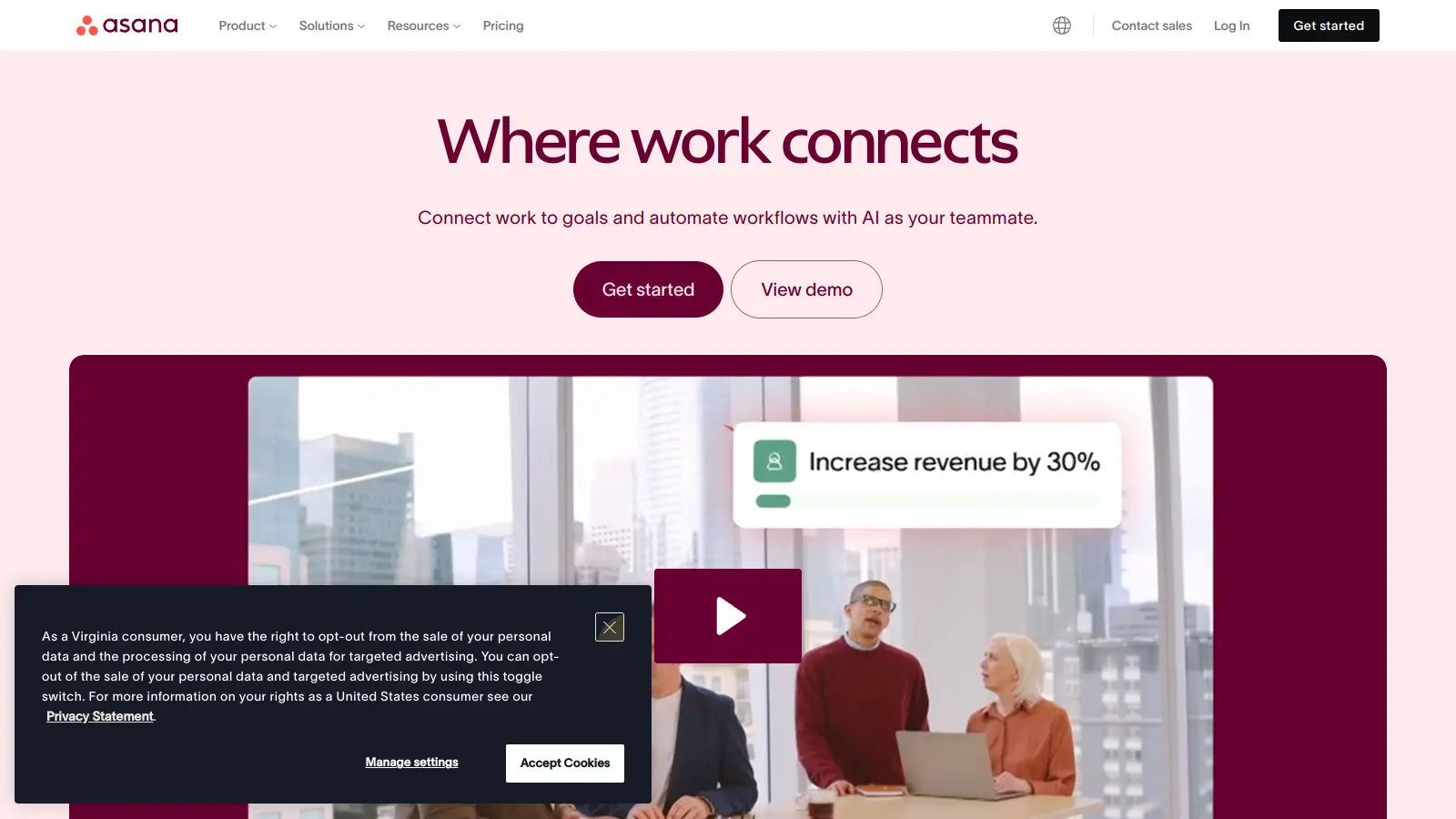
Asana's timeline view and dependency mapping make it practical for planning phased development projects where one milestone must close before the next starts. Its workflow rules automate routine notifications and task assignments, which reduces coordination overhead across architects, contractors, and internal teams. The free plan supports up to 10 users, making it accessible for early-stage development teams.
Pros
✓Dependency mapping for phased development timelines
✓Clean task views that non-project-managers adopt quickly
✓Rules engine automates routine task assignments
Cons
✗No budget or financial tracking built in
✗Free plan capped at 10 users, which limits contractor access
Construction management software for residential builders and developers.
Paid
Best for · Residential developers and custom home builders managing client-facing projectsPricing · From $199/mo
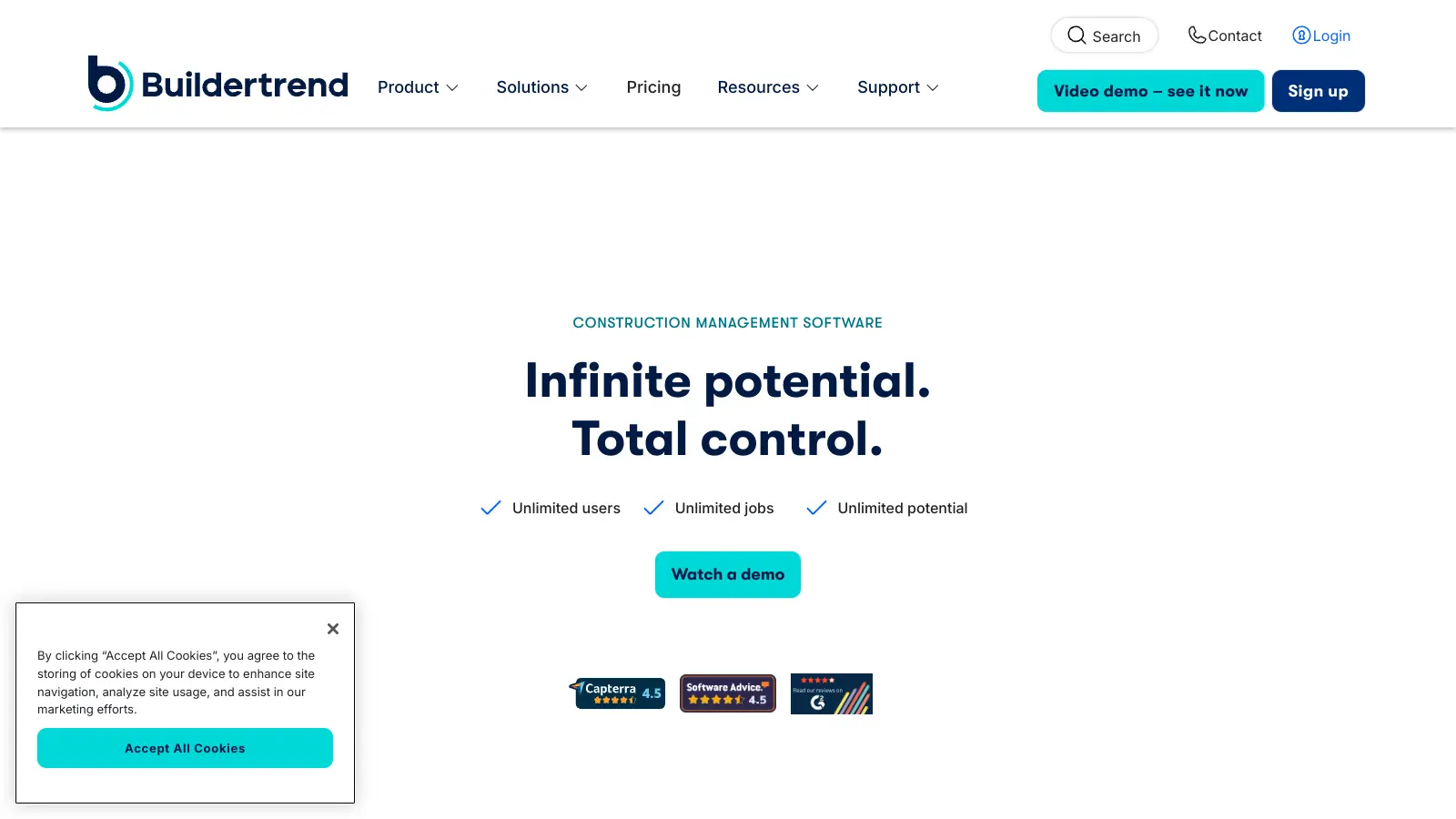
Buildertrend targets residential construction and development specifically, covering scheduling, budget tracking, subcontractor management, and client-facing communication in one platform. It includes a customer portal so buyers can follow project progress, request changes, and approve selections, which reduces inbound phone calls during active construction. It integrates with QuickBooks and Xero for accounting reconciliation.
Pros
✓Client portal reduces owner communication overhead
✓Built-in budget tracking tied to construction schedule
✓QuickBooks and Xero integrations for accounting sync
Cons
✗Focused on residential; less suited to commercial development
✗Minimum $199/mo price point is high for single-project developers
Affordable project management with Gantt charts and time tracking built in.
Freemium
Best for · Small development firms already in the Zoho ecosystemPricing · Free plan available; paid from $5/user/mo
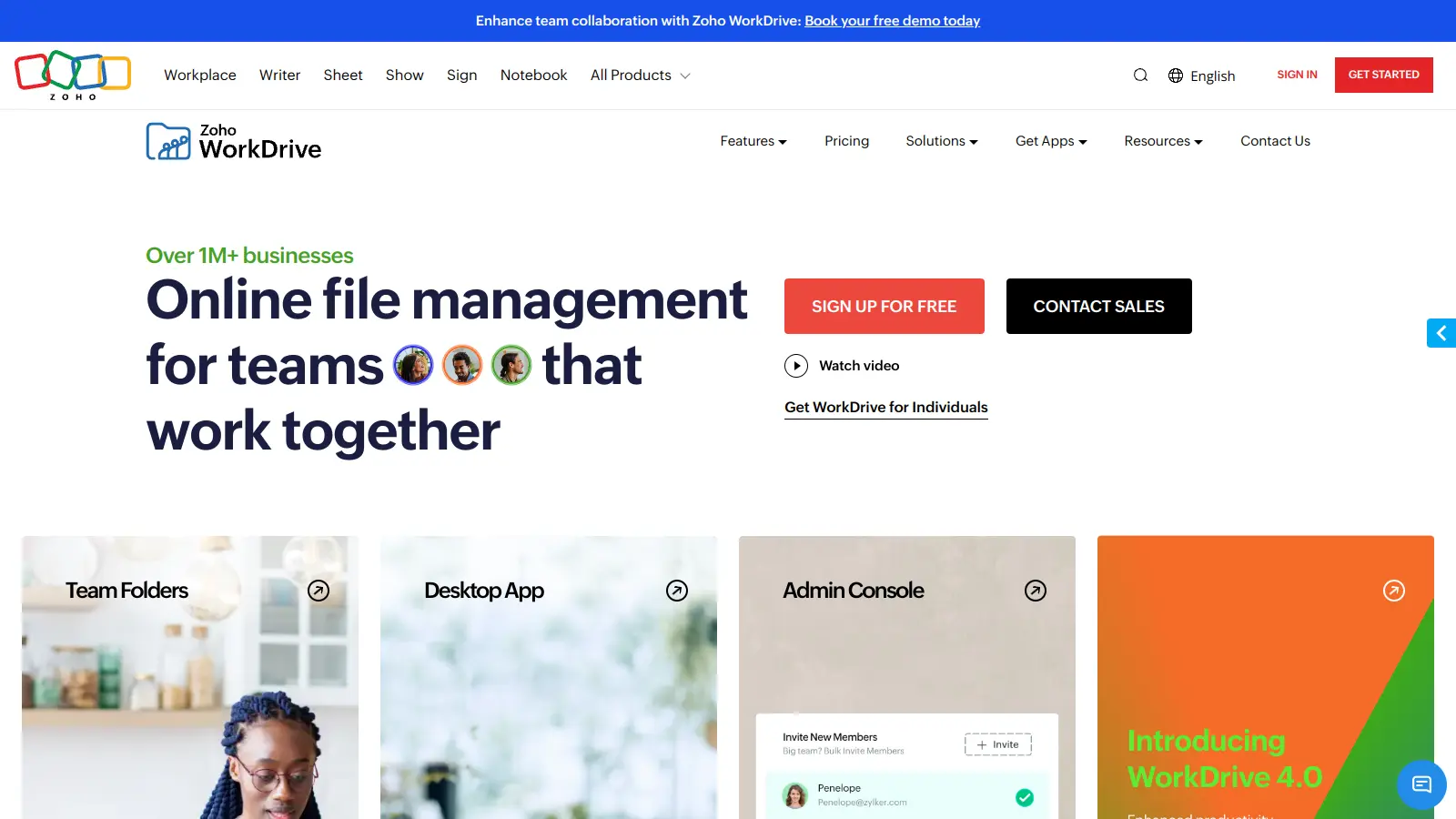
Zoho Projects is a cost-effective project management tool with Gantt chart scheduling, task dependencies, time tracking, and budget monitoring on paid plans. For real estate teams already using other Zoho products like Zoho CRM or Zoho Books, the integration between tools makes it practical to track deal pipelines, project tasks, and invoicing in a connected ecosystem. It won't match the construction-specific depth of Procore, but for smaller development operations, the price-to-feature ratio is hard to beat.
Pros
✓Native integration with Zoho CRM and Zoho Books
✓Gantt charts with dependency tracking on all paid plans
✓One of the most affordable paid tiers in this category
Cons
✗Interface feels dated compared to monday.com or Asana
✗Limited construction-specific features without customisation
How to choose project management software for real estate development
Budget tracking depth
Generic task managers track tasks, but real estate development demands line-item budget control, variance tracking against original estimates, and change order management. Look for tools that let you tie costs to specific budget line items and flag overruns automatically.
Construction phase support
Pre-development planning and active construction have very different data needs. A tool that handles RFIs, submittals, draw requests, and punch lists natively will save you from cobbling together separate apps for each phase.
Contractor and external stakeholder access
You'll regularly need subcontractors, lenders, and municipal consultants to view or contribute to project data. Check whether the tool supports guest or limited-access users without requiring everyone to hold a full paid seat.
Integration with accounting software
Project costs need to reconcile with your general ledger. Tools that connect directly to Yardi, QuickBooks, Sage, or similar accounting platforms reduce manual data entry and lower the risk of budget discrepancies between systems.
Scalability across a portfolio
If you're running multiple projects simultaneously, you need cross-portfolio visibility: aggregate budget status, milestone tracking across projects, and the ability to benchmark one project's performance against another. Some tools handle this well at the portfolio level; others are designed around single-project use.
frequently asked questions
It depends on your project complexity. For straightforward renovations or small developments, a well-configured general tool like monday.com or Asana can handle scheduling and task tracking. For ground-up development with active budget management, change orders, and draw schedules, a purpose-built platform like Northspyre or Procore will save significant time and reduce errors.
General project management tools start around $10 to $15 per user per month on paid plans, with free tiers available for small teams. Purpose-built real estate development platforms typically require custom pricing and often run several hundred to several thousand dollars per month depending on portfolio size and feature set. Procore, for example, prices by annual construction volume rather than per seat.
ClickUp and Asana both have free plans with enough functionality for small teams or single-project use. The free tiers typically cap users, limit reporting features, and exclude integrations you'll need at scale. For active development management with budget oversight, most teams end up on a paid plan within the first few months.
Choosing based on general task management features rather than financial control capability. Many teams select a tool that handles scheduling well but forces them to track budgets separately in spreadsheets anyway. Prioritise budget-to-actual tracking and change order workflows before evaluating interface preferences.
Several can. Procore has native integrations with Yardi, Sage, and QuickBooks. Northspyre connects with accounting platforms as part of its core offering. General tools like monday.com and ClickUp can connect via Zapier or native integrations, but the sync depth is typically more limited than a purpose-built platform.
tools for humans
toolsforhumans editorial team
Reader ratings and community feedback shape every score. Since 2022, ToolsForHumans has helped 600,000+ people find software that holds up after launch. The picks here come from that.