Best AI Digital Marketing Tools: Top Picks for Marketers (2026)
8 tools reviewedlast reviewed 20 march 2026
Editorial note:this was originally published in july of 2023
This page is for marketers who need to move faster without sacrificing output quality. Whether you're running SEO campaigns, writing ad copy, or trying to make sense of competitor data, AI tools have become a practical part of the day-to-day workflow, not a future trend.
The tools here were selected based on how well they fit real marketing tasks: content creation, search visibility, paid ads, automation, and analytics. Pricing range, ease of adoption for solo marketers and small teams, and actual feature depth all factored into the selection.
You'll find the obvious category leaders alongside a few less-talked-about picks that hold up well in practice. Honest cons included throughout.
We collect first-hand reviews from people who use these tools every day — what works, what doesn't, whether it's worth paying for. We research pricing, features, and comparisons so that feedback has real context behind it. For this guide, tools were selected based on real-world marketing effectiveness, ease of integration, and measurable ROI capabilities. Read our full research methodology.
help us improve this guide
tell us what you're looking for, what you're using now, and what caught your eye — takes 30 seconds.
What are AI digital marketing tools?
AI digital marketing tools are software platforms that use machine learning and large language models to help marketers plan, create, distribute, and measure their work. They cover a wide range of functions: generating copy, analysing search intent, automating workflows, producing ad creative, and tracking brand visibility across AI search engines.
The category exists because marketing volume demands have outpaced what small teams can handle manually. A single campaign might require dozens of content variations, keyword research across thousands of terms, and weekly competitor monitoring. AI tools handle the repetitive, data-heavy parts of that work so marketers can focus on strategy and quality control.
These tools are used by solo content creators, in-house marketing teams at growth-stage companies, and agencies managing multiple clients. The right one depends heavily on your primary channel: SEO, paid social, email, or content marketing.
A design platform with AI image generation, copy tools, and social publishing built in.
Small marketing teams managing social content without a designer
FreemiumFree plan available; Pro from $15/mo
our top pick
1
Semrush
A full-suite SEO and competitive intelligence platform with growing AI features.
Freemium
Best for · In-house SEO teams and agencies managing multiple sitesPricing · From $139.95/mo
Semrush covers keyword research, backlink analysis, site auditing, and position tracking in one platform. Its newer AI Visibility Toolkit tracks how your brand appears in AI-generated search results from tools like ChatGPT, Perplexity, and Gemini, which matters as zero-click AI answers eat into organic traffic. The content marketing toolkit uses AI to generate briefs and optimise drafts against top-ranking pages.
Pros
✓AI visibility tracking across ChatGPT, Gemini, Perplexity
✓Keyword and competitor data all in one platform
✓Content brief generation tied to real SERP data
Cons
✗Expensive for solo marketers or very small teams
✗AI writing features lag behind dedicated copywriting tools
An AI copywriting platform built around brand voice control and marketing templates.
Paid
Best for · Marketing teams producing high content volumePricing · From $49/mo
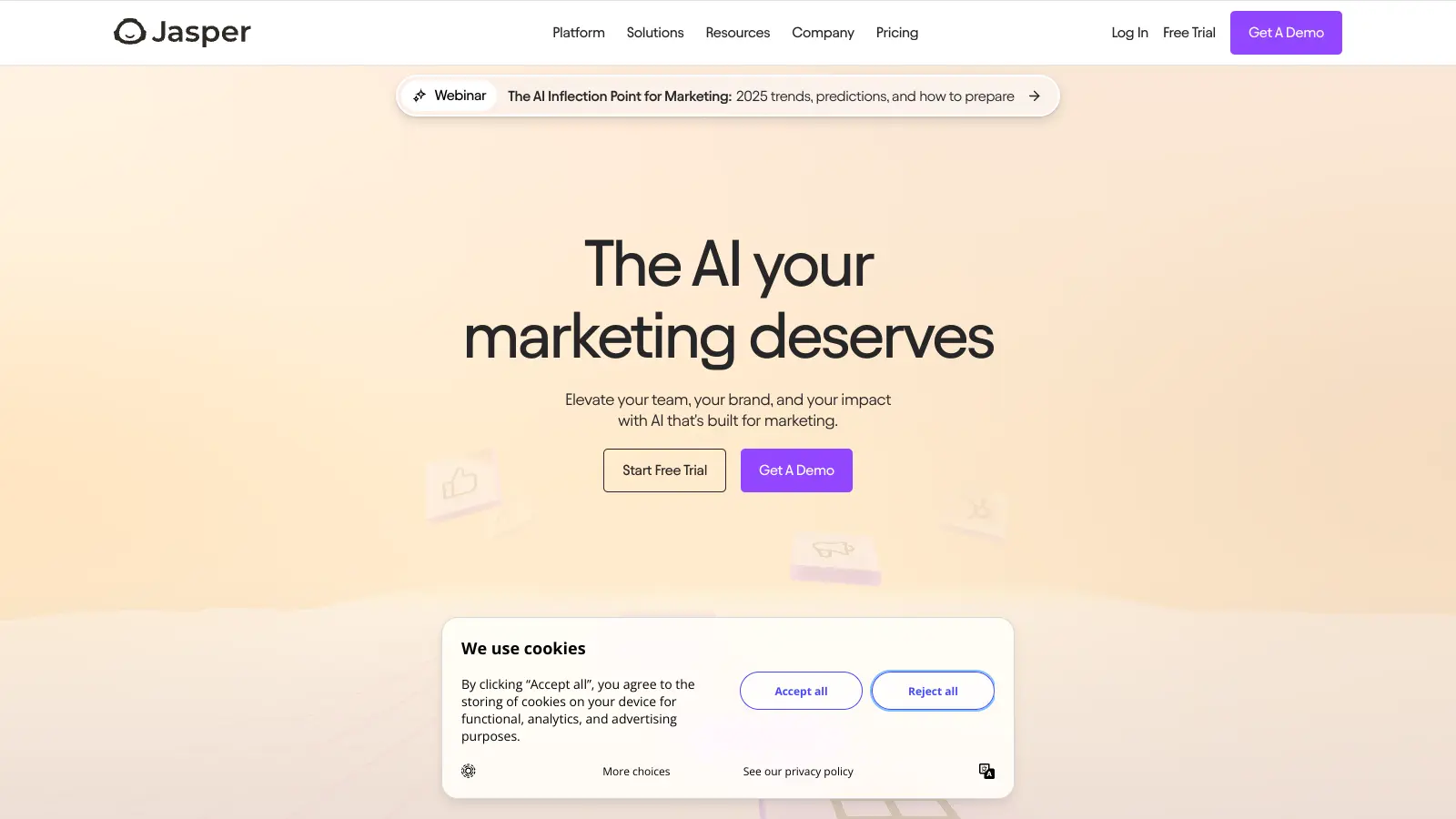
Jasper is purpose-built for marketing copy: blog posts, landing pages, email campaigns, product descriptions, and social ads. You can upload brand voice guidelines and style documents so outputs stay on-brand across a team. It includes 50+ marketing-specific templates and integrates with Surfer SEO for on-page optimisation inside the editor.
Pros
✓Brand voice training reduces editing time significantly
✓Marketing-specific templates cover most copy types
✓Surfer SEO integration built into the editor
Cons
✗No free plan; trial requires a credit card
✗Outputs still need human editing for factual accuracy
An on-page SEO tool that scores your content against top-ranking competitors in real time.
Paid
Best for · SEO writers and content teams targeting organic trafficPricing · From $99/mo
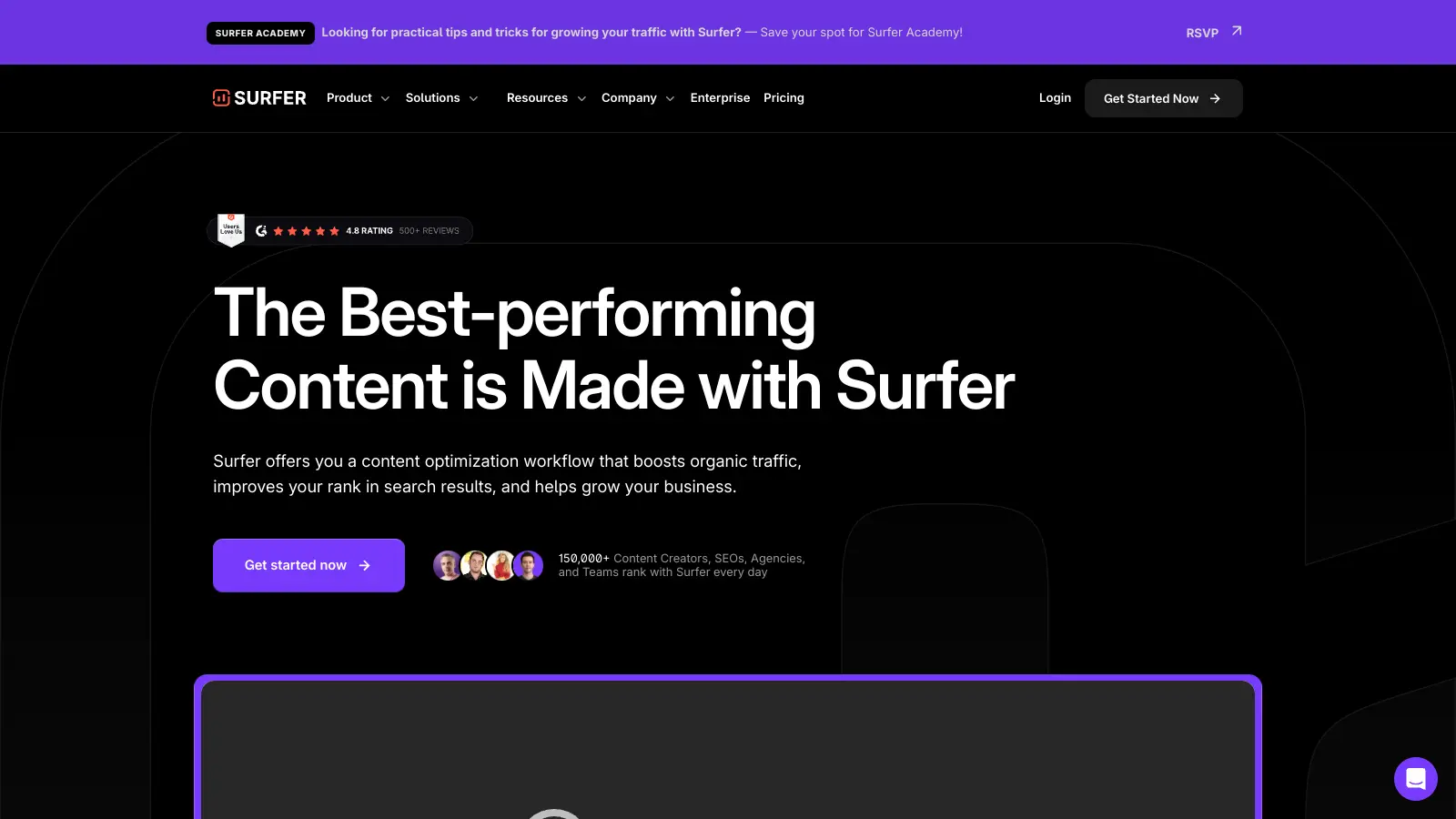
Surfer analyses the top 20 results for any keyword and gives you a content score based on word count, heading structure, keyword density, and entity coverage. You write or paste content into its editor and get live feedback as you go. It also generates AI-assisted outlines and first drafts calibrated to what's already ranking, which makes it useful for SEO writers who want data behind their structure decisions.
Pros
✓Real-time content scoring against actual SERP competitors
✓Outline generator grounded in ranking-page analysis
✓Integrates with Google Docs and Jasper
Cons
✗Focuses almost entirely on on-page SEO; no link building or technical audit features
✗Content score can push writers toward keyword stuffing if followed too literally
A visual workflow automation platform that connects your marketing tools without code.
Freemium
Best for · Marketers who want automation without hiring a developerPricing · Free plan available; paid from $9/mo
Make (formerly Integromat) lets you build multi-step automated workflows between apps using a drag-and-drop visual editor. For marketers, this means automating things like posting approved content to social channels, routing lead form data into your CRM, or triggering email sequences based on behaviour. It connects to over 1,800 apps and supports AI modules that let you plug in OpenAI or Anthropic models mid-workflow.
Pros
✓Visual builder requires no coding knowledge
✓Connects to 1,800+ apps including most marketing platforms
✓AI module support for OpenAI and Anthropic mid-workflow
Cons
✗Complex multi-step workflows have a real learning curve
✗Debugging broken automations can be time-consuming for non-technical users
An AI tool that generates conversion-focused ad creatives and copy at scale.
Paid
Best for · Performance marketers running paid social and display campaignsPricing · From $21/mo
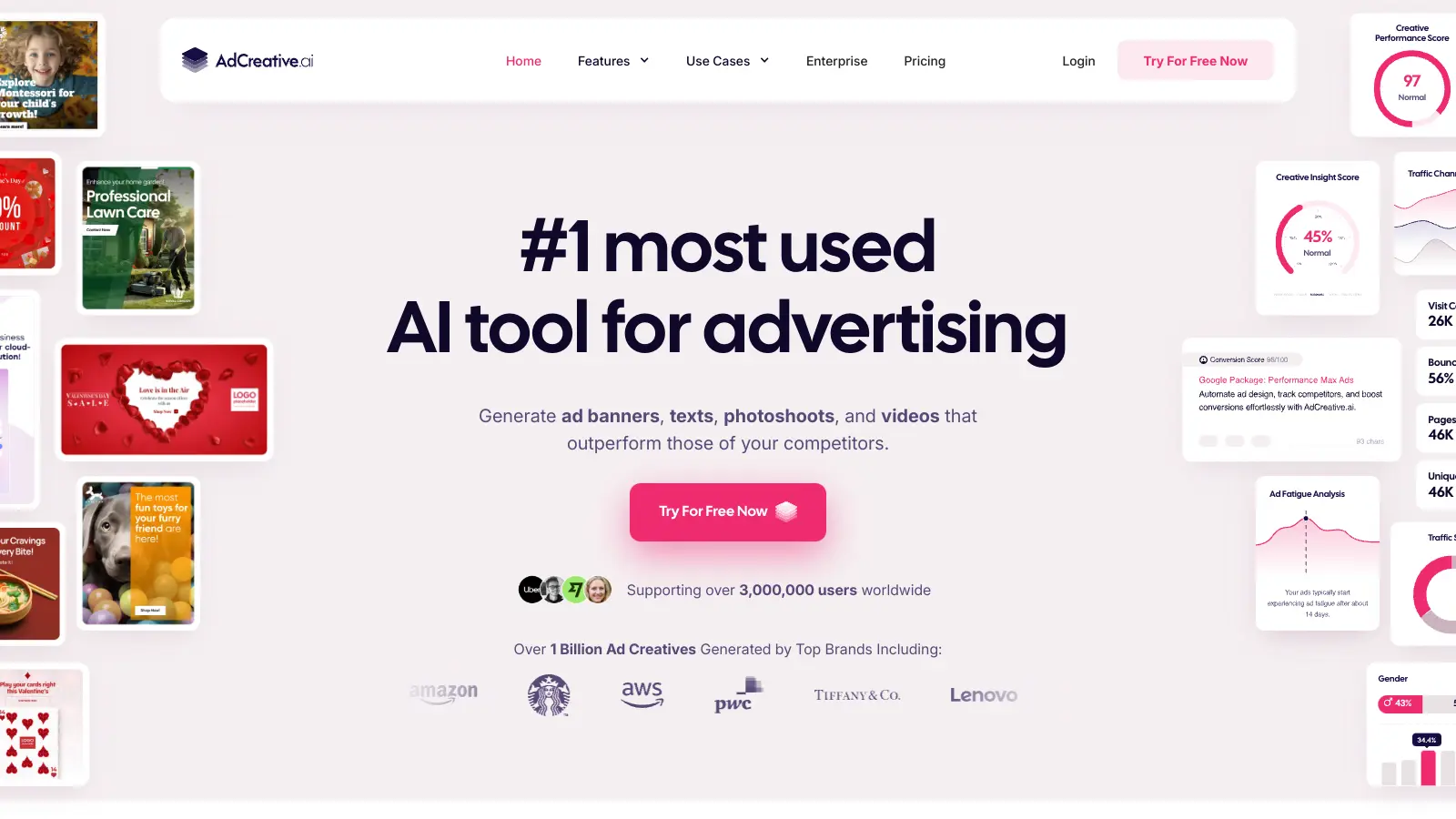
AdCreative.ai generates static ad images, banner variations, and ad copy for Google, Facebook, Instagram, and LinkedIn campaigns. You connect your brand assets, pick a format and audience, and the tool produces multiple creative variations ranked by its predicted conversion score. It's designed for performance marketers who need to test creative at volume without a dedicated design team.
Pros
✓Generates dozens of ad variations from a single brand upload
✓Predicted conversion scores help prioritise which to test
✓Covers static ads across all major paid channels
Cons
✗Video ad generation is limited compared to static output quality
✗Creative quality depends heavily on the brand assets you upload
A newsletter platform with built-in AI writing tools and monetisation features.
Freemium
Best for · Content marketers and creators growing an email audiencePricing · Free plan available; paid from $42/mo
Beehiiv is an email newsletter platform built for creators and content-led marketers. Its AI writing assistant helps draft and edit newsletter content, while its segmentation tools let you target specific subscriber groups. The platform includes a built-in ad network, paid subscription tiers, and a website builder, making it a reasonably complete infrastructure for audience monetisation without stitching together multiple tools.
Pros
✓AI writing assistant integrated directly into the editor
✓Built-in ad network and paid subscription support
✓Audience segmentation without third-party tools
Cons
✗Free plan capped at 2,500 subscribers
✗Less flexible for complex transactional email workflows compared to Klaviyo or ActiveCampaign
An AI search engine that pulls live web data for market and competitor research.
Freemium
Best for · Marketers who need fast, sourced research and competitive intelPricing · Free plan available; Pro from $20/mo
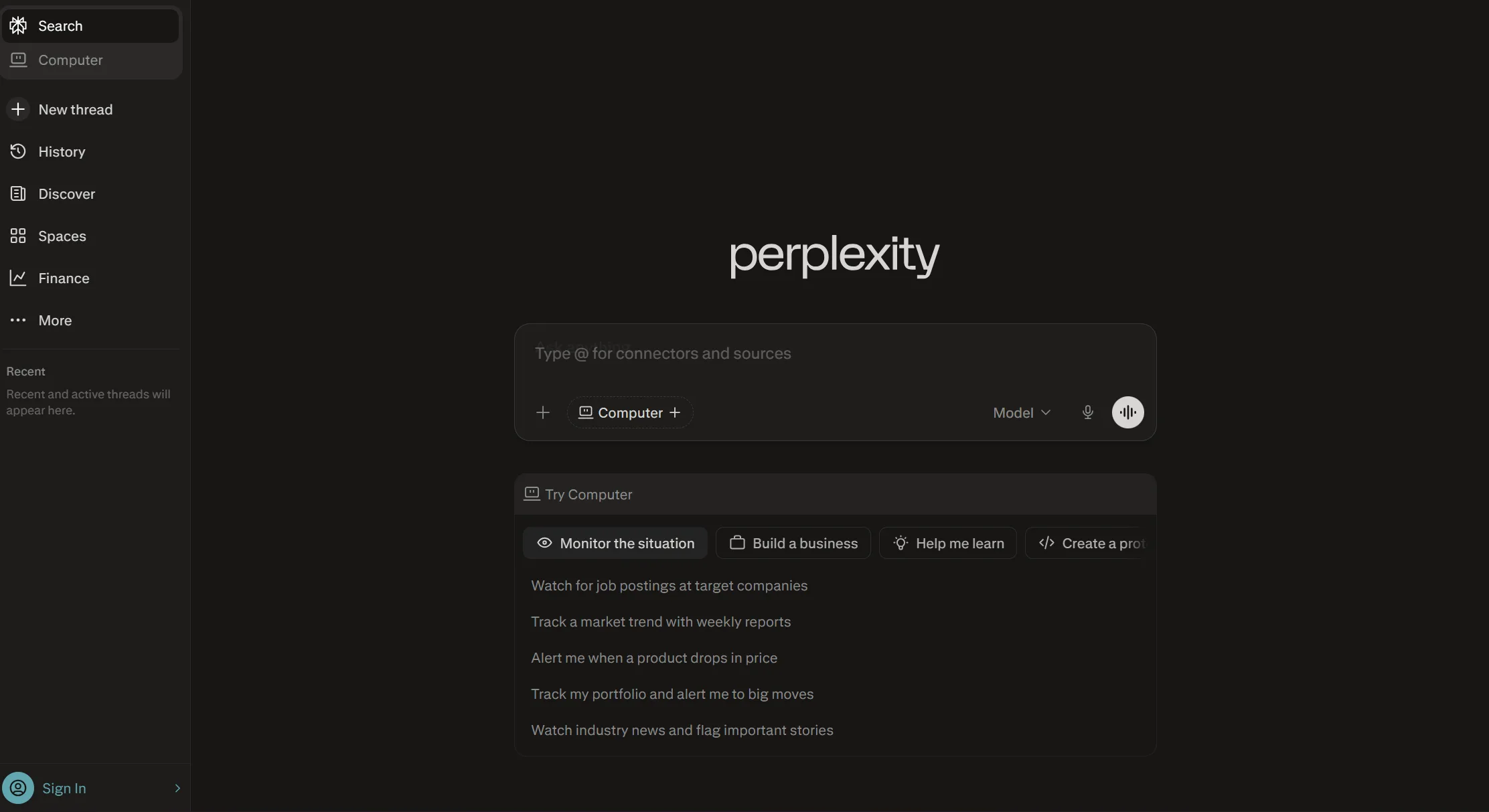
Perplexity searches the live web and synthesises answers with cited sources, which makes it useful for competitor monitoring, trend research, and quickly understanding an unfamiliar topic or market. For marketers, its value is in research speed: getting a sourced summary of what competitors are publishing, what a new regulation means, or what customers are saying about a product category, without opening 15 browser tabs. The Teams plan adds collaboration features and higher usage limits.
Pros
✓Cites live sources so you can verify claims quickly
✓Faster than manual research for competitor and trend monitoring
✓Pro plan connects to uploaded documents and internal files
Cons
✗Not designed for content generation or campaign execution
✗Source quality varies; some answers surface low-authority results
A design platform with AI image generation, copy tools, and social publishing built in.
Freemium
Best for · Small marketing teams managing social content without a designerPricing · Free plan available; Pro from $15/mo
Canva's Magic Studio is a suite of AI features layered into Canva's existing design editor: text-to-image generation, background removal, AI copy suggestions, and a tool that resizes designs across formats automatically. For marketers without a dedicated designer, it closes the gap between needing something visual and being able to produce it. The social scheduler and brand kit features make it a reasonable all-in-one for small marketing teams managing organic social.
Pros
✓AI image generation and editing inside a familiar design tool
✓Magic Resize adapts one design across all social formats instantly
✓Brand kit keeps colours, fonts, and logos consistent across the team
Cons
✗AI image quality trails dedicated generators like Midjourney
✗Advanced print and layout control lags behind Adobe tools
A tool built for SEO content won't help much if your biggest need is ad creative for paid social. Before comparing features, identify whether your bottleneck is in content production, keyword research, ad generation, email, or analytics, then look for tools purpose-built for that channel.
Check the quality of AI output for your niche
Generic AI output often reads that way. Look for tools that let you train on your brand voice, upload reference material, or tune outputs with structured prompts. Review sample outputs in your specific industry before committing to a paid plan.
Understand what data the tool can access
Some tools pull live web data, competitor backlink profiles, or SERP features in real time. Others work only with the text you give them. For competitive intelligence or SEO work, real-time data access is a meaningful differentiator.
Evaluate the learning curve relative to your team's technical skill
Workflow automation tools like Make or Gumloop are powerful but require configuration time. Simpler tools like Jasper or Copy.ai give you output faster. Be honest about how much setup time your team will actually invest.
Factor in total cost across your stack
Many marketers end up running three or four AI tools simultaneously. A $49/month tool looks cheap until you're also paying for a keyword research platform, an image generator, and an email automation suite. Map out your full intended stack before committing.
frequently asked questions
Entry-level plans for most AI marketing tools start between $20 and $50 per month. Comprehensive platforms like Semrush run from $139/month upward. If you're building a full stack covering content, SEO, and ads, budget $100 to $300/month depending on team size.
Free plans exist for several tools in this category, including ChatGPT, Semrush's limited free tier, and Canva's AI features. But output limits and feature restrictions on free plans make them impractical for anything beyond occasional use. A budget of $50 to $100/month will unlock the features that actually save time.
Using AI output without editing it. Most tools produce content that's structurally correct but factually thin, tonally flat, or missing the specific details that make marketing copy convert. Treat AI as a first draft generator, not a finished output machine.
Several do, including Semrush, Jasper, and Surfer SEO, all of which have multi-seat plans or agency tiers. Check whether the plan includes separate brand voice profiles or workspace separation per client, since that matters a lot operationally.
Google's stance is that it evaluates content quality regardless of how it was produced. AI-generated content can rank when it's accurate, well-structured, and edited for depth. Thin, unedited AI content performs poorly, not because it's AI-generated, but because it's low quality.
tools for humans
toolsforhumans editorial team
Reader ratings and community feedback shape every score. Since 2022, ToolsForHumans has helped 600,000+ people find software that holds up after launch. The picks here come from that.