Best Property Management Software for Small Business (2026)
7 tools reviewedlast reviewed 20 march 2026
Editorial note:this was originally published in august of 2024
This page is for independent landlords and small property managers handling anywhere from 1 to 50 units who want software that covers tenant screening, rent collection, and maintenance tracking without paying enterprise prices or hiring a dedicated admin.
The tools here were selected based on pricing transparency, feature depth at the entry tier, and how well they fit portfolios under 100 units. Each entry includes honest notes on where a tool falls short, not just where it shines.
Whether you're a first-time landlord with a single rental or a self-managing investor with a dozen doors, there's a tool in this list that fits your situation and budget.
We collect first-hand reviews from people who use these tools every day — what works, what doesn't, whether it's worth paying for. We research pricing, features, and comparisons so that feedback has real context behind it. For this guide, tools were selected based on affordability, ease of use for non-technical users, and essential features like tenant management and rent collection. Read our full research methodology.
help us improve this guide
tell us what you're looking for, what you're using now, and what caught your eye — takes 30 seconds.
What is property management software for small businesses?
Property management software is a platform that centralises the operational tasks of renting out residential or commercial units: listing vacancies, collecting applications, screening tenants, signing leases, collecting rent, and tracking maintenance requests. Instead of juggling spreadsheets, email chains, and paper forms, landlords manage everything from a single dashboard.
Small business landlords, typically those managing between 1 and 100 units independently, have different needs from large property management companies. They need affordable per-unit pricing, simple onboarding without a dedicated IT team, and tools that tenants can use without training. The category ranges from free tools built specifically for DIY landlords to mid-market platforms that add accounting, owner portals, and workflow automation as portfolios grow.
The core problem these tools solve is time: chasing rent, fielding maintenance calls, and staying legally compliant across state-specific lease requirements all eat hours that compound across every unit you manage.
Straightforward property management software with flat pricing by unit count.
Small property managers who need accounting without enterprise pricing
PaidFrom $45/mo (up to 10 units)
our top pick
1
TurboTenant
Free landlord software with a genuinely useful premium upgrade at $12/mo.
Freemium
Best for · Independent landlords with 1-20 unitsPricing · Free; Premium from $12.42/mo
TurboTenant covers the full landlord workflow: listing syndication, tenant screening, state-specific leases, online rent collection, maintenance tracking, and basic accounting. The free plan is genuinely functional, with screening costs passed to applicants. The Premium plan at $12.42/month adds ACH fee waivers for tenants, phone support, income verification, and a landlord forms library with 32+ documents.
Pros
✓Free plan covers listings, screening, and rent collection
✓State-specific lease templates included
✓Mobile app with push notifications for payments
Cons
✗Phone support only available on Premium plan
✗Accounting features are basic compared to dedicated tools
Landlord software built around DIY leasing and rent collection.
Freemium
Best for · DIY landlords who prioritise lease toolsPricing · Free; Unlimited Plus from $9/unit/mo
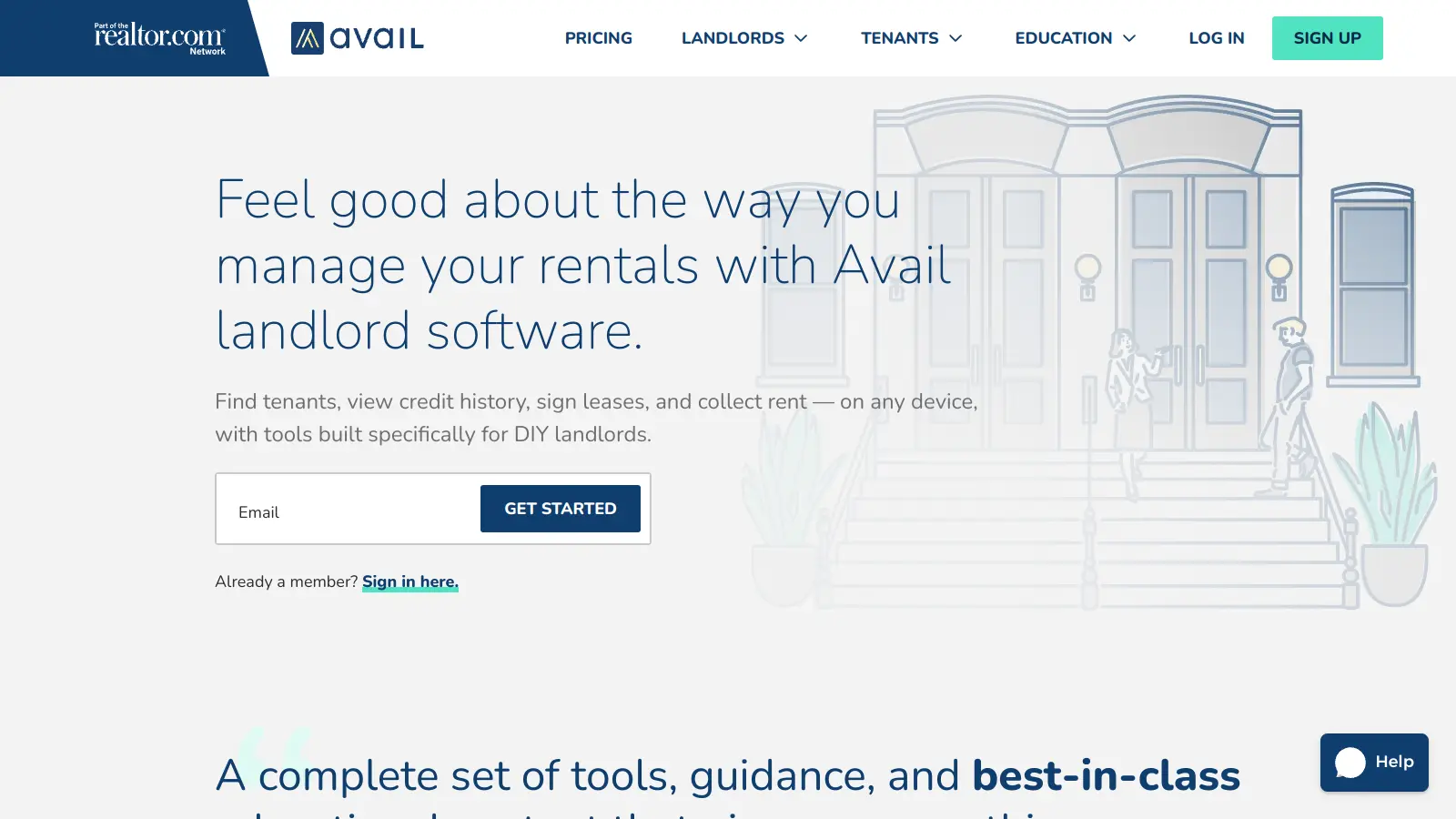
Avail targets independent landlords with tools for rental listings, tenant applications, credit and background checks, lease creation, and online rent collection. The free Unlimited plan has no unit cap. The Unlimited Plus plan at $9/unit/month removes ACH payment delays, enables custom lease templates, and waives tenant-side fees.
Pros
✓No unit cap on the free plan
✓Lawyer-reviewed lease templates by state
✓Clean tenant-facing interface
Cons
✗Per-unit pricing gets expensive at 10+ units on the paid plan
All-in-one platform that covers listings, payments, and accounting.
Freemium
Best for · Small landlords who want accounting built inPricing · Free plan available; paid plans from $17/mo
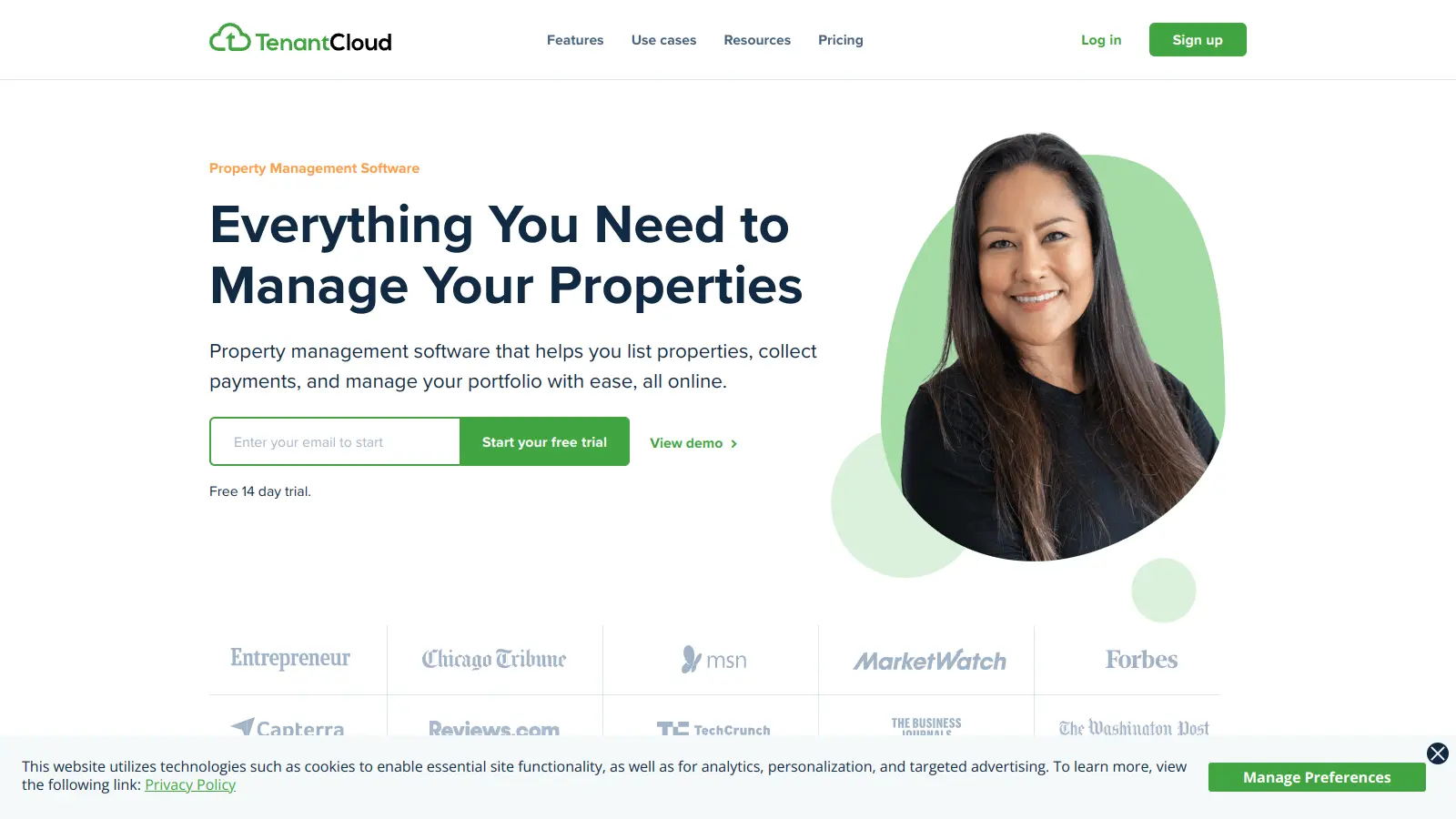
TenantCloud handles listing syndication to Apartments.com, Rentler, and Realtor.com, along with online applications, tenant screening, rent collection (ACH, credit, debit, and cash), and accounting with real-time reporting. It has a free plan for basic use and paid tiers for teams and growing portfolios that add features like custom reports and maintenance management.
Pros
✓Syndicates listings to major rental sites
✓Accepts multiple payment methods including cash
✓Built-in accounting with real-time cash flow tracking
Cons
✗Interface feels dated compared to newer competitors
✗Customer support response times can be slow on lower tiers
Mid-market property management software for growing residential portfolios.
Paid
Best for · Small property management businesses with 20-150 unitsPricing · From $58/mo
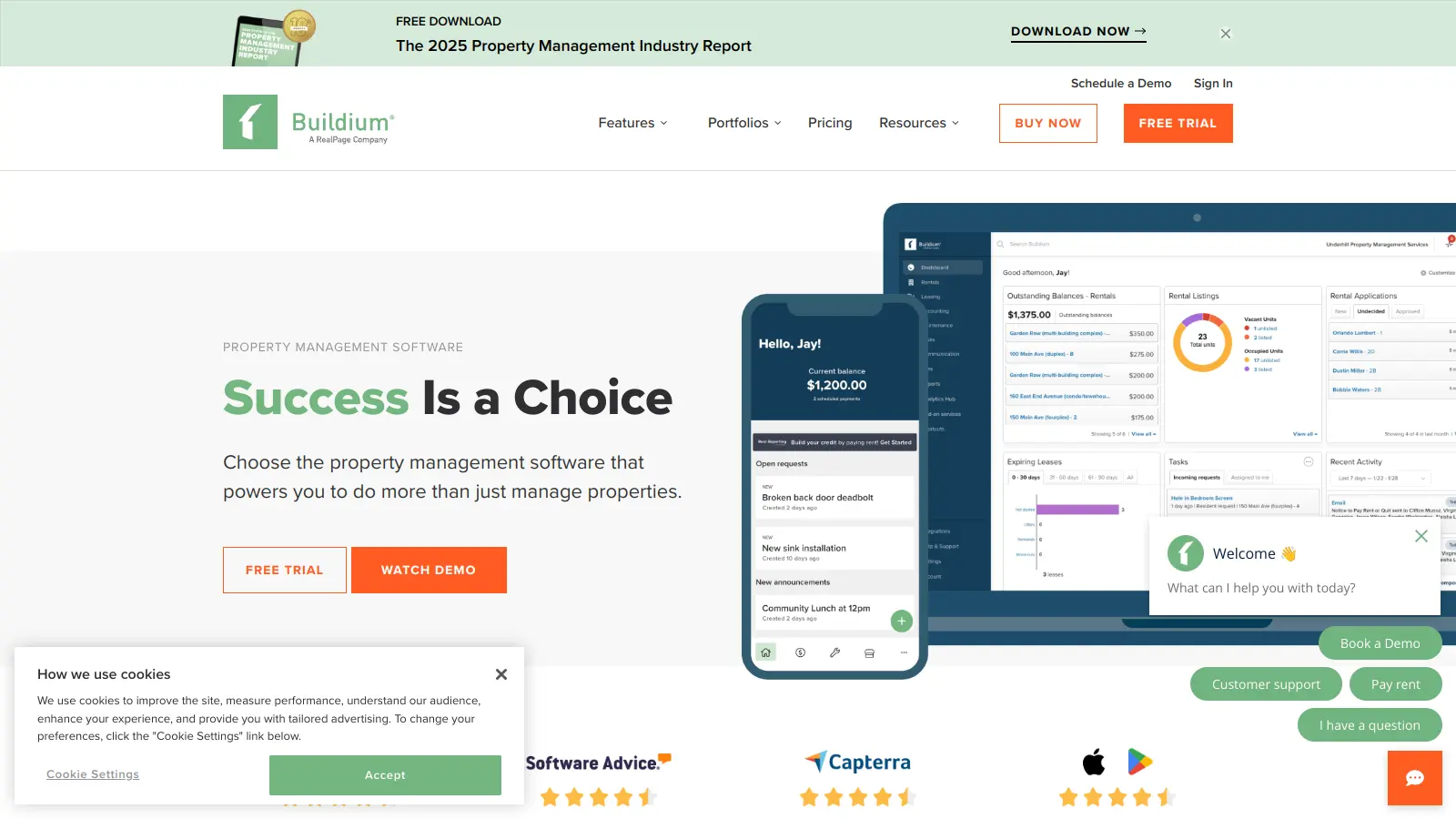
Buildium is built for property managers handling 50 to several hundred units and includes full accounting (bank reconciliation, owner payments, 1099 generation), maintenance workflows, tenant and owner portals, and lease tracking. The Essential plan starts at $58/month for up to 150 units. It's more feature-complete than most small-landlord tools but requires a steeper learning curve.
Pros
✓Full double-entry accounting with 1099 support
✓Owner portal for investor reporting
✓Strong maintenance workflow with vendor tracking
Cons
✗Minimum $58/mo makes it expensive for under 10 units
✗Onboarding takes significant time to configure correctly
Enterprise-grade property management platform with AI-native workflows.
Paid
Best for · Property management companies with 50+ unitsPricing · From $1.40/unit/mo (50-unit minimum)
AppFolio is the benchmark for full-featured property management software, covering leasing, accounting, maintenance, owner reporting, and AI-assisted workflow automation. It requires a minimum of 50 units and a minimum monthly spend, which puts it out of reach for most small landlords. For property management companies managing residential portfolios at scale, its depth in accounting and investor reporting is hard to match.
Pros
✓AI workflow automation built into core platform
✓Best-in-class owner and investor reporting
✓Handles residential, commercial, and mixed portfolios
Cons
✗50-unit minimum excludes most small landlords
✗Pricing and complexity are overkill for under 20 units
Property accounting and expense tracking built for small landlords.
Freemium
Best for · Landlords who prioritise tax-ready accountingPricing · Free up to 3 units; from $12/mo
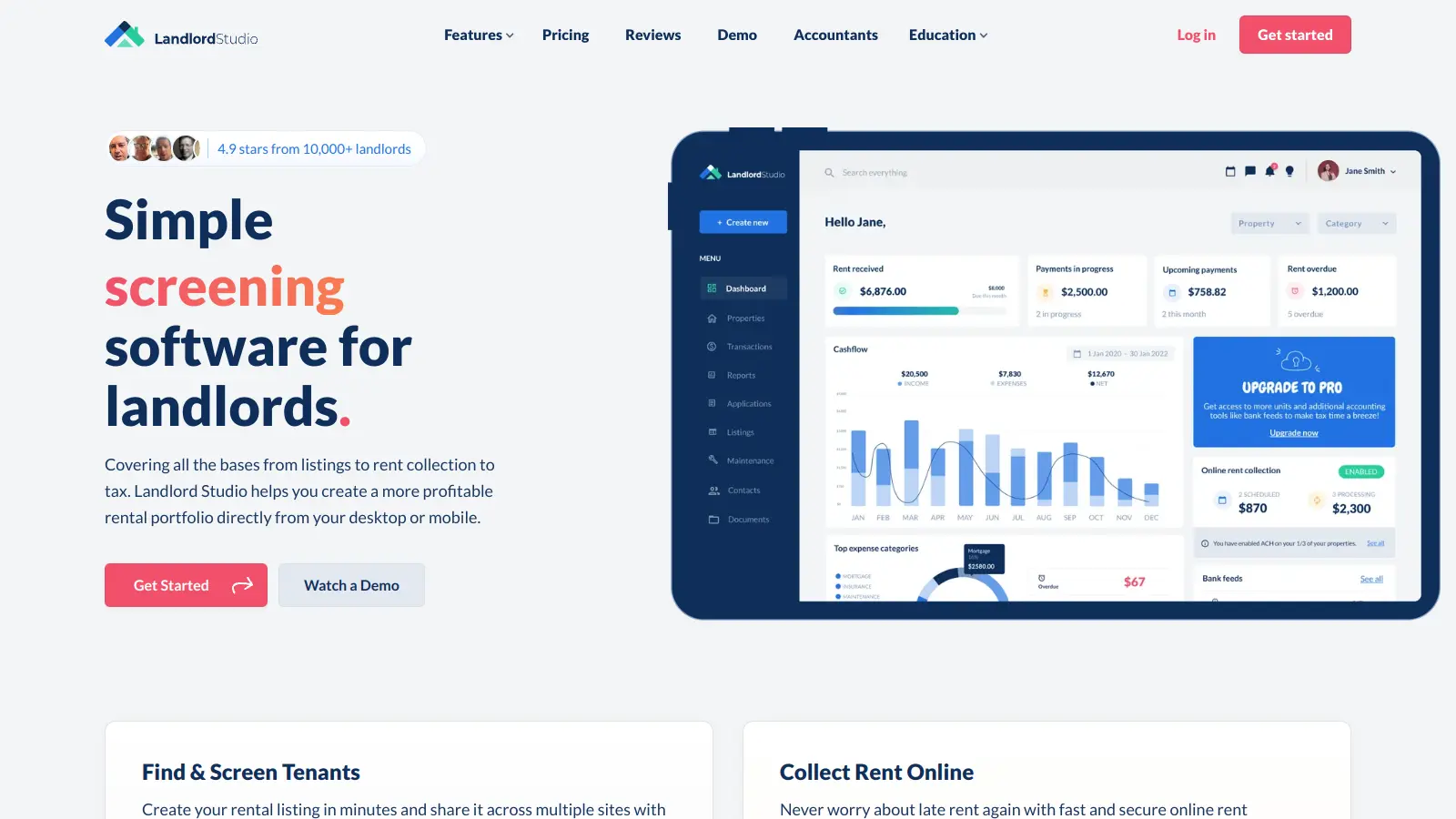
Landlord Studio is primarily an accounting and reporting tool for residential landlords, with strong receipt scanning, mileage tracking, and Schedule E report generation. It also covers tenant screening, rent collection, and basic lease management. The free plan supports up to 3 units; the Go plan starts at around $12/month for unlimited units and adds bank feeds and automated transaction matching.
Pros
✓Schedule E-ready tax reports included
✓Receipt scanning and mileage tracking from mobile
✓Bank feed with automated transaction matching on paid plan
Cons
✗Listing and leasing tools are less developed than competitors
Straightforward property management software with flat pricing by unit count.
Paid
Best for · Small property managers who need accounting without enterprise pricingPricing · From $45/mo (up to 10 units)
Rentec Direct is a mid-range platform covering tenant screening, online rent collection, accounting (including bank reconciliation and owner statements), maintenance tracking, and a tenant portal. Pricing scales by unit count starting at $45/month for up to 10 units on the Rentec PM plan. It lacks the AI features or polish of AppFolio but is more accessible and easier to set up for a small management company.
Pros
✓Includes owner portal and owner statements at base tier
✓US-based customer support included at all plan levels
✓Bank reconciliation and 1099 filing built in
Cons
✗UI feels dated and less intuitive than newer tools
✗No meaningful free tier to test before committing
How to choose property management software for a small business
Per-unit pricing vs. flat monthly fees
Some platforms charge per unit, which gets expensive fast if you manage 20+ doors. Others charge a flat monthly fee regardless of portfolio size. At fewer than 10 units, a flat-fee or free plan usually wins on cost; at 20-50 units, per-unit pricing from a full-featured platform can still be competitive if it replaces multiple separate tools.
Which tasks are actually included for free
Many platforms advertise a free tier but charge for the features you'll actually use daily, such as ACH payments, e-signatures, or tenant screening. Check what's gated behind paid plans before committing, especially if rent collection or background checks are your primary need.
Tenant-facing experience
If your tenants find the portal confusing or the mobile app unreliable, you'll still be fielding calls and texts. Look for platforms where tenant onboarding is self-serve and the payment flow is straightforward, particularly for tenants who aren't tech-savvy.
Accounting and tax reporting depth
Basic income and expense tracking is table stakes. If you want Schedule E-ready reports, category-level expense filtering, or integration with QuickBooks, verify those features exist at your target plan before signing up. Some tools require a paid upgrade for anything beyond simple rent tracking.
State-specific legal compliance
Lease templates, notice periods, and security deposit rules vary by state. A platform that auto-generates state-compliant lease agreements saves you lawyer fees and reduces legal exposure. Not all tools offer this, and some only cover a subset of states.
frequently asked questions
Free tiers typically cover listings, basic tenant screening (sometimes with fees passed to applicants), and rent collection. Paid plans add features like ACH fee waivers, priority support, advanced accounting reports, and e-signatures. For a single-unit landlord, a free plan is often enough. At 5+ units, the time savings from paid features usually justify the monthly cost.
Costs range from $0 (TurboTenant's free plan, Avail's free tier) to $250+ per month for platforms like AppFolio that have unit minimums. Most small landlord-focused tools fall between $12 and $55 per month for a single flat-fee plan. Per-unit pricing on mid-market platforms typically runs $1 to $3 per unit per month.
Yes, and several tools are designed specifically for that scenario. TurboTenant and Avail both have free plans with no unit minimums that work well for single-property landlords. The main trade-off at one unit is that flat monthly fees feel expensive relative to what you're managing, so a free or very low-cost plan is the better starting point.
Choosing based on the free plan features without checking what requires an upgrade. Rent collection, e-signatures, and background checks are the features landlords use most, and these are frequently gated. Always map your top three daily tasks to the pricing tier before committing.
Some do, some don't. TurboTenant includes state-specific lease templates. Buildium and AppFolio offer lease tools but compliance coverage varies. If legal compliance in your state is a priority, verify template availability for your specific state before choosing a platform, rather than assuming it's covered.
tools for humans
toolsforhumans editorial team
Reader ratings and community feedback shape every score. Since 2022, ToolsForHumans has helped 600,000+ people find software that holds up after launch. The picks here come from that.