Best AI Recruitment Software: Top Picks for Hiring Teams (2026)
8 tools reviewedlast reviewed 20 march 2026
Editorial note:this was originally published in july of 2023
This page is for recruiters and HR teams who want to cut time-to-hire without adding headcount. AI recruitment tools now cover the full pipeline: sourcing from massive candidate databases, scoring inbound applicants, writing outreach, and scheduling interviews automatically.
The category has exploded, and not every tool earns the label. Some are genuine AI sourcing engines with 800M+ profile databases. Others are applicant tracking systems with a GPT-generated job description tacked on. This list separates the two.
The eight tools below were selected based on actual AI functionality, pricing transparency, ease of onboarding, and fit across different team sizes, from lean startups to enterprise talent teams.
We collect first-hand reviews from people who use these tools every day — what works, what doesn't, whether it's worth paying for. We research pricing, features, and comparisons so that feedback has real context behind it. For this guide, recruitment tools were selected based on candidate sourcing capabilities, screening accuracy, and integration with existing HR systems. Read our full research methodology.
help us improve this guide
tell us what you're looking for, what you're using now, and what caught your eye — takes 30 seconds.
What is AI recruitment software?
AI recruitment software is a category of hiring tools that use machine learning and natural language processing to automate or assist tasks that recruiters previously did manually: searching for candidates, scoring resumes, writing outreach messages, and scheduling interviews.
The category splits into two main types. Sourcing tools (like Juicebox or GoPerfect) proactively search databases of hundreds of millions of profiles to surface candidates who match a role, even if they never applied. Screening tools (like Greenhouse or Workable) sit at the inbound end, scoring applicants against job criteria and flagging the ones worth a closer look.
Most modern platforms combine both. They're used by in-house talent teams, HR generalists at growing companies, and staffing agencies. The main problem they solve is volume: too many applicants to review manually, or too few good ones coming in organically.
AI-powered ATS and CRM built specifically for staffing and recruitment agencies.
Staffing agencies and external recruiters
PaidFrom $85/user/mo
our top pick
1
Greenhouse
Structured hiring ATS with AI-assisted candidate scoring and interviews.
Custom
Best for · Mid-market and enterprise hiring teamsPricing · Pricing on request
Greenhouse is an ATS built around structured hiring: consistent scorecards, standardised interview kits, and now AI features that help write job descriptions, score applicants, and reduce unconscious bias through anonymised review modes. It's widely used by mid-market and enterprise teams who want a documented, repeatable hiring process rather than ad hoc decisions.
All-in-one hiring platform with AI sourcing, screening, and ATS built in.
Paid
Best for · Growing SMBs and mid-market teamsPricing · From $189/mo
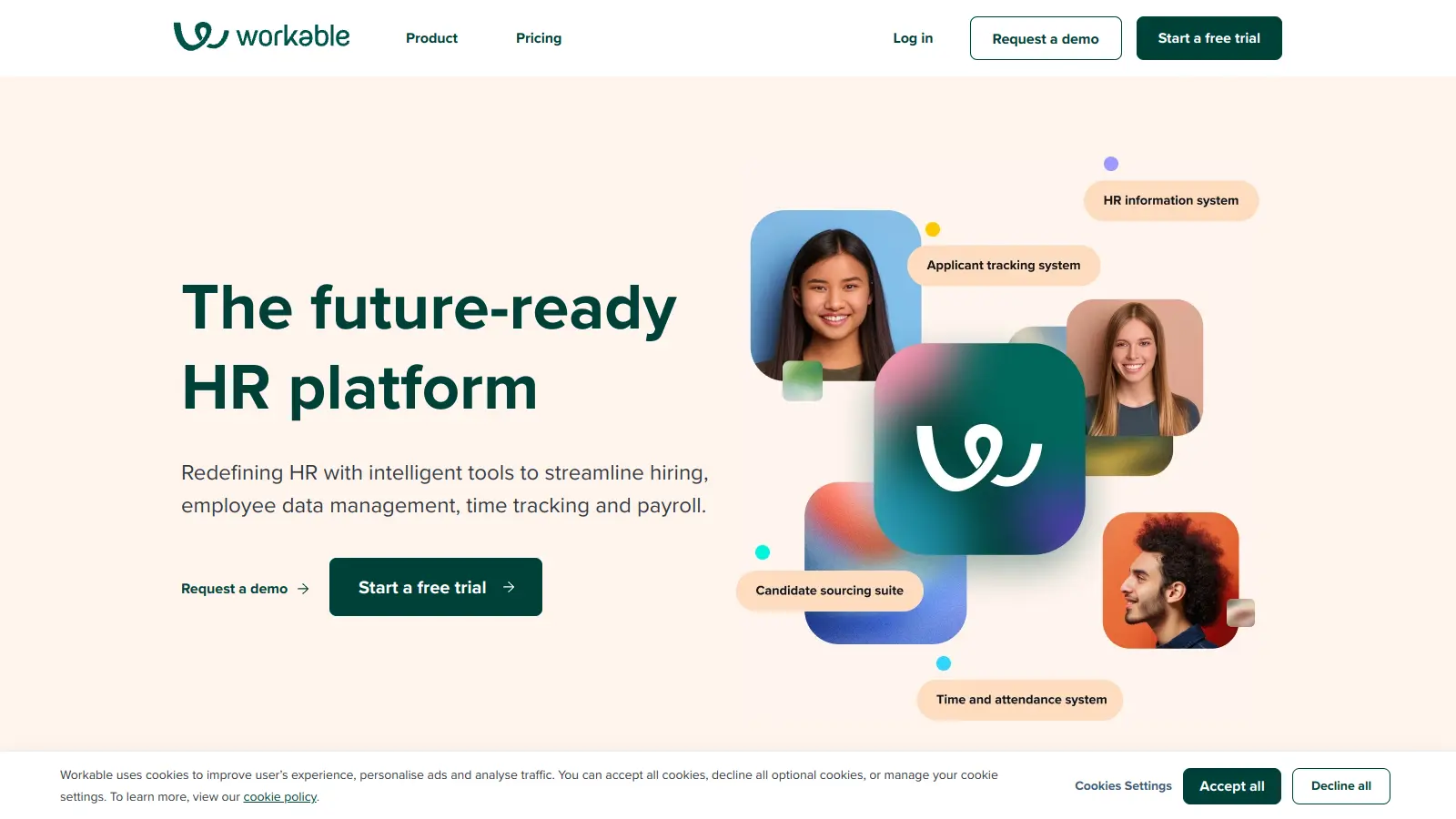
Workable combines an ATS with an AI sourcing tool that searches a database of 400M+ passive candidates. Its AI features include automated resume screening, candidate scoring, and AI-generated job descriptions. It's one of the few tools where you can post a job, find passive candidates, and manage the full pipeline in one interface without stitching together separate tools.
Pros
✓Sourcing and ATS in one platform, no separate tools needed
✓AI candidate sourcing from 400M+ profile database
✓One-click job posting to 200+ job boards
Cons
✗AI sourcing quality can vary for niche or technical roles
✗Reporting and analytics less detailed than enterprise-only ATS tools
Natural language candidate search across 800M+ profiles with AI outreach.
Freemium
Best for · Talent sourcers and recruiting teams doing outbound hiringPricing · Free plan available
Juicebox lets recruiters describe the candidate they want in plain language, the same way you'd brief a colleague, and the AI translates that into a search across 800M+ profiles from 30+ data sources. It builds enriched candidate profiles based on skills and achievements rather than just job titles, and its multi-step outreach sequences claim up to 3x more replies than standard templates.
Pros
✓Natural language search, no complex Boolean required
✓Enriched profiles include achievements, not just job history
✓Multi-step automated outreach with engagement tracking
Cons
✗Less useful for high-volume inbound screening workflows
✗Profile data quality varies across geographies and industries
Autonomous AI recruiting agent that sources, scores, and messages candidates.
Custom
Best for · Hiring teams running high-volume or multi-role searchesPricing · Pricing on request
GoPerfect runs sourcing and outreach on autopilot: you set your hiring target and deadline, and the AI handles candidate discovery from 800M+ profiles, scoring, and personalised multi-channel outreach via LinkedIn, email, and SMS. It includes unlimited seats, which is useful for collaborative hiring teams. The tool syncs with your ATS to score inbound applicants in real time using criteria you define in plain language.
Pros
✓Unlimited seats included at no extra cost per user
✓Autonomous outreach across LinkedIn, email, and SMS
✓Real-time ATS integration for inbound applicant scoring
Cons
✗Pricing is not public, requires a sales conversation
✗Autonomous mode requires careful setup to avoid irrelevant outreach
Affordable AI ATS with candidate scoring and social media enrichment.
Paid
Best for · Small businesses and staffing agencies on a budgetPricing · From $19/user/mo
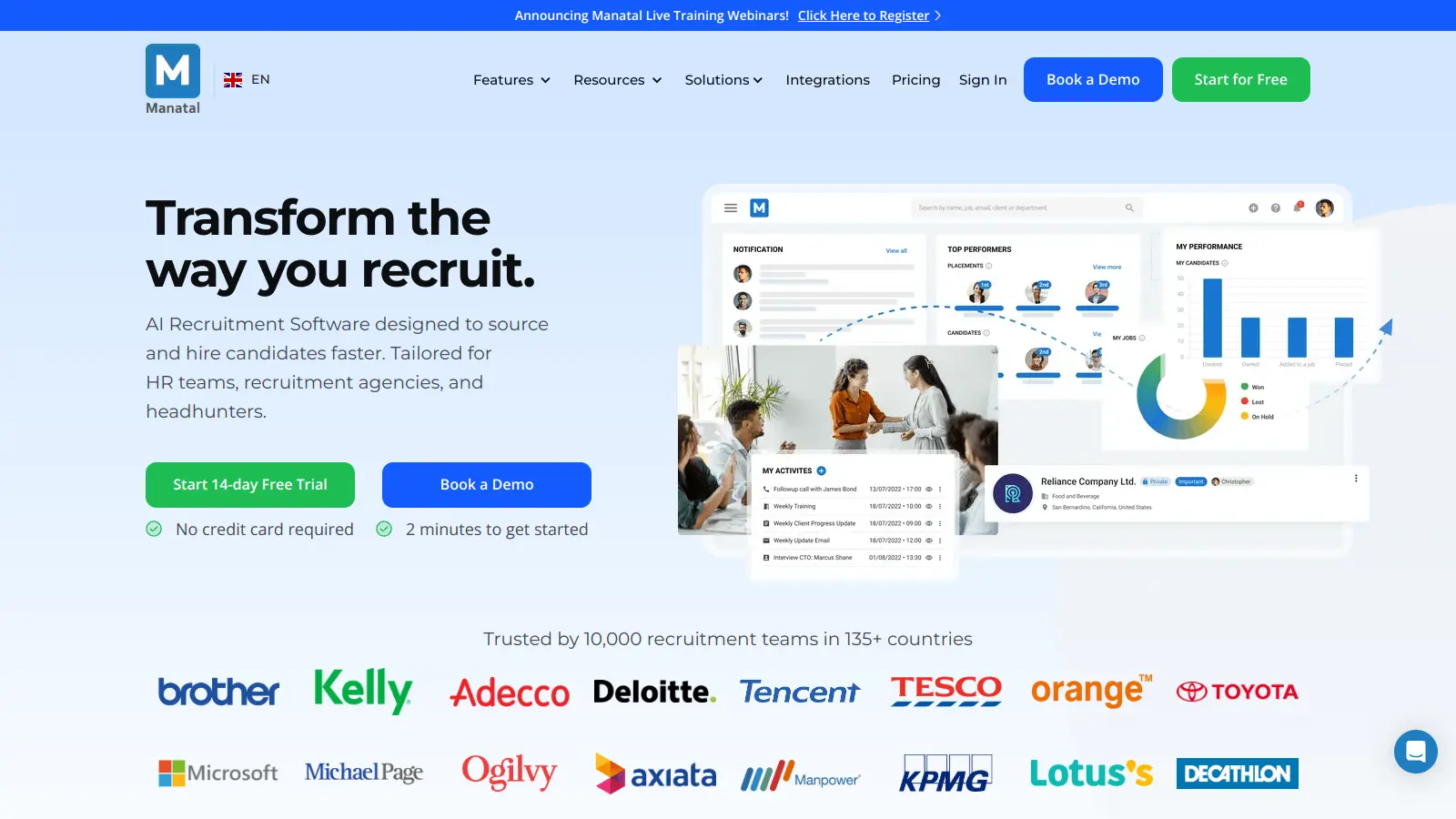
Manatal is an ATS aimed at SMBs and staffing agencies that want AI features without enterprise pricing. It automatically enriches candidate profiles with data from LinkedIn and other social platforms, and its AI scoring ranks applicants against job requirements. The interface is clean and onboarding is fast, typically measured in days rather than weeks.
Pros
✓One of the lowest price points in the AI ATS category
✓Social media enrichment adds context to thin resumes
✓Fast to set up, minimal IT support needed
Cons
✗Candidate database for outbound sourcing is limited vs. Workable or Juicebox
✗Reporting features are basic compared to enterprise ATS tools
Conversational AI assistant that screens candidates and schedules interviews automatically.
Custom
Best for · High-volume hiring in retail, healthcare, and hospitalityPricing · Pricing on request
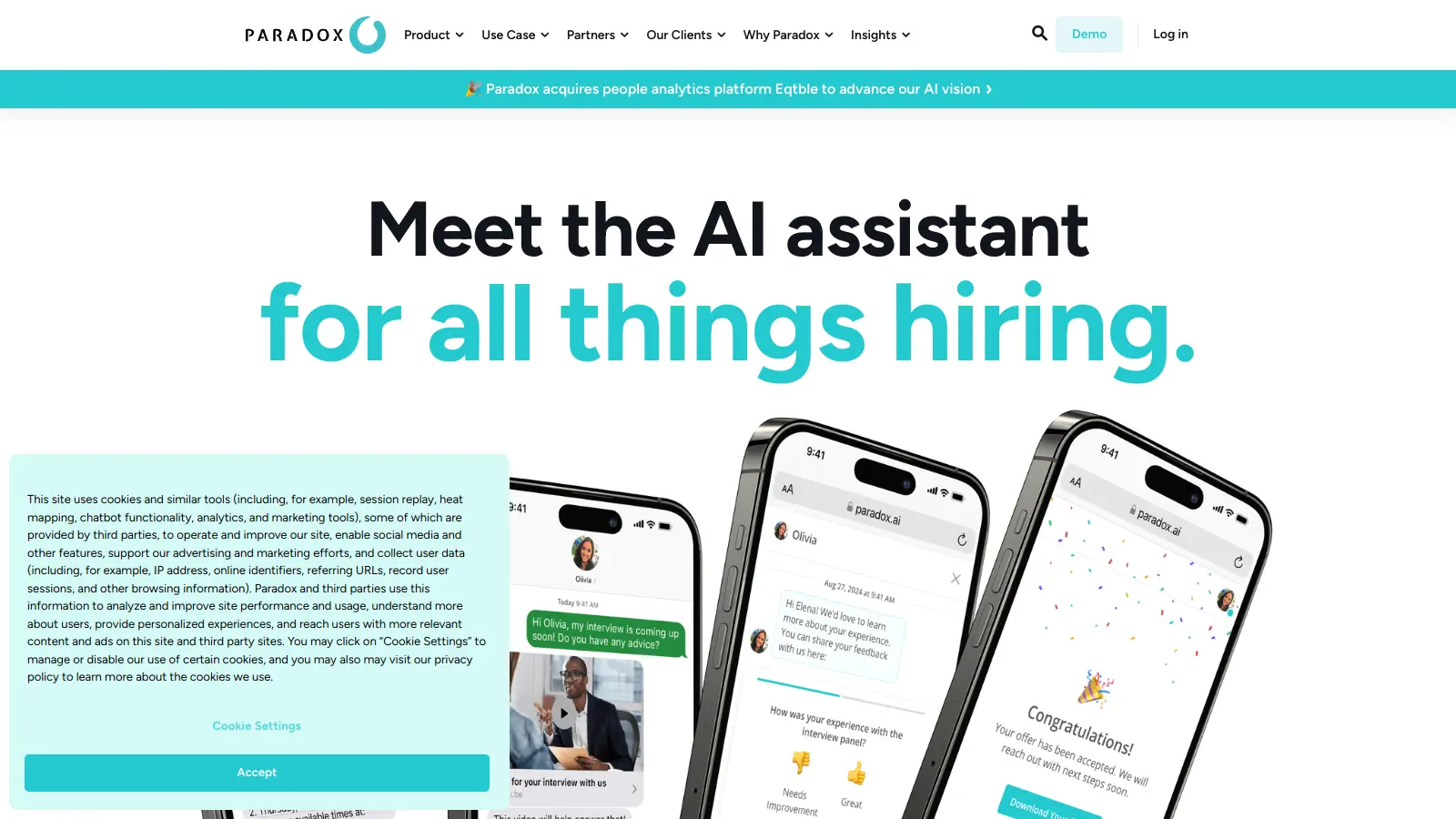
Paradox's AI assistant, Olivia, handles the conversational layer of recruiting: answering candidate questions, screening applicants through SMS or chat, and booking interviews directly into recruiter calendars without human involvement. It's built for high-volume hiring in retail, hospitality, and healthcare, where speed matters and recruiters can't manually process every application.
Pros
✓Handles screening and scheduling with zero recruiter involvement
Enterprise talent CRM with AI-driven talent intelligence and pipeline building.
Custom
Best for · Enterprise talent acquisition and workforce planning teamsPricing · Pricing on request
Beamery is a talent operating system for large enterprises, focused on building long-term talent pipelines rather than just filling immediate vacancies. Its AI layer, called TalentGPT, analyses internal mobility opportunities, predicts candidate fit, and surfaces insights about talent market trends. It's designed for organisations with mature TA functions that want to think beyond the current hire.
Pros
✓TalentGPT covers both external sourcing and internal mobility
✓Strong talent market intelligence for workforce planning
✓Built for large-scale, multi-region hiring programmes
Cons
✗Significant implementation overhead, not suitable for small teams
✗Overkill and cost-prohibitive for companies hiring fewer than 100 people per year
AI-powered ATS and CRM built specifically for staffing and recruitment agencies.
Paid
Best for · Staffing agencies and external recruitersPricing · From $85/user/mo
Recruit CRM combines an ATS with a candidate and client CRM designed for external recruiters and staffing agencies rather than in-house teams. Its AI features include resume parsing, candidate matching, and GPT-powered email drafting. The dual ATS/CRM design means agencies can manage both their candidate pipeline and their client relationships in one system, which generic ATS tools don't handle well.
Pros
✓Combined ATS and client CRM designed for agency workflows
✓GPT-powered email drafting built into the outreach workflow
✓Resume parsing accuracy is consistently rated highly by agency users
Cons
✗Per-user pricing adds up quickly for larger agency teams
✗Less suited to in-house HR teams who don't need the client CRM layer
Some tools use AI only for job description generation or basic keyword matching. Look for platforms where AI handles ranking, scoring against custom criteria, or autonomous sourcing from external databases. Ask vendors to show you the scoring logic, not just a demo of the interface.
Inbound screening vs. outbound sourcing
If you get hundreds of applicants per role, you need a tool that scores and ranks inbound resumes consistently. If your roles are hard to fill and you rely on headhunting, you need outbound sourcing with a large candidate database and personalised outreach. Many teams need both, but not every tool does both well.
ATS integration
Check whether the tool connects to your existing ATS (Greenhouse, Lever, Workday, etc.) before committing. Some AI sourcing tools sync candidates directly into your ATS pipeline. Others require manual exports, which creates extra admin and data quality issues.
Bias and compliance controls
AI screening can entrench historical bias if the model is trained on past hiring decisions. Look for tools that offer structured scoring against objective criteria, audit logs, and GDPR/EEOC compliance documentation. Vendors should be able to explain what their models are optimising for.
Pricing model and seat limits
Some tools charge per seat, which gets expensive for larger teams. Others charge per job slot or per hire. GoPerfect, for example, includes unlimited seats. If your team collaborates heavily, the per-seat model can double your costs quickly, so factor in team size when comparing plans.
frequently asked questions
An ATS manages inbound applicants: it collects applications, tracks candidates through stages, and handles communication. An AI sourcing tool proactively finds candidates who haven't applied, usually from a large external database. Some platforms (like Workable) do both. Others specialise in one side of the funnel.
Entry-level tools like Manatal start around $15-19 per user per month. Mid-market platforms like Workable start around $149-189 per month for small teams. Enterprise sourcing tools like Beamery and some configurations of iCIMS are priced on request. Expect to pay more for larger candidate databases, higher outreach volumes, or enterprise compliance features.
Manatal has a free trial and a low-cost paid tier that includes AI candidate scoring, making it one of the most accessible options. Most other tools in this category offer free trials rather than permanent free plans, and the genuinely capable AI features are usually behind a paid tier.
Yes, if the scoring model is trained on past hiring data that reflects historical bias, it can amplify those patterns at scale. The better tools use structured, criteria-based scoring rather than pattern-matching against previous hires, and they provide audit logs so you can review how decisions were made. Always ask vendors specifically how their models handle protected characteristics.
Usually not. Most AI sourcing and screening tools integrate with popular ATS platforms via API or native connectors. Tools like GoPerfect and Juicebox sync candidates into your existing ATS. If you're buying an AI-native ATS like Greenhouse or Workable, that would replace your current system, but standalone AI layers can sit on top of what you already have.
tools for humans
toolsforhumans editorial team
Reader ratings and community feedback shape every score. Since 2022, ToolsForHumans has helped 600,000+ people find software that holds up after launch. The picks here come from that.