Customer Experience Analytics Platform+1 more

SentiSum
best deal
Start Free 14-Day Trial: Analyze 6 Months of Customer Data & Experience SentiSum's AI Insights
redeem now
SentiSum
best deal
Start Free 14-Day Trial: Analyze 6 Months of Customer Data & Experience SentiSum's AI Insights
redeem nowWe start with direct ratings from our readers, then look at what real users are saying in practitioner forums and community spaces. We pair that with search demand data and profession-level persona analysis.
Editorial note: this was originally published in august of 2024
quick take
based on real user feedback, community sentiment, pricing value, and fit for target audience. see our full methodology
used SentiSum? we'd love to know your thoughts
reader ratings shape our score
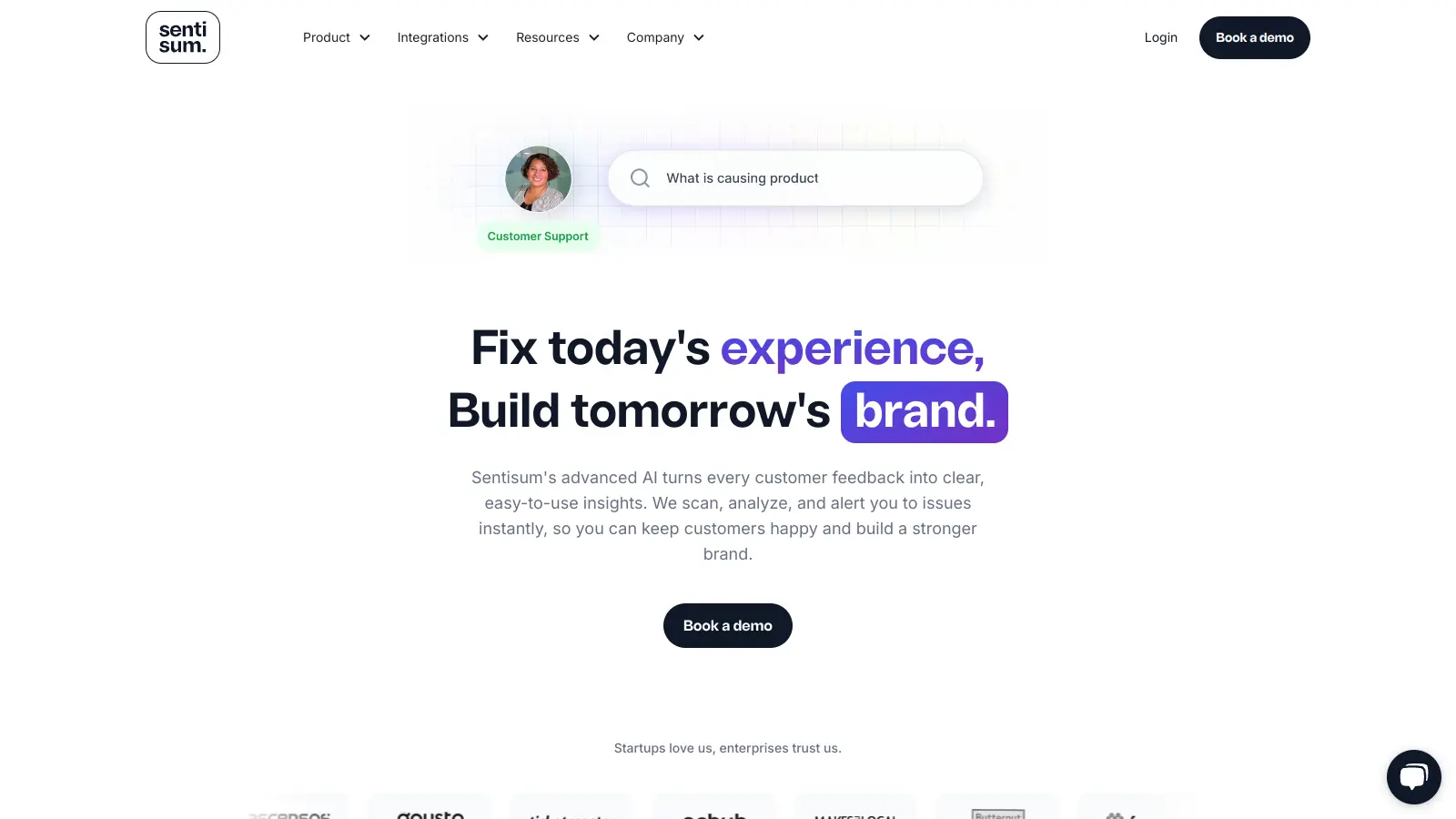
SentiSum is an AI-native Voice of Customer analytics platform that helps businesses understand and act on customer feedback. The platform analyzes conversations, surveys, reviews, calls, and social media posts across multiple channels to provide clear insights into customer sentiment and trends.
At its core, SentiSum uses natural language processing and machine learning to automatically tag and categorize customer feedback. This makes it easier for companies to spot issues, track patterns, and prevent churn. The platform can handle feedback from calls, emails, chats, and social media, bringing everything together in one place.
The platform uses the Kyo AI Engine to provide early alerts for sentiment shifts, explain churn risk, and recommend actions. It offers custom AI models built for each customer, support for over 100 languages, and the ability to route support tickets based on urgency and intent. Teams can customize their dashboards to focus on relevant data, while anomaly detection helps track sudden changes in customer sentiment.
SentiSum offers a 14-day free trial that includes analysis of six months of historical data. The Pro plan starts at $3,000 per month for 5,000 conversations with unlimited users. Companies can reach out directly for custom enterprise pricing based on their specific needs.
monthly search interest
140/mo now
SentiSum sat at a modest but steady 70-140 monthly searches for three years before a sharp spike in May 2025. That spike has since come down but settled at a level roughly double the pre-2025 baseline. This suggests the tool picked up meaningful attention, likely from a product launch or press moment, and has retained some of that new audience rather than dropping back to where it started. It's not a viral hype story, but it is growing from a small base, which means you're evaluating a tool that more people are discovering right now but that still lacks the battle-tested user community of its larger competitors.
Whether SentiSum earns its price tag depends almost entirely on your team's size, ticket volume, and how much manual feedback analysis you're currently doing. Pick your role below to see whether it actually makes sense for your situation.
overall sentiment
select your role to see what people like you are saying
Customer Experience Manager
mixedIf you're managing feedback across Zendesk, Intercom, surveys, and social in parallel, SentiSum's centralised tagging and trend dashboard cuts real hours from your week. The churn risk flagging and real-time sentiment tracking are genuinely useful for leadership reporting. The catch is the price: at $3,000/month, you'll need to show clear ROI to get it past finance, and the thin public review record makes that conversation harder.
strengths
concerns
Support Team Lead
mixedSentiSum is useful if you're running a high-volume English-language support queue and need churn risk and emotion signals surfaced automatically rather than buried in ticket data. It cuts manual triage time and helps you spot training gaps from real interactions. Be honest about your ticket language mix though: if a meaningful portion of your queue is non-English, accuracy issues will undermine the value quickly.
strengths
concerns
Product Manager
mixedYou can use SentiSum to pull UX issues and retention signals directly from customer feedback without building a survey programme, which is genuinely useful at scale. The problem is that non-English accuracy is inconsistent, and there is almost no independent evidence of how well it integrates with product analytics tools in practice. If your user base is primarily English-speaking and you're dealing with high feedback volume, it's worth trialling. For global products, verify the language accuracy on your actual data first.
strengths
concerns
Market Research Professional
mixedResearchers appreciate SentiSum's ability to analyze feedback across multiple touchpoints and languages at scale, streamlining what would be weeks of manual coding. However, documented accuracy issues with non-English text and sparse API documentation create friction for custom analysis and integration into research workflows.
strengths
concerns
“At $3,000 a month, SentiSum is asking for a significant budget commitment with relatively little public evidence of what you actually get for it.”
Public discussion of SentiSum is thin. The two sources that surface are a roundup article from AppFollow and a survey analysis comparison list from thecxlead.com. Neither contains substantive user reviews or direct experience reports. SentiSum appears on these lists as a named tool but receives no detailed community critique or endorsement. At $3,000 per month for the Pro plan entry point, it sits in a bracket where most buyers are enterprises doing vendor evaluations rather than individuals leaving forum posts. That pricing reality largely explains the silence. The category it sits in (AI voice-of-customer analytics) is well-discussed, with competitors like Chattermill and Enterpret generating more visible community debate. SentiSum's relative quiet online makes it harder to assess real-world reliability from third-party accounts alone.
Only if your team is processing thousands of customer conversations monthly and the cost of manual tagging and sentiment review is real. At $3,000/month for the Pro plan, you need to be getting back at least that in analyst time or churn-prevention value. For smaller operations or teams under 50 agents, the math rarely works out. There is no publicly listed cheaper tier (the Growth plan has been discontinued), so there is no low-risk entry point.
Customer Experience Managers at mid-to-large companies dealing with high volumes of multi-channel feedback are the clearest fit. Support Team Leads running large queues who need churn risk flagged automatically also get real value. Product Managers at companies with predominantly English-speaking user bases can use it to surface UX and bug signals from feedback at scale. It is not a fit for small teams or anyone without a significant monthly conversation volume to justify the cost.
Two stand out. First, accuracy drops with non-English feedback, which is a genuine problem for any global product team or support operation handling multilingual queues. Second, there is almost no independent community discussion or public review data to validate vendor claims. You are largely relying on SentiSum's own case studies when evaluating ROI. Legacy system integrations can also be painful, and setup complexity means there is a real time-to-value lag for under-resourced teams.
Both target the same buyer: enterprise CX and support teams who need to process feedback at volume. Chattermill has more visible community discussion and a longer public track record, which makes it easier to evaluate independently before committing. SentiSum's Kyo AI engine and early warning agent features look competitive on paper, but with so little independent review data it is harder to verify. If you have the time to run a proper trial of both on your actual data, do it. If you need to make a faster call, Chattermill's more established reputation makes it the lower-risk choice right now.
Not fully. The platform claims 100+ language support at the Pro tier, but accuracy degrades with non-English input. For Product Managers and Support Team Leads managing global user bases, this is a real limitation. If a significant share of your feedback comes in languages other than English, test specifically on that subset during any trial period before signing a contract.
toolsforhumans editorial team
Reader ratings and community feedback shape every score. Since 2022, ToolsForHumans has helped 600,000+ people find software that holds up after launch. how we research →

SurveyMonkey is an online survey platform that enables users to create, distribute, and analyze surveys with customizable forms and AI-powered tools. It offers multiple question types, survey templates, advanced logic, and analytics tools. Used by individuals and enterprises, SurveyMonkey provides integrations with other tools and flexible pricing plans for research and feedback collection.
best deal
Try SurveyMonkey's Basic Plan free – Create unlimited surveys with up to 10 questions each

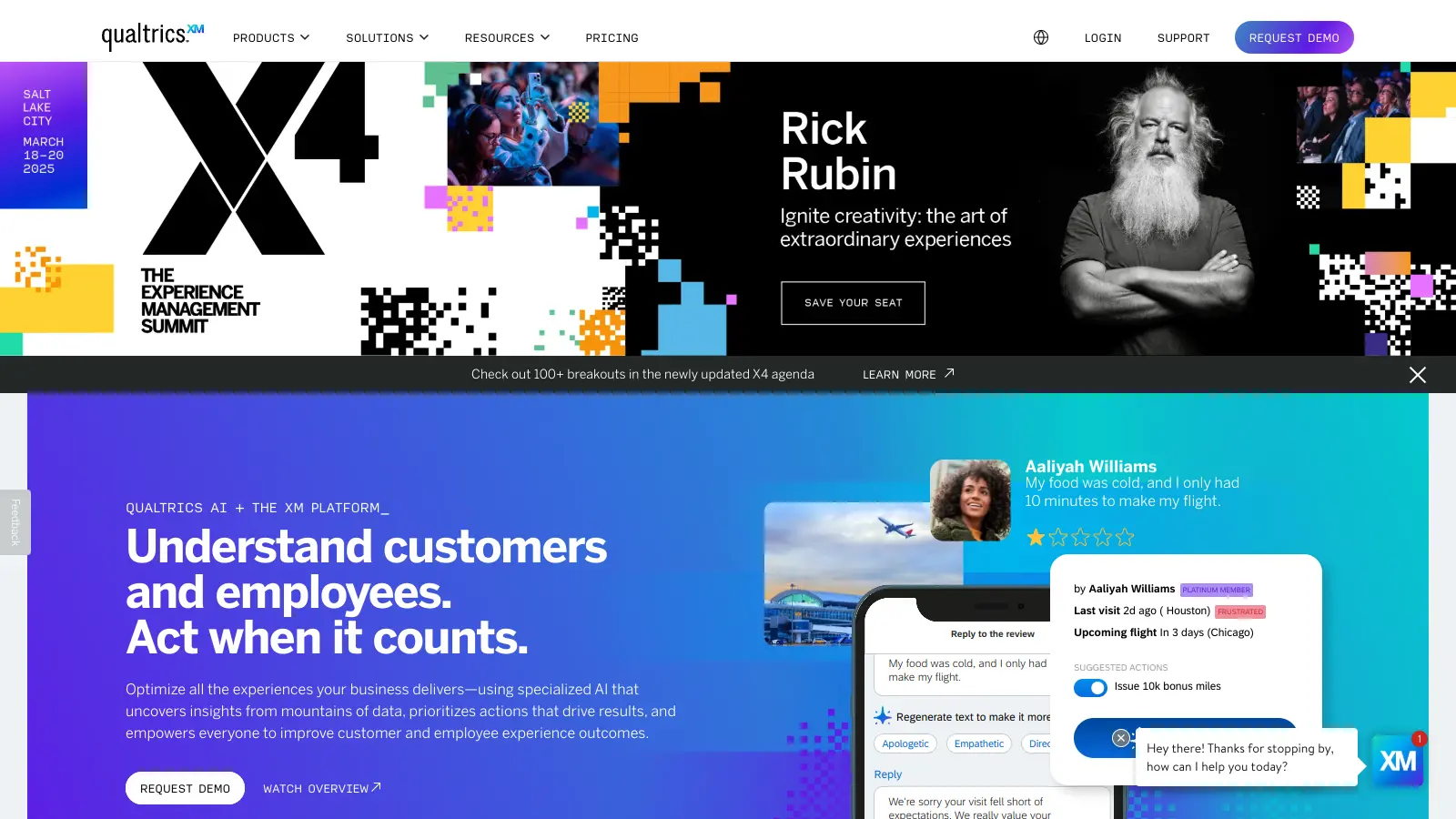
Qualtrics is an AI-powered experience management platform for creating, distributing, and analyzing surveys. It uses machine learning, natural language processing, and generative AI to collect and analyze feedback across surveys, video, calls, and chats. Features include customizable surveys, AI-driven analytics, and enterprise integrations.
best deal
Start Free Now: Get 500 survey responses with basic features on a single-user account

Typeform is an AI-powered form builder for creating interactive, conversational forms and surveys. It presents questions one at a time, leading to higher engagement and completion rates. With AI-generated form building, customizable templates, integrations with 500+ apps, and AI-powered insights that analyze responses, Typeform provides a solution for collecting data across industries.
best deal
Annual plans save 16% compared to monthly billing. Free plan available with 10 responses per month.

Heap is a digital insights platform that automatically captures all user interactions on websites and mobile apps to analyze user behavior, optimize funnels, and uncover insights. It uses AI-powered tools like CoPilot and Sense for natural language queries, plus data science features that detect friction points, helping product, marketing, and data teams make decisions without manual tracking setup.
best deal
Try Heap Free: Track 10,000 sessions/month with automatic capture, retroactive analysis, and 6 months data history (no credit card required)

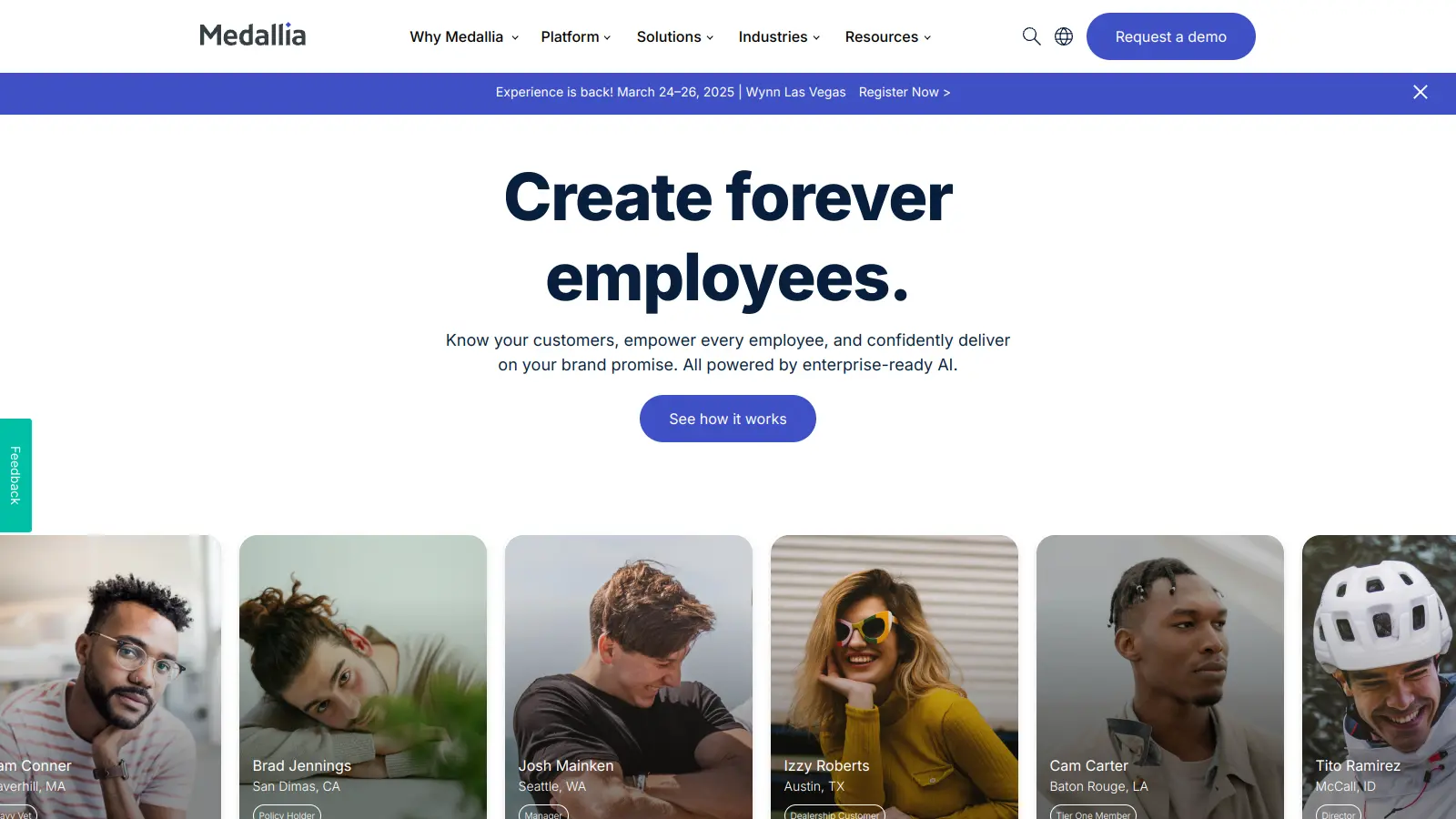
Medallia is an enterprise experience management platform that captures and analyzes customer and employee feedback across multiple channels. Using AI-driven analytics, it helps businesses improve satisfaction, loyalty, and performance by providing real-time insights and actionable recommendations.
best deal
Get your personalized enterprise quote and see Medallia in action

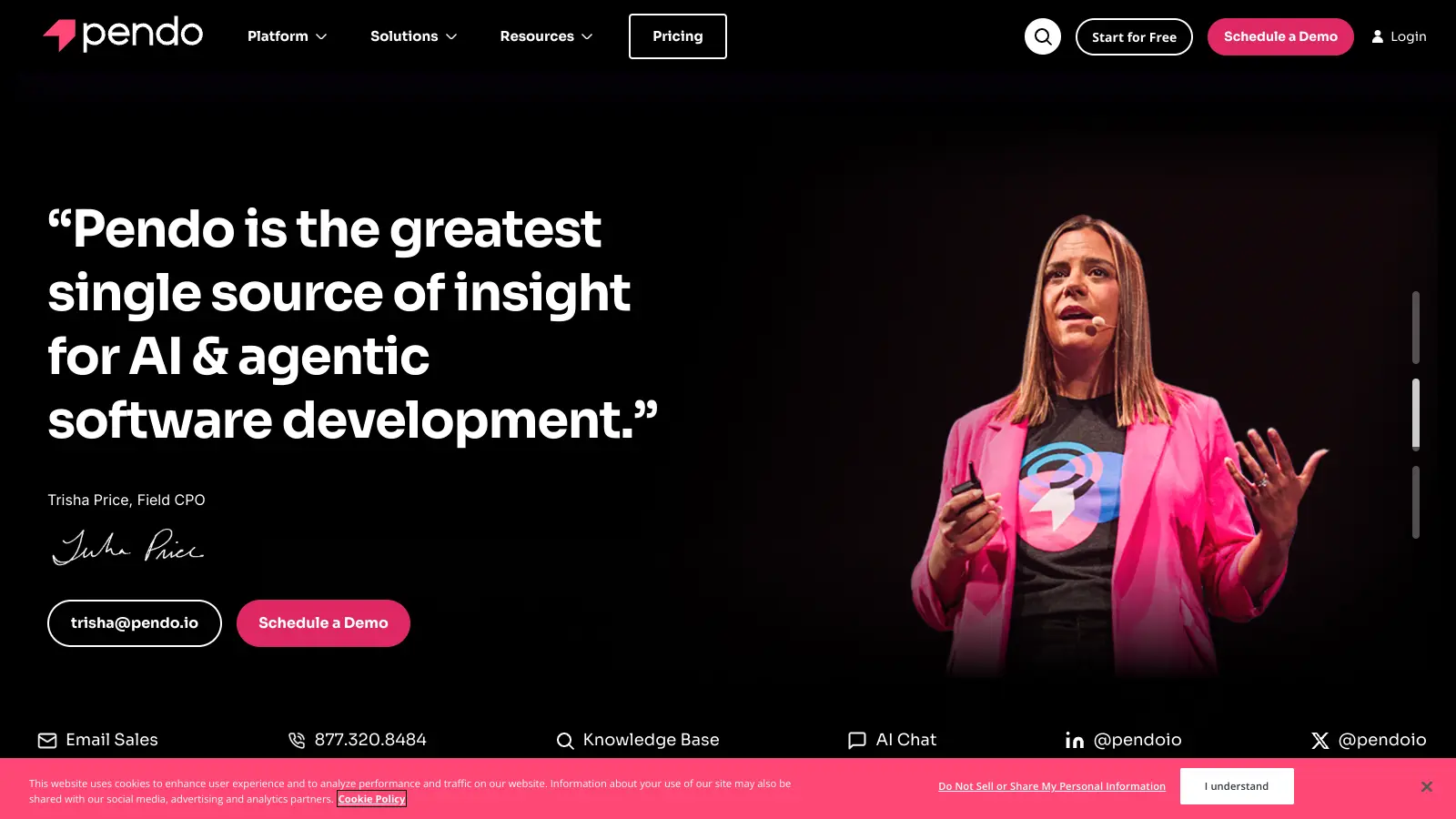
Pendo is a product analytics platform that helps businesses understand user behavior, improve product experiences, and drive growth. It tracks user interactions across web, mobile, and AI interfaces, offers session replays and AI-powered insights, and provides tools for in-app guides, user feedback, and roadmapping.
best deal
30-day free trial available, or try the Free Plan with analytics, guides, and surveys for up to 500 monthly users