Best Customer Satisfaction Software: 8 Top Picks (2026)
8 tools reviewedlast reviewed 20 march 2026
Editorial note:this was originally published in august of 2024
Customer satisfaction software covers a wide range of tools: post-interaction survey senders, NPS trackers, help desk platforms with built-in CSAT scoring, and AI-powered contact center analytics that review 100% of interactions automatically. The right choice depends on where you're collecting feedback, how many customers you're dealing with, and what you plan to do with the data.
This list covers eight tools worth considering in 2026, from lightweight survey tools suited to small teams to enterprise-grade platforms built for high-volume contact centers. Each entry includes honest pricing, real limitations, and a clear sense of who it's actually built for.
Tools were selected based on measurement depth, integration options, pricing transparency, and how well they handle the full feedback loop from collection through to action.
We collect first-hand reviews from people who use these tools every day — what works, what doesn't, whether it's worth paying for. We research pricing, features, and comparisons so that feedback has real context behind it. For this guide, tools were selected based on real-time feedback capabilities, omnichannel support integration, and measurable CSAT/NPS tracking features. Read our full research methodology.
help us improve this guide
tell us what you're looking for, what you're using now, and what caught your eye — takes 30 seconds.
What is customer satisfaction software?
Customer satisfaction software is any tool that helps businesses collect, measure, and act on feedback about how customers feel about their products, services, or support interactions. This includes CSAT surveys, NPS trackers, help desk platforms with built-in rating systems, and AI analytics tools that analyze call recordings and chat transcripts for sentiment signals.
The core problem these tools solve is that businesses typically have no systematic way to know whether customers are happy unless something goes wrong. Customer satisfaction software creates a structured feedback loop so teams can spot issues early, benchmark performance over time, and prioritize improvements based on real data.
These tools are used across customer service, product, and marketing teams. Support managers use them to measure agent performance. Product teams use them to track satisfaction after feature releases. Growth teams use CSAT and NPS data to identify churn risk and expansion opportunities.
AI-native customer service platform with built-in satisfaction tracking.
SaaS companies using conversational support
PaidFrom $29/mo
our top pick
1
Delighted
Purpose-built CSAT, NPS, and CES survey tool for CX teams.
Freemium
Best for · CX teams wanting fast CSAT and NPS setupPricing · From $17/mo
Delighted is a focused feedback platform that lets teams send CSAT, NPS, and CES surveys across email, SMS, web, and in-app channels. It calculates scores automatically, surfaces trends in a real-time dashboard, and supports conditional follow-up questions to understand why customers rated the way they did. It's owned by Qualtrics but operates as a standalone product with a simpler setup than enterprise survey platforms.
Established survey platform with AI-assisted analysis and 200+ integrations.
Freemium
Best for · Teams that already use survey workflows across departmentsPricing · From $25/mo
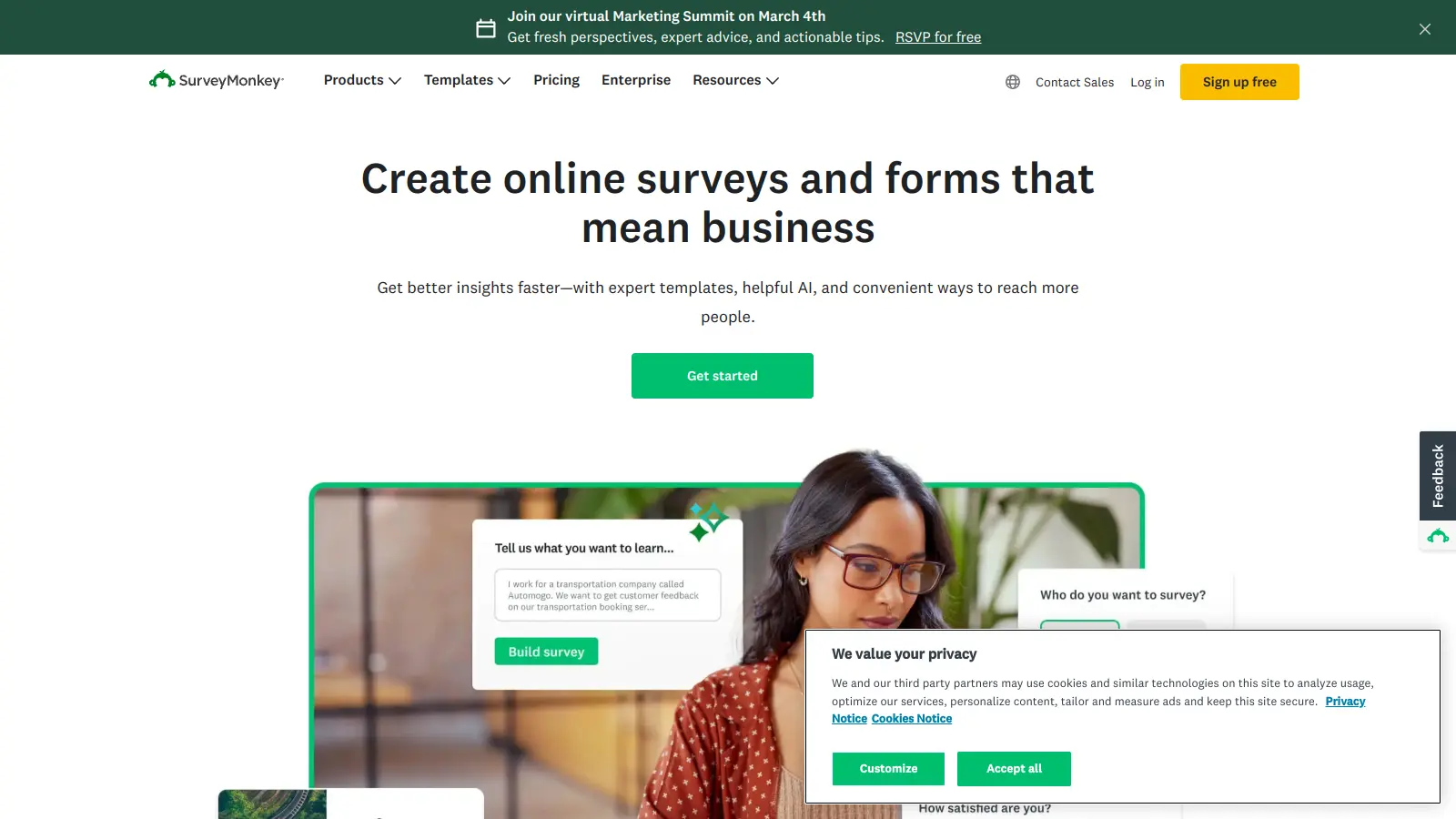
SurveyMonkey is one of the most widely used survey platforms, with templates specifically for CSAT and NPS measurement. Its AI features can surface trends and themes from open-ended responses without manual coding. The platform supports multilingual surveys, advanced logic branching, and connects to over 200 tools via its integration marketplace.
Pros
✓Large template library including CSAT and NPS formats
✓AI-assisted theme detection in open responses
✓200+ native integrations
Cons
✗Free plan limits responses to 10 per survey
✗Interface feels dated compared to newer competitors
Multi-channel feedback tool with 40+ native integrations and AI analysis.
Freemium
Best for · SaaS product and CX teams using HubSpot or IntercomPricing · From $99/mo
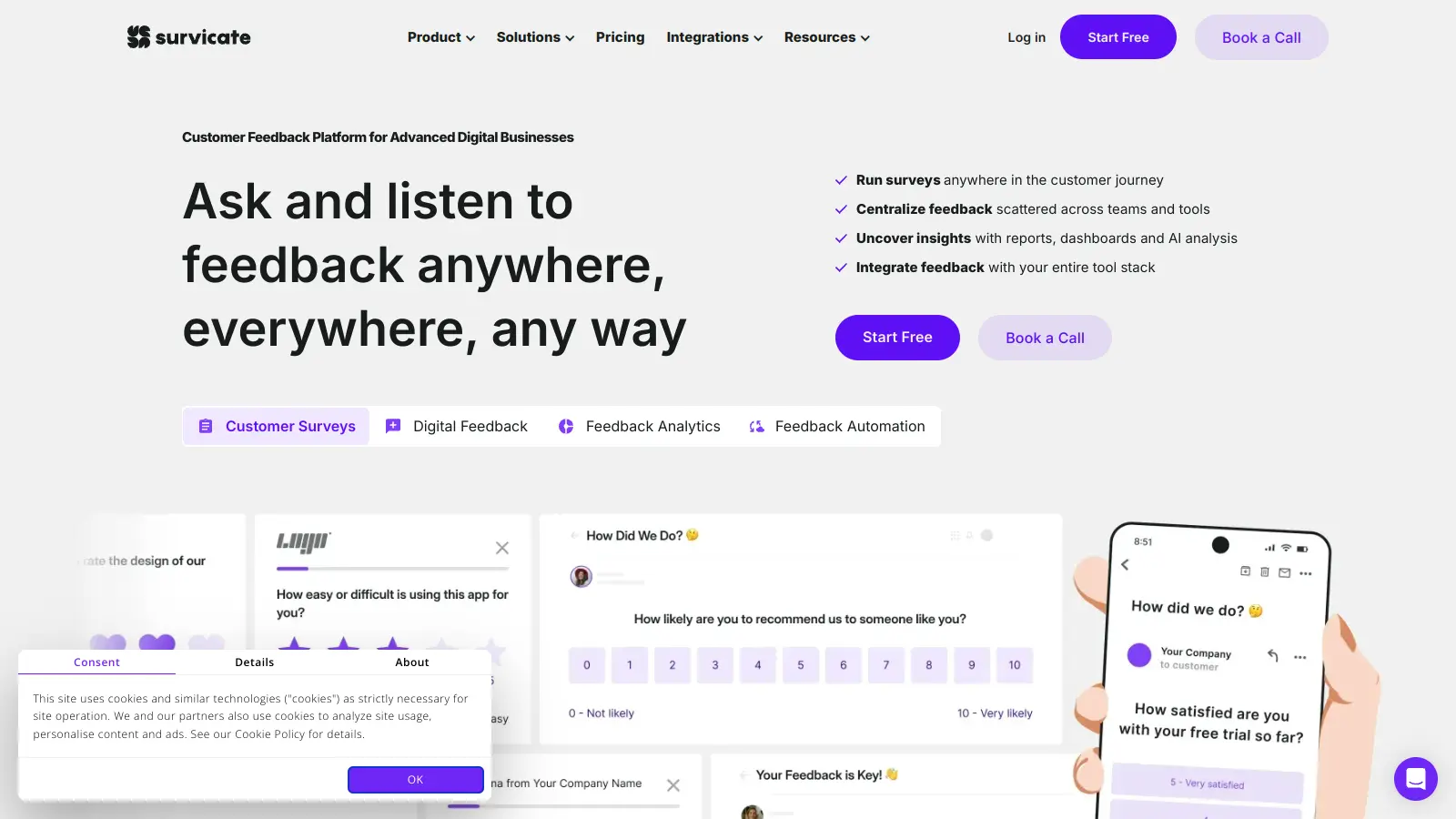
Survicate collects feedback across email, web, in-product, and mobile channels, and routes responses into your existing CRM or helpdesk via 40+ native integrations including HubSpot, Intercom, and Zendesk. It supports NPS, CSAT, CES, and custom survey formats. The AI layer can detect patterns across responses and flag emerging issues without manual tagging.
Pros
✓40+ native integrations including HubSpot and Zendesk
✓Covers email, web, in-app, and mobile in one platform
Help desk platform with built-in CSAT tracking across all support channels.
Paid
Best for · Support teams that want CSAT built into their help deskPricing · From $55/agent/mo
Zendesk Suite is a full customer service platform that includes CSAT measurement as a core feature, automatically sending satisfaction surveys after ticket resolution. It tracks scores by agent, team, and time period, and surfaces low scores in reporting dashboards so managers can identify patterns. As a combined help desk and satisfaction tracking system, it removes the need to connect a separate survey tool to your support workflow.
Pros
✓CSAT surveys built natively into ticket workflow
✓Score reporting by agent and team out of the box
✓Covers email, chat, voice, and social in one platform
Cons
✗Expensive for small teams, especially at higher tiers
✗CSAT customization is limited compared to dedicated survey tools
AI-assisted help desk with CSAT tracking and a usable free tier.
Freemium
Best for · Small support teams needing free CSAT trackingPricing · Free plan available; paid from $15/agent/mo
Freshdesk is a customer support platform that includes automated CSAT surveys sent after ticket closure, with results visible in its reporting dashboard. It covers email, chat, phone, and social channels. The free plan supports unlimited agents, which is unusual in this category and makes it a practical starting point for small support teams that want satisfaction tracking without a per-seat cost.
Pros
✓Free plan includes unlimited agents
✓CSAT surveys sent automatically on ticket close
✓Covers email, chat, phone, and social channels
Cons
✗Advanced reporting and analytics require paid plans
✗CSAT customization options are basic compared to standalone survey tools
Conversational survey builder with high completion rates and flexible logic.
Freemium
Best for · Teams prioritising survey completion rates and designPricing · From $25/mo
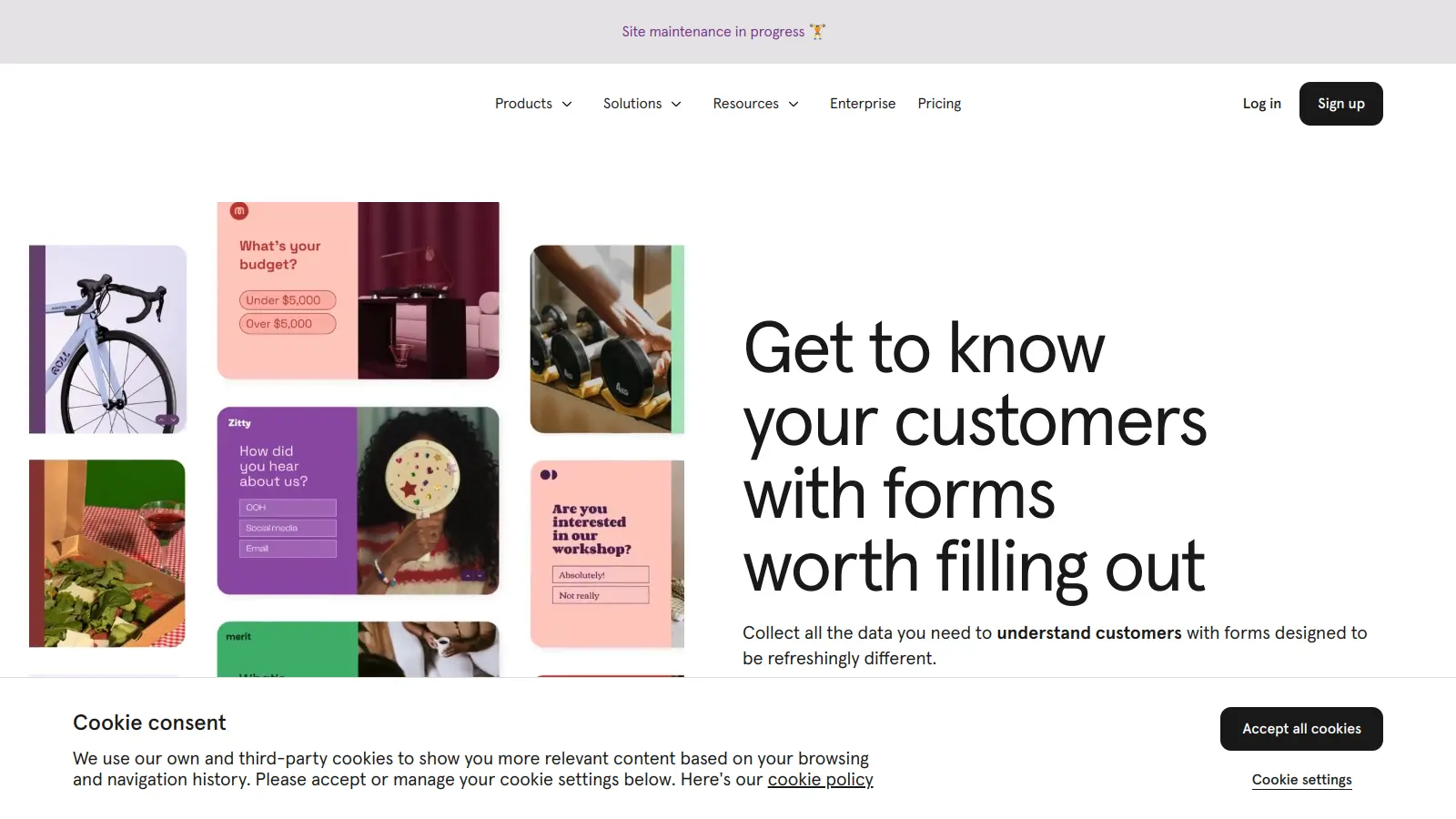
Typeform presents surveys one question at a time in a conversational format, which typically produces higher completion rates than traditional multi-question forms. It supports CSAT and NPS formats and includes conditional logic so follow-up questions adapt based on previous answers. Its real-time insights feature uses AI to surface themes and suggested next steps from response data.
Pros
✓Conversational format improves survey completion rates
✓Strong conditional logic for follow-up questions
✓Clean UI that's easy to set up without technical help
Cons
✗Not designed specifically for CSAT or NPS, so scoring setup requires manual configuration
AI contact center platform that scores 100% of interactions automatically.
Custom
Best for · Contact centers needing automated QA and satisfaction analyticsPricing · Pricing on request
Level AI analyzes every customer interaction, including calls, chats, and emails, using AI to score quality, detect sentiment, and surface satisfaction signals without relying on customers to fill out surveys. It covers QA automation, real-time agent assistance, and coaching workflows. Because it evaluates all interactions rather than a sample, it gives contact center managers a far more complete picture of what's driving satisfaction and churn than post-interaction surveys alone.
Pros
✓Analyzes 100% of interactions, not just survey respondents
✓Combines QA scoring, sentiment analysis, and agent coaching
✓Rated 4.7/5 on G2 with documented cost savings for enterprise users
Cons
✗No public pricing, likely out of range for small teams
✗Overkill for businesses not running a dedicated contact center
AI-native customer service platform with built-in satisfaction tracking.
Paid
Best for · SaaS companies using conversational supportPricing · From $29/mo
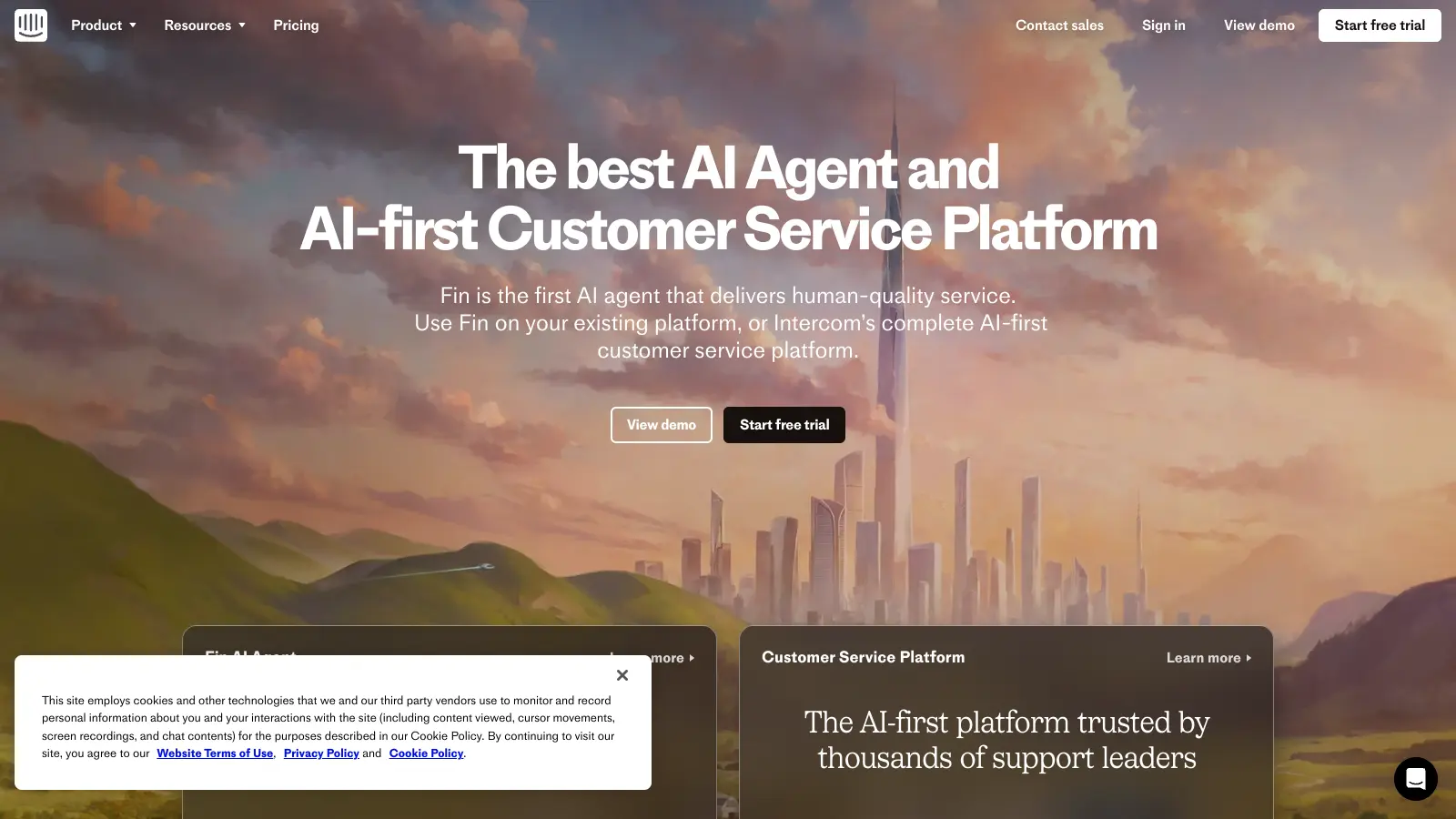
Intercom combines a conversational support inbox, an AI agent for deflection, and a helpdesk with satisfaction measurement built in. CSAT ratings are collected at the end of conversations and tied to the full conversation history, so support managers can see exactly what happened before a low score was given. It's designed primarily for SaaS companies with in-product and web-based support needs.
Pros
✓CSAT tied directly to full conversation history
✓AI agent handles deflection before human handoff
✓Strong in-product and web messenger experience
Cons
✗Pricing scales quickly with seat count and usage
✗Less suited to email-heavy or phone-based support teams
Survey tools capture explicit feedback when customers choose to respond, which typically means you hear disproportionately from very happy or very unhappy customers. If you need coverage across all interactions, look at tools like Delighted for targeted survey distribution or AI-based platforms like Level AI that analyze every interaction automatically.
Which channels do your customers use?
Some tools are built primarily for email surveys, others for in-app widgets, live chat, or post-call SMS. Make sure the tool supports the specific touchpoints where your customers interact with you, whether that's after a support ticket closes, at checkout, or mid-product session.
Do you need CSAT, NPS, or CES measurement?
CSAT measures satisfaction with a specific interaction. NPS measures overall brand loyalty. CES (Customer Effort Score) measures how easy it was to get something resolved. Many tools support all three, but some are optimized for one format. Clarify which metric your team will actually act on before committing.
How will the data connect to your existing stack?
Satisfaction data is most useful when it lives alongside your CRM, helpdesk, or analytics tools. Check native integrations with the specific platforms you already use, such as Zendesk, HubSpot, or Salesforce, rather than assuming a general integration list means your setup is covered.
What's the reporting and closing-the-loop capability?
Collecting scores is only half the job. Look for tools that let you segment responses by agent, product, or cohort, alert the right person when a low score comes in, and track whether satisfaction improves after changes are made. Tools without solid reporting tend to produce data that nobody acts on.
frequently asked questions
CSAT (Customer Satisfaction Score) measures how happy a customer was with a specific interaction, usually scored on a 1-5 scale immediately after the event. NPS (Net Promoter Score) asks how likely a customer is to recommend your company, capturing longer-term loyalty. CES (Customer Effort Score) measures how easy it was for a customer to get their issue resolved. Most mature CX programs track all three, but CSAT is usually the first metric teams start with.
Entry-level survey tools like Delighted start around $17 per month. Mid-tier platforms with more integrations and response volume, like SurveyMonkey or Survicate, typically run $25 to $99 per month depending on the plan. Full helpdesk platforms with CSAT built in, like Freshdesk or Zendesk, start around $15 to $55 per agent per month. Enterprise AI platforms like Level AI are priced on request and are typically suited to contact centers with significant interaction volume.
Free plans from tools like Freshdesk, SurveyMonkey, and Survicate are genuinely usable for small teams just starting out, but they usually cap the number of surveys sent, responses collected, or agents covered. If you're tracking satisfaction at scale or need integrations with your CRM, you'll hit those limits quickly and need a paid plan.
Collecting feedback without a clear process for acting on it. Teams often set up CSAT surveys, get responses, and then have no workflow for following up with unhappy customers or routing low scores to the right person. Before picking a tool, decide who owns the feedback loop and what triggers a response when scores drop.
Most of the major tools on this list have native integrations with at least one of those platforms. Delighted integrates with Salesforce and Slack. Survicate has native connections to HubSpot, Intercom, and Zendesk. SurveyMonkey connects to over 200 apps via its ecosystem. Always verify the specific integration works for your plan tier, as some connectors are locked to higher-tier subscriptions.
tools for humans
toolsforhumans editorial team
Reader ratings and community feedback shape every score. Since 2022, ToolsForHumans has helped 600,000+ people find software that holds up after launch. The picks here come from that.