tools for
humans

Miro reviews — what users really think

last reviewed 24 march 2026
how we review

We start with direct ratings from our readers, then look at what real users are saying in practitioner forums and community spaces. We pair that with search demand data and profession-level persona analysis.

full methodology →

Editorial note: this was originally published in september of 2024

quick take

  • Best for: distributed teams running agile ceremonies and design sprints
  • Skip if: you're a freelancer or team under 4 people doing occasional brainstorming
  • £Best value: Starter plan at $8/user/month with annual billing
4.0/ 5 — editorial rating

used Miro? we'd love to know your thoughts

reader ratings shape our score

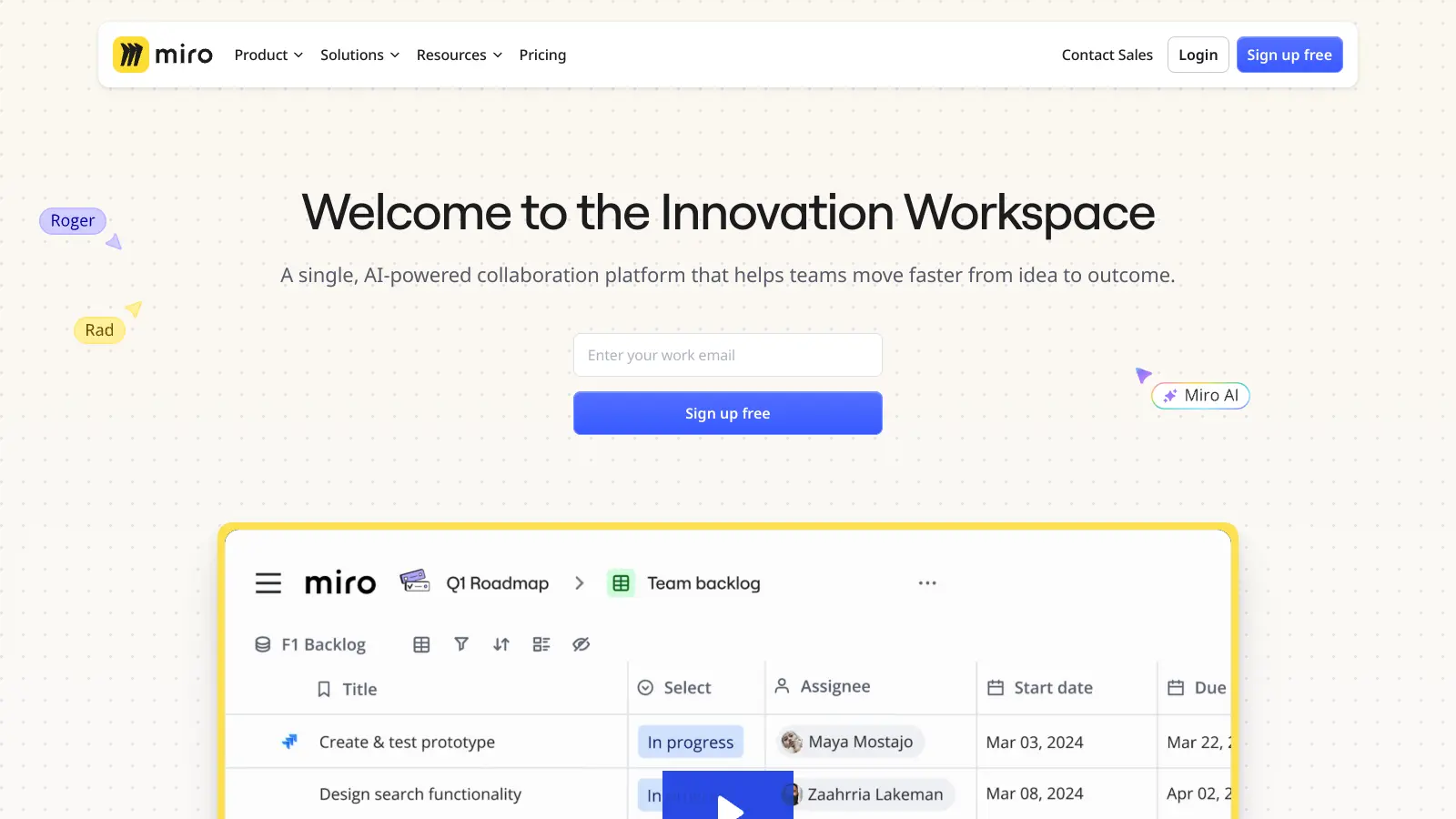
Miro is a digital whiteboard built for teams who need to think together without being in the same room. It's the most widely adopted visual collaboration tool in its category, with a template library deep enough to cover everything from sprint retrospectives to customer journey maps. Remote team project managers and UX designers get the most out of it. What it does better than alternatives is breadth: one canvas handles brainstorming, planning, stakeholder feedback, and async video walkthroughs. What it sacrifices is simplicity and cost efficiency for smaller teams who only need occasional whiteboarding.

Pricing starts free for up to three boards, with the Starter plan at $8 per user per month on annual billing. It runs in the browser and has desktop apps for Mac and Windows. The one thing to know before trying: the free plan is genuinely usable for testing, but the three-board cap will force a decision quickly if you're doing real work. If your team is already running Jira or Asana, the integrations alone make the Starter plan worth a monthly trial.

how popular is Miro?

monthly search interest

165k/mo now

066k132k200k2023202420252026
peak interest165k/moFeb 2026
searches now165k/moFeb 2026
1-month change— steadyvs prev month

Miro's search volume has held remarkably steady for four years, oscillating in a consistent band with dips in December and small peaks in September and January. This isn't a viral AI tool riding a hype cycle: it's a category staple with a stable, returning user base. The search pattern suggests it's already embedded in workflows rather than being actively evaluated by new users, which means you're picking up a mature, battle-tested product rather than a moving target.

who is Miro for?

Whether Miro's worth it depends a lot on how your team actually works. Pick your role below to see where it earns its price and where it doesn't.

overall sentiment

select your role to see what people like you are saying

Remote Team Project Manager

positive

If you're running distributed sprints and retros, Miro is hard to beat. The Jira integration keeps planning connected to delivery without switching tools, and the shared canvas cuts a real chunk out of your meeting time. Budget the Starter plan at $8 per user per month minimum: the free tier's three-board limit won't survive a real project cycle.

strengths

  • Real-time synchronous collaboration across time zones reduces meeting overhead
  • Seamless Jira and Asana integration keeps planning connected to development
  • Templates for sprint planning and retrospectives accelerate agile ceremonies
  • Shared canvas eliminates back-and-forth on email or chat

concerns

  • Pricing scales steeply as team size grows, making budget justification difficult
  • Performance degradation with large boards and many simultaneous editors impacts large team sprints
  • Learning curve for team adoption despite intuitive UI

what users are saying

For freelancers or very small teams doing occasional whiteboarding, you're paying for depth you won't use.

Independent reviews of Miro are broadly positive, with professional reviewers praising its infinite canvas, template library, and real-time collaboration. One editorial review describes it as 'highly capable' with 'a wonderful set of tools' and a 'fairly generous' free version. Project management reviewers consistently flag it as the go-to for visual collaboration in creative teams, design departments, and agile groups, particularly where visual brainstorming and journey mapping are central to the workflow. The criticism, where it surfaces, tends to be structural rather than about core functionality: the free plan's three-board limit and restricted exports frustrate users who want to test it properly before committing, and the pricing ladder jumps quickly once you need more than the basics.

Our take: Miro is genuinely the best whiteboard collaboration tool on the market for distributed teams that run regular workshops, design sprints, or agile ceremonies. At $8 per user per month on the Starter plan, it's reasonably priced for teams of four or more. The problem is below that threshold: for freelancers or very small teams doing occasional whiteboarding, you're paying for depth you won't use, and tools like FigJam or Lucidspark do the basics for less. Don't buy the Business plan at $16 per user until your team is actually using integrations like Jira, SSO, and advanced export regularly. The free plan is usable enough to genuinely test whether Miro fits before you pay.
features

  • Digital Whiteboard Collaboration: Infinite canvas where teams brainstorm, plan, and organize ideas in real-time, with multiple users contributing simultaneously.
  • Asynchronous Collaboration Tools: Use Talktrack to create video guides for feedback and decisions without scheduling live meetings, with 5 Talktracks included on the free plan.
  • AI-Powered Content Generation: Generate ideas, topics, diagrams, mind maps, code blocks, user stories, and acceptance criteria from selected content using natural language prompts, with auto-structuring of freeform notes into workflows or diagrams.
  • Visual Project Management: Manage projects with Kanban boards, Agile workflows, and integrations with 250+ apps including Jira, Slack, Google Drive, and Zoom.
  • Smart Content Recognition: Convert handwritten notes, sketches, and images into editable digital assets, with AI clustering of sticky notes by theme or keyword.
  • Enterprise-Grade Security: Single Sign-On, SCIM, analytics, and AI Workflows on Enterprise plans.
  • AI Sidekicks and Teammates: AI teammates work directly on your shared canvas, providing real-time smart suggestions through natural language commands.

pricing

  • Free Plan offers unlimited team members, 3 editable boards, 5 Talktracks, premade templates, basic attention management, core integrations, and 10 AI credits per team per month.
  • Starter Plan at $8 per user monthly with annual billing or $10 monthly provides unlimited editable boards, private sharing, full collaboration tools, and integrations.
  • Business Plan priced at $16 per user monthly with annual billing or $20 monthly includes all Starter plan features plus Miro AI, advanced controls, and team workspaces.
  • Enterprise Plan offers custom pricing with SSO, SCIM, enterprise-grade security, analytics, AI Workflows, and dedicated support for organizations with advanced requirements.

frequently asked questions

For teams of five or more running regular sprints, workshops, or cross-functional planning sessions, yes. The Starter plan at $8 per user per month unlocks unlimited boards and private sharing, which is the threshold where Miro becomes genuinely useful. Below five people, or for occasional use, it's hard to justify: FigJam and Lucidspark cover simple whiteboarding at lower cost, and the free tier's three-board limit makes serious work awkward.

Remote team project managers running agile ceremonies get the most out of it, especially with the Jira and Asana integrations. UX and product designers use it heavily for customer journey mapping, design sprints, and async stakeholder feedback. It's a poor fit for solo freelancers or micro-teams doing occasional brainstorming.

Two that come up consistently: board performance degrades noticeably when you have large canvases with many simultaneous editors, which is a problem right when you need it most during big team sessions. And the free plan's export restrictions mean you can't easily share deliverables with external clients without upgrading. There are also recurring formatting bugs with shapes and arrows that disrupt design work.

If your team lives in Figma, FigJam is the natural choice for design workshops and simple brainstorming. It's cheaper and integrates tightly with your existing design files. Choose Miro when you need the full breadth: sprint planning, roadmaps, project tracking integrations, Talktrack async video, and a broader template library. FigJam is the better option for design-focused teams. Miro is the better option for cross-functional teams where engineering, product, and design all share the same canvas.

Only partially. Guests can view and comment on boards without a paid seat, which helps for client feedback. But if you're a freelancer expecting to collaborate with clients who don't have Miro, the async video features and sharing links work reasonably well on free. The real value only shows when your core working team is all in the same canvas simultaneously.

tools for
humans

toolsforhumans editorial team

Reader ratings and community feedback shape every score. Since 2022, ToolsForHumans has helped 600,000+ people find software that holds up after launch. how we research →

other tools to check out

Notion screenshot
online buzz673k
trend (1M)18%
3.8

Notion

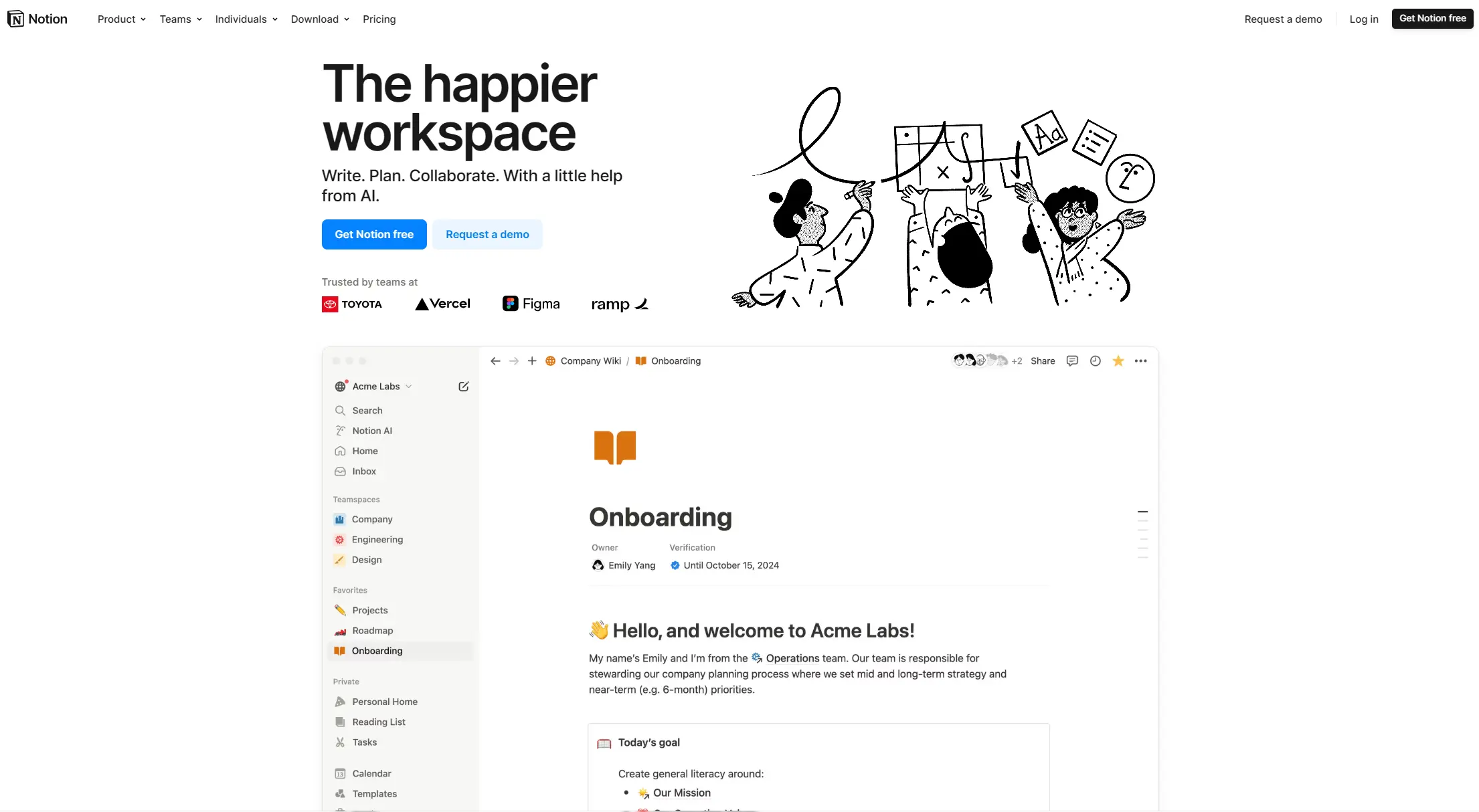
Notion is an all-in-one productivity platform for creating, organizing, and collaborating on notes, databases, wikis, tasks, and projects. Its block-based system allows for customizable workspaces with multiple views like tables, boards, and calendars. It includes AI assistance, collaboration features, and integrations with other tools.

best deal

Annual billing saves 20% across all paid plans—Plus starts at $8/month with unlimited blocks and file uploads

Smartsheet screenshot
online buzz301k
trend (1M)steady
3.8

Smartsheet

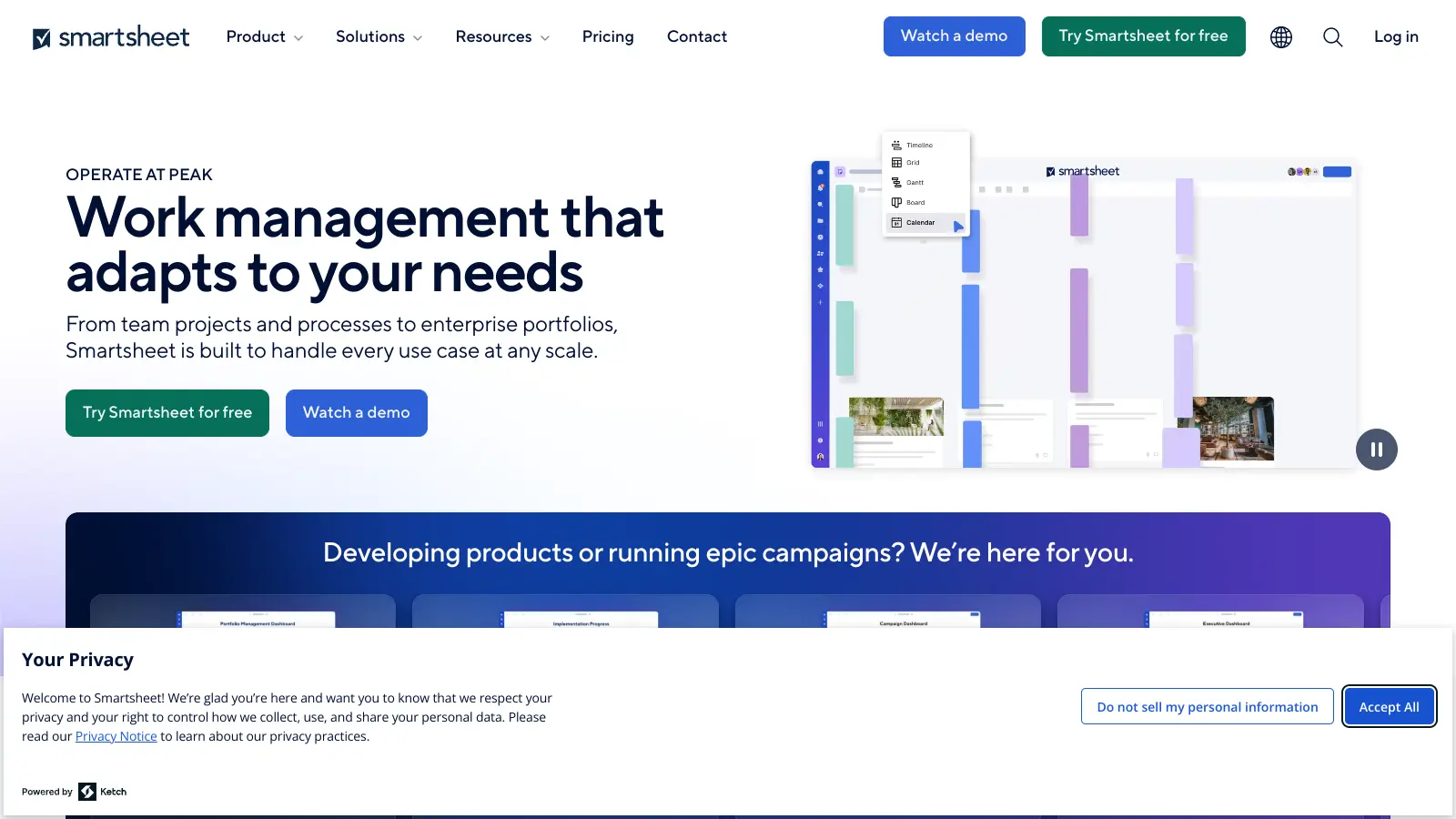
Smartsheet is a cloud-based work management platform with a spreadsheet-like interface designed to help teams collaborate, manage projects, and track workflows. It offers features like Gantt charts, real-time collaboration, workflow automation, AI-powered formula generation and data analysis, customizable reporting, and integrations with third-party tools. The platform provides scalable solutions for businesses of different sizes, from individual users to large enterprises, with pricing plans ranging from free to custom enterprise options.

best deal

Get a 30-day free trial to test all features before committing to a paid plan

Polaris screenshot
online buzz301k
trend (1M)steady
3.5

Polaris

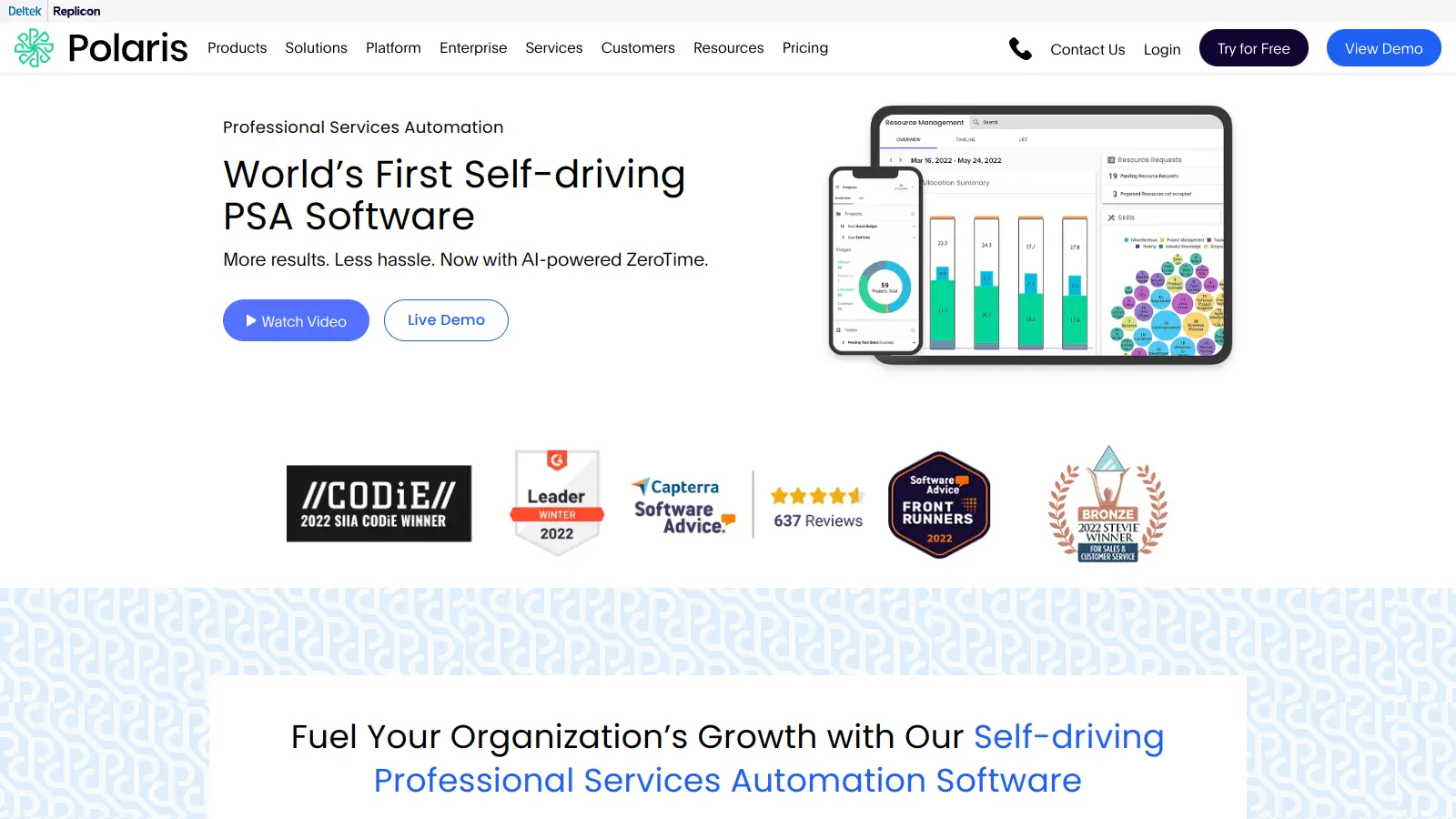
Polaris PSA is a professional services automation tool that helps service organizations manage projects, resources, and financials. It uses AI to capture real-time data, provide recommendations, and enable proactive decision-making. The platform includes automatic time tracking, resource matching, and integrations with Salesforce and 100+ work apps.

best deal

Free Trial Available for Polaris PSA

Asana screenshot
online buzz301k
trend (1M)steady
3.8

Asana

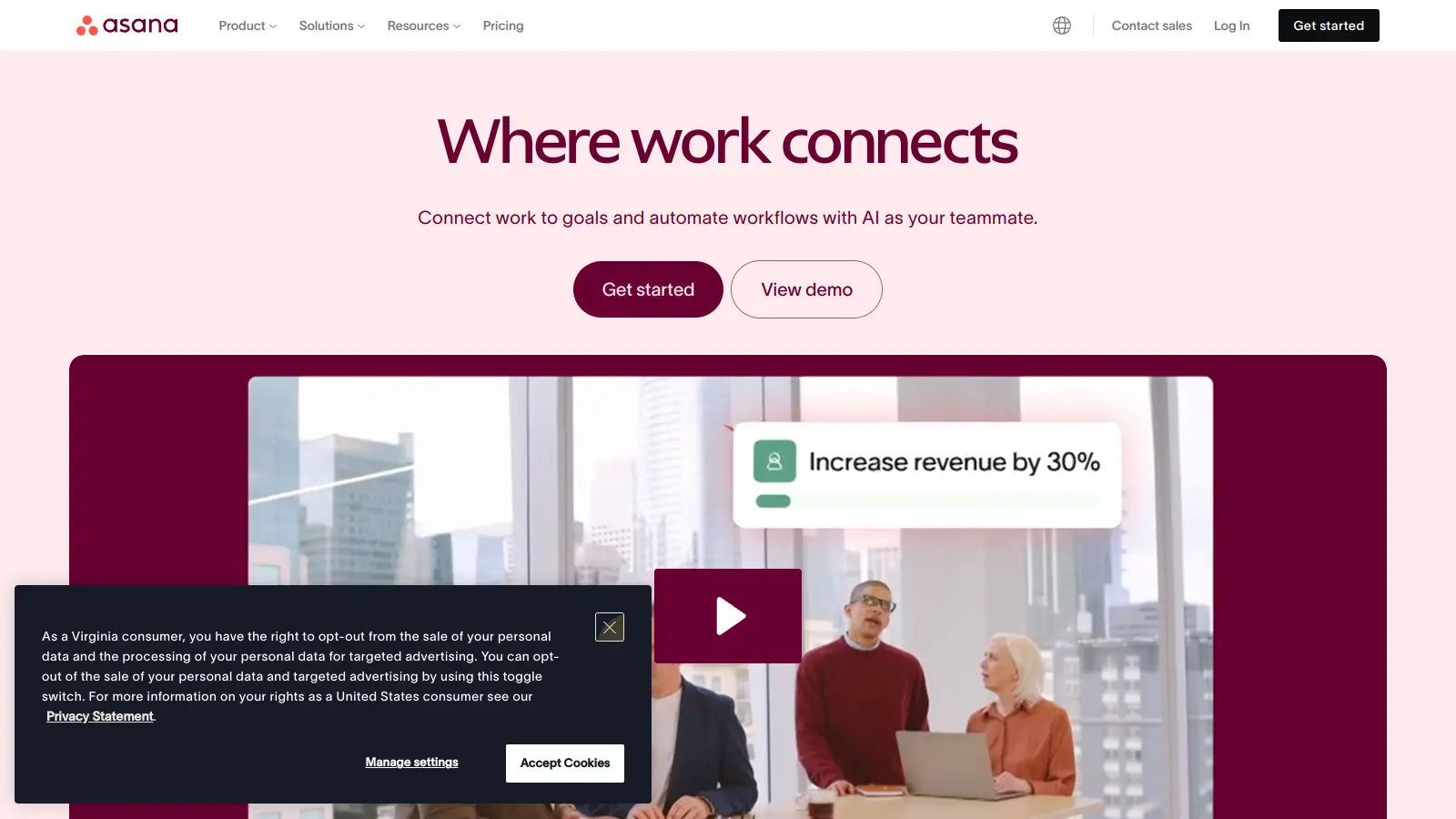
Asana is a web-based project management platform that enables teams to organize, track, and collaborate on work. It offers task management, multiple project views (lists, boards, timelines), AI features for automating workflows, communication tools, progress tracking, and integrations with over 200 apps. Available in free and paid plans, Asana supports teams of all sizes with flexible project visualization options.

best deal

Try Asana free with the Personal Plan for 1-2 users, or start a 30-day free trial of paid plans to test AI features and advanced workflows.

ClickUp screenshot
online buzz246k
trend (1M)steady
3.8

ClickUp

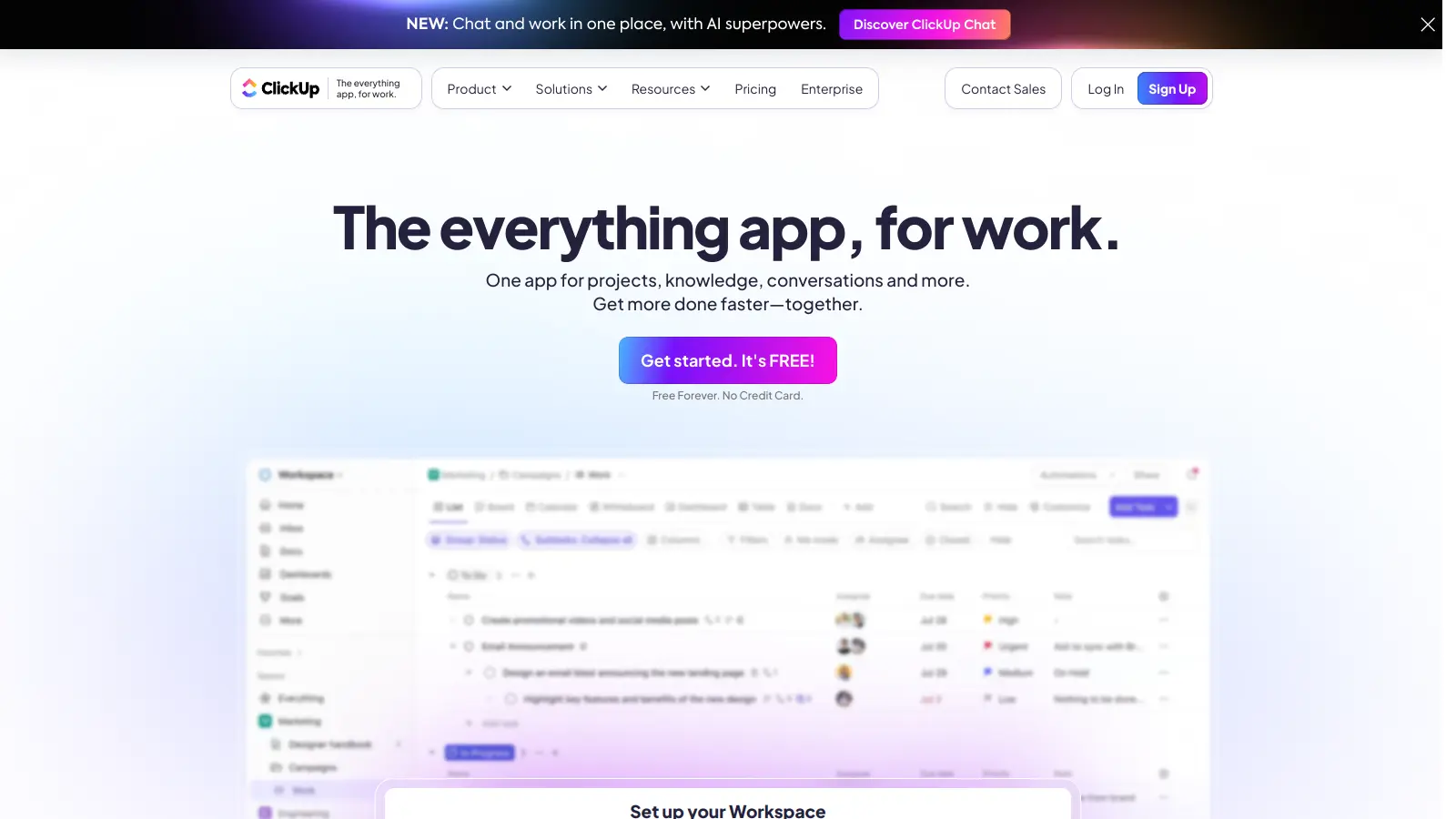
ClickUp is a comprehensive cloud-based project management platform that combines task management, collaboration tools, automation, and AI assistance in one workspace. It offers customizable features including multiple project views, document creation, time tracking, and AI-powered workflow automation across multiple pricing tiers, catering to teams of all sizes from freelancers to large enterprises.

best deal

Try ClickUp's Free Forever Plan with unlimited tasks and collaborative docs, or get a 14-day free trial on paid plans!

Trello screenshot
online buzz246k
trend (1M)steady
3.5

Trello

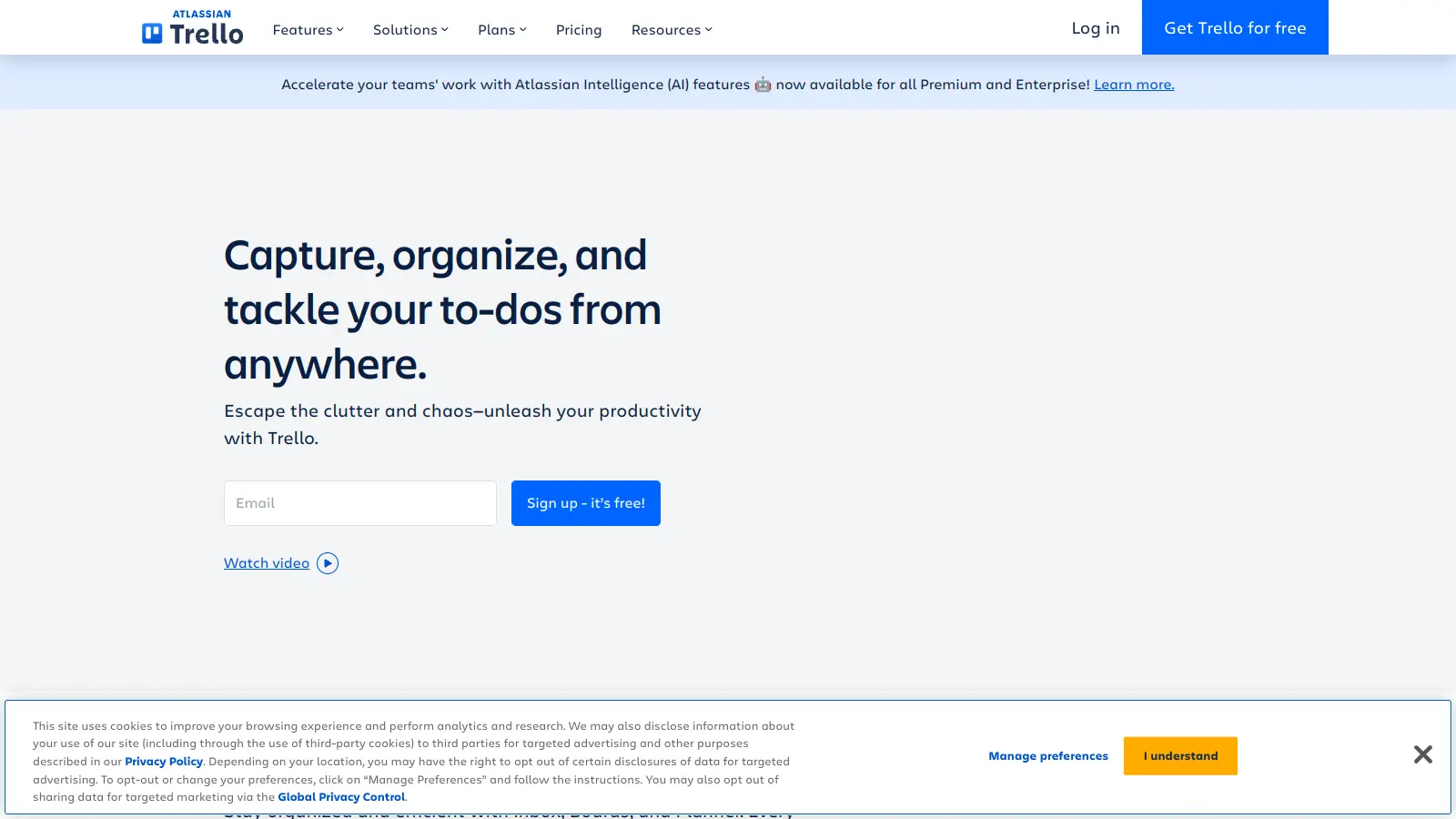
Trello is a project management tool that helps teams organize work using boards, lists, and cards. It enables users to track tasks, collaborate in real-time, and manage workflows visually. With features like task assignment, due dates, integrations, and AI-powered automation, Trello supports project management for teams of any size, from small startups to large enterprises.

best deal

Try Trello Free - Organize projects with unlimited cards, lists, and members across up to 10 boards per workspace