No Code Development Platform+2 more

Jotform
best deal
Try the Starter plan for free with 5 forms, 100 monthly submissions, and all standard features. Nonprofits and educational institutions get 50% off paid plans.
redeem now
Jotform
best deal
Try the Starter plan for free with 5 forms, 100 monthly submissions, and all standard features. Nonprofits and educational institutions get 50% off paid plans.
redeem nowWe start with direct ratings from our readers, then look at what real users are saying in practitioner forums and community spaces. We pair that with search demand data and profession-level persona analysis.
Editorial note: this was originally published in august of 2024
quick take
based on real user feedback, community sentiment, pricing value, and fit for target audience. see our full methodology
used Jotform? we'd love to know your thoughts
reader ratings shape our score
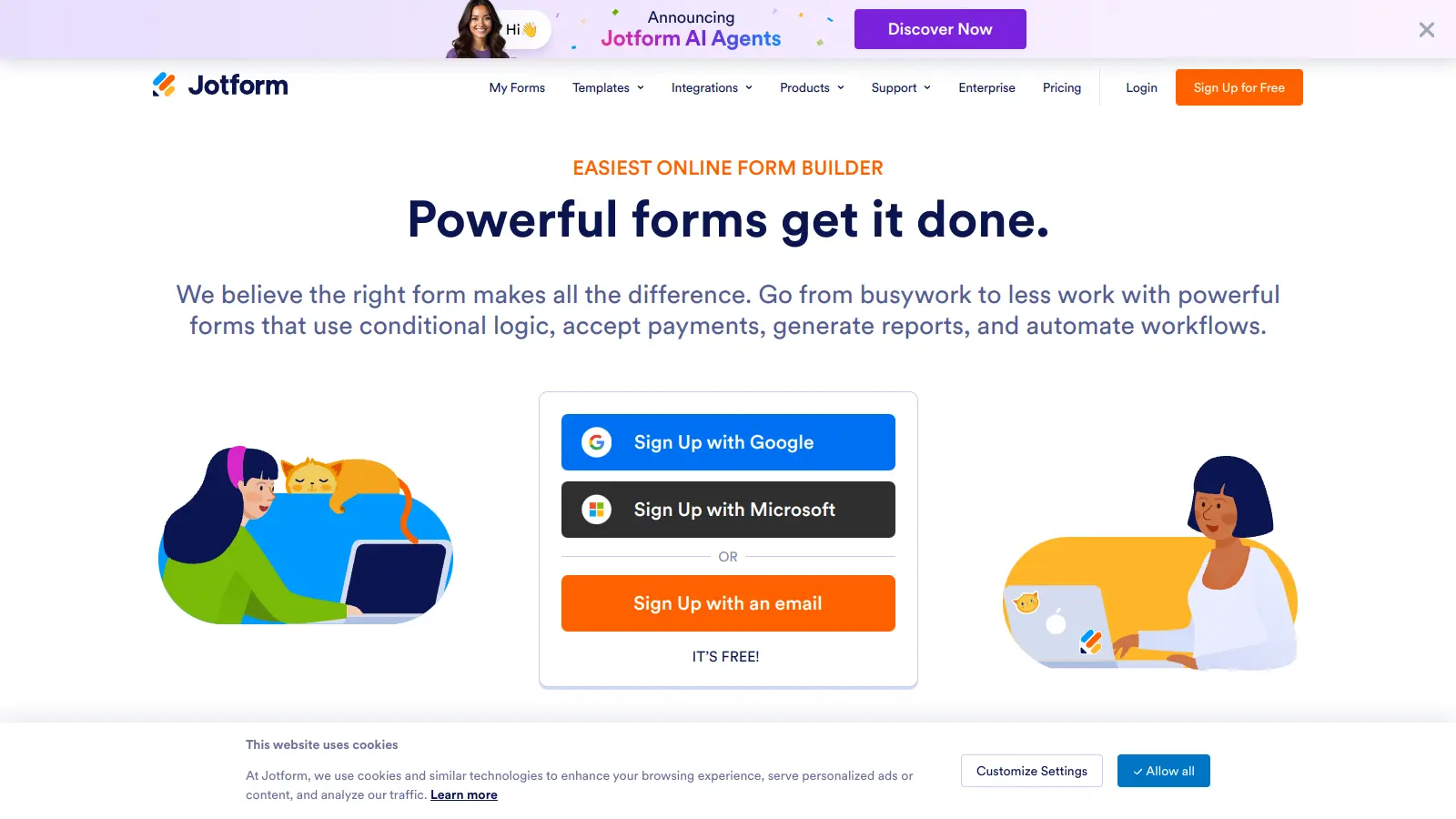
Jotform is an online form builder with over 10,000 templates, built-in payment processing, and HIPAA compliance baked in at the plan level rather than as an add-on. Small business owners and event planners get the most out of it because those groups need forms that actually do things: collect payments, route registrations, and integrate with CRM and email tools without writing a line of code. The tradeoff is that the conditional logic is weaker than competitors at the same price point, so if your forms need complex branching, you'll hit the ceiling faster than the feature list suggests.
The free Starter plan caps you at 5 forms and 100 monthly submissions, which is enough to evaluate whether it fits your workflow but not enough to run a real operation on. Paid plans start at $34/month billed annually. It runs in the browser with no software to install, and forms are mobile-responsive by default. If you're currently stitching together a separate form tool, payment processor, and data collection spreadsheet, Jotform is worth the subscription: it handles all three in one place.
monthly search interest
246k/mo now
Jotform's search volume has grown steadily from around 135,000 monthly searches in 2022 to consistently hitting 246,000 through 2025 and into early 2026. This isn't a viral spike: it's a slow, sustained climb that suggests a growing core user base rather than hype-driven traffic. The product has clearly found its audience and kept it, which makes it a safe tool to build a workflow around.
Whether Jotform is worth it depends heavily on what you're actually asking the forms to do. Pick your role below to see where it earns its keep and where it falls short.
overall sentiment
select your role to see what people like you are saying
Small Business Owner
positiveIf you need a payment form live this week without touching code, Jotform gets you there. The Bronze plan at $34/month covers payment integrations, mobile-responsive forms, and enough submissions for most small operations. The free tier is too limited for regular use, but the paid entry point is fair compared to what you'd spend building the same thing separately.
strengths
concerns
Event Planner
positiveJotform handles event registration and ticket payment in one place, which genuinely reduces the multi-platform juggling most event workflows require. The template library gives you a working starting point in minutes. The weak spot is conditional logic: if your registration flow needs complex branching based on attendee type or ticket selection, you'll need workarounds that slow things down.
strengths
concerns
Healthcare Administrator
mixedJotform's HIPAA compliance is real and makes it a viable option for patient intake without buying a specialized healthcare platform. For non-technical admin staff, the form builder is genuinely easy to use. The hesitation is uptime: intermittent reliability issues that are acceptable in most contexts are harder to accept when patients are trying to submit intake forms before an appointment.
strengths
concerns
Nonprofit Fundraiser
positiveJotform's donation form templates and payment integrations cover the basics well, and the pricing is accessible for organizations watching every dollar. The Starter plan's branding and submission limits will push most active fundraising campaigns to a paid tier, but $34/month for a functional donation and volunteer intake system is reasonable. Conditional logic limits can be an issue for multi-step donor journeys.
strengths
concerns
“What really stands out for me is how customizable and professional the forms look compared to Google Forms. The drag-and-drop editor is super intuitive, and I can set up payme”
Reddit r/jotform
The community discussion around Jotform is broadly positive, particularly from non-technical users who needed to move fast. In one Reddit thread in r/jotform, a user building a custom corporate order tracking system described Jotform as essential to keeping their workflow together, specifically calling out that they aren't a tech person and still got it working. A separate thread from someone who'd tried multiple platforms settled on Jotform as their default for everything from client intake to order submissions, citing the drag-and-drop editor and how much more professional the output looks compared to Google Forms. The most consistent praise across both posts centres on the same two things: the interface is genuinely easy, and the forms look like something a real business built. Critical feedback in these threads is lighter, but the concerns that do surface align with what comes up more broadly: pricing jumps feel steep as soon as you need features beyond the basics, and conditional logic is weaker than you'd expect for the price you end up paying at higher tiers.
The free Starter plan is worth trying first, but its 5-form limit and 100 monthly submissions cap means most active users hit the wall quickly. The Bronze plan at $34/month billed annually is a fair price if you're processing payments or need HIPAA compliance, since alternatives for those specific features cost more or require separate tools. If you only need basic data collection with no payment processing, Google Forms is free and probably sufficient.
Small business owners who need payment forms without hiring a developer get the most value here. Event planners managing registrations and ticket payments also fit well, since the platform consolidates what would otherwise be multiple tools. Healthcare administrators benefit from the HIPAA-compliant infrastructure, though they should test the uptime reliability before committing for patient-critical workflows.
Conditional logic is the most common complaint from power users: the branching capabilities lag behind what competitors offer, and complex routing scenarios require awkward workarounds. Branding customization is locked behind higher tiers, which means lower-plan forms carry Jotform's own branding. There have also been reported uptime inconsistencies that are manageable for most use cases but become a real problem if your forms are running during a live event or a critical healthcare workflow.
Google Forms is free, simple, and integrates neatly with Google Workspace. If you need payment processing, HIPAA compliance, or forms that look like something a real business designed, Google Forms can't deliver those. Jotform is the right choice when the form itself has to do real work: collect money, route patients, register event attendees. Stick with Google Forms for internal surveys, quick polls, or anything where cost is the deciding factor.
Jotform does offer HIPAA-compliant infrastructure, which is the baseline requirement for patient data. The concern is uptime: there are reports of intermittent downtime that, in most business contexts, is a mild inconvenience but in a healthcare setting creates real problems. If patient intake is time-sensitive or high-volume, test the reliability thoroughly before going live, and have a backup intake process ready. For lower-stakes administrative tasks like appointment scheduling, the risk is more manageable.
toolsforhumans editorial team
Reader ratings and community feedback shape every score. Since 2022, ToolsForHumans has helped 600,000+ people find software that holds up after launch. how we research →

Shopify is an e-commerce platform that enables businesses of all sizes to create, manage, and grow online stores. It offers tools for store creation, product management, payment processing, and multichannel sales, supporting both online and in-person transactions. With customizable themes, extensive app integrations, and flexible pricing plans, Shopify caters to entrepreneurs, small businesses, and global brands.
best deal
Get Shopify Basic for $29/month when billed annually (regularly $39/month)

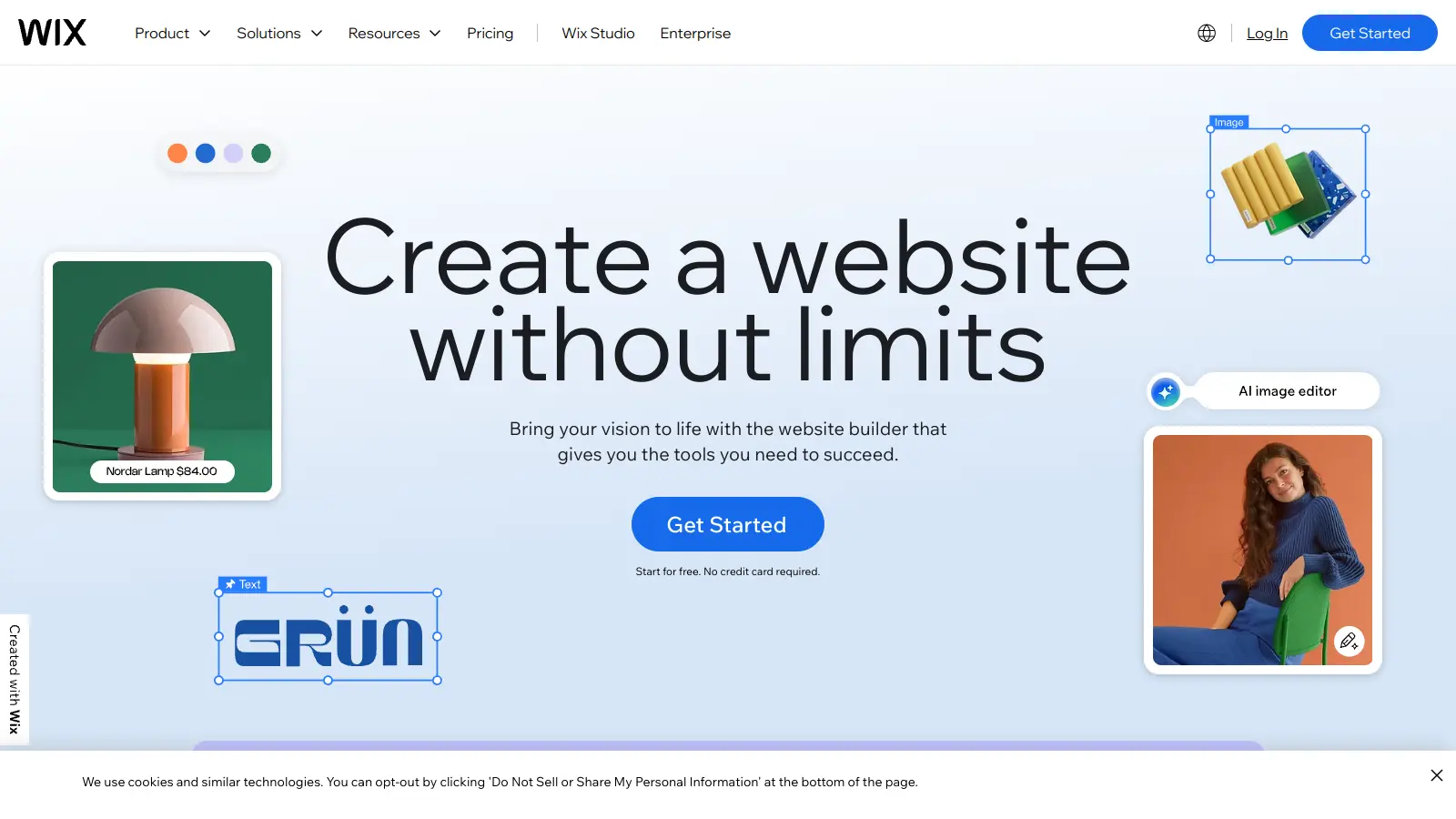
Wix is a website builder that lets individuals and businesses create professional websites without coding. It offers drag-and-drop editing, AI-powered design tools, templates, and features for e-commerce, SEO, and marketing. Pricing ranges from free to enterprise-level, covering everything from personal portfolios to online stores.
best deal
Get 50% off Wix annual plans, with Light Plan starting at $17/month

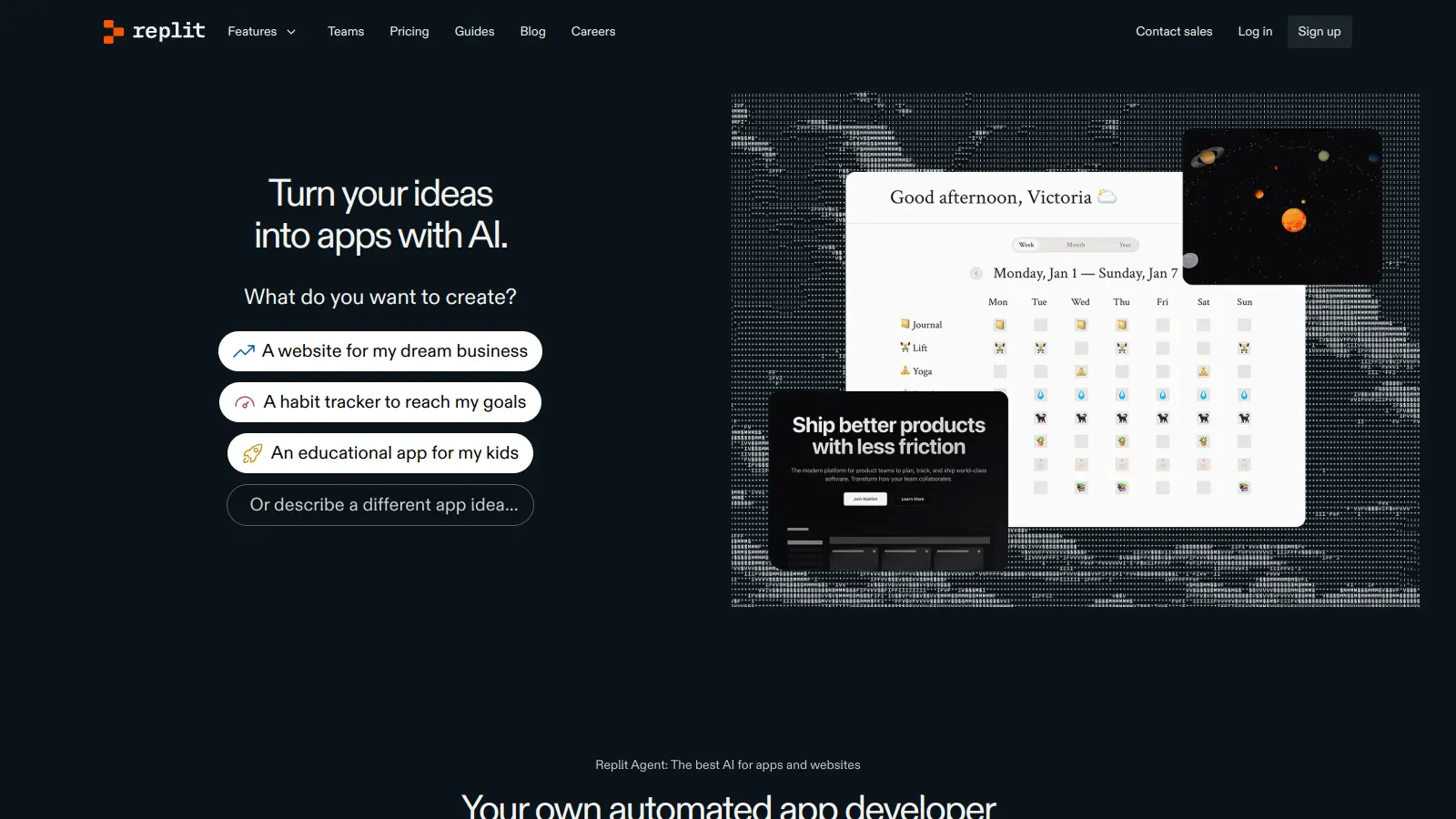
Replit is an AI-powered cloud-based integrated development environment (IDE) that supports over 50 programming languages, offering real-time collaboration, AI assistance through Replit Agent that can build complete applications from natural language prompts, and direct application deployment. It provides a platform for developers of all levels, enabling coding, project sharing, and hosting directly from a web browser with pricing tiers from free to enterprise-level plans.
best deal
Teams users automatically upgraded to Pro at no additional cost for remainder of term; yearly Teams subscribers get $100 monthly credits free until term ends

Dora is a no-code AI platform that enables users to create dynamic, 3D animated websites without coding knowledge. It offers AI-driven design assistance, seamless 3D integration, and a user-friendly interface similar to Figma. The tool allows for easy customization, responsive design, and incorporates advanced features like automated design tasks and 3D model incorporation, making web design more accessible to beginners and professionals alike.
best deal
Try Dora AI Free - Unlimited projects with AI website building, 3D animation, and responsive design.

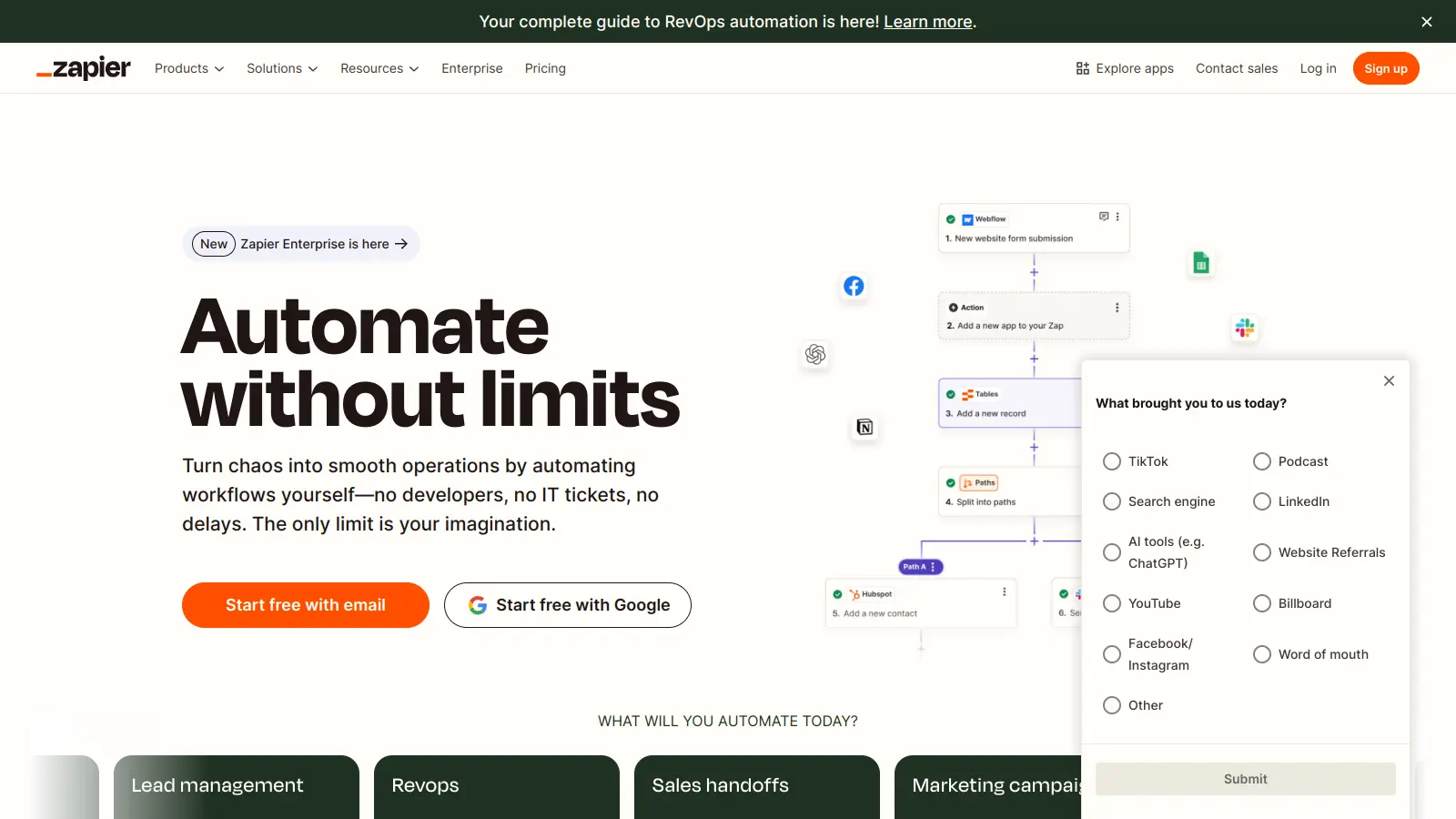
Zapier is a no-code automation platform that connects over 8,000 apps, enabling users to create automated workflows called "Zaps" without coding. It integrates different services, automating repetitive tasks through customizable triggers, multi-step processes, and real-time data transfer. Pricing ranges from free to enterprise tiers.
best deal
Start automating with unlimited Zaps and 100 monthly tasks free – no credit card needed

Poe is an AI chatbot aggregator platform developed by Quora that allows users to interact with AI models from companies like OpenAI and Anthropic. It enables users to access and switch between different chatbots, create custom AI assistants, and offers both free and paid subscription plans. The platform supports web and mobile interfaces, provides monetization options for bot creators, and serves as a centralized hub for AI interactions.
best deal
Try Poe Free: 100 daily messages with ChatGPT, Claude & more AI assistants in one place