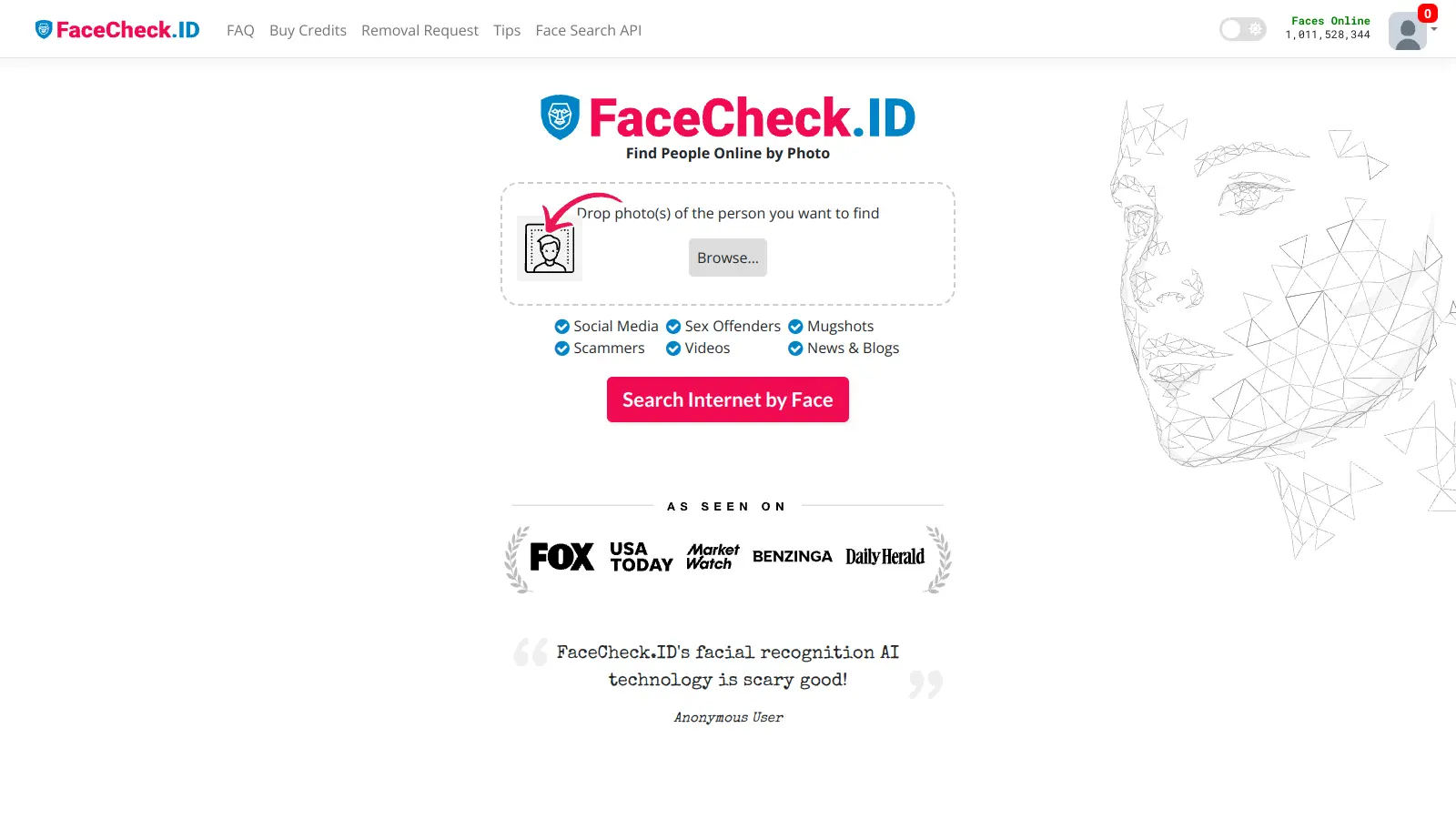
FaceCheck.ID helps people verify identities and protect themselves online through AI-powered facial recognition technology. This tool searches through a vast database of over 763 million images across social media, news sites, blogs, mugshot databases, sex offender registries, and criminal news to find matches for uploaded photos.
Users can quickly check if someone's online presence matches their claimed identity—useful for spotting scams or verifying professional connections before you meet them. The platform delivers results in seconds and includes criminal background checks and safety alerts. No login required, so users can search anonymously.
The service works on a credit-based system, with packages starting from 36 credits at $6. Each search costs 3 credits, and users can pay using PayPal or various cryptocurrencies. Basic searches with limited results are free, but unlocking full links and details requires credits. Premium options unlock additional capabilities like continuous automated searches and Telegram alerts.
Like any facial recognition tool, accuracy varies based on image quality and lighting conditions.
FaceCheck.ID works for individuals and professionals who need to verify online identities and protect themselves from scams or misrepresentation.
The tool gets the most use in cybersecurity, human resources, property management, and online dating industries where identity verification directly impacts safety and business outcomes.
Public discussion about FaceCheck.ID is limited compared to more established facial recognition tools. There isn't much independent user feedback available on major review platforms, tech forums, or social media where you'd typically find detailed opinions about security and privacy tools. Some users mention the interface is easy to use and appreciate the 24/7 support team, while others are skeptical about crypto-only payment options for higher tiers and raise data privacy concerns common with facial recognition technology.
The limited online buzz might mean FaceCheck.ID serves a niche market, or users keep their facial recognition searches private. The free basic search option lets you test the platform's accuracy before committing to a paid credit package.
FaceCheck ID's AI can match faces even from low-quality or altered images by analyzing features like eye spacing and jawline. Results come with confidence scores so you know how reliable each match is. Accuracy depends on lighting conditions, photo angles, and image quality. The tool performs best with clear, front-facing photos.
Will FaceCheck ID store my photos after I upload them?No, FaceCheck ID doesn't store your uploaded photos or personal data. The service only keeps the facial recognition results, not the actual images you submit. This protects your privacy while still allowing the tool to perform its identity verification functions. You can also search anonymously without creating an account or logging in.
How much does it cost to use FaceCheck ID?FaceCheck ID works on a credit system where each search costs 3 credits. You can try a basic search for free, but unlocking full links requires credits. Credit packages start from "Just a Peek" with 36 credits for $6, up to "The Professional" with 10,000 credits for $597. Credits expire based on your plan, ranging from 2 days to 1 year. They accept PayPal and cryptocurrency payments.
Can FaceCheck ID find someone from any photo I upload?Not always. FaceCheck ID searches over 763 million public images, but it can only find matches if the person appears in their database of social media, news sites, blogs, mugshot records, and criminal registries. If someone has limited online presence or no public photos, FaceCheck ID won't find them. Recent images or profiles might not be indexed yet. The tool works best with clear, front-facing photos.
Is using FaceCheck ID legal for checking on people?Using FaceCheck ID is generally legal for personal safety purposes like verifying online contacts, but be careful about how you use it. The tool is meant for safety and fraud prevention, not stalking or harassment. Different countries have privacy laws that might restrict facial recognition technology. Respect people's privacy and make sure you're not violating any local laws when using facial recognition tools for personal research.


Our newsletter comes with exclusive discounts, trials and practical insights from within the industry