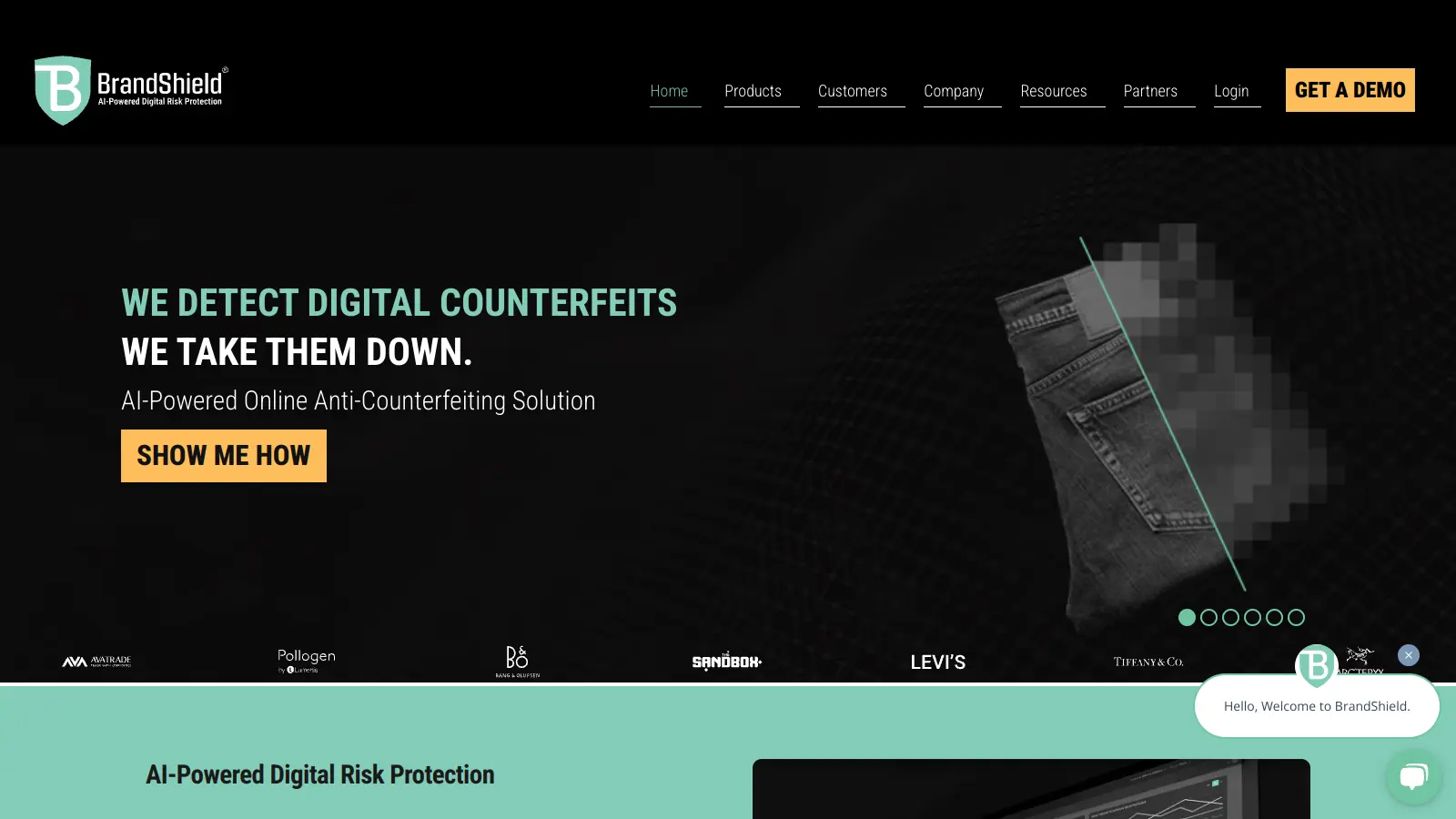
BrandShield offers digital risk protection solutions that help companies defend against online threats. The platform combines AI and machine learning to spot and remove dangers across websites, social media platforms, mobile applications, marketplaces, app stores, and the dark web.
The tool monitors for counterfeit products, phishing attempts, and AI-generated scams. Its monitoring system scans multiple channels to detect trademark infringements, fake websites, fraudulent ads, deepfakes, and unauthorized sellers that could harm a company's reputation.
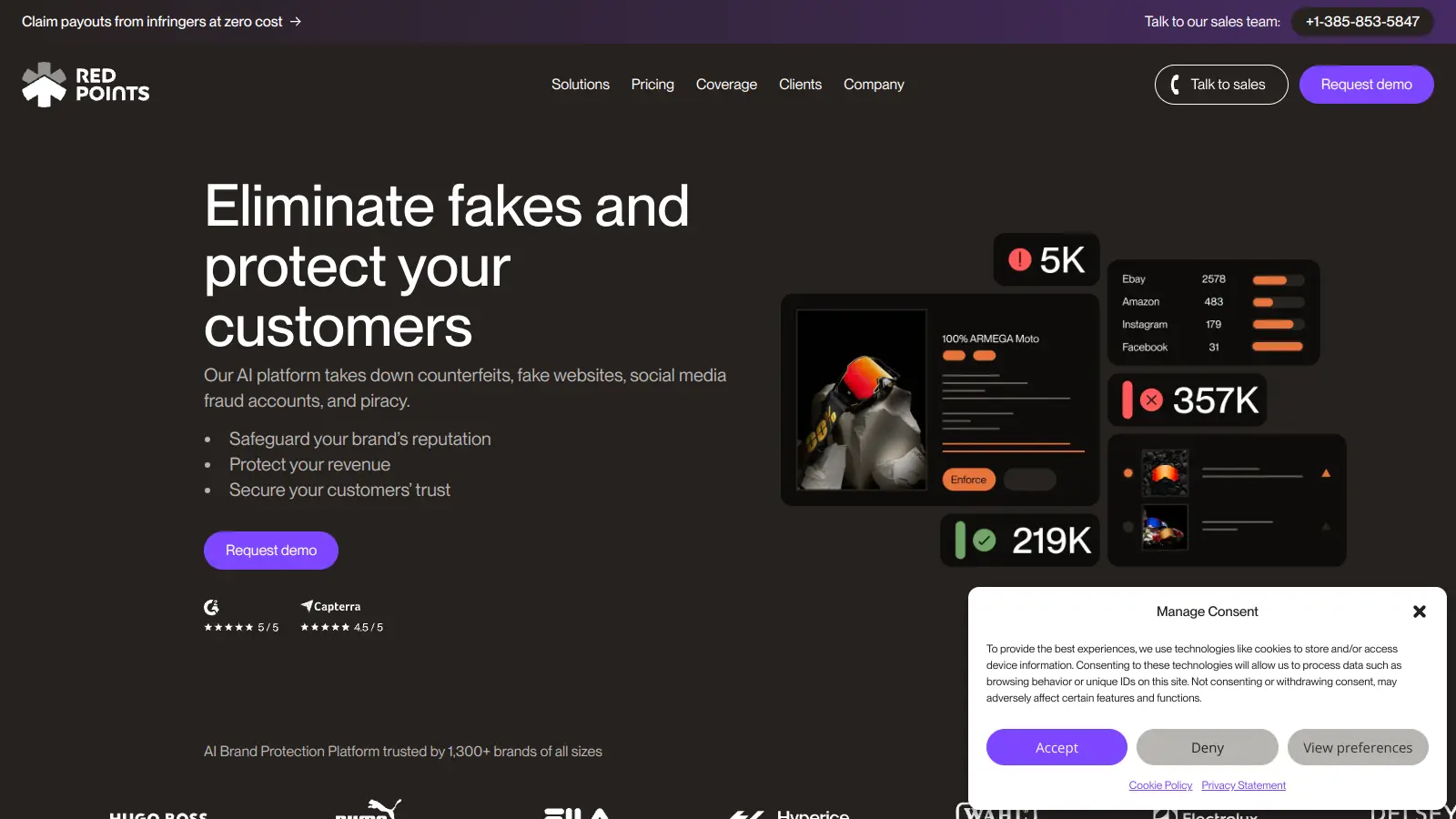
The platform includes a dashboard where users can track potential threats and manage enforcement actions. BrandShield uses a hybrid AI-human model where automated systems handle detection and prioritization while analysts verify threats. The platform offers one-click takedowns and 24/7 support, with customers reporting rapid counterfeit removals within days of onboarding. Notable clients include Levi's, New Balance, and Dropbox.
Pricing isn't publicly listed and requires contacting their sales team for a custom quote. The service offers packages tailored to company size, threat profile, and enforcement needs. BrandShield ranked #1 for brand protection on G2 in Fall 2025, with users praising its interface and responsive support team.
BrandShield works for businesses and organizations that need protection against online threats to their brand identity and reputation. The platform automatically detects counterfeit products, phishing attempts, and trademark infringements across websites, social media, and mobile apps.
BrandShield typically serves industries with valuable intellectual property or strong consumer trust components, including fashion retailers, technology companies, consumer goods manufacturers, and financial services.
BrandShield has strong positive feedback from users on G2, where it ranked #1 for brand protection in Fall 2025. Users consistently praise the platform for being intuitive and easy to use, with a quick learning curve that adapts to their needs. The support team gets high marks for being responsive and proactive, going above and beyond to help customers. Users report fast implementation, rapid counterfeit takedowns within days of onboarding, and AI-powered scoring that helps prioritize threats. Many customers describe great value compared to other brand protection options and appreciate the partnership-like relationship with account managers.
The platform has limited effectiveness at detecting SMS-based phishing scams and many online offers are not detected. Some mention the absence of purchase tests and ergonomic issues with the interface table. A few reviews point to limitations like one scan per month in certain cases. Users acknowledge that no system catches all threats, though they consider this an expected limitation rather than a major flaw.
BrandShield 3.0 comes with major upgrades to both the user interface and backend infrastructure. The new version works faster, covers more platforms, and can protect more brands without reducing protection quality for existing customers. You'll notice a completely redesigned dashboard that makes it easier to spot and take action against online threats. The system is also built to scale better as your brand protection needs grow.
How does BrandShield handle phishing and counterfeit detection?BrandShield uses AI including LLMs, NLP, AI.ClusterX threat clustering, and image detection to scan across domains, social media, marketplaces, app stores, and the dark web to find threats. The system looks for patterns that match known scams and also identifies new threat types as they emerge, including AI-generated scams and deepfakes. Once it spots a problem - like a fake website using your brand name or counterfeit products being sold - it flags these for review through a hybrid AI-human model where analysts verify threats before the platform can start the automated takedown process.
Can I handle takedowns myself or does BrandShield do it for me?You have both options! BrandShield offers one-click takedowns and automated enforcement with 24/7 support. If you want them to do the work, their team will manage the entire process from detection to removal. If you prefer to be hands-on, the platform gives you tools to initiate and track takedowns yourself. Many customers mix both approaches depending on the type of threat and how complex the takedown might be.
Was BrandShield really responsible for taking down the entire Itch.io website?There was an incident where Itch.io (an indie game platform) was temporarily taken offline, but the full story isn't as simple as BrandShield taking down the entire site. According to available information, BrandShield's system flagged just one fan page for "Funko Fusion" on Itch.io. Both Funko and BrandShield have stated they only requested removal of that specific page, not the entire site. The domain registrar (iwantmyname) appears to have taken more extensive action than requested. This situation has raised questions about takedown procedures and communication between protection services, site owners, and domain registrars.
How user-friendly is BrandShield's interface for non-technical team members?Users consistently describe BrandShield as intuitive and easy to use with a quick learning curve. The dashboard presents threat information visually with clear metrics and action items. Team members without technical backgrounds can easily understand what threats exist, their severity, and what actions are needed. The system uses plain language rather than technical jargon, and common tasks like reviewing potential threats or approving takedown requests can be done with just a few clicks. Users report fast implementation and onboarding, with most new users getting comfortable with the basic functions in just a few days.

Our newsletter comes with exclusive discounts, trials and practical insights from within the industry