Ai Powered Contract Analysis Platform+2 more

Evisort
best deal
Request a Demo | Starting from $15k/year for AI-powered contract management
redeem now
Evisort
best deal
Request a Demo | Starting from $15k/year for AI-powered contract management
redeem nowWe start with direct ratings from our readers, then look at what real users are saying in practitioner forums and community spaces. We pair that with search demand data and profession-level persona analysis.
Editorial note: this was originally published in june of 2024
quick take
based on real user feedback, community sentiment, pricing value, and fit for target audience. see our full methodology
used Evisort? we'd love to know your thoughts
reader ratings shape our score
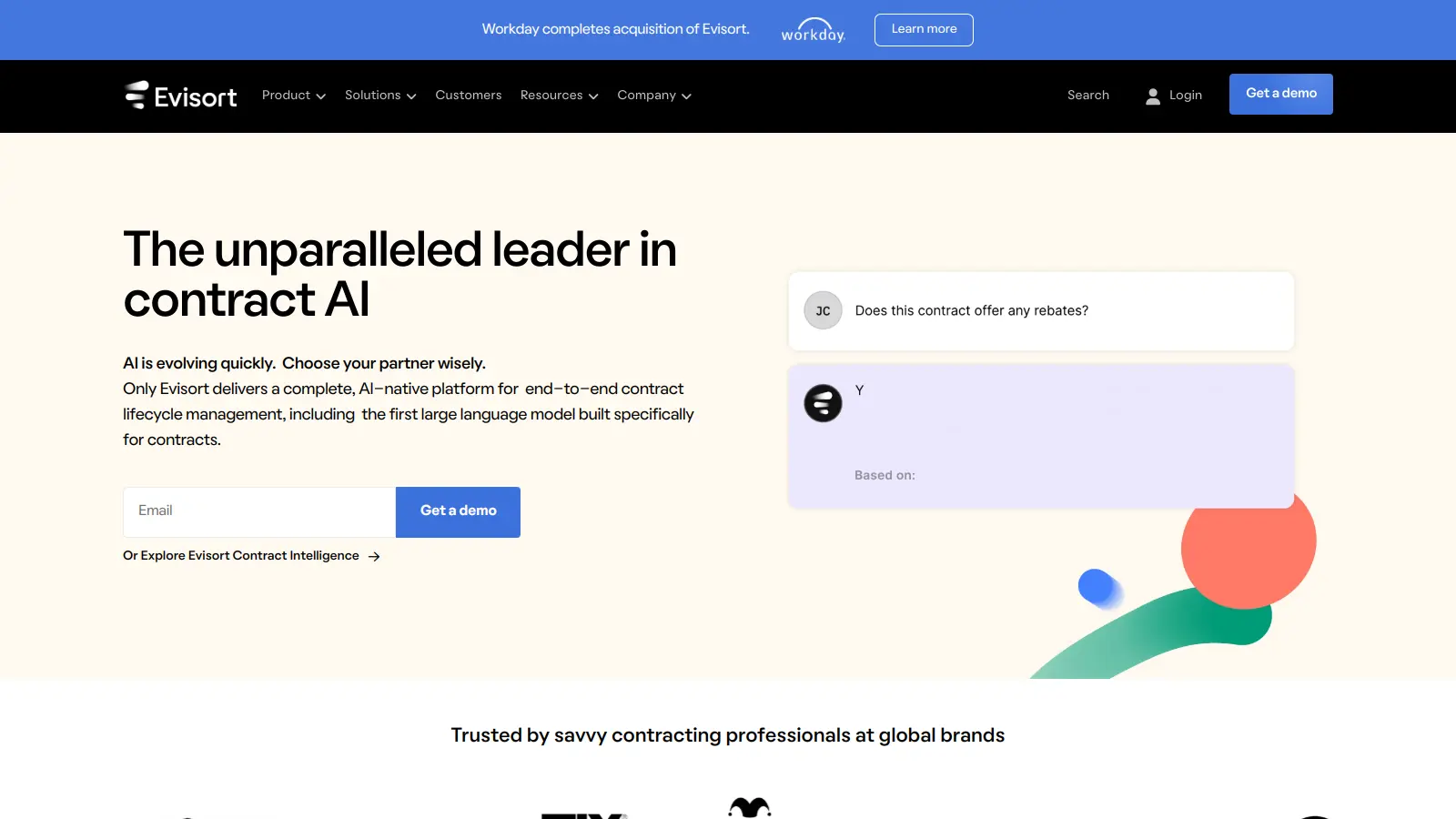
Evisort helps businesses manage their contracts more efficiently through AI-powered automation. The platform streamlines everything from drafting and negotiating to analyzing and storing contracts, making it easier for teams to handle their contract lifecycle.
At its core, the software uses artificial intelligence trained on millions of contracts to understand and process legal documents. It can automatically extract key information, flag important dates, and even suggest contract language. Teams can access their contracts through a central repository that connects with common business tools like Salesforce and SharePoint.
The platform works well for mid-sized to large companies, particularly in finance, healthcare, and technology. While it offers strong AI capabilities and excellent customer support, some limitations exist with OCR scanning of older documents and customization options. The software currently focuses on North American markets and only operates in English.
Pricing isn't publicly available and requires contacting the company for a custom quote. Most customers can expect annual costs between $15,000 and $300,000, depending on their needs and organization size.
monthly search interest
1.9k/mo now
Evisort saw a sharp but isolated spike to 8,100 searches in September 2024, almost certainly tied to Workday's acquisition announcement, and has since settled back to around 2,900 monthly searches. The underlying baseline has actually been fairly stable for three years, which suggests a consistent but narrow audience of enterprise buyers doing active vendor evaluation rather than a tool with broad organic growth. The hype has passed; what you're seeing now is the real demand level.
Whether Evisort earns its price tag depends almost entirely on what you're trying to do with it. Pick your role below to see whether it fits your situation.
overall sentiment
select your role to see what people like you are saying
General Counsel / Legal Operations Manager
positiveIf you're overseeing hundreds of contracts across a large organisation, Evisort's AI obligation monitoring and compliance tracking genuinely reduces the risk of things slipping through. The interface is approachable enough that legal teams don't need weeks of onboarding. The main frustrations are dashboard rigidity and opaque pricing that makes budget forecasting harder than it should be.
strengths
concerns
Contract Manager
mixedEvisort handles forward-looking contracts well: renewal reminders, key term extraction, and lifecycle tracking are solid day-to-day. The problem shows up when you try to digitise older paper-based agreements, because the OCR struggles with anything below good scan quality. If your repository is mostly clean digital files, you'll get on fine. If it's a mix of scanned legacy documents, expect manual clean-up work.
strengths
concerns
Procurement Specialist
positiveThe spending commitment tracking and vendor agreement standardisation are the strongest reasons procurement teams use this. It genuinely reduces the spreadsheet-heavy manual work most teams are stuck with. The frustration is that unclear pricing makes it difficult to build an internal business case, and reporting customisation isn't deep enough for detailed vendor-specific analysis.
strengths
concerns
C-Suite Executive / CFO
mixedThe ROI case for Evisort is real but requires a large enough contract volume to justify costs that typically reach $100,000 a year. The Workday acquisition is worth factoring into any multi-year decision: tighter Workday integration is a plus if that's already your core system, but it introduces roadmap dependency if it isn't. Get explicit commitments on product direction before signing.
strengths
concerns
“You're not buying an independent AI-native startup anymore, you're buying into a large HCM vendor's roadmap, and that uncertainty is real.”
Community discussion around Evisort is thin but pointed. The most substantive public conversation comes from a thread in r/legaltech where a legal team actively evaluating CLMs is weighing Evisort against Ironclad, noting that Ironclad entered the race late but appears to meet their requirements. That thread frames Evisort as an established player being actively challenged, which tells you something about where the competitive pressure is coming from. Independent comparison content places Evisort alongside DocuSign CLM, giving it credit for AI-native contract analysis capabilities that DocuSign CLM arguably bolted on later, though the comparison sources have a commercial slant. Pricing is the other recurring theme: starting around $15,000 a year with a typical enterprise deployment running closer to $100,000 annually, and no public pricing page to speak of, Evisort sits firmly in the deal-with-a-salesperson tier. That opacity frustrates buyers who want to benchmark cost before entering a demo cycle.
At $15,000 a year minimum and a typical bill closer to $100,000, this is only worth it for organisations managing a large volume of contracts where manual tracking is genuinely breaking down. If you have fewer than a few hundred active contracts, you'll overpay for what you use. The value case is strongest when AI-powered obligation monitoring and renewal tracking replace multiple headcount hours per week. There's no self-serve tier, so you're committing to an enterprise sales process before you see a real number.
General Counsel and Legal Operations Managers overseeing portfolios of hundreds or thousands of contracts get the clearest return, particularly for automated compliance tracking. Contract Managers handling forward-looking agreements benefit from renewal date automation and lifecycle tools. Procurement Specialists get genuine value from vendor spending commitment tracking. It's not built for small legal teams or companies with straightforward contract needs.
OCR performance on legacy paper contracts is weak, which creates real friction if you're trying to digitise a historical document repository. Workflow creation is complex enough to slow down standardised process implementation. Dashboard and reporting customisation is limited, which matters if you need bespoke compliance views. And pricing opacity means you can't forecast budget without going through a full sales cycle first.
If your primary need is contract drafting, redlining, and a modern collaboration workflow, Ironclad is the stronger choice right now. It's an independent product with a clear roadmap and a clean interface that legal teams actually adopt. Evisort has the edge on AI-powered analysis of existing contract repositories and obligation monitoring at scale. Choose Evisort if you're managing a large legacy portfolio and need intelligence on what's already signed. Choose Ironclad if you're optimising the front end of the contract process.
That depends on your existing tech stack. Workday acquiring Evisort means tighter integration with Workday's HR and finance systems, which is a genuine advantage if you're a Workday shop. But if you're not, you're buying into a product whose roadmap will increasingly be shaped by what Workday customers need, not necessarily what standalone CLM buyers want. It's a reasonable bet if Workday is already central to your operations. Otherwise, you should ask hard questions about independent product development during your sales process before signing a multi-year contract.
toolsforhumans editorial team
Reader ratings and community feedback shape every score. Since 2022, ToolsForHumans has helped 600,000+ people find software that holds up after launch. how we research →

Harvey AI is an AI platform built for legal professionals, offering AI-powered legal research, contract analysis, document drafting, and clause extraction. Trained on legal datasets, it helps lawyers automate complex workflows, enhance research capabilities, and improve efficiency across multiple practice areas.
best deal
Join the waitlist to explore Harvey AI's legal solutions starting at approximately $500 per lawyer annually

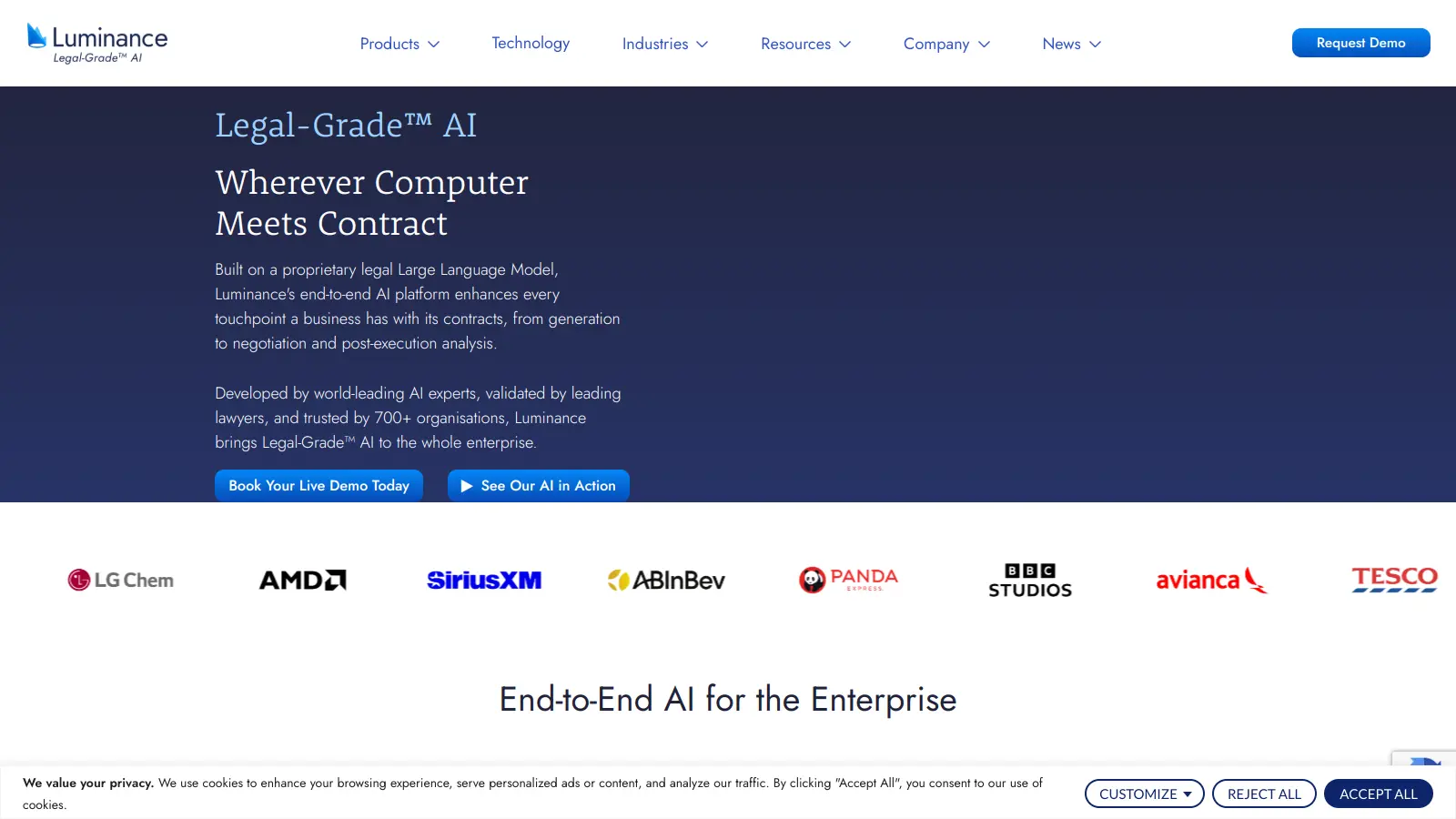
Luminance is an AI-powered legal technology platform that automates contract management, review, drafting, and negotiation using its proprietary Large Language Model. Founded in 2015 by Cambridge mathematicians, it serves over 1,000 organizations worldwide including law firms, corporate legal teams, and global consultancies. The platform offers deep document analysis, integration with Microsoft Word, and AI-driven features that reduce contract processing time while ensuring compliance and data security.
best deal
Get Your Personalized Luminance Quote And See How AI Legal Tools Can Transform Your Contract Management

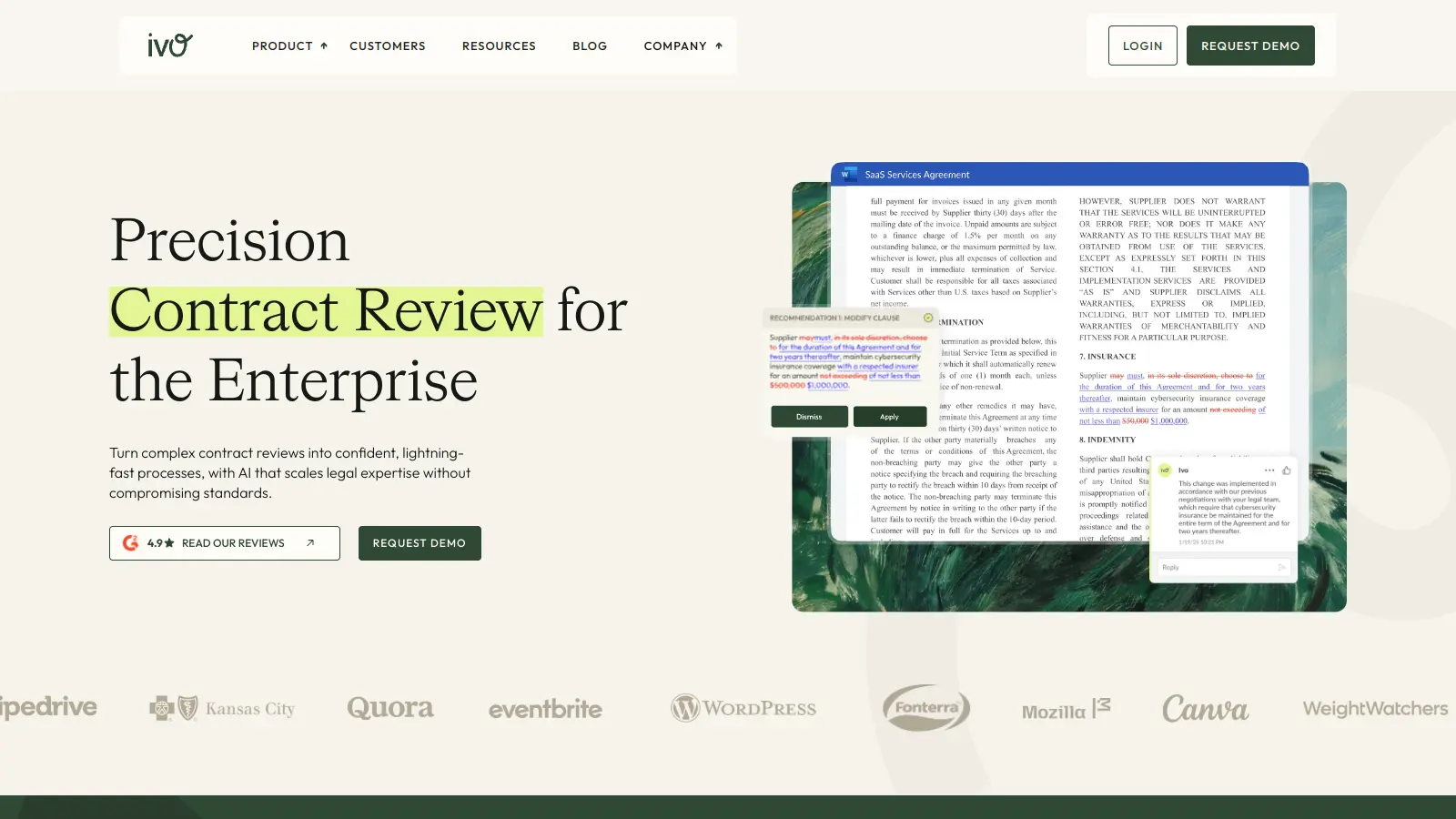
Ivo AI is an advanced AI-powered contract review and intelligence platform designed to help legal teams efficiently analyze, redline, and manage agreements. It integrates directly into Microsoft Word and includes a centralized contract repository that uses agentic AI to surface business insights, detect contract relationships, and enable plain-language queries across all agreements.
best deal
Schedule a personalized demo to see how Ivo's AI-powered contract intelligence can reduce your legal team's contract cycle times.

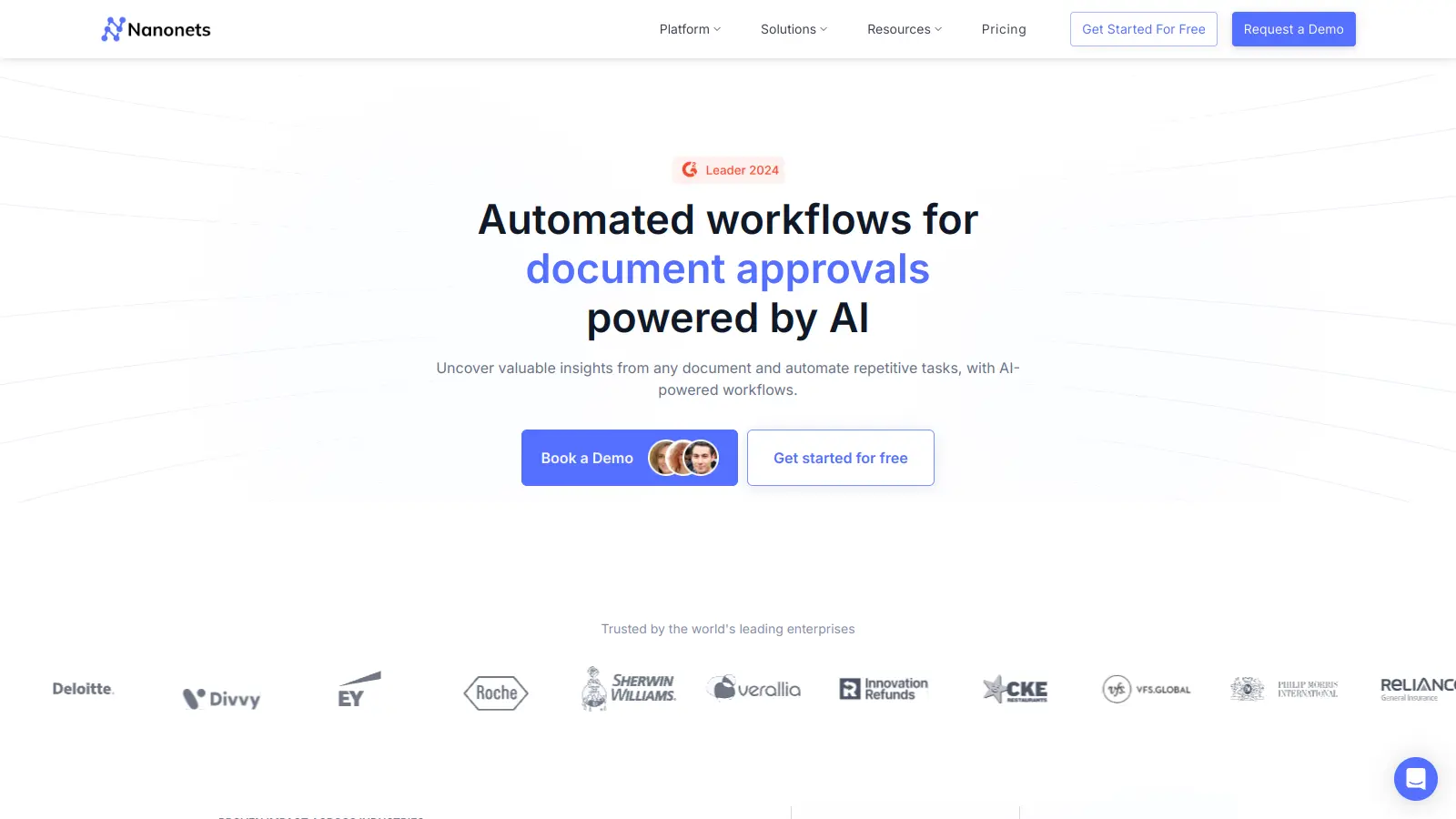
Nanonets is an AI-powered platform that automates document processing and data extraction using OCR and machine learning. Founded in 2017, it helps businesses across finance, healthcare, logistics, and retail streamline operations by extracting structured data from PDFs, images, and emails, customizing workflows, and integrating with existing systems.
best deal
Start for free with $200 in credits, then pay $0.30 per page with no monthly fee

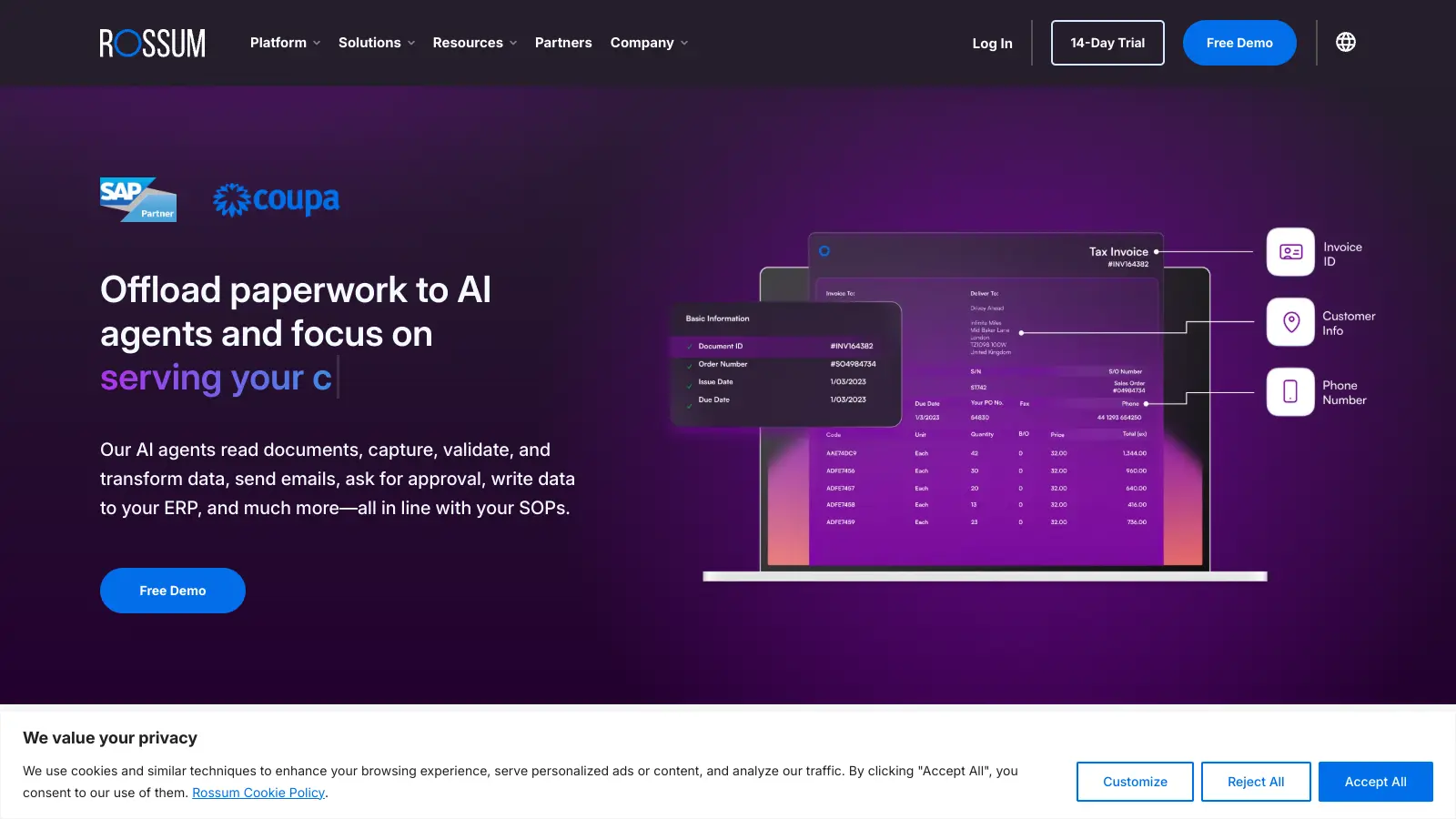
Rossum is an AI-powered Intelligent Document Processing (IDP) platform that automates document processing workflows. Founded in 2017, it uses machine learning and deep learning to extract data from documents without requiring templates. The platform offers over 98% accuracy, supports 276 languages including handwriting, and provides continuous AI improvement, enabling businesses to reduce manual intervention and save time across multiple industries.
best deal
14-day free trial available, no credit card required. Paid plans start at $18,000/year with unlimited users.

LawGeex is an AI-powered legal technology platform that automates contract review processes. Using patented AI with machine learning and natural language processing, it analyzes business contracts against customized legal policies, flags problematic clauses, generates redlines, and helps legal teams manage high volumes of agreements with consistent standards.
best deal
Request a Free Demo to Experience AI-Powered Contract Review