Governance Risk & Compliance Grc Platform+2 more

AuditBoard
best deal
See custom pricing for your audit & compliance needs
redeem now
AuditBoard
best deal
See custom pricing for your audit & compliance needs
redeem nowWe start with direct ratings from our readers, then look at what real users are saying in practitioner forums and community spaces. We pair that with search demand data and profession-level persona analysis.
Editorial note: this was originally published in september of 2024
quick take
based on real user feedback, community sentiment, pricing value, and fit for target audience. see our full methodology
used AuditBoard? we'd love to know your thoughts
reader ratings shape our score
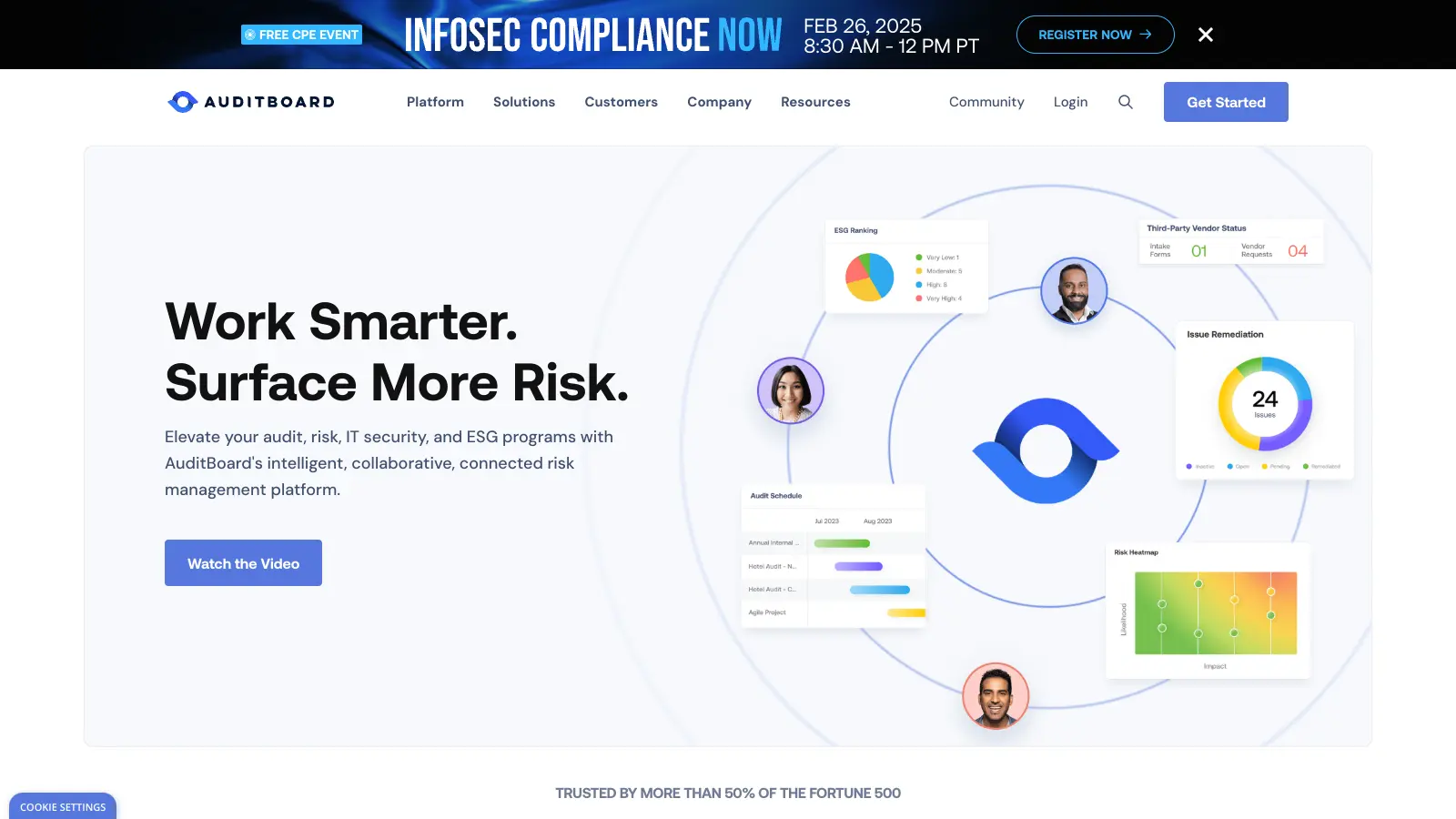
AuditBoard is a cloud-based platform that helps organizations manage their audit, risk, sustainability, compliance, and infosec processes. The software serves businesses across retail, insurance, construction, transportation, and other industries.
The platform combines several functions into one system. Users can handle risk assessments, plan audits, and track compliance requirements all in one place. It integrates with Microsoft Office and Google Drive to help teams work more efficiently.
Organizations use AuditBoard to automate routine tasks, from initial planning through to final reporting. The system includes built-in generative AI, machine learning, and natural language processing that can generate audit scope documents, create executive-level reports, and automate evidence gathering. Teams can also access real-time dashboards and create custom reports to track progress.
Pricing isn't publicly available. AuditBoard offers custom quotes based on each organization's specific needs. Companies need to contact their sales team directly for detailed pricing information.
Many Fortune 500 companies rely on AuditBoard for their audit and compliance needs. The platform has earned recognition for its governance, risk, and compliance capabilities, with users noting its easy-to-use interface and feature set.
monthly search interest
8.1k/mo now
AuditBoard saw a sharp spike in searches around mid-2024 that has since pulled back by more than half, likely driven by the rebranding to Optro rather than genuine product growth. Search volumes have since settled back to their 2022-2023 baseline, suggesting a stable but not expanding evaluator pool. For teams considering it now, this is a mature platform in a defined market — the hype has passed and what you're seeing is the real, steady-state demand.
Whether AuditBoard is worth it depends heavily on your team size, your existing infrastructure, and which workflows are actually eating your time. Pick your role below to see the honest breakdown for your situation.
overall sentiment
select your role to see what people like you are saying
Internal Audit Manager
positiveIf your team is still building scope documents manually or consolidating findings across spreadsheets, AuditBoard's automation features will give you hours back each audit cycle. The SOX compliance tooling is the strongest part of the platform. The main friction is implementation: integrating with legacy systems takes longer than quoted, and the learning curve is steeper than the demos suggest.
strengths
concerns
Risk and Compliance Officer
mixedYou'll get real value from the real-time framework mapping and cross-functional collaboration features if your compliance environment aligns with the frameworks AuditBoard supports out of the box. If your regulatory requirements are unusual or your legacy infrastructure is complex, the customisation limits and integration friction will create ongoing headaches. Worth it for large teams running standard frameworks, harder to justify for niche or complex regulatory environments.
strengths
concerns
Information Security Lead
positiveThe vendor assessment automation is the clearest win here: if your team is manually chasing security questionnaire responses, AuditBoard cuts that significantly by reusing existing data. Continuous monitoring adds proactive exception visibility. The catch is performance: large vendor datasets load slowly, and connecting AuditBoard to your existing security toolstack is rarely as smooth as the sales demo.
strengths
concerns
CFO/Executive Stakeholder
mixedYour main interaction with the platform is the consolidated reporting layer, and it delivers: cross-audit summaries and risk dashboards give you visibility without digging through workpapers. The opaque pricing model means you'll need to push the procurement conversation hard to understand total cost of ownership. The rebrand to Optro is worth asking about directly before signing a multi-year agreement.
strengths
concerns
“Don't sign a contract without a full pilot and a clear answer on what the Accelerate tier actually costs your org size.”
Community discussion around AuditBoard is thin but telling. A thread on r/techsales asks whether the risk and ESG modules are gaining real traction or whether the product is still primarily an audit and SOX tool — a question that reflects genuine market uncertainty about where the platform fits as it expands its scope. A separate thread on r/InternalAudit asks directly whether the Accelerate tier (the premium add-on with AI and continuous monitoring features) is worth the extra cost, with no clear consensus emerging. Across commercial review platforms, the tool generally scores well for SOX compliance functionality and customer support, but recurring criticisms centre on opaque pricing, performance slowdowns with large datasets, and integration friction with legacy systems. The rebrand to Optro adds another layer of uncertainty for teams evaluating a long-term commitment to the platform.
That depends entirely on what you get quoted, because there are no public prices. For Fortune 500-scale audit teams where the alternative is a patchwork of spreadsheets and manual consolidation, the platform can justify itself quickly. The IDC figure cited by the vendor claims $1M in average annual savings, which should be taken with scepticism, but the efficiency gains from automating SOX documentation and evidence collection are real. If you're a smaller team or a mid-market organisation, the custom pricing structure means you could easily be paying enterprise rates for a fraction of enterprise volume. Push hard for a pilot and get the Accelerate tier pricing itemised separately before committing.
Internal Audit Managers running SOX compliance programmes get the clearest value: the scope document automation and cross-audit summaries directly replace the most time-consuming manual tasks. Information Security Leads benefit from the vendor assessment automation if their team is drowning in security questionnaires. Risk and Compliance Officers get real-time framework mapping, but the customisation limits mean it works best when your compliance framework aligns closely with what the platform already supports. CFOs and executive stakeholders get consolidated reporting without having to dig through audit workpapers themselves.
Two issues come up consistently. First, performance degrades noticeably with large datasets — if your audit portfolio is extensive or your vendor list is long, slow loading times will frustrate your team during high-stakes reporting periods. Second, integration with legacy systems is harder than the sales pitch suggests. If your organisation runs older ERP or GRC infrastructure, expect a longer implementation timeline than you're quoted. The platform also has limited customisation in certain compliance modules, which is a real constraint for organisations operating under frameworks that don't map neatly to the defaults.
Workiva is the main alternative for SOX and financial reporting teams. If your primary need is financial close reporting and SEC filing compliance, Workiva has a stronger track record and deeper integrations with finance workflows. AuditBoard (Optro) pulls ahead when your use case spans audit, risk, and infosec governance together — it's a broader GRC platform rather than a pure financial reporting tool. For teams that need both, the honest answer is that Workiva owns the finance layer better, and AuditBoard owns the internal audit and risk layer better. Pick based on where your team's core pain actually sits.
The AI scoping memos and cross-audit summaries are the features most likely to save real time for internal audit teams. Generating a first-draft scope document from existing risk and process data cuts hours of writing, and the consolidated executive summary across multiple audits is genuinely useful for stakeholder reporting. The continuous monitoring features in the Accelerate tier are less proven — the r/InternalAudit thread asking whether Accelerate is worth it got no clear answer, which suggests the ROI isn't obvious even to current users. Treat the AI features as a productivity aid, not a replacement for audit judgement.
toolsforhumans editorial team
Reader ratings and community feedback shape every score. Since 2022, ToolsForHumans has helped 600,000+ people find software that holds up after launch. how we research →

PowerDMS is a cloud-based policy and compliance management platform for public safety agencies and healthcare organizations. It offers AI-driven tools for managing policies, training, internal affairs investigations, and accreditation through a secure, centralized system.
best deal
PowerDMS offers a free trial - compare custom pricing plans for your policy and compliance management needs

Mimecast is a cloud-based cybersecurity platform that provides email security, archiving, and continuity solutions. It protects against phishing, malware, ransomware, and business email compromise using AI-powered detection engines, URL scanning, attachment sandboxing, and user awareness training.
best deal
Explore Mimecast's Protect Plan with AI-powered email security starting today.

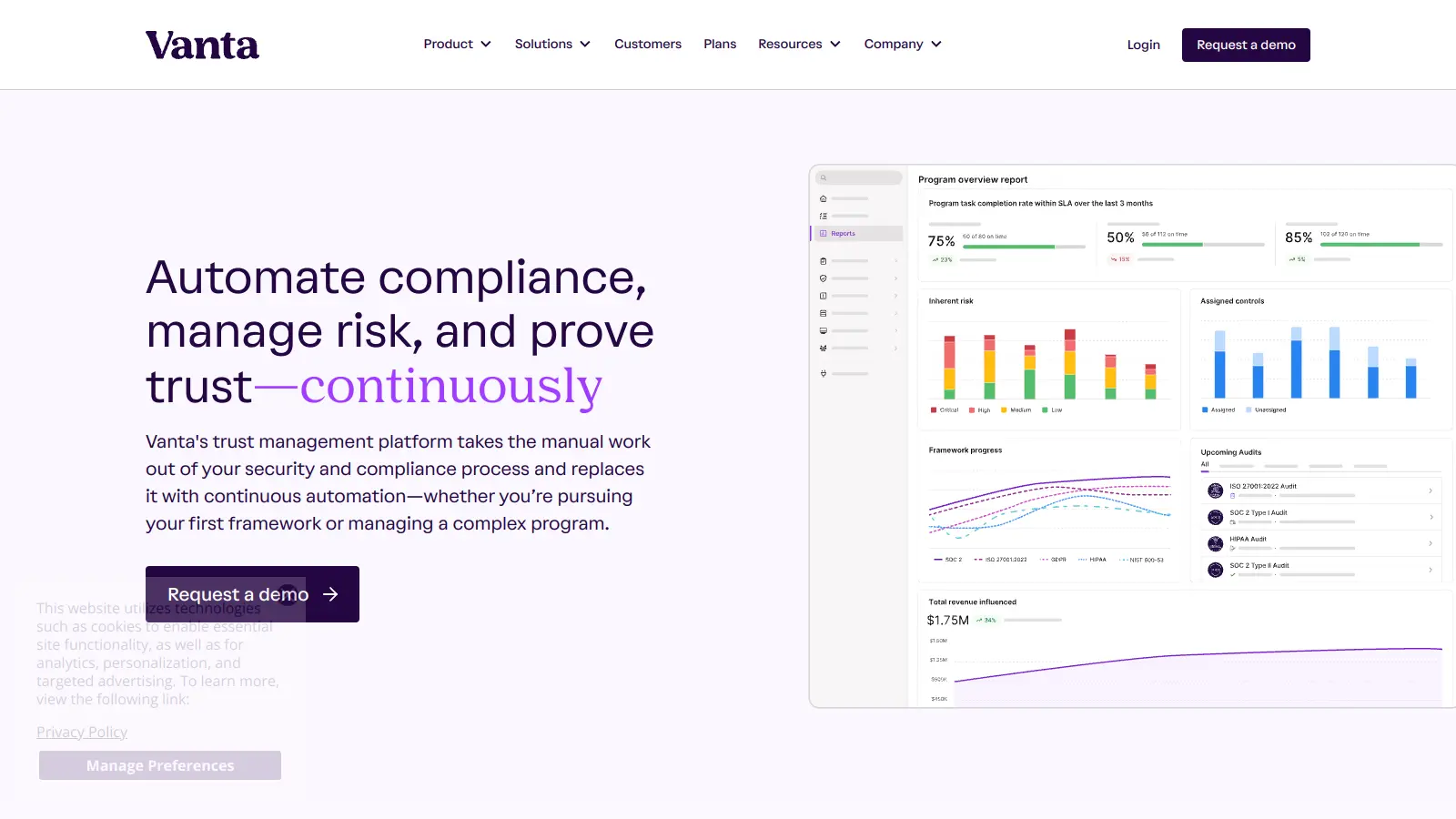
Vanta is a compliance and security platform that automates up to 90% of compliance work for major security frameworks like SOC 2 and ISO 27001. It offers automated evidence collection, policy management, access control, and AI-powered tools to help businesses streamline compliance processes, strengthen security, and build stakeholder trust.
best deal
Free trial available with no credit card required. Core plan starts at $7,500 annually.

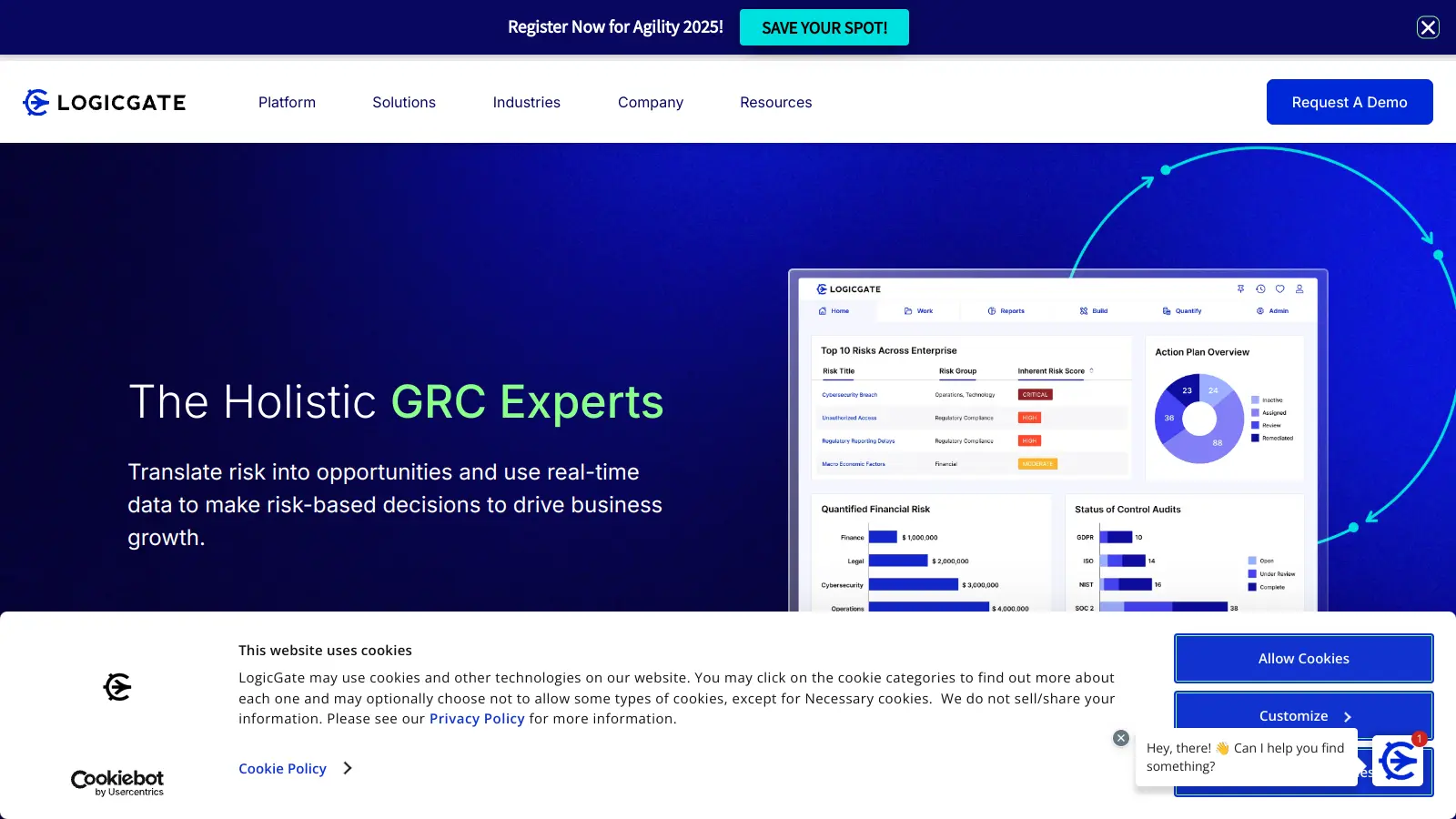
LogicGate is an AI-powered Governance, Risk, and Compliance (GRC) platform offering the Risk Cloud solution. The platform helps organizations manage cyber risk, third-party risk, compliance controls, and operational resilience through a no-code interface with built-in Spark AI features that automate evidence testing, form completion, and risk analysis.
best deal
Get started with Risk Cloud from $13,765/year and automate your compliance process with AI-powered features

Snyk is an AI-driven developer security platform that scans code for vulnerabilities, license compliance issues, and provides AI-powered fixes using static and dynamic analysis. It integrates with IDEs, Git workflows, and CI/CD pipelines for real-time scanning across open-source dependencies, container images, infrastructure as code, and proprietary code.
best deal
Try Snyk Free: Unlimited tests on open-source projects, 200 tests on private projects, 100 container tests with IDE plugins, CI/CD integration & continuous monitoring.

Drata is a cloud-based compliance automation and GRC platform that helps organizations streamline audit readiness across multiple frameworks. Founded in 2020, the tool continuously monitors security controls, automates evidence collection, manages vendor risk using AI agents, and integrates with hundreds of cloud services and SaaS tools to provide real-time compliance monitoring across over 20 compliance standards.
best deal
See How Drata Can Automate Your Compliance Starting at $7,500/Year