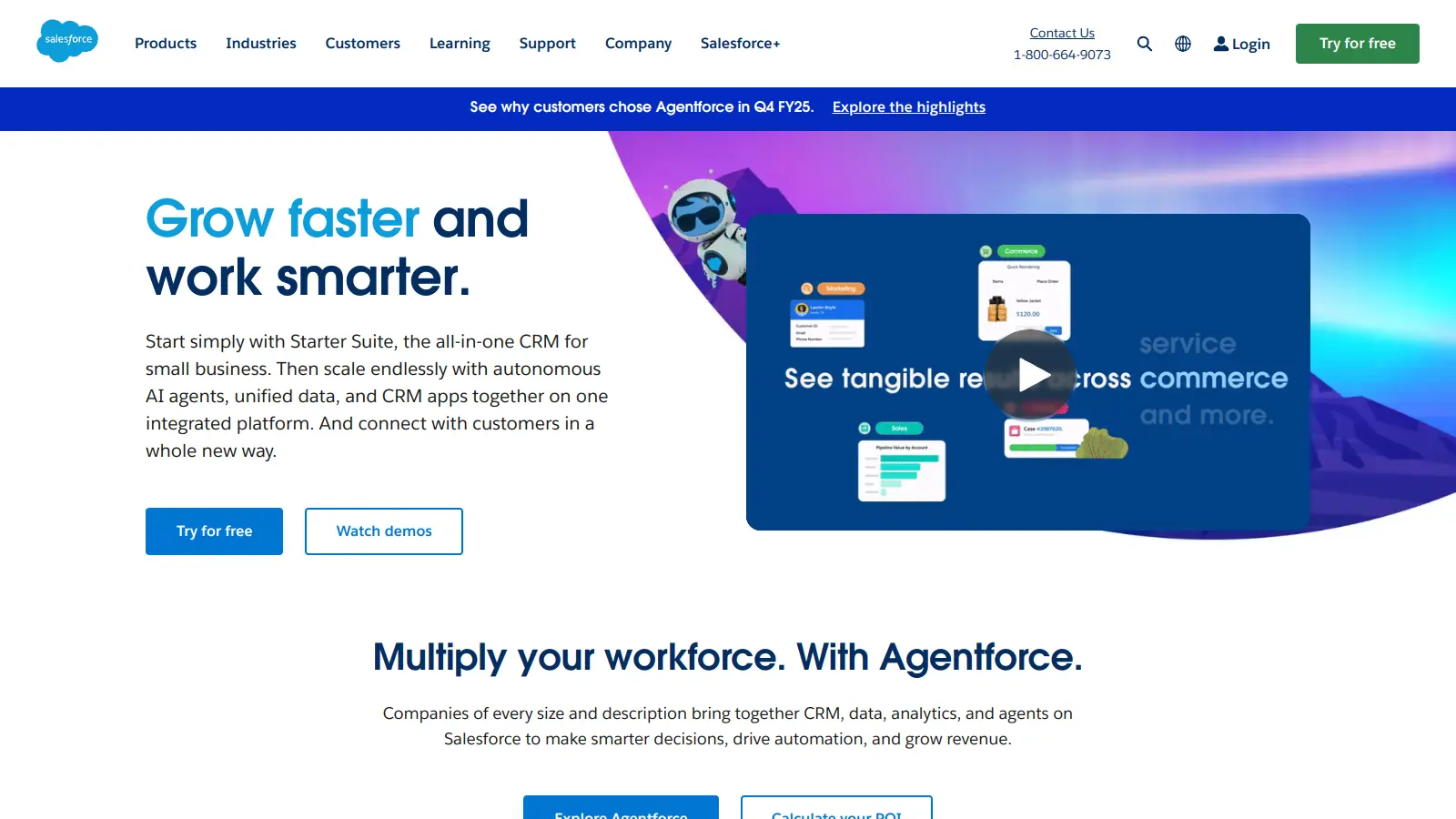
Salesforce is a customer relationship management (CRM) platform that helps businesses handle their sales, marketing, and customer service tasks in one place. The platform brings together customer information and makes it available across different departments, which helps teams work better together.
At its core, Salesforce offers tools for managing sales leads, tracking customer interactions, and running marketing campaigns. The platform includes features like Sales Cloud for sales teams, Marketing Cloud for creating targeted campaigns, and Service Cloud for customer support. Companies can pick and choose which tools they need.
The software uses artificial intelligence to help businesses understand their customers and make decisions based on data. It can connect with many other business tools and grows along with your company, whether you're a small startup or a large corporation. The platform runs as a multi-tenant SaaS solution accessed through your browser, and includes Force.com for building custom apps and AppExchange for finding third-party integrations.
Pricing starts at $25 per user monthly for basic features through the Starter Suite, with more comprehensive plans available for larger organizations or those needing advanced capabilities. While the platform offers extensive features, businesses typically choose specific tools that match their needs and budget.
Through cloud-based delivery, teams can access their work from anywhere, making it easier for companies with remote workers or multiple offices to stay connected and productive.
Salesforce is ideal for businesses looking to streamline customer relationship management across sales, marketing, and service departments. The platform centralizes customer data and provides AI-powered insights that help teams avoid duplicate work and spend less time searching for information.
From retail and manufacturing to healthcare and financial services, Salesforce has become the go-to CRM solution for organizations of all sizes.
Salesforce gets praise for its customization options and automation capabilities. Users appreciate the platform's powerful reporting and analytics features, along with strong integration support through AppExchange. The Trailhead training resources and active community help users learn the system, and enterprises value the scalability and security features.
The complaints center on cost and complexity. Many users find Salesforce too expensive for small teams, with frequent price increases making it harder to justify. The interface has a steep learning curve and can feel bloated with features most businesses don't need. Users report that frequent updates disrupt established workflows, and customer support response times can be slow. For companies with simple CRM needs, Salesforce often feels like overkill.
Salesforce helps you track and manage customer relationships in one place. Think of it as your complete customer command center. You can follow leads from first contact to closing a deal, handle customer service issues, run marketing campaigns, and see everything about your customers in one spot. The platform connects your sales, marketing, and customer service teams so everyone works with the same information. This means fewer things falling through the cracks and customers don't get conflicting information from different departments.
Is Salesforce hard to learn?Salesforce has a learning curve, but it's not as steep as some people think. The basic functions like tracking contacts and deals are pretty straightforward. Salesforce also offers tons of free training through Trailhead, their learning platform with guided paths for beginners to experts. Most users can learn the essentials within a few weeks. That said, mastering the more complex features takes time. Many companies find it helpful to have at least one team member get deeper training or bring in a Salesforce consultant during setup.
How long does it take to implement Salesforce?Implementation time varies based on your needs. A small business using basic features might get up and running in 2-4 weeks. Most mid-sized companies need about 2-3 months. Large enterprises with complex needs might take 6 months or more. The biggest factors affecting timeline are how much customization you need, how clean your existing data is, and whether you're integrating with other systems. Starting with a focused approach (like just sales features first) can help you see value faster while building toward a complete solution.
Will Salesforce work with my existing software?Salesforce plays well with others. It connects to thousands of apps through AppExchange (Salesforce's app marketplace) and has built-in connections to common tools like Gmail, Outlook, and major accounting software. For other systems, Salesforce offers several integration options ranging from simple data imports to complete API connections. MuleSoft, which Salesforce owns, specializes in connecting different systems. While most integrations are possible, some might require developer help or third-party connectors. Before you commit, make a list of your must-have integrations and check compatibility.
Is Salesforce worth the cost for a small business?The value of Salesforce for small businesses depends on your growth plans and how you'll use it. If you're managing more than a handful of customers and want to scale, Salesforce can prevent the chaos that comes with growth. The Starter Suite begins at $25 per user monthly, which is competitive for what you get. The real value comes from actually using the features - businesses that just use it as a fancy address book won't see much return. Consider starting with the specific problem you need to solve (like tracking sales or improving follow-ups), and focus on those features first.


Our newsletter comes with exclusive discounts, trials and practical insights from within the industry