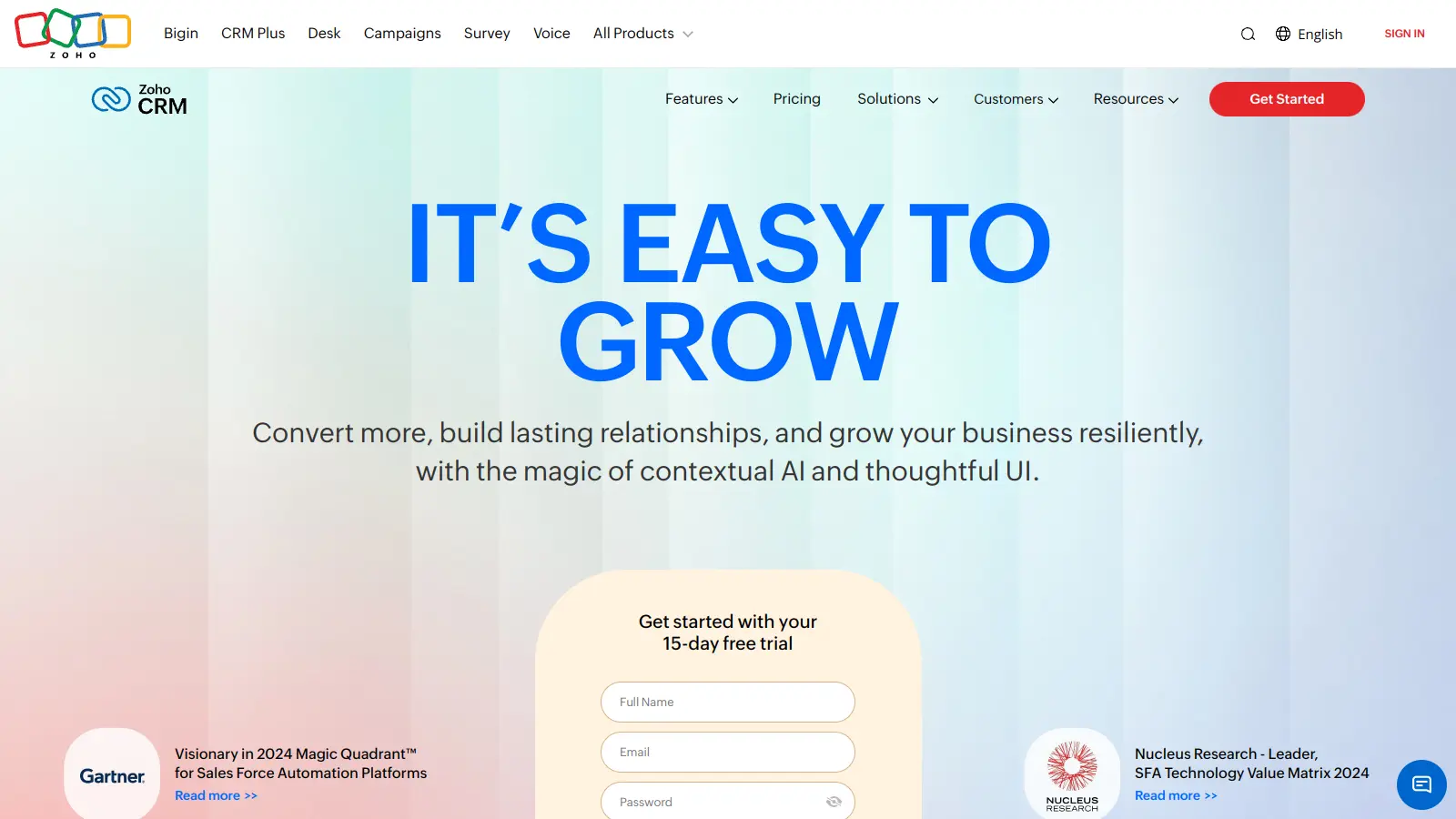
Zoho CRM helps businesses manage their customer relationships through a comprehensive set of tools for sales, marketing, and customer service. The platform automates routine functions and centralizes customer data, making it easier to track leads, manage deals, and provide support across multiple channels.
From small businesses to large enterprises, users can monitor pipeline activity, analyze performance metrics, and communicate with customers through email, phone, social media, and custom portals. The software includes AI-powered insights through Zia assistant, which handles predictions, anomaly detection, and conversational task management.
Built to scale alongside growing businesses, the platform offers pricing tiers starting with a free plan for up to three users. Paid plans range from $14 to $52 per user per month (billed annually) and unlock additional capabilities such as Blueprint for sales processes, territory management, advanced analytics, and custom functions. The system integrates with over 900 third-party apps through the Zoho Marketplace.
Teams can collaborate through shared calendars, document libraries, and customer portals while maintaining control over data access. The interface is customizable with page layouts, canvas design, and workflow automation using assignment rules, macros, and functions. Users can set up cadences for follow-ups and use journey orchestration for customer nurturing without technical expertise.
Zoho CRM works for businesses that need to organize customer relationships and automate sales processes without hiring developers. The platform centralizes data and automates routine tasks so teams can spend more time on customer interactions.
With over 250,000 businesses using the platform, Zoho CRM is commonly used across industries like retail, professional services, manufacturing, and real estate, particularly by teams focused on sales growth and customer retention.
Users praise Zoho CRM for its customization options and value for money. Many reviewers highlight the ability to create custom workflows and modules without writing code, and businesses appreciate paying less than they would for Salesforce while getting similar functionality. The integration with other Zoho apps and third-party tools gets positive mentions, as does the mobile app for sales reps in the field. Customer support is responsive and helpful.
The learning curve is steep when you try to use advanced customization features. Reporting and dashboard capabilities are limited compared to enterprise-level CRMs. Bugs and performance issues show up when working with large datasets. Email integration and deliverability can be unreliable, which frustrates teams relying on email campaigns. The interface looks dated in some areas, and advanced analytics features are limited out-of-the-box.
Zoho CRM's latest update, called "Zoho CRM for Everyone," brings major improvements to help teams work better together. The update adds Team Modules and Team Spaces that let different departments (like sales, marketing, and customer service) work in the same system while only seeing what's relevant to them. There's also a new Requester Profile feature that helps track requests between teams, so nothing falls through the cracks. The interface has improved navigation, and you can now make deep customizations directly from the front end without technical help.
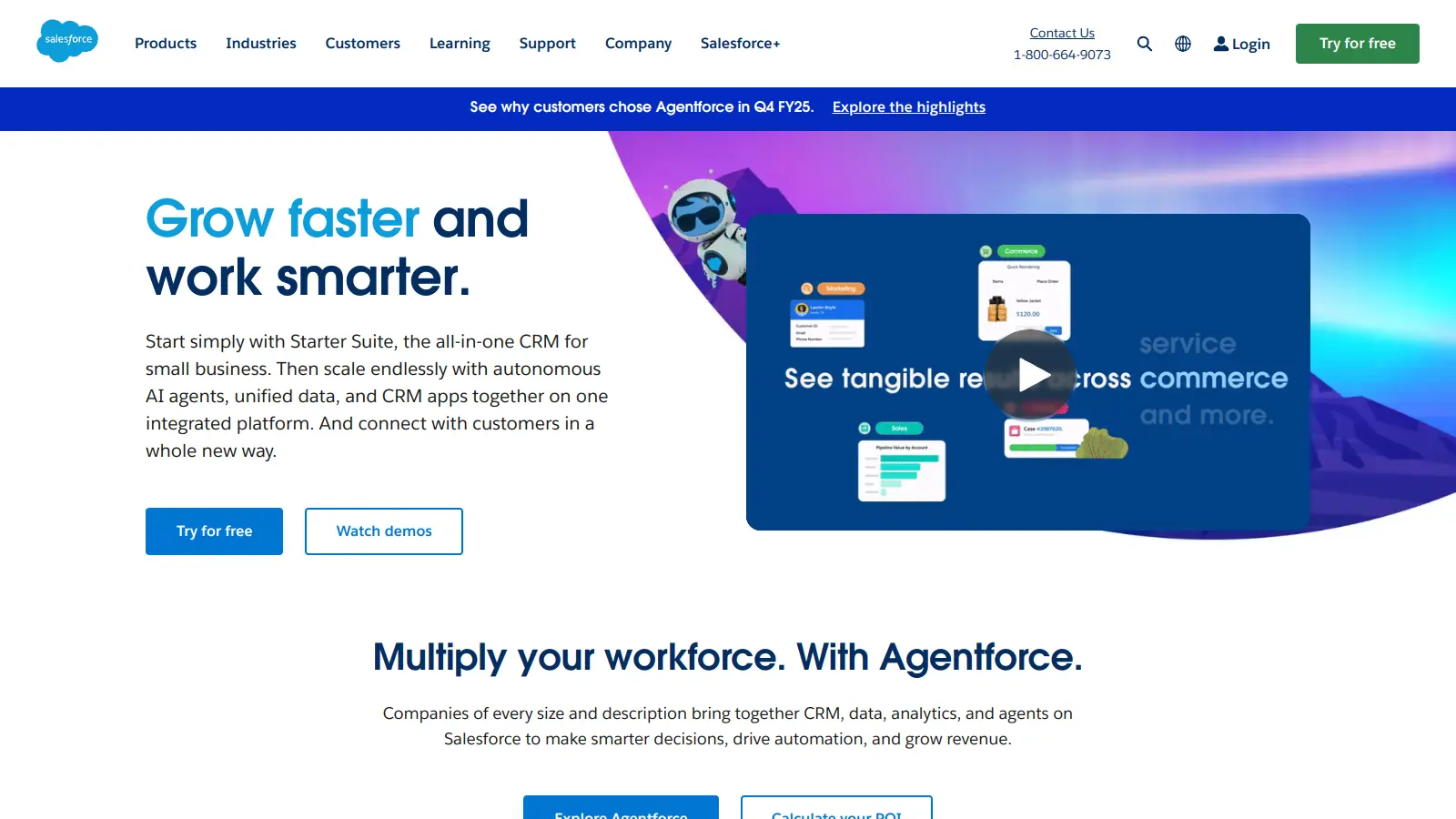
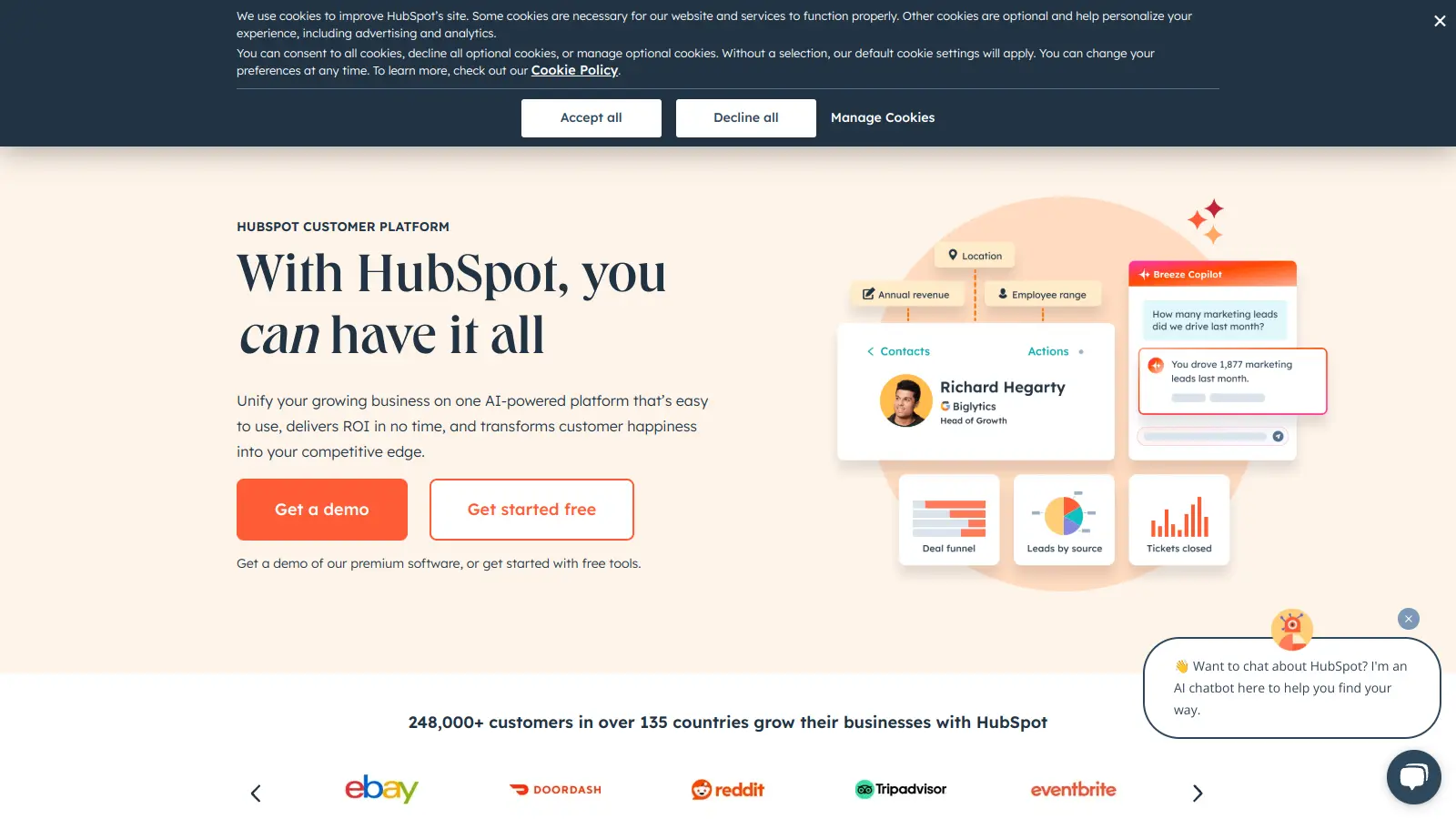
How does Zoho CRM compare to Salesforce or HubSpot?Zoho CRM costs significantly less than Salesforce while offering similar core features like sales automation, pipeline management, and AI assistance. Users often say they get excellent value for money with Zoho. HubSpot has a more modern interface and stronger marketing features in its free tier, but Zoho offers more customization options and better pricing as you scale. Salesforce has more advanced analytics and a larger app ecosystem, but it's more expensive and complex to set up. If you're budget-conscious and need solid customization without enterprise complexity, Zoho fits the bill.
Can I customize Zoho CRM to fit my unique business needs?Yes! Zoho CRM is highly customizable. You can create custom fields, modules, and layouts to match your business processes. With the latest update, making these changes is easier than ever - you can customize right from the front end without needing technical knowledge. You can also build custom workflows using Blueprint for sales processes, set up assignment rules and macros, create cadences for follow-ups, and design personalized dashboards and reports. If you need more, Zoho CRM connects with over 900 third-party apps through the Zoho Marketplace.
What AI features does Zoho CRM offer?Zoho CRM comes with an AI assistant called Zia that helps in several ways. Zia can predict which leads are most likely to convert, spot unusual patterns in your sales data, and forecast your sales numbers. It also offers product recommendations based on customer interests. Zia Voice lets you talk to your CRM - you can ask it to take notes, pull up information, or run calculations for you. The AI also helps with customer segmentation using the RFM model (recency, frequency, monetary value) to target your marketing campaigns better. Zia is available starting with the Enterprise plan.
Is Zoho CRM good for small businesses?Absolutely! Zoho CRM works well for small businesses for several reasons. First, they offer a free plan for up to three users that's free forever, which is perfect if you're just starting out. The Standard plan starts at just $14 per user per month with annual billing, making it affordable as you grow. The system doesn't require an expert to set up. As your business grows, Zoho CRM can grow with you - you can add more users and features when needed. Small business owners particularly like the value for money, and the all-in-one approach helps small teams manage sales, marketing, and customer service without juggling multiple tools.


Our newsletter comes with exclusive discounts, trials and practical insights from within the industry