Lex Machina Review 2026 - Features, Pricing & Deals

Last Updated
•
Feb 14, 2026

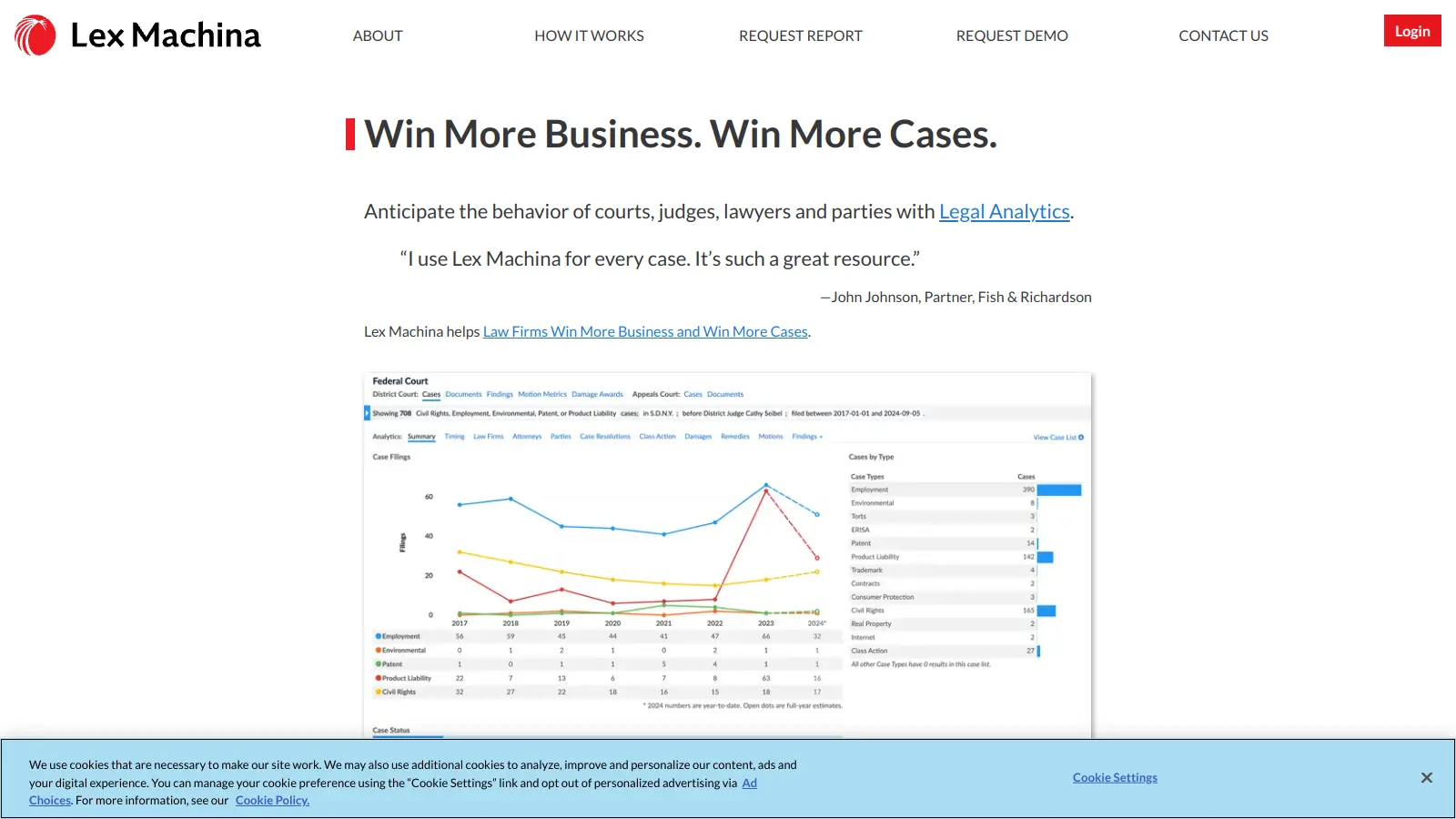
Lex Machina is a legal analytics platform that helps law firms and corporations strengthen their litigation strategies. The platform uses AI to analyze court documents and provide insights on judge behavior, attorney performance, case outcomes, and litigation trends.

Originally developed at Stanford Law School and Stanford's Computer Science department, the platform now operates as part of LexisNexis. It covers all 94 federal district courts, 13 appeals courts, the Patent Trial and Appeal Board (PTAB), and enhanced state court coverage, analyzing over 45 million documents and 10 million cases.

The system processes raw legal documents using proprietary AI technology like Protégé for data extraction, cleaning, tagging, and enhancement. Users can access detailed information about judge tendencies, motion success rates (tracking 100+ motion types overall and 40+ in state courts), and opposing counsel performance. The platform's predictive analytics achieve 70-80% accuracy for case outcomes, damages, and settlement predictions.

Pricing isn't publicly available and varies based on organization size and needs. The platform offers AI-assisted tools including natural language prompts, custom columns, findings search, and entity grouping features. Integration with the LexisNexis ecosystem allows users to combine Lex Machina's analytics with other legal research tools.

The platform costs too much for small firms, and data coverage has gaps in smaller jurisdictions. The learning curve is steep for attorneys who aren't tech-savvy.

Who is Lex Machina for?

Lex Machina is suited for legal professionals who need data-driven insights to build stronger litigation strategies. The platform uses AI to analyze court documents and provide predictive analytics that help attorneys make informed decisions about cases, judges, and opposing counsel.

  • Litigators and Law Firm Partners - They can use the platform to develop case strategies, predict outcomes based on historical data, and make data-backed decisions about resource allocation and case evaluation.
  • Litigation Associates - These attorneys benefit from quick access to judge analytics, motion success rates, and case precedents that help them prepare more effectively and improve win rates.
  • In-House Legal Counsel - Corporate legal teams can manage litigation risks, select outside counsel based on proven performance data, and predict settlement outcomes for business intelligence.
  • Legal Research Teams - They can quickly find relevant cases, analyze legal trends, and compile strategic insights that would take days or weeks through traditional methods.
  • Business Intelligence Teams - Legal teams can analyze competition, evaluate opposing counsel and parties, and allocate resources based on litigation data.
  • Litigation Consultants - These professionals can provide clients with data-backed advice on litigation strategy and case assessment using predictive analytics.

The tool is used across major law firms, corporate legal departments, and consulting firms handling complex litigation in federal and state courts.

Online Reviews (Last 6 Months Summarised)

Legal professionals who use Lex Machina praise its accuracy in litigation analytics and predictions, with many reporting it saves significant time in case evaluation and strategy development. Users highlight the interface, judge and lawyer insights, and high-quality data from court dockets that helps improve win rates and settlement outcomes.

The platform is very expensive with pricing that isn't transparent, which can be prohibitive for small firms. Other complaints: steep learning curve for attorneys who aren't tech-savvy, coverage limited to US federal and state courts only, data gaps in smaller jurisdictions, and weak integration with non-LexisNexis tools.

Features

  • Data Collection: Covers all 94 federal district courts, 13 appeals courts, PTAB, and enhanced state courts with over 45 million documents and 10 million cases, using AI to clean, tag, and enhance raw litigation data.
  • Predictive Analytics: Provides 70-80% accuracy for case outcome predictions, motion grant and denial rates, damages, and settlements based on historical data patterns and judge behavior.
  • Judge Analytics: Offers detailed insights on judge rulings, timelines, findings, and behavior patterns to help lawyers develop targeted legal strategies.
  • Attorney and Party Analysis: Evaluates attorneys' and parties' historical performance, outcomes, and preferred legal arguments to support strategic case preparation and competition analysis.
  • AI-Assisted Research Tools: Uses technology like ProtĂ©gĂ© for natural language prompts, custom columns, findings search, and entity grouping to simplify complex legal research.
  • Motion Metrics: Tracks 100+ motion types overall and 40+ types in state courts with detailed success rates and judicial response patterns.
  • LexisNexis Integration: Connects with the LexisNexis ecosystem including Lexis+ AI for workflow integration across legal research platforms.

Pricing

  • Pricing is not publicly available and varies based on organizational size and specific requirements.
  • Custom pricing requires direct consultation with Lex Machina to determine costs tailored to individual needs.
  • A free demo is available for organizations interested in evaluating the platform's capabilities.
  • Interested organizations should contact Lex Machina directly for a demo and quote that matches their litigation research and analytics requirements.

Frequently Asked Questions

How accurate are Lex Machina's predictions?

Lex Machina's predictive analytics achieve 70-80% accuracy for case outcomes, motion grant and denial rates, damages, and settlements. The predictions are based on historical data patterns and judge behavior rather than guaranteeing specific results. Accuracy tends to be higher in practice areas with more data (like patent litigation) and when analyzing judges with longer track records. Users find the platform most helpful for understanding trends and tendencies, but still apply their own judgment to final strategy decisions.

What courts and data does Lex Machina cover?

Lex Machina covers all 94 federal district courts, 13 federal appeals courts, and the Patent Trial and Appeal Board (PTAB). State court coverage includes enhanced data from select jurisdictions. The platform has over 45 million documents and 10 million cases in its database. Federal coverage is complete with historical data, while state coverage focuses on commercial and complex civil litigation but may have gaps in smaller jurisdictions. The platform tracks 100+ motion types overall and 40+ types specifically in state courts.

Is there a free trial or demo available?

Yes, Lex Machina offers a free demo for organizations interested in evaluating the platform. This lets you see the analytics capabilities, interface, and data coverage before committing to a subscription. Since pricing isn't publicly available and varies based on your organization's size and needs, the demo is a good way to understand what you'll get and discuss custom pricing with their team.

Can Lex Machina integrate with case management software?

Lex Machina integrates with the LexisNexis ecosystem, including Lexis+ AI and other LexisNexis products. The platform allows users to combine its analytics with other legal research tools in their workflow. You can export data in common formats for further analysis. If you're using specific practice management or case management software, it's worth asking their support team about integration possibilities for your setup, though some users note that integration with non-LexisNexis tools could be better.

How steep is the learning curve for new users?

The learning curve can be steep for attorneys who aren't tech-savvy, according to user feedback. While the interface includes AI-assisted tools like natural language prompts and search filters, getting the most value requires time exploring features and understanding how to apply insights to your specific legal strategy. New subscribers typically receive training sessions, and the company offers tutorial videos. Most users report it takes regular use over a few weeks before attorneys feel completely comfortable using all the platform's capabilities.

Other Tools To Check Out

Best Deal

Get 15% bundle savings and try Clio free before committing to a plan

Redeem Now

Best Deal

Get Your Personalized Luminance Quote And See How AI Legal Tools Can Transform Your Contract Management

Redeem Now

Best Deal

Start Your Cloud Subscription at $99/month - Access All Chapters, Support & Updates

Redeem Now

Find Out How Best To Utilise Tools

Our newsletter comes with exclusive discounts, trials and practical insights from within the industry

Sign Up Today