Heap review — retroactive user behavior analytics

last reviewed 24 march 2026
how we review

We start with direct ratings from our readers, then look at what real users are saying in practitioner forums and community spaces. We pair that with search demand data and profession-level persona analysis.

full methodology →

Editorial note: this was originally published in september of 2024

quick take

  • Best for: product teams who need retroactive funnel analysis without developer involvement
  • Skip if: you need more than 12 months of data history or have high session volumes on a fixed budget
  • £Best value: free tier for under 10,000 sessions; get competing quotes before signing any paid tier
½3.8/ 5 — editorial rating

based on real user feedback, community sentiment, pricing value, and fit for target audience. see our full methodology

used Heap? we'd love to know your thoughts

reader ratings shape our score

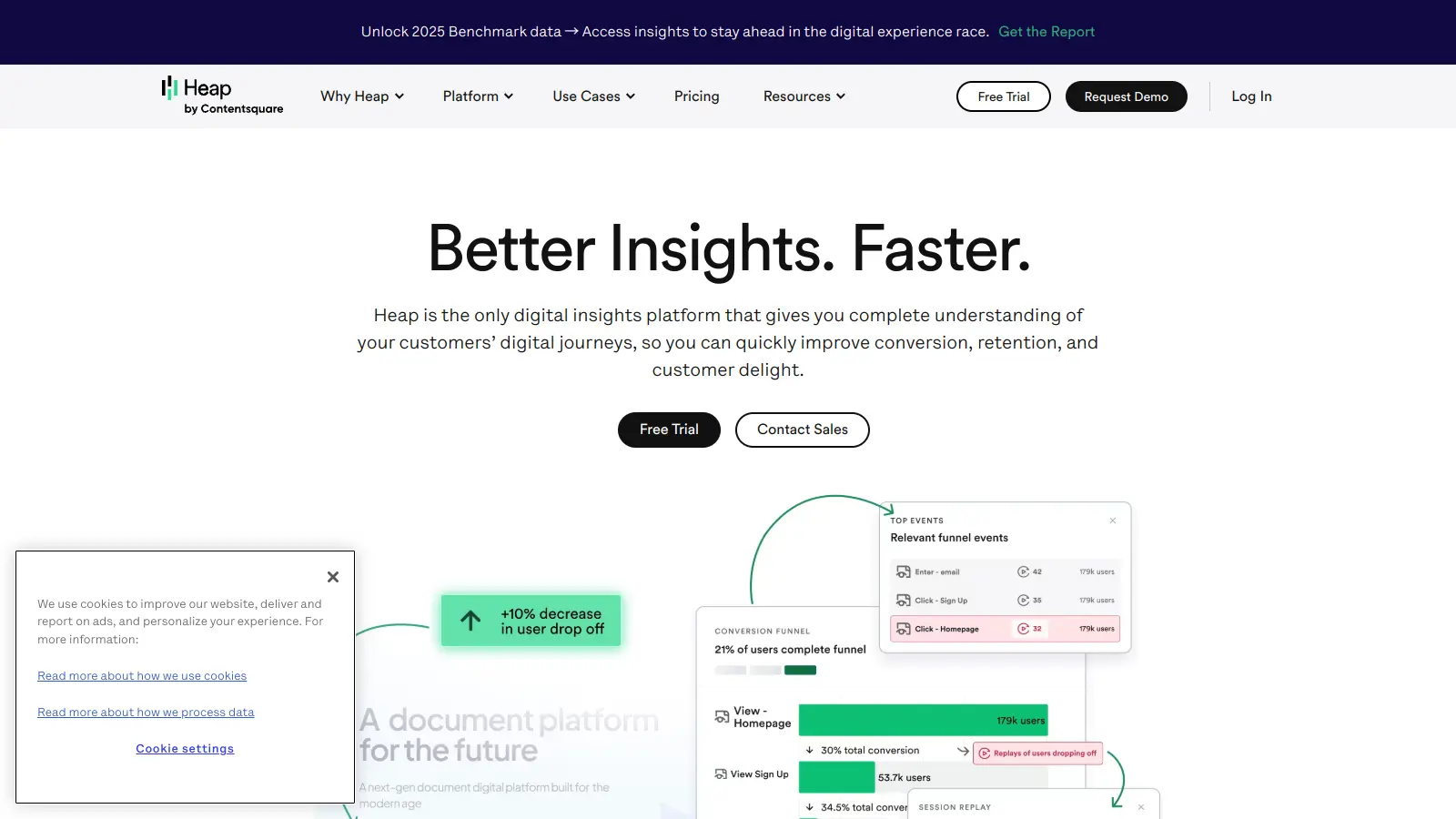
Heap automatically captures every click, tap, and page view on your site or app from the moment you install it, which means you can answer questions about past user behaviour without ever going back to engineering to add new tracking code. Product Managers and UX Researchers get the most from that retroactive capability, since they can build funnels and analyse user paths for events that happened weeks ago even if nobody thought to instrument them at the time. The tradeoff is cost and retention: the autocapture model is genuinely faster to set up than Mixpanel or manual event tracking, but data history is capped at 6 to 12 months on standard plans and paid pricing is opaque until you're in a sales conversation.

The free plan covers up to 10,000 sessions per month with 6 months of history, which is enough to evaluate whether the tool fits your workflow. Growth and Pro plans use custom session-based pricing with no published rates, so budget planning requires a sales call. Heap runs on web and mobile. Before you request a demo, know your monthly session volume: that number drives the entire cost conversation, and it's the first thing they'll ask.

how popular is Heap?

monthly search interest

40.5k/mo now

026.4k52.8k80k2023202420252026
peak interest74k/moMar 2023
searches now41k/moFeb 2026
1-month change18%vs prev month

Heap's search volume has been slowly declining since a spike in early 2023, settling into a relatively stable range around 33,000 to 50,000 monthly searches. The pattern suggests the market for product analytics tools is maturing: Heap has a committed core audience, but it's not winning new users at the rate it was two years ago. If you're evaluating it now, you're looking at a settled product rather than a hyped one.

who is Heap for?

Heap works very differently depending on your technical background and how much historical data you actually need. Pick your role below to see whether it's worth it for your situation.

overall sentiment

select your role to see what people like you are saying

Product Manager

positive

If you're tired of waiting on engineering to instrument new events, Heap's autocapture is the real deal: you can build a funnel retroactively using clicks that happened last month without touching any code. Session replays and journey maps add useful qualitative context. The main friction is the 12-month data retention ceiling on standard plans, which forces you to export data if you want year-over-year comparisons.

strengths

  • Eliminates need for developer involvement to add new tracking
  • Session replays and user journey visualization provide rich qualitative context
  • Real-time data access enables quick troubleshooting of conversion drops
  • Custom event creation and retroactive analysis without new instrumentation

concerns

  • 6-12 month data retention on basic plans limits historical trend analysis
  • Occasional data processing delays impact real-time decision-making
  • Missing standard metrics like exit rates require workarounds

what users are saying

The absence of exit rates in a tool at this price point, requiring manual workarounds to replicate a metric that every free analytics tool includes, tells you something real about where Heap's priorities have been.

Community feedback on Heap is predominantly positive, sitting at 4.4 out of 5 across over a thousand reviews on commercial review platforms. The most consistent praise centres on automatic event capture: users report being able to answer questions about past user behaviour without going back to engineering to add new tracking. That retroactive analysis capability comes up repeatedly as the feature that justifies the cost, particularly for teams that have been burned by gaps in manually instrumented analytics. The most common criticisms are specific and worth taking seriously: data retention limits on lower tiers mean historical comparisons beyond 6 to 12 months require exporting to another tool, and performance noticeably degrades when querying large datasets. A recurring frustration is the absence of standard metrics like exit rates, which you'd expect in any analytics tool at this price point and which require manual workarounds to replicate.

Our take: Heap earns its reputation for one core reason: automatic capture genuinely works, and it saves real implementation time versus tools that require upfront event planning. The pricing model is where it gets complicated. All three paid tiers use custom session-based pricing, which means you won't know what you're paying until you're in a sales conversation, and costs scale fast as your traffic grows. If you're a small product team doing focused funnel analysis, the free tier's 10,000 sessions and 6-month history will cover you. If you're comparing Heap at scale against PostHog or Mixpanel, run the numbers carefully before signing anything, because the value equation shifts considerably at higher volumes. Don't subscribe to a paid tier without clarity on your session volume costs first.
features

  • Automatic Data Collection: Heap captures every user interaction on websites and apps without manual tagging, providing behavioral insights from the start.
  • Retroactive Analysis: Analyze past user behavior retrospectively with a complete historical dataset, no prior setup required.
  • AI-Powered Insights: CoPilot and Sense let you ask questions in natural language and automatically generate charts, segments, and funnels without technical skills.
  • Data Science Tools: Illuminate detects friction points and opportunities in user journeys, helping teams spot problems they might have missed.
  • Session Replay Technology: Visual playback of user journeys shows exactly how customers navigate and interact with digital products.
  • Funnel and Conversion Analysis: Identifies drop-off points in user journeys and tracks conversion rates to optimize product performance and user experience.
  • Advanced User Segmentation: Groups users based on behaviors, demographics, and interaction patterns with unified profiles.

pricing

  • Free Plan offers up to 10,000 sessions per month with core analytics charts, unlimited enrichment sources, Guides integrations, 6 months data history, and SSO.
  • Growth Plan requires custom pricing based on session volume, includes all Free features plus unlimited users and reports, chart customization, CSV exports, 12 months data history, and email support.
  • Pro Plan requires custom session pricing, adds account analytics, engagement matrix, report alerts, session replay as an add-on, and standard support beyond the Growth plan.
  • Premier Plan is tailored for large enterprises with custom session pricing, includes all Pro features plus data warehouse integration, behavioral targeting, unlimited projects, advanced user permissions, dedicated CSM, and region-specific storage.

frequently asked questions

The free tier is worth trying if your traffic is under 10,000 sessions per month and you don't need more than 6 months of history. For paid tiers, it depends entirely on the custom quote you get, since Heap doesn't publish Growth or Pro pricing. The retroactive analysis and autocapture features are genuinely useful, but teams with high session volumes often find costs outpace the value. Get the quote, then compare it against Mixpanel or PostHog at the same volume before committing.

Product Managers who want to understand user journeys without filing tickets to engineering get the most out of it. Marketing Analytics Leads benefit from funnel and conversion path analysis, though non-technical team members will need ramp-up time. Technical Data Analysts find the retroactive query capability useful but hit performance walls with large datasets. It's a poor fit for teams needing more than 12 months of data history on standard plans.

Two limitations come up consistently. First, data retention is capped at 6 months on the free plan and 12 months on the Growth plan, which makes year-over-year comparisons impossible without exporting data elsewhere. Second, standard metrics like exit rates are missing and require manual workarounds to calculate. Query performance also degrades with large datasets, which is a real problem once your user base grows.

Heap wins on implementation speed: autocapture means you start collecting complete data immediately, with no need to define events upfront. Mixpanel requires more upfront event planning but gives you better performance at scale, more predictable pricing, and a richer set of standard metrics out of the box. If you're starting a new product and want complete historical data without instrumentation work, start with Heap. If you're scaling fast and need long data retention with advanced querying, Mixpanel is the more reliable long-term choice.

For basic dashboards and funnel reports, yes. Heap's UI is designed for self-serve analysis and the autocapture removes the need for technical setup. But Marketing Analytics Leads consistently report a steep learning curve for anything beyond pre-built reports. Creating custom funnels, segments, or data joins without help from a data analyst takes real time to learn. The AI-assisted Sense feature helps with natural language queries, but it's not a substitute for understanding how Heap structures its data model.

tools for
humans

toolsforhumans editorial team

Reader ratings and community feedback shape every score. Since 2022, ToolsForHumans has helped 600,000+ people find software that holds up after launch. how we research →

is this your tool?

claim your listing to update details, respond to our review, or upgrade to a featured partnership.

claim this listing →

other tools to check out

Google Analytics screenshot
online buzz368k
trend (1M)steady
3.8based on real user feedback, community sentiment, pricing value, and fit for target audience. see our full methodology

Google Analytics

Google Analytics is a free web analytics service by Google that helps businesses track and analyze website and app performance. It provides insights into user behavior, traffic sources, engagement, and conversions through real-time reports, audience segmentation, and advanced tracking tools. The latest version, GA4, offers machine learning capabilities, improved privacy features, and event-based tracking to measure online interactions across platforms.

best deal

Start with Google Analytics Free - Track visitor behavior, create custom reports, and get real-time insights across all your platforms at zero cost.

Sage screenshot
online buzz246k
trend (1M)steady
3.5based on real user feedback, community sentiment, pricing value, and fit for target audience. see our full methodology

Sage

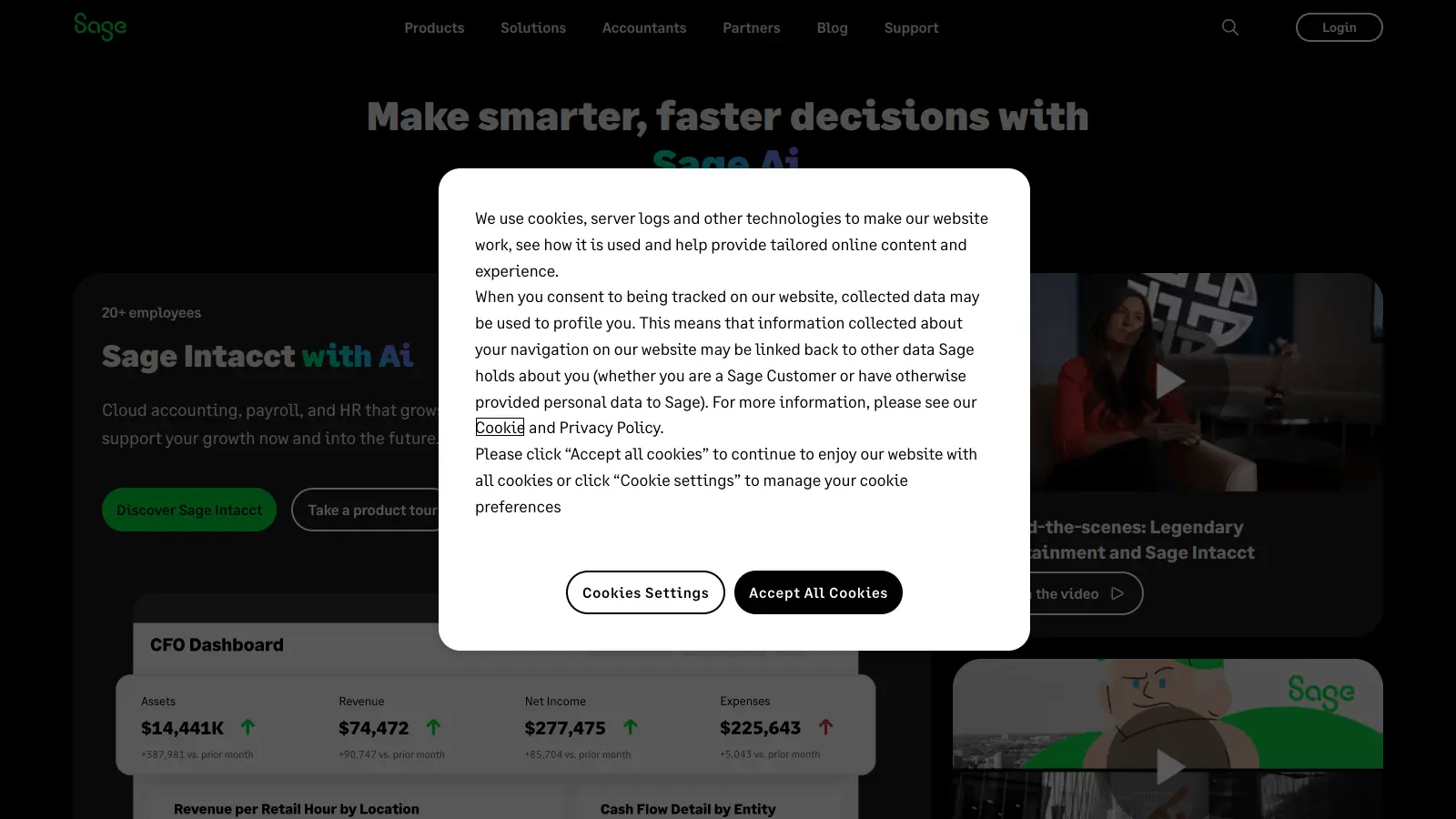
Sage is a software provider offering cloud-based accounting and enterprise resource planning (ERP) solutions for businesses. Their products range from simple accounting tools for small businesses to comprehensive ERP systems for larger enterprises, with features like invoicing, expense tracking, payroll management, data integration, and real-time analytics.

best deal

Start with Sage Accounting from just £12/month and streamline your small business finances today

SurveyMonkey screenshot
online buzz165k
trend (1M)steady
3.5based on real user feedback, community sentiment, pricing value, and fit for target audience. see our full methodology

SurveyMonkey

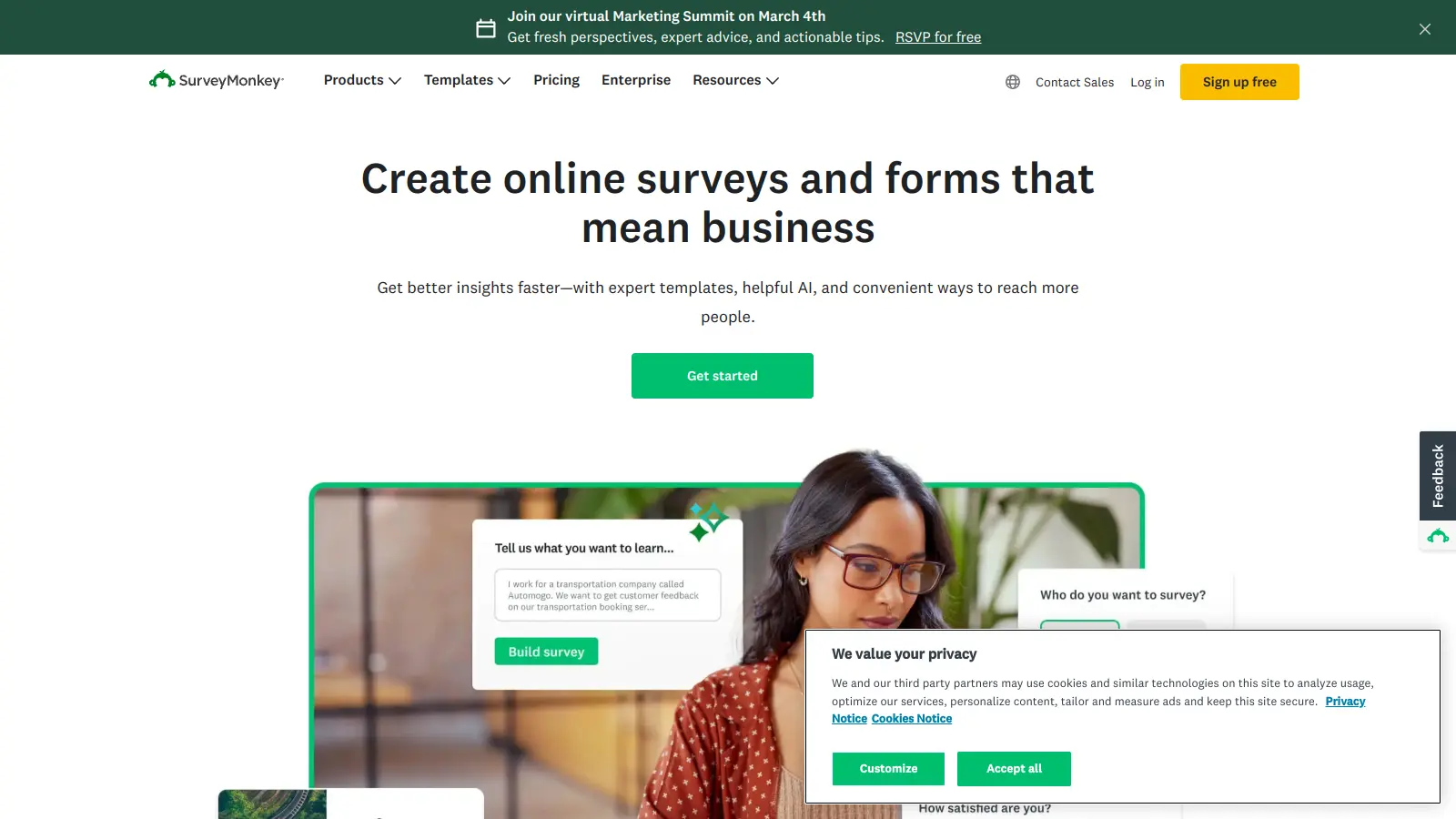
SurveyMonkey is an online survey platform that enables users to create, distribute, and analyze surveys with customizable forms and AI-powered tools. It offers multiple question types, survey templates, advanced logic, and analytics tools. Used by individuals and enterprises, SurveyMonkey provides integrations with other tools and flexible pricing plans for research and feedback collection.

best deal

Try SurveyMonkey's Basic Plan free – Create unlimited surveys with up to 10 questions each

Qualtrics screenshot
online buzz135k
trend (1M)23%
3.5based on real user feedback, community sentiment, pricing value, and fit for target audience. see our full methodology

Qualtrics

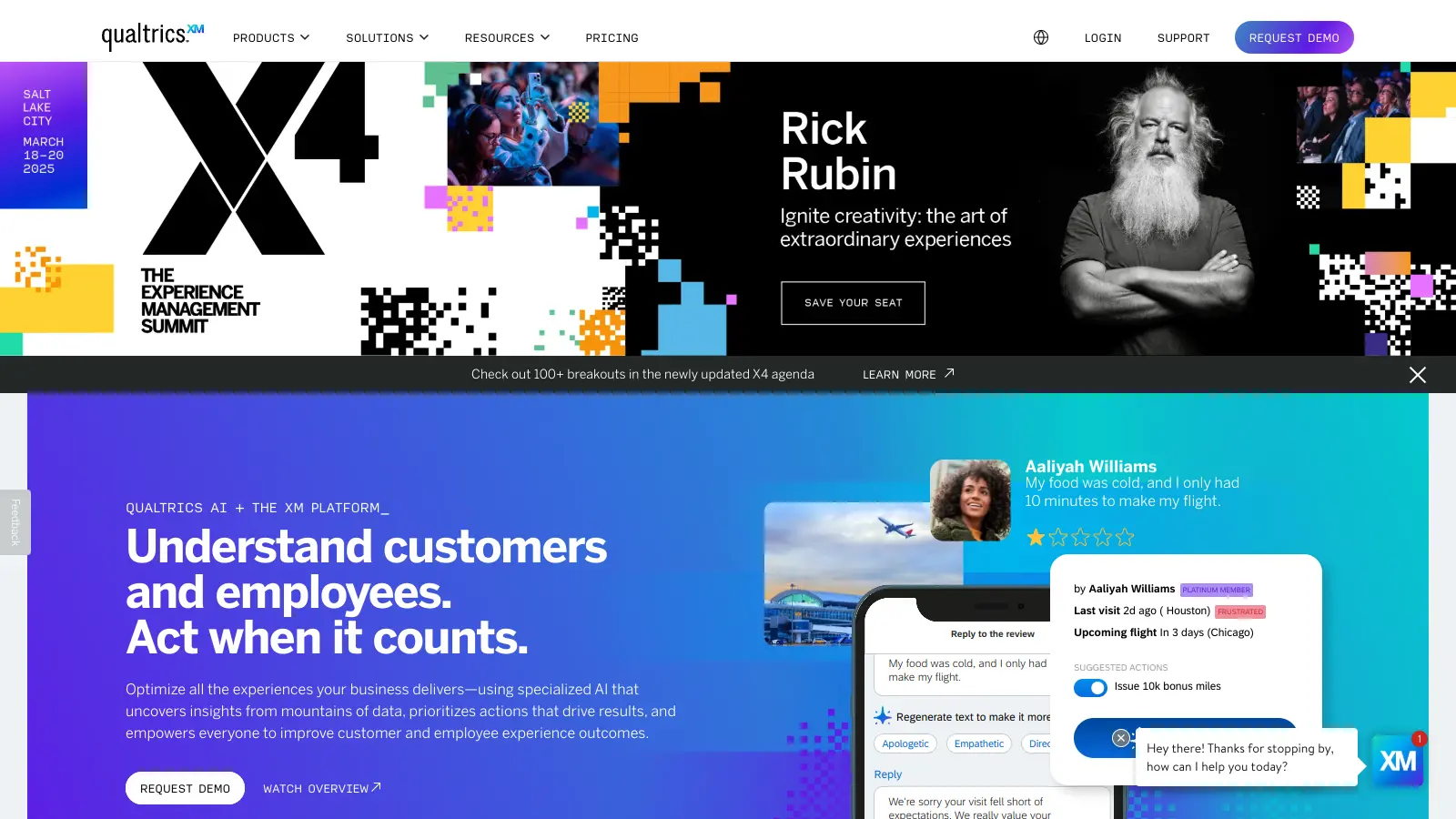
Qualtrics is an AI-powered experience management platform for creating, distributing, and analyzing surveys. It uses machine learning, natural language processing, and generative AI to collect and analyze feedback across surveys, video, calls, and chats. Features include customizable surveys, AI-driven analytics, and enterprise integrations.

best deal

Start Free Now: Get 500 survey responses with basic features on a single-user account

Seamless.Ai screenshot
online buzz135k
trend (1M)steady
3.0based on real user feedback, community sentiment, pricing value, and fit for target audience. see our full methodology

Seamless.Ai

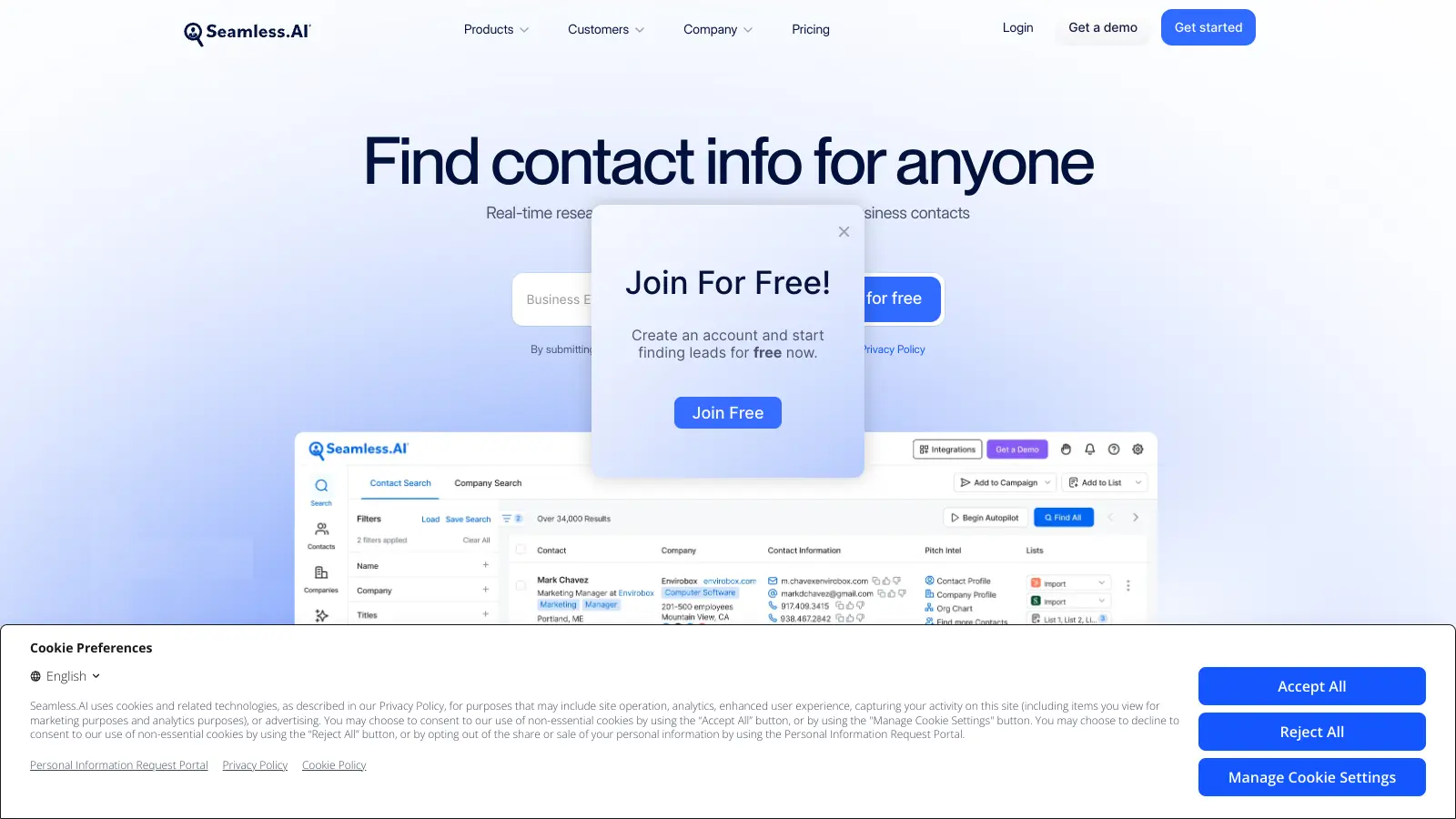
Seamless.AI is an AI-powered sales intelligence platform that helps B2B sales and marketing teams find verified contact information in real-time. Founded in 2015, it provides emails, direct phone numbers, mobile numbers, and company data to connect with decision makers. The platform includes a web app, Chrome extension, CRM integrations, and AI-powered outreach tools.

best deal

Try Seamless.AI free with 50 lifetime credits to find verified B2B contacts with real-time search

Columns AI screenshot
online buzz110k
trend (1M)steady
3.5based on real user feedback, community sentiment, pricing value, and fit for target audience. see our full methodology

Columns AI

Columns AI is a data storytelling platform that automates the creation of interactive visualizations and data stories from spreadsheets, databases, and APIs. It uses artificial intelligence to help marketers, analysts, and data teams transform raw data into narratives with annotations, animations, and voice overs. The platform offers an intuitive interface, data catalog management, and collaboration tools with pricing starting from a free tier up to $75 per year for premium features.

best deal

Lifetime deal available for $99 through AppSumo (89% off) – includes AI data storytelling and interactive visualization features