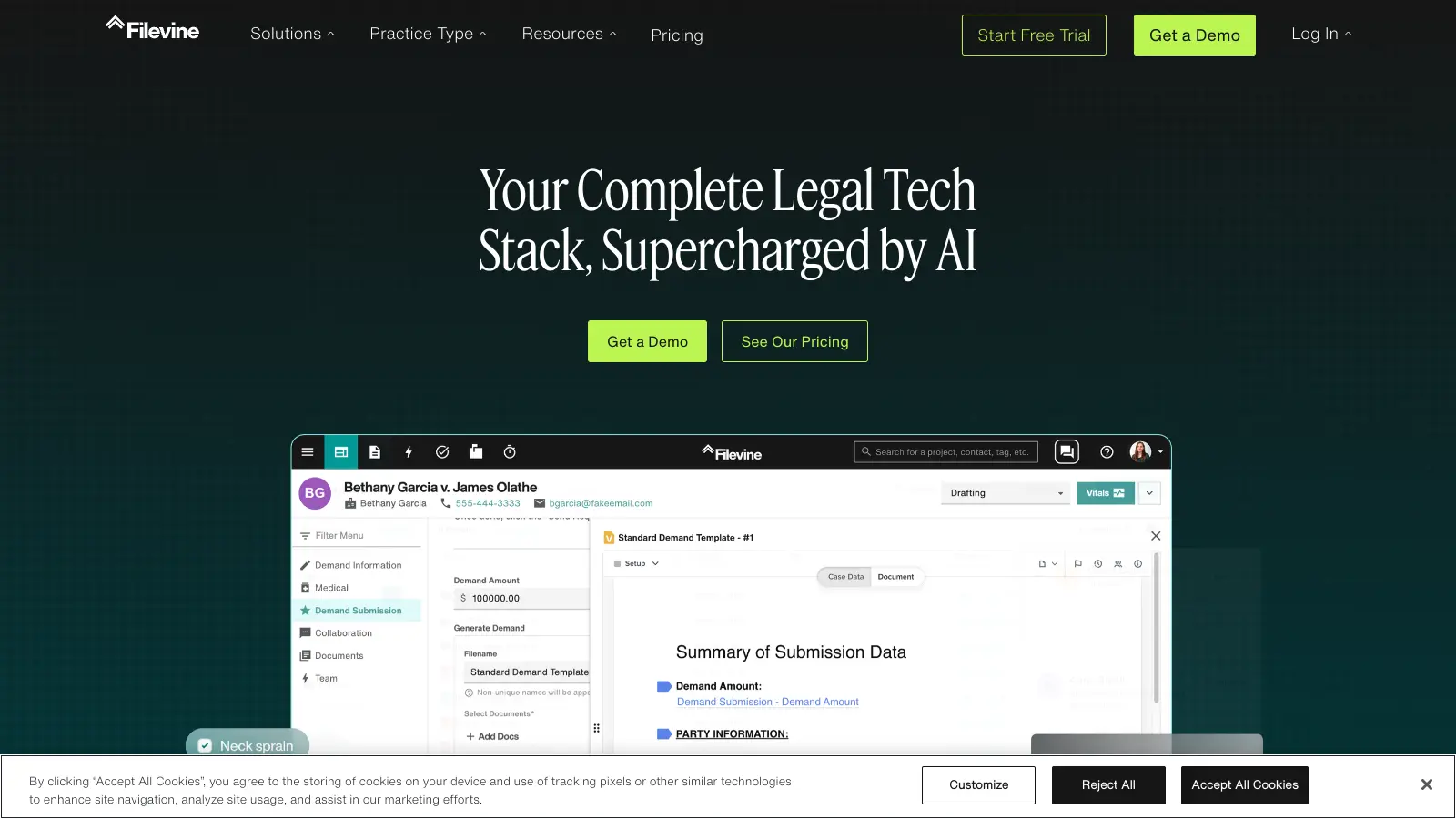
Harvey AI is a specialized artificial intelligence platform built for legal professionals to automate and streamline their daily workflows. The tool uses domain-specific AI models trained on legal datasets and case law materials to assist lawyers across different jurisdictions and practice areas.
At its core, the platform helps legal teams with contract analysis, clause extraction, document drafting, and complex research tasks. Harvey breaks down legal processes into modular, automated tasks handled by specialized AI models that work together to accomplish specific objectives. Users can train the system with their own documents, allowing for personalized assistance based on their specific needs and resources.
The platform uses agentic workflows to catch and correct hallucinations in real time, with agents performing self-review, deeper research, and escalation to human experts when needed. As of May 2025, Harvey supports multiple AI models including OpenAI's GPT, Anthropic's Claude, and Google's Gemini. Features include document management, automated drafting suggestions, Deep Research integration, and Words to Workflow functionality.
While pricing isn't publicly available, interested law firms can join a waitlist for early access and demos. The platform aims to provide different pricing tiers to accommodate firm sizes from mid-market to enterprise, with previous reports suggesting costs around $500 per lawyer annually.
Harvey has seen significant adoption in the legal sector. As of 2025, 42% of AmLaw 100 firms use Harvey, including major law firms like Allen & Overy. The platform maintains security measures to protect sensitive client information while offering the benefits of AI-assisted legal work. A partnership with LexisNexis has expanded Harvey's data sources across 8 new markets.
Harvey AI is designed for legal professionals who handle high volumes of contracts, research, and document analysis. The platform delivers efficiency gains by automating routine tasks while maintaining compliance and security standards.
Harvey AI has seen broad adoption across the legal industry, with 42% of AmLaw 100 firms using the platform as of 2025, including major firms like Allen & Overy, corporate legal departments, and enterprise organizations handling complex legal work.
Harvey AI has received positive feedback from legal professionals who use it for document analysis, contract review, and legal research. Users appreciate the AI's ability to understand complex legal language and generate legal drafts and memoranda. The platform has gained significant traction, with 42% of AmLaw 100 firms adopting it as of 2025, which speaks to its value in high-stakes legal work. Legal professionals find it particularly helpful for processing large volumes of legal documents and integrating with existing legal workflows.
Accuracy in legal interpretations remains a concern. Subscription costs are high. There's a learning curve to get optimal results, and some users report inconsistent results across different document types. Jurisdiction-specific knowledge can be limited in some cases. Users stress the importance of verifying Harvey's output, particularly for complex legal matters, and emphasize that it shouldn't replace qualified legal counsel.
Harvey AI is built specifically for legal work. Unlike general AI tools, Harvey uses domain-specific AI models trained on legal datasets and case law materials, so it understands legal terminology and concepts much better. It can help with tasks like contract analysis, clause extraction, legal research, and document drafting with more accuracy than general-purpose AI. Harvey also uses agentic workflows to catch and correct hallucinations in real time, with AI agents performing self-review and escalating to human experts when needed. As of May 2025, Harvey supports multiple AI models including OpenAI's GPT, Anthropic's Claude, and Google's Gemini.
Can Harvey AI replace a lawyer?No, Harvey AI should not replace qualified legal counsel. While Harvey can automate many legal workflows like contract analysis, document drafting, and research, it's designed to assist legal professionals, not replace them. Users emphasize the importance of verifying Harvey's output, particularly for complex legal matters. The platform includes features like escalation to human experts when the AI encounters situations beyond its capabilities. Think of Harvey as a powerful tool that makes lawyers more efficient, not a substitute for legal expertise and judgment.
How secure is my data when using Harvey AI?Harvey takes security very seriously. The platform uses enterprise-grade encryption and follows strict data protection protocols. Your documents in the Vault feature are stored securely, and Harvey doesn't share your data between clients or firms. The system also includes governance controls so you can track who accesses what information. Many major law firms, including 42% of AmLaw 100 firms, already trust Harvey with sensitive legal materials, which speaks to their security standards. If you have specific compliance requirements, their team can walk you through how their security measures align with your needs.
Can Harvey AI handle legal research across different jurisdictions?Yes, Harvey AI can handle legal research across different jurisdictions. It's trained on case law and legal materials from different regions and can find relevant precedents and statutes quickly. Harvey has expanded its data sources across 8 new markets through a partnership with LexisNexis. When you ask a research question, Harvey provides answers with proper citations so you can verify the information. It's particularly helpful when you need to compare legal approaches across different jurisdictions or when working in an area of law you're less familiar with. Just specify which jurisdiction you're interested in, and Harvey will focus its search accordingly.
What types of legal documents can Harvey AI analyze?Harvey can analyze contracts, agreements, legal memoranda, case files, and regulatory documents. The platform excels at contract analysis and clause extraction, automatically identifying key terms, obligations, and potential issues. It can process large volumes of legal documents efficiently, making it valuable for due diligence, contract review, and legal research. Some users report that results can vary across different document types, so it's always good practice to review Harvey's analysis for accuracy. The more you use Harvey with your firm's specific document types, the better it gets at understanding your particular needs.


Our newsletter comes with exclusive discounts, trials and practical insights from within the industry