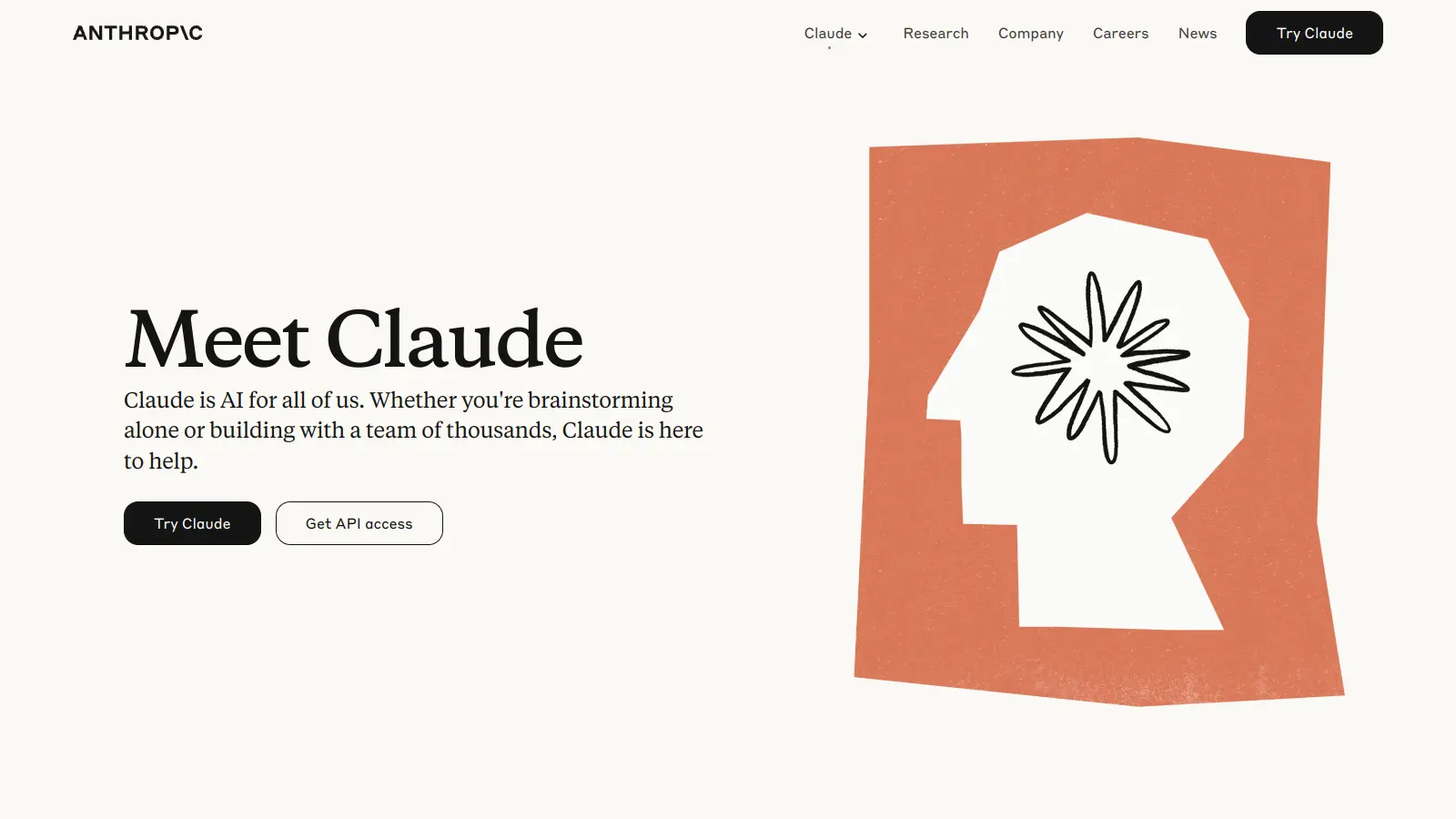
Claude is an AI assistant from Anthropic that handles writing, coding, analysis, and creative work. It operates through a web interface, mobile apps for iOS and Android, and desktop applications.
Claude focuses on safe and ethical AI interactions through Constitutional AI. The assistant processes lengthy documents with a 1M token context window, and supports multiple languages including English, Spanish, Japanese, and Mandarin Chinese.
The platform offers several subscription tiers, from a free plan for basic usage to Pro, Max tiers, Team, and Enterprise plans. Each tier provides different levels of access to Claude's capabilities and newer models like Claude Opus 4.6, which features adaptive thinking that adjusts reasoning depth based on task complexity.
Recent updates have added vision analysis for interpreting visual data, code generation across 80+ programming languages, and context compaction for long-running conversations. Claude handles tasks from document summaries to complex coding projects.
Claude works for professionals, students, and teams who need AI assistance for writing, coding, research, and creative projects.
Marketing agencies, software development teams, legal firms, and educational institutions use Claude where clear communication and efficient information processing matter.
Claude gets praise for strong reasoning abilities and human-like writing style. Users like its ethical guardrails through Constitutional AI and its helpfulness for complex problem-solving and analysis. The tool performs fast and reliably, particularly in coding tasks across multiple programming languages. Its thoughtful approach to nuanced questions makes it stand out.
Claude is overly cautious and refuses certain prompts on sensitive topics. The free tier has rate limits that restrict daily usage, and full features require a subscription. Responses are often verbose or repetitive. Web search exists but real-time web access is still limited compared to competitors. Claude also struggles with certain creative or fictional tasks where guardrails get too restrictive.
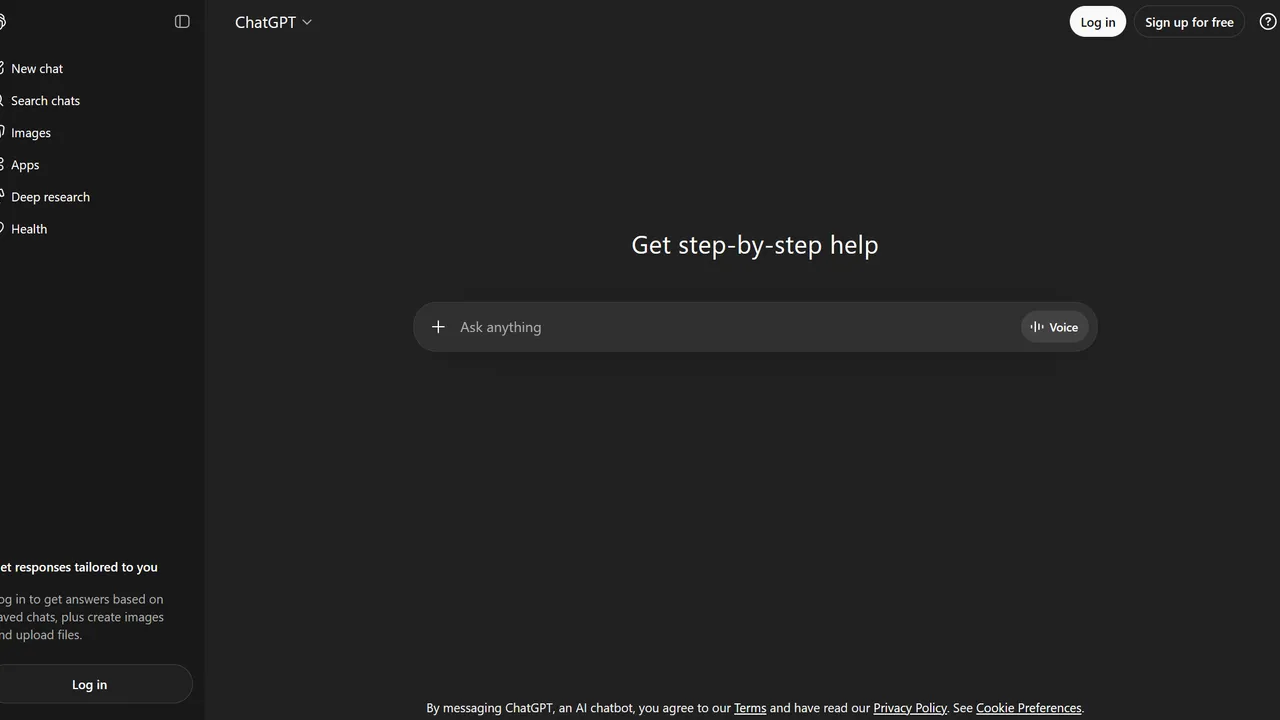
Claude uses Constitutional AI that prioritizes safe, helpful interactions with strong ethical guardrails. While both handle conversations and content creation, Claude often excels at understanding nuance and complex instructions. Claude Opus 4.6 offers stronger reasoning capabilities with adaptive thinking that adjusts reasoning depth based on task complexity. Claude supports a 1M token context window (with premium pricing beyond 200K tokens), letting you analyze much longer documents than most alternatives. The main trade-off is that Claude can be more cautious about refusing certain prompts, and its web access is more limited than ChatGPT's plugin ecosystem.
Can Claude work with images and documents?Yes. Claude can analyze images and understand their content in detail through its vision analysis capabilities. You can upload photos, screenshots, charts, or diagrams, and Claude will describe what it sees and answer questions about the visual content. For documents, you can work with PDFs, Word files, and text documents. With its 1M token context window, Claude excels at summarizing extremely long documents, extracting key information, and answering specific questions about the content. This makes it helpful for research, legal document analysis, business intelligence, and handling complex information quickly.
What are the limitations of using Claude?While web search has been added, real-time web access is still more limited compared to competitors. Claude's knowledge has a cutoff date, meaning it won't know about very recent events. The free plan limits you to 30-100 daily messages based on length and complexity. Claude occasionally makes factual errors or becomes verbose and repetitive. It can analyze images but can't generate them. Claude is overly cautious and refuses certain prompts on sensitive or creative fictional topics due to its ethical guardrails. The extended 1M token context window requires premium pricing beyond the standard 200K tokens.
Is Claude safe for enterprise use?Claude is designed with enterprise use in mind, particularly through its Team and Enterprise plans. Anthropic built Claude using Constitutional AI to maintain safety and alignment, making it suitable for regulated, brand-safe AI systems. Enterprise plans provide additional security controls including SSO, domain capture, role-based access, SCIM, and audit logs. These features make Claude appropriate for customer support operations, legal document analysis, and other business-critical applications. However, always review your specific compliance requirements and use the appropriate tier with necessary security features for your sensitive data.
How do I get the most out of Claude?Be specific and detailed in your requests. Break complex tasks into smaller steps rather than asking for everything at once. When you need Claude to follow particular formats or styles, provide clear examples of what you want. Take advantage of the extended context window by uploading lengthy documents for comprehensive analysis. For coding tasks, specify the programming language and provide context about your project across the 80+ languages Claude supports. Try different approaches if you don't get the results you want - rephrasing your question often helps. Claude's adaptive thinking means it will allocate more reasoning effort to complex problems, so don't hesitate to ask challenging questions. Remember that Claude works best as a thought partner rather than a perfect oracle, so verify important information.


Our newsletter comes with exclusive discounts, trials and practical insights from within the industry