WalkMe Review 2026 - Features, Pricing & Deals

Last Updated
•
Feb 14, 2026

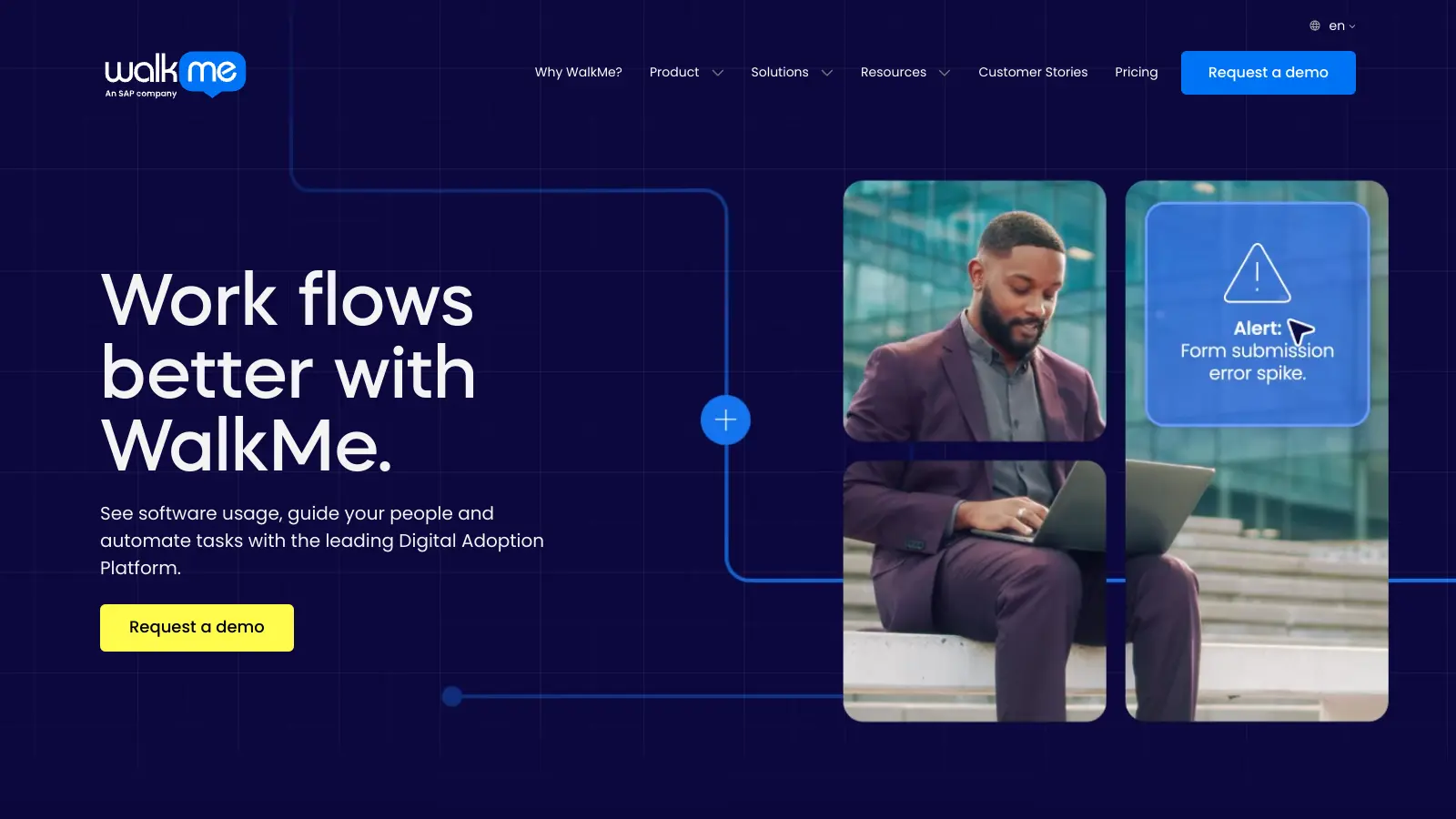
WalkMe is a Digital Adoption Platform that helps businesses make better use of their software investments. The platform overlays on enterprise applications to identify workflow bottlenecks and deliver AI-powered assistance directly within users' daily work applications.

At its core, WalkMe uses contextual AI technology to automatically understand user context and intent, then delivers proactive, task-aware guidance without requiring prompt engineering. The platform includes step-by-step walkthroughs, automated workflows, and real-time support features. Organizations can create customized guides, add tooltips, and gather usage data to understand where users need extra help.

The platform works across desktop, web, and mobile applications, making it suitable for both internal employee training and customer-facing support. Users can access assistance through interactive guides, AI copilots, and automated task lists. WalkMe's AI capabilities include enterprise search, assisted reading, generative writing, and form input validation.

WalkMe is now owned by SAP and operates as an enterprise-focused solution with custom pricing. Annual costs typically range from $43,000 to $79,000 for median deployments, though actual pricing varies widely based on user count, application coverage, and selected features. The platform is designed for larger organizations implementing digital transformation initiatives.

Whether you're onboarding new employees, launching a new software system, or trying to improve user adoption rates, WalkMe provides tools to simplify these digital processes. The platform integrates with many common business applications and offers analytics to track progress and identify areas for improvement.

Who is WalkMe for?

WalkMe is designed for enterprise organizations that need to simplify complex software adoption processes and increase digital efficiency across their workforce. This tool delivers measurable results by cutting training time, reducing support tickets, and improving user satisfaction across digital platforms.

  • IT and Digital Transformation Leaders who need to roll out new software with minimal disruption and maximum adoption rates across the enterprise
  • Sales Teams looking for assistance with CRM updates, competitive analysis, and email writing directly within their daily workflows
  • HR and Training Managers who need efficient ways to onboard employees, conduct compliance checks in performance reviews, and streamline candidate feedback processes
  • Customer Success Teams wanting to improve user adoption and reduce support inquiries through self-service guidance
  • Operations Managers who need to standardize processes and ensure consistent execution across digital workflows
  • IT Support Teams seeking to automate troubleshooting and support ticket resolution with AI-powered assistance
  • Business Analysts needing insight into how employees use software tools to identify bottlenecks and improvement opportunities

WalkMe has become an essential tool across industries including financial services, healthcare, retail, and technology, especially for enterprise organizations implementing AI transformation and digital adoption initiatives.

Online Reviews (Last 6 Months Summarised)

WalkMe receives praise for being easy to implement and customize, with users particularly appreciating the platform's ability to improve user onboarding and significantly reduce support tickets. The customer support team earns consistent high marks for responsiveness and helpfulness. Integration with major platforms like Salesforce and SAP works well, and the analytics capabilities provide valuable insights into user engagement and adoption patterns.

High pricing is a common complaint, making it difficult for smaller teams to justify the investment. Users report a steep learning curve when trying to create advanced customizations, and performance issues can occur on complex sites. Some end-users find the walkthroughs intrusive. The limited free tier or trial restrictions make it hard to fully evaluate the platform before committing to a substantial contract.

Features

  • Contextual AI Assistance: Delivers task-aware AI copilot functionality that detects user intent and suggests next best actions in real-time, providing proactive support without requiring prompt engineering.
  • Smart Walk-Thrus: Provide step-by-step guidance through complex processes with real-time on-screen instructions, making it easier for users to complete tasks successfully and learn new software quickly.
  • WalkMe Stories: Automatically creates documentation by transforming workflows into annotatable guides, simplifying the process of capturing and sharing knowledge across teams.
  • AI-Powered Productivity Tools: Includes assisted writing, enterprise search, form input validation, and custom AI actions that help users work more efficiently across applications.
  • In-Flow Learning: Delivers just-in-time training embedded directly in daily workflows, helping users quickly adapt to new platforms or workplace systems without leaving their work context.
  • Text-to-Action Capabilities: Enables natural language interactions that automate tasks, reduce errors, and provide instant support across digital platforms.
  • AI-Powered Dashboards: Track AI adoption, monitor Digital Adoption Platform projects, and analyze software usage with advanced insights that help organizations optimize digital investments.

Pricing

  • WalkMe offers custom Enterprise pricing with median annual costs ranging from $43,000 to $79,000 depending on deployment scale and requirements.
  • Actual subscription costs vary widely from $9,000 to $150,000+ per year based on monthly active users (MAU), number of applications covered, selected features, and contract negotiations.
  • Pricing is based on MAU-based licensing with modular add-ons available for additional capabilities and integrations.
  • Implementation costs typically range from $10,000 to $100,000+ and are separate from the platform subscription fee.
  • Internal resource costs for 1-3 dedicated staff members to manage WalkMe content typically add $80,000 to $300,000 per year in personnel expenses.
  • Minimum contract values rarely fall below $10,000, and pricing is not publicly displayed on the website—all quotes require direct sales consultation.

Frequently Asked Questions

Will WalkMe still work after being acquired by SAP?

Yes, WalkMe continues to operate after the SAP acquisition. SAP has integrated WalkMe's technology with their existing solutions while maintaining support for current WalkMe customers. If you're already using WalkMe, you shouldn't experience any service interruptions. You'll likely see new features as SAP combines WalkMe with their Joule AI assistant and other tools in their ecosystem, potentially expanding the platform's AI capabilities and enterprise integration options.

How difficult is it to create guides in WalkMe?

Most users find creating basic guides in WalkMe fairly straightforward, even without technical skills. The platform uses a point-and-click editor that lets you build step-by-step walkthroughs by selecting elements on your website or application. For simple guides, you can get started in minutes. More complex interactions or custom scenarios require more training, and users report a steep learning curve for advanced customizations. WalkMe offers extensive documentation and support resources to help you learn, and many users mention they were creating useful content within their first day of using the tool.

How does WalkMe pricing work for enterprises?

WalkMe doesn't publish pricing publicly—you need to contact their sales team for a custom quote. Pricing is based on monthly active users (MAU), the number of applications you want to cover, and which features you select. Median annual costs range from $43,000 to $79,000, but actual prices vary from around $9,000 to over $150,000 depending on your needs. You'll also need to budget for implementation costs (typically $10,000 to $100,000+) and internal staff to manage the platform. Contract minimums rarely fall below $10,000, so WalkMe is really designed for enterprise budgets.

What happens if my website changes - will I need to redo all my guides?

WalkMe is designed to handle most minor website changes without breaking your guides. The platform uses several methods to identify elements on your pages, so if something moves or changes slightly, your guides often continue to work. However, major redesigns or structural changes to your website will likely require updates to your WalkMe content. WalkMe includes tools to help you identify and fix broken steps, and their Smart Walk-Thru features are somewhat resilient to changes in your interface.

How long does it take to implement WalkMe across my organization?

Implementation time varies based on your organization's size and needs. A basic setup for a single application can take as little as 1-2 weeks. However, enterprise-wide deployments across multiple systems typically take 2-3 months to fully implement. This includes the technical setup, creating initial content, and training your team. Many companies start with a pilot program on one application before expanding to others. WalkMe provides implementation support, but having a dedicated internal resource to manage your WalkMe content will speed up the process and improve your results.

Other Tools To Check Out

No items found.

Find Out How Best To Utilise Tools

Our newsletter comes with exclusive discounts, trials and practical insights from within the industry

Sign Up Today