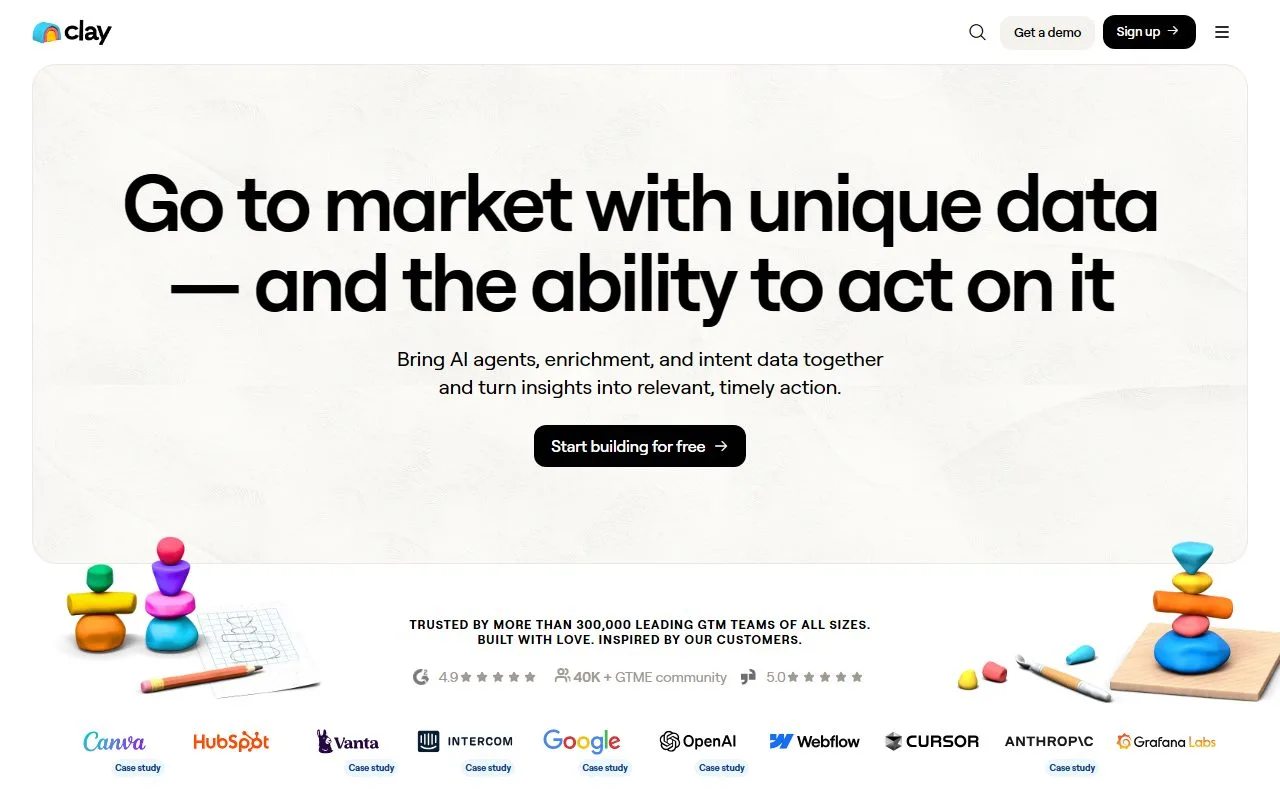
Clay GTM is a data enrichment and outreach automation platform built for sales and marketing teams. It combines 150+ data enrichment providers into a single marketplace, giving users access to multiple data sources through one subscription.
The platform helps businesses build targeted prospect lists, enrich contact information, and automate personalized outreach campaigns from one central location. The system works through a no-code smart table interface similar to spreadsheets, where you can import data from sources like LinkedIn, Google Maps, CRMs, CSV files, and webhooks.
A standout feature is Claygent, an AI-powered web research agent that can gather unstructured data from across the web. This tool works alongside the platform's ability to integrate with popular services like Semrush, SimilarWeb, and Clearbit. You can also use AI models like GPT, Claude, and Gemini for content generation and data processing. The platform detects intent signals like job changes, website visits, and mentions to help you time your outreach better.
The platform offers several pricing tiers, from a free plan with 100 credits per month to Pro plans for larger teams. Businesses can test the service through a 14-day trial that includes full access to the Pro plan features.
Clay now serves thousands of users including notable companies like Intercom, Verkada, and Notion. The platform continues to focus on balancing AI automation with human creativity in sales processes.
Clay GTM is suited for sales and marketing professionals who need to streamline their lead generation and outreach efforts. The platform helps teams save hours on data enrichment and campaign management, pulling prospect information from sources beyond just LinkedIn.
Clay GTM is commonly used across technology, SaaS, financial services, and professional services industries, particularly by growth-focused teams looking to work smarter rather than harder.
Public reviews and feedback about Clay GTM are relatively scarce compared to more established sales tools. The platform serves thousands of users and has attracted notable companies, but there isn't much discussion yet on major software review sites or user forums.
The limited public conversation makes it hard to gauge widespread sentiment about the platform's strengths and pain points. If you're considering Clay, you'll need to rely on the 14-day trial and direct conversations with their team rather than extensive third-party reviews. The lack of buzz doesn't necessarily reflect quality—it may just be newer to market or serve a niche that doesn't actively review tools online.
Clay stands out by combining over 150 data enrichment providers into one marketplace, so you don't need multiple subscriptions. This gives you better data coverage than single providers like ZoomInfo while cutting costs. The platform includes fallback logic that automatically tries different providers if one doesn't have the data you need. Unlike most tools that just offer data, Clay uses AI agents to analyze websites, PDFs, and search results to find information that would normally take hours of manual work. The platform also builds personalized outreach messages based on your enriched data through AI models like GPT, Claude, and Gemini.
How does Clay's AI web research actually work?Clay's AI agent (called Claygent) works like a digital assistant that can grab hard-to-find data from websites. Unlike regular scrapers that need exact patterns, Claygent can understand what information to look for even when pages aren't structured the same way. It reads through web pages, PDFs, and other content just like a human would, pulling only publicly available information. This means you can gather data from sources like Google Maps, GitHub, or any website without writing complex code or dealing with captchas. You can also use it for contextual research tasks that go beyond simple data extraction.
Can I use Clay if I'm not in sales?Yes! While Clay is popular with sales teams, it works great for many other uses. Recruiters use it to find candidates and enrich resumes with additional information. Marketers build targeted content campaigns with better audience data. Researchers gather information across multiple sources without manual copying and pasting. Investors use it to research companies and markets. The tool is helpful for anyone who needs to collect, organize, and act on data from multiple sources, regardless of your specific field.
How many credits do I need for basic enrichment tasks?Credit costs vary based on what you're looking for and which data providers you choose. Finding basic contact info like an email address might cost 1-2 credits with some providers or 5+ with premium sources. Company details typically range from 2-10 credits depending on depth. Clay lets you pick which sources to use for each task, so you can choose cheaper options for basic needs and save premium credits for harder-to-find information. The free plan with 100 credits is enough for small experiments, while the Starter plan with 2,000 credits works for individuals and small projects. Teams doing regular outreach typically need the Explorer or Pro plan.
Does Clay integrate with my existing tools?Clay connects with most popular business tools. It has direct integrations with major CRMs like Salesforce, HubSpot, and Pipedrive so your data stays in sync. It works with outreach platforms like Apollo, Lemlist, Instantly, and Salesforge for automated campaigns. You can pull data from tools like Semrush, LinkedIn, GitHub, and SimilarWeb. Clay also offers an HTTP API and webhooks that let you connect to practically any tool with API access. If you use spreadsheets, you can import and export CSV files easily. The system is built to fit into your existing workflow rather than forcing you to change it.


Our newsletter comes with exclusive discounts, trials and practical insights from within the industry