Best Trello Alternatives in 2026: For Teams Who Need More
7 alternatives reviewedlast reviewed 5 april 2026
Editorial note:this was originally published in april of 2026
Trello is fast to set up and genuinely good for simple Kanban workflows. But if you need Gantt charts, time tracking, nested subtasks, or more than 10 boards without paying, you've probably already hit its ceiling.
This page covers 7 alternatives worth considering, ranging from free open-source tools to full project management platforms. Each pick is assessed on pricing, how well it handles the gaps Trello leaves, and how painful it is to switch.
Whether you're a solo operator, a growing engineering team, or a department that needs real reporting, there's a specific tool here that fits better than a generic upgrade.
We collect first-hand reviews from people who use these tools every day — what works, what doesn't, whether it's worth paying for. We research pricing, features, and comparisons so that feedback has real context behind it. For this guide, we prioritised tools with clear free-tier limits, direct Trello import options, and at least one feature category where they outperform Trello on an equivalent plan. Read our full research methodology.
looking for a Trello alternative?
tell us what you're considering and why — it helps others in the same position.
What is Trello and why do people look for alternatives?
Trello is a Kanban-based project management tool built around boards, lists, and cards. It's owned by Atlassian and has a free plan that supports unlimited cards and up to 10 boards per workspace. Teams use it to track tasks, move work through stages, and collaborate without much setup overhead.
It's popular with freelancers, small marketing teams, and agile dev teams who want visual task tracking without a steep learning curve. The paid plans start at $5 per user per month (billed annually) and unlock additional views like timeline and calendar, plus more automation.
People start looking for alternatives when they need features Trello deliberately leaves out: subtask dependencies, built-in time tracking, Gantt views on the free plan, or more flexible reporting. The 10-board cap on the free plan also pushes growing teams toward either paying up or switching entirely.
A flat-rate team tool combining to-dos, messaging, docs, and scheduling.
Teams of 15 or more who want one flat monthly price
PaidFrom $15/user/month (Basecamp Plus); flat $299/month for unlimited users
vs TrelloBetter than Trello for teams who need Gantt charts, time tracking, and unlimited boards without paying anything.
our top pick
1
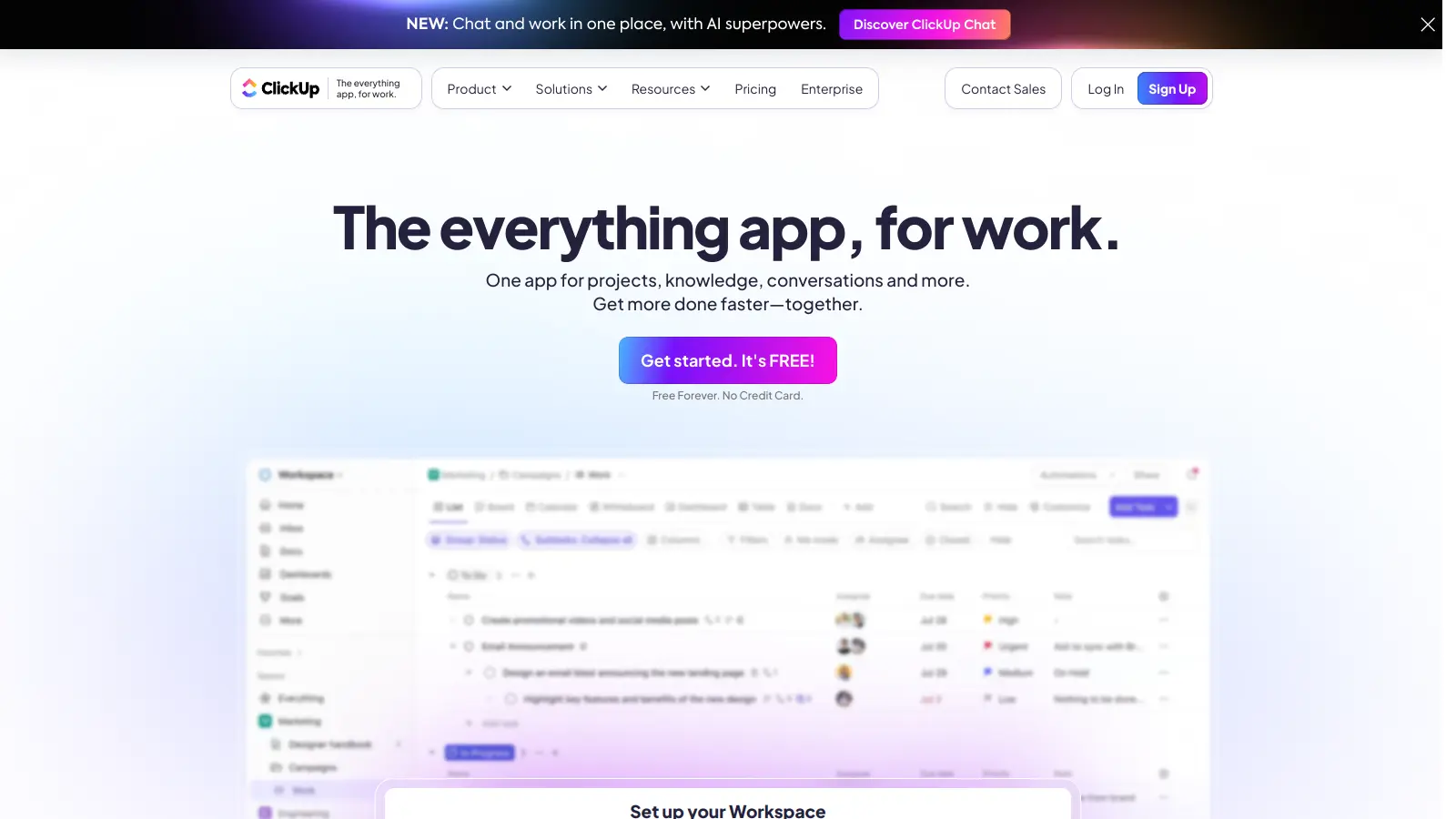
ClickUp
A project management platform that does Kanban, Gantt, docs, and more.
Freemium
Best for · Teams replacing Trello and wanting everything in one toolPricing · Free plan available; paid from $7/user/month
ClickUp packs Kanban boards, Gantt charts, time tracking, subtasks, and a docs layer into one platform. The free plan is genuinely usable: unlimited tasks, unlimited members, and no board cap, though storage is capped at 100MB. It imports Trello boards directly and supports CSV, so migration is straightforward.
Pros
✓Unlimited boards and tasks on free plan
✓Built-in time tracking on paid tiers
✓Direct Trello import supported
Cons
✗Interface is cluttered until you disable unused features
vs TrelloBetter than Trello when your projects have task dependencies and you need timeline views without hacking them together with Power-Ups.
2
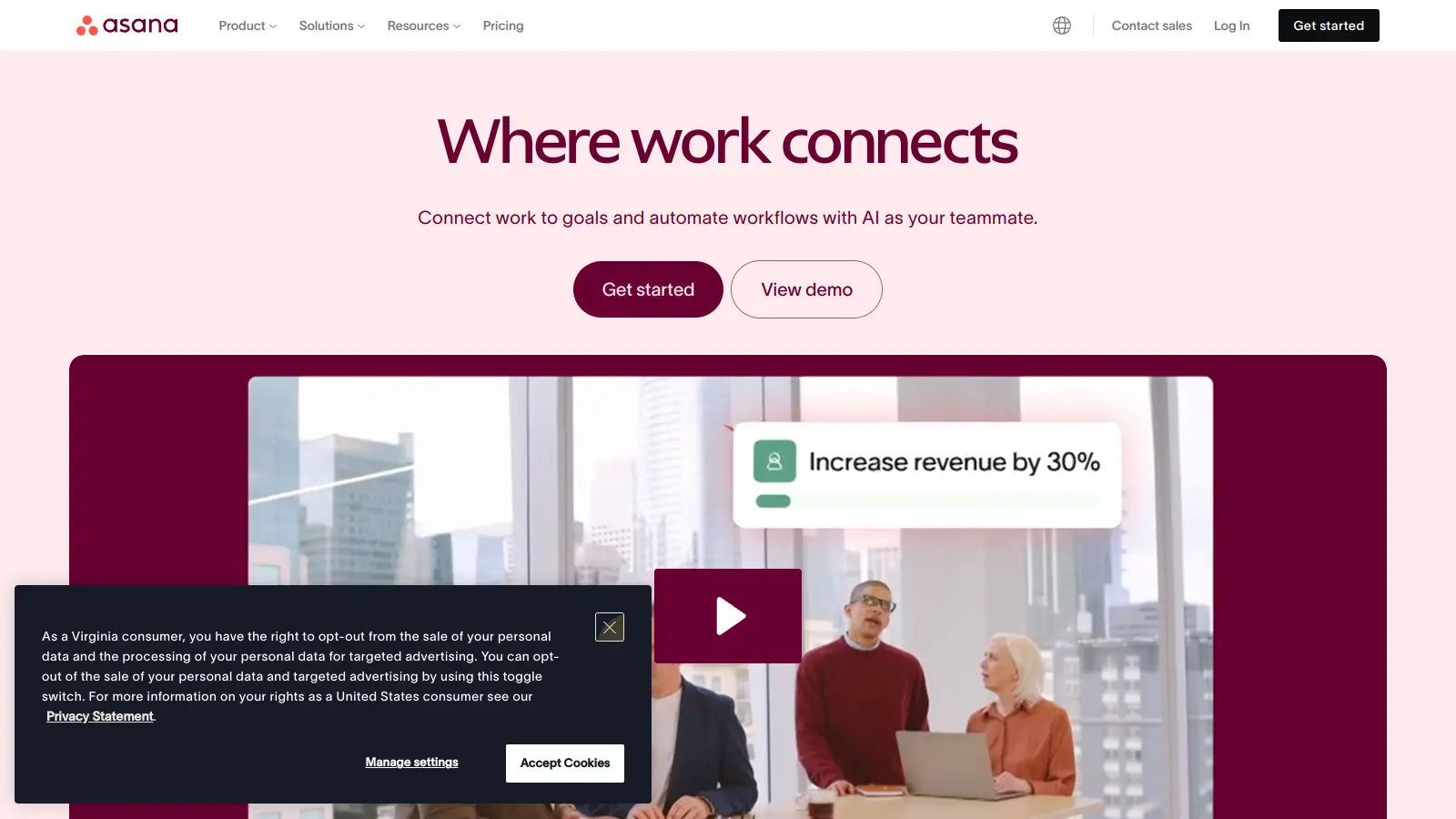
Asana
Task and project tracking with strong dependency and timeline support.
Freemium
Best for · Mid-size teams needing task dependencies and cross-project reportingPricing · Free plan available; paid from $10.99/user/month
Asana handles task dependencies, project timelines, and workload views that Trello simply doesn't have. The free plan supports up to 10 users with unlimited tasks and projects, and it includes a list view, board view, and calendar. Paid plans start at $10.99/user/month and unlock Gantt-style timelines and advanced reporting.
Pros
✓Task dependencies work clearly out of the box
✓Direct import from Trello via CSV or native tool
✓Portfolio view for tracking multiple projects
Cons
✗Free plan caps at 10 users, which limits growing teams
vs TrelloBetter than Trello for teams that need custom field types, formula columns, and CRM-style tracking alongside standard project boards.
3
monday.com
A flexible work platform with more view types and field customisation than Trello.
Freemium
Best for · Small to mid-size teams needing a CRM and project tool in one placePricing · Free for 2 seats; paid from $9/user/month
monday.com gives you customisable boards with over 30 column types, multiple views including Gantt and workload, and more automation than Trello's free plan allows. It's more of a general work operating system than a pure Kanban tool, which makes it better for teams who manage both projects and ongoing operations in the same place.
Pros
✓30+ column types for flexible data modelling
✓Automations available on most paid plans
✓Strong dashboard and reporting features
Cons
✗Free plan is limited to 2 seats, making it impractical for most teams
vs TrelloBetter than Trello when your team needs a shared knowledge base and project tracker that stay in sync without third-party integrations.
4
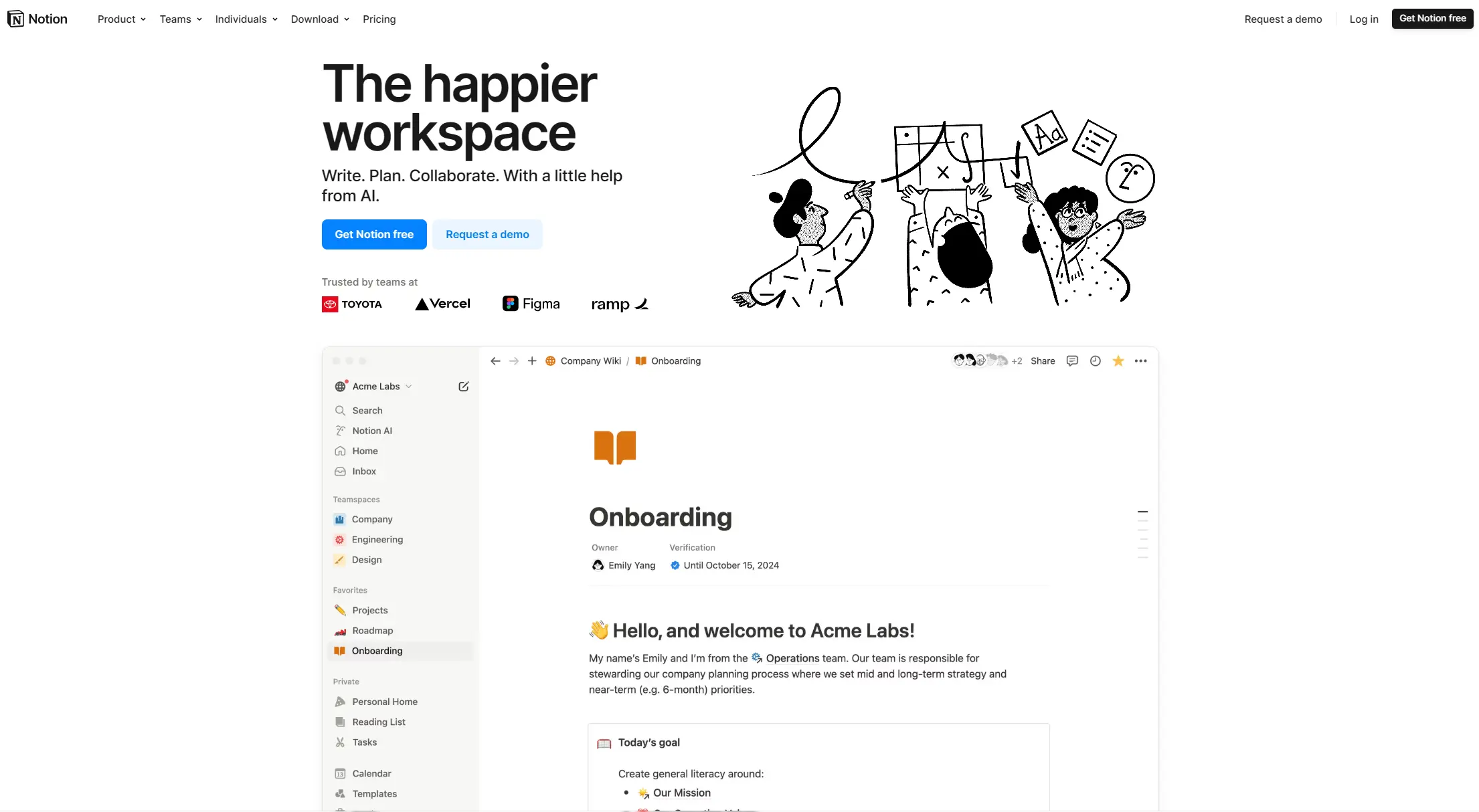
Notion
A docs-and-databases tool that handles project tracking alongside team wikis.
Freemium
Best for · Knowledge workers who want task tracking and docs in the same workspacePricing · Free plan available; paid from $10/user/month
Notion combines a wiki, database, and Kanban board into one workspace. You can build a project tracker that links directly to meeting notes, SOPs, and team documentation without switching apps. It's not as purpose-built for project management as Trello, but for teams who are already managing a lot of written content alongside tasks, the consolidation is worth it.
Pros
✓Board, table, and calendar views on the free plan
✓Linked databases connect tasks to docs natively
✓Generous free plan with unlimited pages
Cons
✗Task management features are less structured than dedicated PM tools
vs TrelloBetter than Trello for dev teams who need sprint cycles, issue prioritisation, and Git integration that Trello requires paid Power-Ups to approximate.
5
Linear
Issue tracking and sprint management built specifically for software teams.
Freemium
Best for · Software engineering teams running sprints and tracking bugsPricing · Free for small teams; paid from $8/user/month
Linear is fast, keyboard-driven, and designed around software development workflows including sprints, cycles, and issue hierarchies. It integrates with GitHub, GitLab, and Figma out of the box. It's not a general-purpose project tool, but for engineering teams using Trello as a makeshift issue tracker, it's a significant upgrade.
Pros
✓Keyboard-first interface loads extremely fast
✓Native Git integration for commit-to-issue linking
✓Sprint cycles and backlogs built in, not bolted on
Cons
✗Not suited for non-technical teams or general project tracking
✗Limited customisation compared to broader PM tools
vs TrelloBetter than Trello for agile teams who want Scrum sprints, story points, and the option to self-host without paying per user.
6
Taiga
An open-source project management tool with Kanban, Scrum, and custom fields.
Freemium
Best for · Agile teams who want open-source software with Scrum supportPricing · Free tier available; cloud plans from $5/user/month
Taiga is open-source and supports both Kanban and Scrum workflows with custom fields, story points, and reporting. It has a native Trello importer, which makes migration practical. You can self-host it for free or use the cloud-hosted version, which has a free tier for public projects and small private teams.
Pros
✓Direct Trello board import built in
✓Scrum and Kanban modes in the same project
✓Self-hosting option available at no cost
Cons
✗UI feels dated compared to newer PM tools
✗Smaller integration ecosystem than Trello or Asana
vs TrelloBetter than Trello for teams large enough that per-user pricing becomes expensive, especially if they also need messaging and docs in the same tool.
7
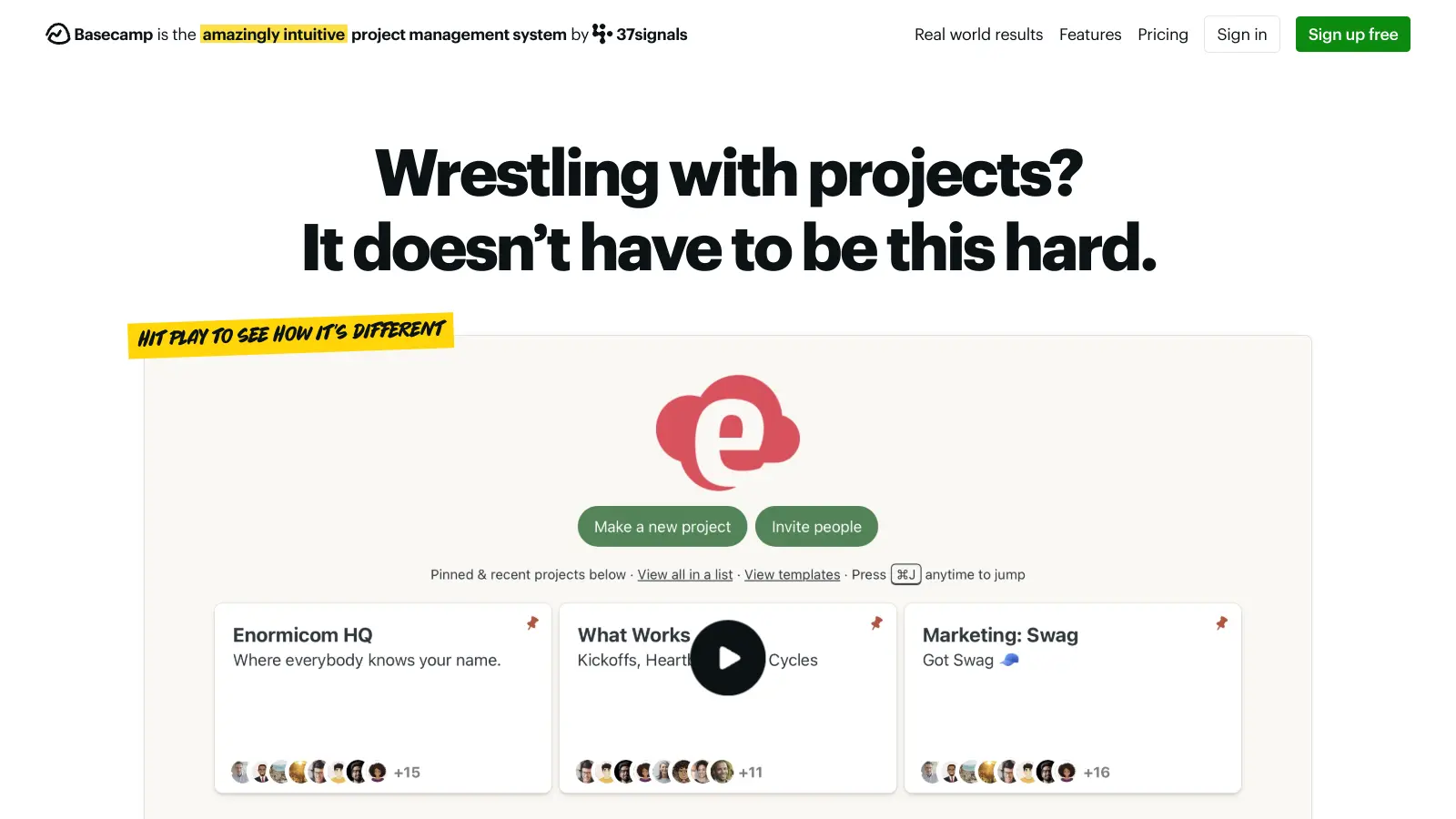
Basecamp
A flat-rate team tool combining to-dos, messaging, docs, and scheduling.
Paid
Best for · Teams of 15 or more who want one flat monthly pricePricing · From $15/user/month (Basecamp Plus); flat $299/month for unlimited users
Basecamp charges a flat $299/month for unlimited users rather than a per-seat fee, which makes it cost-effective for larger teams. It combines to-do lists, message boards, file storage, and group chat in one place. It doesn't have Kanban boards natively, but the to-do structure handles most task tracking needs and the fixed pricing model is a hard-to-match deal at scale.
Pros
✓Flat $299/month covers unlimited users
✓Built-in message boards reduce Slack dependency
✓Simple enough for non-technical team members
Cons
✗No native Kanban board view
✗Reporting and analytics are minimal compared to competitors
If Kanban is fine but you want a timeline or calendar view without paying, look at tools like ClickUp or Asana that include multiple views on free tiers. If you need deeper task structure like dependencies and nested subtasks, that's a different shortlist entirely.
How many people are on your team?
Trello's free plan is per-workspace, not per-user, so small teams can use it free. Some alternatives charge per user from day one, which changes the math fast. Confirm per-user pricing before committing, especially if your team is larger than five people.
Do you need anything beyond task tracking?
Trello only does project management. If you want a CRM, a wiki, or a docs layer in the same tool, you need something like Notion or monday.com. Adding those use cases to Trello means third-party integrations and extra cost.
How much does migration cost you in time?
Several tools, including Asana and Taiga, have direct Trello import. Others require manual setup. If you have dozens of active boards, check whether the tool has an import path before you start.
What's your real budget per user?
Trello Standard is $5/user/month billed annually. Most alternatives in this tier run $8 to $15/user/month for comparable paid features. Free plans vary widely in what they actually unlock, so test the free tier against your specific workflow before deciding the paid plan is worth it.
frequently asked questions
Asana and Taiga both have direct Trello import tools that pull in boards, cards, and attachments. ClickUp also supports Trello CSV imports. If minimising migration friction is the priority, start with one of those three.
Yes. ClickUp's free plan has unlimited tasks and no board cap, though it limits storage to 100MB. Taiga's free hosted plan and Wekan (self-hosted) also remove the board limit. The trade-off is usually storage or user count, not board count.
Linear is purpose-built for software teams and handles sprints, issue tracking, and Git integration in a way Trello never will. Taiga is a good open-source option if your team wants self-hosting. Both assume a technical user base.
The most common reasons are hitting the 10-board free plan limit, needing Gantt or dependency views, wanting built-in time tracking, or outgrowing card-level task management when projects get complex. Some teams also switch because Trello lacks built-in docs or communication features.
Trello's $5/user/month Standard plan is reasonable if Kanban is genuinely all you need. If you're already eyeing timeline views, subtask dependencies, or reporting, that money goes further with ClickUp or Asana, both of which include those features at similar or lower price points.
tools for humans
toolsforhumans editorial team
Reader ratings and community feedback shape every score. Since 2022, ToolsForHumans has helped 600,000+ people find software that holds up after launch. The picks here come from that.