Luminance review — AI contract review & due diligence
last reviewed 24 march 2026how we review
We start with direct ratings from our readers, then look at what real users are saying in practitioner forums and community spaces. We pair that with search demand data and profession-level persona analysis.
Editorial note:this was originally published in june of 2024
quick take
✓Best for: M&A deal teams running high-volume due diligence and GCs managing global contract portfolios
✗Skip if: you're a smaller firm without recurring high-volume contract work or can't justify opaque enterprise pricing
£Best value: negotiate the scope around your actual document volumes before signing anything
★★★★★4.0/ 5 — editorial rating
based on real user feedback, community sentiment, pricing value, and fit for target audience. see our full methodology
used Luminance? we'd love to know your thoughts
reader ratings shape our score
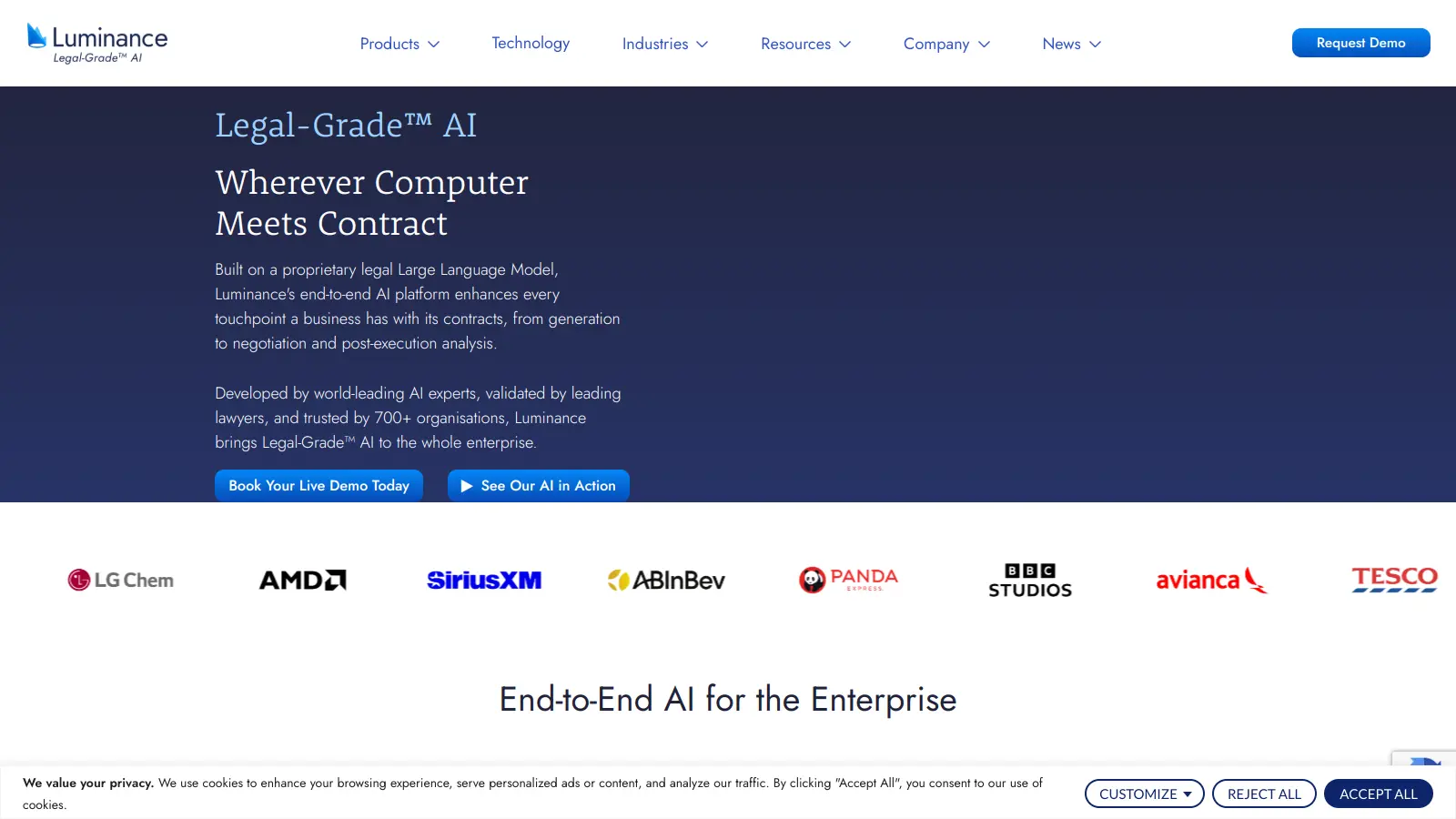
Luminance is an AI-powered legal platform that helps law firms and organizations manage their contracts more efficiently. Built on a proprietary legal Large Language Model (LLM) trained on over 150 million legally verified documents, the platform automates document analysis, contract generation, drafting, redlining, and negotiation processes.
Founded in 2015 by mathematicians from Cambridge University, Luminance now serves over 1,000 organizations across 70 countries, including major corporations, Big Four consultancy firms, and companies like AMD, BBC Studios, and Hitachi. The platform's AI uses a 'Panel of Judges' model that provides autonomous contract negotiation capabilities alongside contract analysis and support.
The software offers automated contract review, AI-led negotiation assistance, compliance checking, and discovery acceleration. It integrates directly with Microsoft Word, Outlook, and Salesforce, so legal teams can access AI capabilities without switching between platforms.
Luminance provides different products to suit different legal needs. These include Luminance Corporate for end-to-end contract processing, Luminance Diligence for M&A due diligence and compliance review, Luminance Discovery for document analysis, Lumi Go for quick access, and Auto-Markup for automated redlining. The platform uses a subscription-based pricing model with usage-based components, and supports on-premises deployments for organizations with specific security requirements.
how popular is Luminance?
monthly search interest
9.9k/mo now
peak interest12k/moOct 2025
searches now10k/moFeb 2026
1-month change— steadyvs prev month
Luminance sat at a fairly stable 5,000-7,000 searches per month for nearly two years before breaking upward in late 2024 and peaking at 12,100 in late 2025. That pattern tracks the broader surge in enterprise legal AI adoption rather than a viral moment, and the modest pullback to around 10,000 suggests the hype phase is settling into a more durable level of genuine professional interest. It's a mature, growing product category now: the audience is real and the tool is battle-tested.
who is Luminance for?
Whether Luminance is worth it depends almost entirely on your role and how much contract volume you're dealing with. Pick your role below to see the honest breakdown.
overall sentiment
select your role to see what people like you are saying
M&A Lawyer / Deal Team Lead
positive
If you're routinely processing thousands of documents under deal pressure, Luminance's speed advantage is real. It can cut first-pass due diligence from weeks to days, which directly affects deal velocity and negotiation leverage. The premium cost is easier to justify when you're billing at enterprise rates and the alternative is a larger team working longer hours.
strengths
Reduces due diligence timelines by up to 90%, accelerating deal closures
Accurately flags unusual and risky clauses across large document volumes
Enables deal teams to focus on negotiation strategy rather than manual review
Integrates seamlessly with existing legal workflows and Microsoft Word
concerns
High subscription cost is a significant investment for deal-specific projects
Complex cross-border clauses sometimes still require manual verification despite AI analysis
Performance degradation when multiple team members conduct simultaneous reviews during compressed deal timelines
In-House Counsel / General Counsel
positive
For a GC managing contracts across multiple jurisdictions, languages, and business units, Luminance's centralised visibility and obligation tracking can genuinely reduce external counsel spend. The challenge is the upfront cost and limited customisation for non-legal stakeholders, which can make internal ROI justification harder than it should be. Worth a serious evaluation if your portfolio runs into the hundreds of active agreements.
strengths
Centralizes contract insights across all organizational agreements in one system
Multi-language support enables compliance monitoring across global operations
Automates obligation tracking and renewal management at scale
Reduces reliance on external counsel for routine contract review, lowering legal spend
concerns
High upfront cost and licensing fees challenging for mid-market companies
Customization limitations restrict ability to tailor reports for specific business units or stakeholders
Occasional inaccuracies on complex compliance clauses still require GC oversight and manual verification
Law Firm Associate
mixed
You'll spend less time on the tedious first-pass review that tends to fill associate hours, and the interface is more approachable than most enterprise legal software. The real tradeoff is whether removing that manual grind also removes the pattern-recognition that builds contract expertise over time. Use it as a starting point for your own analysis rather than a final answer.
strengths
Dramatically reduces time spent on routine contract review and redlining tasks
User interface is intuitive and easier to learn than expected for an enterprise legal tool
Allows associates to focus on negotiation and client strategy instead of document grunt work
Strong customer support and onboarding help ensure successful team adoption
concerns
Steep learning curve for team members without strong technical backgrounds
Over-reliance on AI recommendations may reduce opportunities to develop deep contract analysis skills
Occasional misses on unusual clause interpretations still require careful human review and validation
Legal Operations Manager
mixed
Luminance gives legal ops teams genuine visibility into contract obligations, renewals, and compliance status without needing to pull every document manually. The implementation is non-trivial and the quote-based pricing means you'll need to build a credible business case before you can get budget approved. If you can demonstrate time savings against existing headcount or external counsel costs, the conversation becomes much easier.
strengths
Provides aggregated contract intelligence and obligation tracking across entire organization
Enables data-driven process improvements with visibility into contract lifecycle metrics
Reduces manual administrative work and contract administration overhead
On-premises deployment option ensures security and compliance with firm data policies
concerns
Limited customization options for analytics and reporting restrict ability to create executive dashboards
Performance issues during peak usage periods impact team productivity and project timelines
High cost structure makes ROI justification challenging when pitching to finance and partnership leadership
what users are saying
“If you're running M&A due diligence at scale or managing a large multi-jurisdiction contract portfolio, the time savings are real enough to make the investment defensible.”
The community search data for Luminance the legal AI platform returns no relevant results at all. Both Reddit threads surfaced are about entirely different products that share the name: a makeup product and a brand of coloured pencils. That's not unusual for an enterprise B2B tool. Legal AI platforms of this type rarely generate the kind of casual consumer discussion that shows up in Reddit searches. What does exist in the broader legal tech community points to a consistent picture: Luminance is genuinely well-regarded by law firms and in-house legal departments for contract due diligence, with specific praise for cutting review time on large document sets. The most common friction points that come up across legal tech forums and commercial review platforms are around pricing opacity, implementation complexity, and the occasional accuracy gap on unusual or cross-border clauses that still requires a human to catch.
Our take: Luminance is a serious enterprise tool for serious enterprise legal work. The quote-based pricing model means smaller firms and mid-market in-house teams will struggle to justify the cost without a clear, measurable ROI case upfront. If you're running M&A due diligence at scale or managing a large multi-jurisdiction contract portfolio, the time savings are real enough to make the investment defensible. If you're a smaller firm or a legal ops team without a clear volume use case, you'd be better served testing Ironclad or ContractPodAi first, both of which offer more transparent pricing entry points. Don't sign anything before getting a live demo with your actual document types.
features
AI-Powered Contract Management: Automates the complete contract lifecycle using a legal Large Language Model trained on over 150 million verified documents, helping legal teams draft, review, negotiate, and manage contracts faster.
Panel of Judges Model: Uses a proprietary multi-model approach for autonomous contract negotiation, providing more legally accurate AI decisions than single-model systems.
Contract Analysis: Detects contract anomalies and compliance issues across 1,000+ legal concepts, providing visual risk indicators and reducing negotiation time by up to 90%.
Native Microsoft Word Integration: Works directly within Microsoft Word, allowing legal teams to access AI-powered drafting, redlining, and review without switching platforms.
Automated Redlining and Drafting: Auto-Markup feature automatically redlines contracts and generates compliant documents from approved templates.
Machine Learning Document Review: Uses Deep Coding to predict document relevancy, highlight coding discrepancies, and create interactive heat map visualizations for legal research and discovery.
Enterprise-Grade Security: Maintains ISO27001 certification with on-premises deployment options and Security Advisory Board oversight to ensure data protection and privacy.
pricing
Pricing is quote-based and subscription-driven, requiring direct contact with Luminance for a customized estimate.
Enterprise subscriptions include usage-based pricing components that scale with your team's needs.
No standard free version or automatic free trial available.
On-premises deployment options available for organizations with specific security and data residency requirements.
24/7 support and onboarding assistance included with enterprise subscriptions.
frequently asked questions
It depends entirely on volume. Luminance is quote-based with no published pricing, which means you're negotiating blind. For law firms running multi-thousand-document due diligence deals or in-house teams managing hundreds of enterprise contracts, the ROI case can be straightforward: if it cuts review time by 70-90% on a deal team billing at £300-£600 an hour, the math works fast. For smaller teams without that volume, it almost certainly won't. Get a scoped quote with your actual document volumes before engaging procurement.
M&A lawyers and deal team leads running compressed due diligence timelines get the clearest value. In-house general counsel managing global contract portfolios across multiple languages and business units also have a strong use case. Law firm associates benefit too, though the shift away from manual review raises genuine questions about skills development over time. It's not built for solo practitioners or small firms without recurring high-volume contract work.
First, pricing is opaque and premium. There's no free tier, no self-serve trial, and no published number to anchor expectations. Second, complex cross-border or unusual clause structures still produce enough inaccuracies that you can't remove the human review step entirely. Third, customisation for specific business unit reporting is limited, which frustrates in-house teams that need bespoke outputs for non-legal stakeholders. And fourth, performance under concurrent heavy use during live deal timelines has been flagged as a pain point.
Luminance and Ironclad solve different core problems. Luminance is primarily an AI analysis and review engine: it's built to read contracts fast, flag risks, and support negotiation. Ironclad is a contract lifecycle management platform: it's built around workflow, approvals, and storage. If your biggest pain is reviewing documents quickly and accurately, Luminance wins. If your biggest pain is contract process management and internal approvals, Ironclad is the better fit. Many enterprise legal teams end up running both, which tells you something about how differently they operate.
Not entirely, but it will change what that work looks like. Associates using Luminance report that routine first-pass contract review and redlining gets automated, which frees time for client-facing work and negotiation strategy. The real concern flagged by associates is whether that shift reduces exposure to the kind of analytical grind that builds deep contract expertise over time. That's a legitimate worry, not just technophobia. Firms that use Luminance thoughtfully will treat the AI output as a starting point for associate judgement, not a replacement for it.
Reader ratings and community feedback shape every score. Since 2022, ToolsForHumans has helped 600,000+ people find software that holds up after launch. how we research →
is this your tool?
claim your listing to update details, respond to our review, or upgrade to a featured partnership.
★★★★★3.7based on real user feedback, community sentiment, pricing value, and fit for target audience. see our full methodology
MyCase
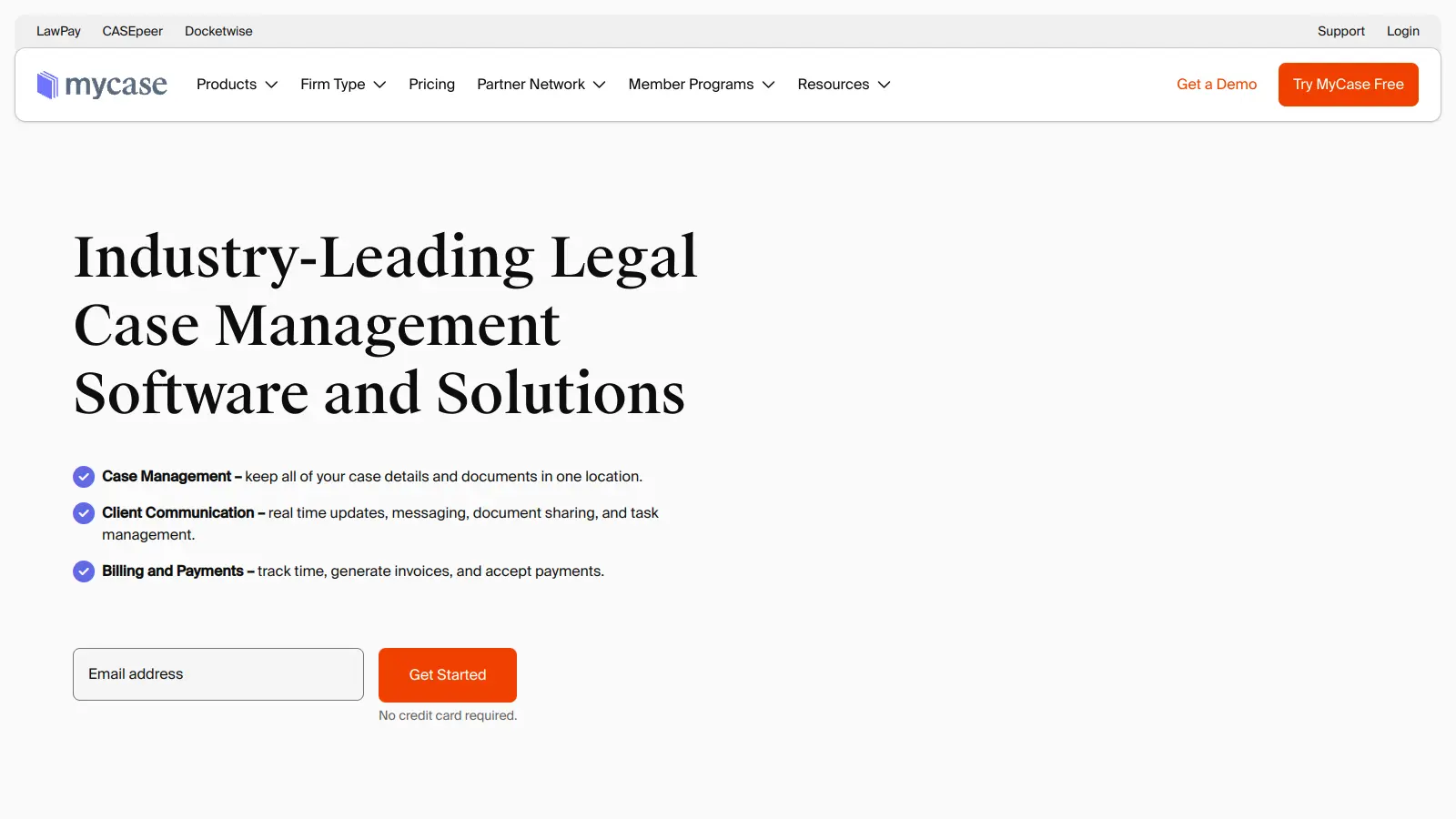
MyCase is a cloud-based law practice management software designed for solo and small to midsize law firms. It provides a platform for managing client communication, case workflow, billing, and document management. With features like client intake forms, eSignature, case tracking, secure client portals, AI-powered document summarization, and integrated payment solutions, MyCase helps law firms streamline their operations and improve efficiency across multiple practice areas.
★★★★★3.5based on real user feedback, community sentiment, pricing value, and fit for target audience. see our full methodology
Deadlines
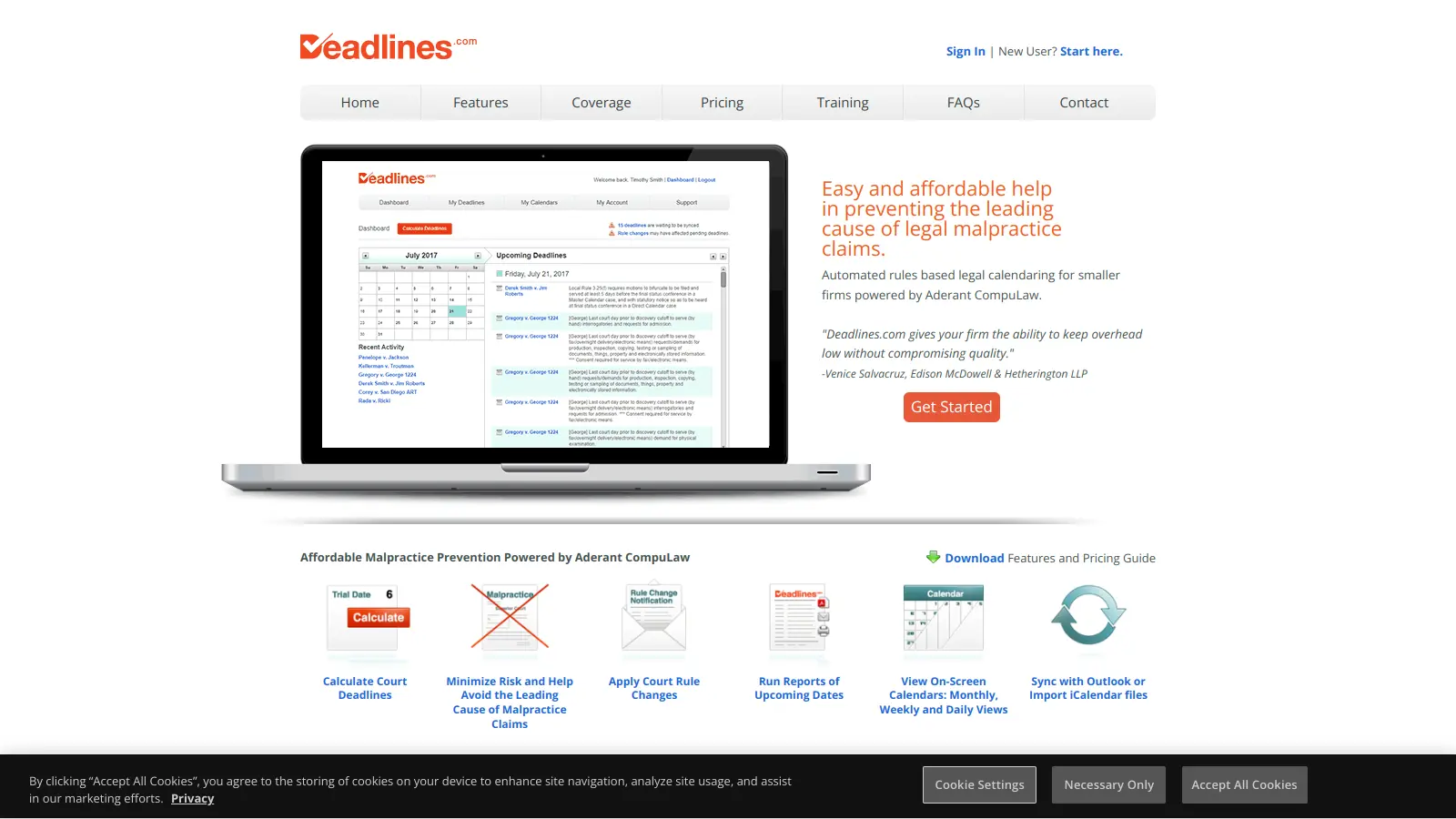
Deadlines.com is a legal calendaring tool powered by Aderant CompuLaw that helps law firms manage court deadlines and rules effectively. It offers features like automated deadline calculation, court rule change notifications, reporting, mobile access, and calendar sync capabilities. Designed for firms of all sizes, it reduces malpractice risks, ensures court rule compliance, and provides an affordable solution for tracking critical legal dates.
★★★★★4.0based on real user feedback, community sentiment, pricing value, and fit for target audience. see our full methodology
Clio
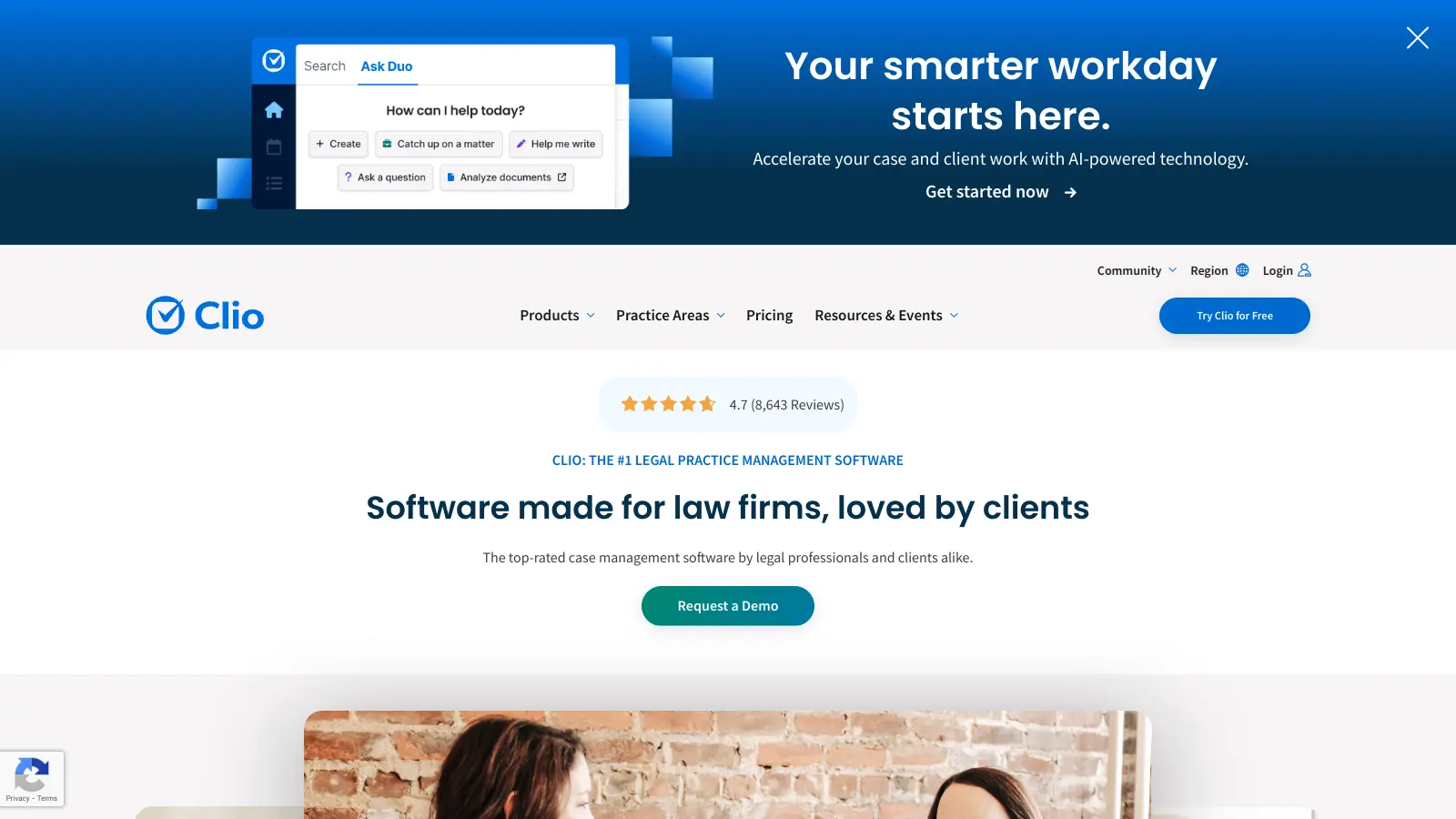
Clio is a cloud-based legal practice management software that streamlines law firm operations. It offers features for case management, billing, document automation, client intake, and collaboration. The platform provides AI tools like Clio Duo for automating tasks, tracking finances, engaging clients, managing documents, and integrating with other software.
★★★★★3.8based on real user feedback, community sentiment, pricing value, and fit for target audience. see our full methodology
Harvey AI
Harvey AI is an AI platform built for legal professionals, offering AI-powered legal research, contract analysis, document drafting, and clause extraction. Trained on legal datasets, it helps lawyers automate complex workflows, enhance research capabilities, and improve efficiency across multiple practice areas.
★★★★★3.8based on real user feedback, community sentiment, pricing value, and fit for target audience. see our full methodology
Filevine
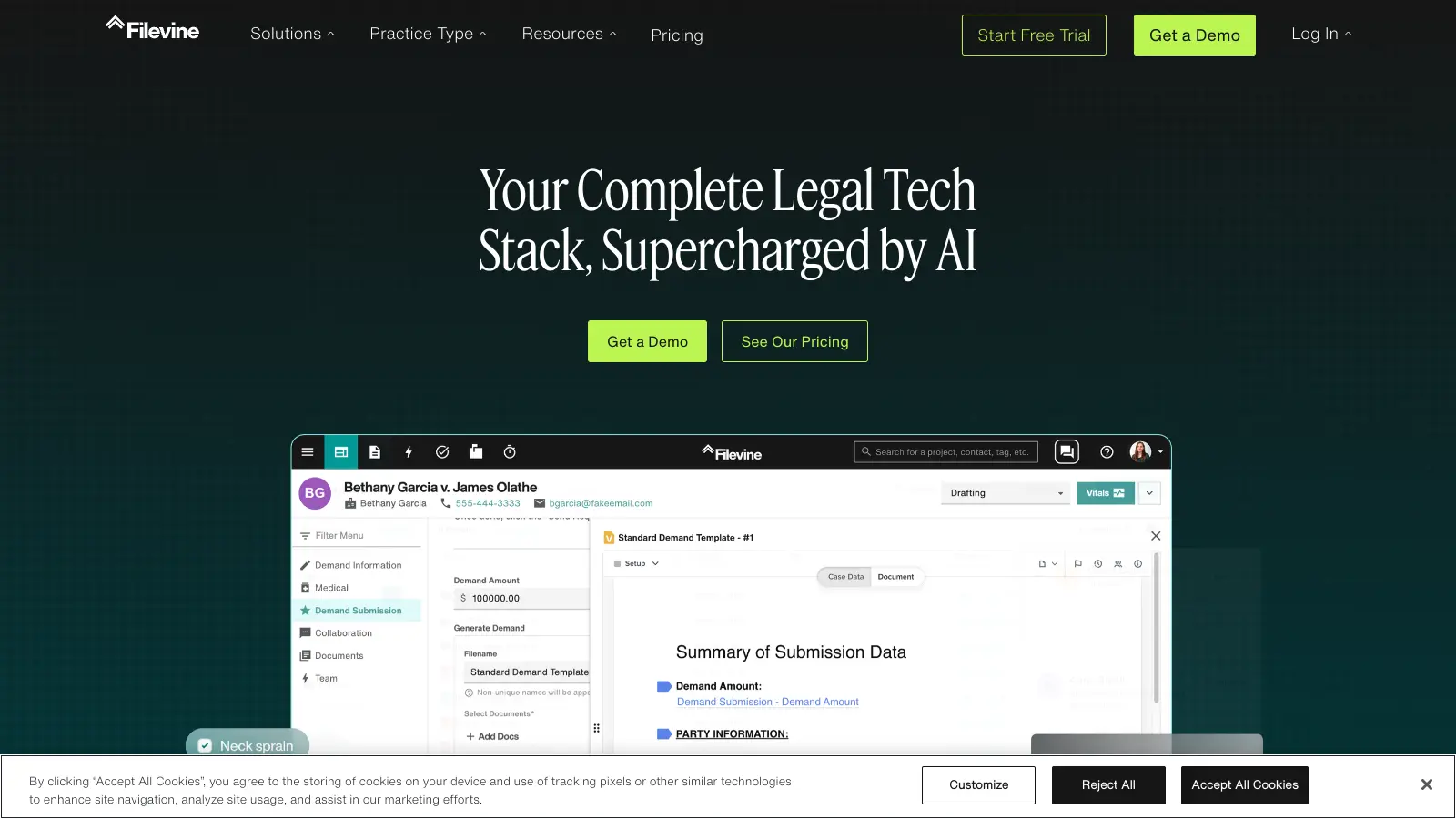
Filevine is an AI-powered legal management platform designed for case, matter, and project management. It automates case workflows, analyzes and summarizes documents, manages depositions, and ensures compliance for law firms. The platform features customizable solutions with document management, AI-driven document review and drafting, secure client communication, integrations, and advanced reporting tools.
★★★★★3.5based on real user feedback, community sentiment, pricing value, and fit for target audience. see our full methodology
LawPay
LawPay is a specialized payment management software designed for law firms, offering secure credit card and eCheck processing, comprehensive billing and invoicing tools, detailed financial reporting, and seamless integration with legal software. It ensures compliance with legal standards, provides PCI Level 1 security, and helps law firms manage their financial operations efficiently, supporting over 55,000 firms nationwide.