Legal Practice Management Software+2 more

LawPay
best deal
Start accepting secure legal payments for just $19/month with LawPay
redeem now
LawPay
best deal
Start accepting secure legal payments for just $19/month with LawPay
redeem nowWe start with direct ratings from our readers, then look at what real users are saying in practitioner forums and community spaces. We pair that with search demand data and profession-level persona analysis.
Editorial note: this was originally published in august of 2024
quick take
based on real user feedback, community sentiment, pricing value, and fit for target audience. see our full methodology
used LawPay? we'd love to know your thoughts
reader ratings shape our score
LawPay is a payment management software built specifically for law firms. It helps legal professionals handle client payments, billing, and financial operations while staying compliant with industry regulations. The platform serves over 55,000 firms nationwide and has earned approval from all 50 state bars, the American Bar Association, and the Association of Legal Administrators.
The software lets law firms accept credit cards, eChecks, and international payments through a secure system. Users can create and send invoices, track expenses, and manage trust accounts all in one place. The platform also connects with more than 30 popular legal software tools to streamline existing workflows.
Security and compliance are central to LawPay's design. The system maintains PCI Level 1 security standards and includes features to prevent the mixing of operating and trust accounts. For billing, firms can schedule recurring payments, send bulk invoices, and process refunds with just a few clicks.
Monthly subscriptions start at $19, with transaction fees varying by payment method. Credit card processing fees begin at 2.99% plus $0.30 per transaction, while eCheck payments have a flat $2 fee. The platform doesn't require long-term contracts, giving firms flexibility in their payment management choices.
monthly search interest
14.8k/mo now
LawPay's search volume has been stable in a tight band of roughly 12,000 to 15,000 monthly searches for the past four years, with no meaningful growth trend in either direction. This is a tool with an established, loyal user base in a defined niche — legal payment processing isn't a viral category, so the flat curve is expected. For you, it means the product is battle-tested and the user community is mature, but don't expect rapid feature development driven by a growing user base pushing new demands.
Whether LawPay is worth it depends heavily on your role in the firm and how much volume you're processing. Pick your role below to see the honest breakdown.
overall sentiment
select your role to see what people like you are saying
Solo Practitioner Attorney
positiveAt $19/month with no contract, LawPay covers billing, trust accounting, and compliance in one tool — which is genuinely useful when you don't have admin staff to handle the pieces separately. The Quick Bill feature saves real time on routine invoicing. The catch is the 2.99% card processing fee: if you're billing modest monthly volumes, it's manageable, but it's not the cheapest processor available. Worth it for the compliance confidence alone if you're newly solo.
strengths
concerns
Legal Office Manager
positiveBulk invoicing, recurring payment scheduling, and unlimited user accounts with permission controls make LawPay a reasonable operational choice for managing a team's payment workflow without per-seat licensing costs. Customer support quality comes up as an inconsistent issue in user feedback, which matters when a payment processing problem needs fast resolution. If your firm already runs on Clio, compare Clio Payments directly before defaulting to LawPay.
strengths
concerns
Compliance Officer / Legal Finance Controller
positiveAutomatic separation of trust and operating accounts, PCI Level 1 certification, and explicit approval from all 50 state bars and the ABA make LawPay one of the more defensible choices from a regulatory standpoint. If your firm gets audited, having a bar-approved platform with built-in commingling safeguards is a real asset. The one area to watch: a pattern of increased successful chargebacks flagged by users suggests dispute handling may be shifting, which matters if your firm bills contentious clients.
strengths
concerns
IT-Cautious Legal Administrator
mixedLawPay's PCI Level 1 certification and secure card storage address the core data security concerns that make legal administrators nervous about processing client payments online. The platform doesn't require deep technical setup and integrates with major practice management systems including Clio and LawMatics. Integration with legacy or less common systems can require workarounds, so confirm your stack is supported before committing.
strengths
concerns
“I switched from LawPay to Zoho Payments at the beginning of June. I've processed about 20% more money with Z than with L. But my processing fees with LawPay were 2× my Zoho fees.”
Reddit r/LawFirm
The most direct community criticism of LawPay centres on cost. A thread in r/LawFirm titled 'LawPay is crazy expensive' has a user reporting they switched to Zoho Payments and are now paying roughly half the processing fees while handling 20% more volume. At 2.99% + $0.30 per card transaction (and 3.90% for Amex), those fees add up fast for firms processing significant monthly volume. A separate r/LawFirm thread raises a more serious concern: a multi-state firm with 5+ years on the platform reports a sudden, marked increase in clients successfully winning chargebacks where they previously wouldn't. That's not a minor billing annoyance — it's a trust account risk. Across commercial review platforms, LawPay sits around 3.7 stars across hundreds of reviews, suggesting a product that works but generates its share of frustration.
The $19/month base subscription is fair for what it covers: trust account separation, bar compliance across all 50 states, and invoicing in one place. The real cost question is the transaction fees. At 2.99% + $0.30 per card transaction, a firm processing $50,000/month pays around $1,500 in fees. If that number stings, run a comparison with Zoho Payments or Clio Payments before signing up. For solo practitioners with lower volume, it's worth it. For higher-volume firms, do the math first.
Solo Practitioner Attorneys get the clearest value: one tool handles billing, trust accounting, and compliance without extra admin staff. Legal Office Managers benefit from bulk invoicing, recurring payments, and unlimited user accounts with permission controls. Compliance Officers and Legal Finance Controllers get the most direct relief — automatic trust/operating account separation and 50-state bar approval removes significant regulatory risk from their plate.
Transaction fees are the biggest structural weakness — at 2.99% for Visa/Mastercard, they're higher than generalist processors, and users on Reddit report fees running roughly double what Zoho Payments charges. Chargeback handling has also come up as a concern, with at least one multi-state firm reporting a recent increase in clients winning disputes. Integration with some legacy practice management systems can require workarounds, and there's limited transparency on how the platform handles evolving state-specific trust account rule changes.
If your firm already uses Clio for case management, Clio Payments is worth serious consideration — the integration is native and eliminates the data-sync friction that LawPay users sometimes report. LawPay has the edge if you're not in the Clio ecosystem or need a standalone billing tool that works across multiple practice management platforms. For compliance credibility, both are comparable. For cost, compare your actual processing volume against each provider's fee structure before deciding.
This is the core concern for anyone responsible for IOLTA compliance. LawPay's automatic separation of trust and operating accounts is a genuine safeguard — commingling client funds is a disciplinary violation in every state, and having that enforced at the platform level rather than relying on manual procedures is real value. PCI Level 1 certification and approval from all 50 state bars and the ABA give the compliance framework credibility. The recent chargeback issues flagged by some users don't affect the trust account structure itself, but are worth watching if your firm handles fee disputes regularly.
toolsforhumans editorial team
Reader ratings and community feedback shape every score. Since 2022, ToolsForHumans has helped 600,000+ people find software that holds up after launch. how we research →
is this your tool?
claim your listing to update details, respond to our review, or upgrade to a featured partnership.
claim this listing →
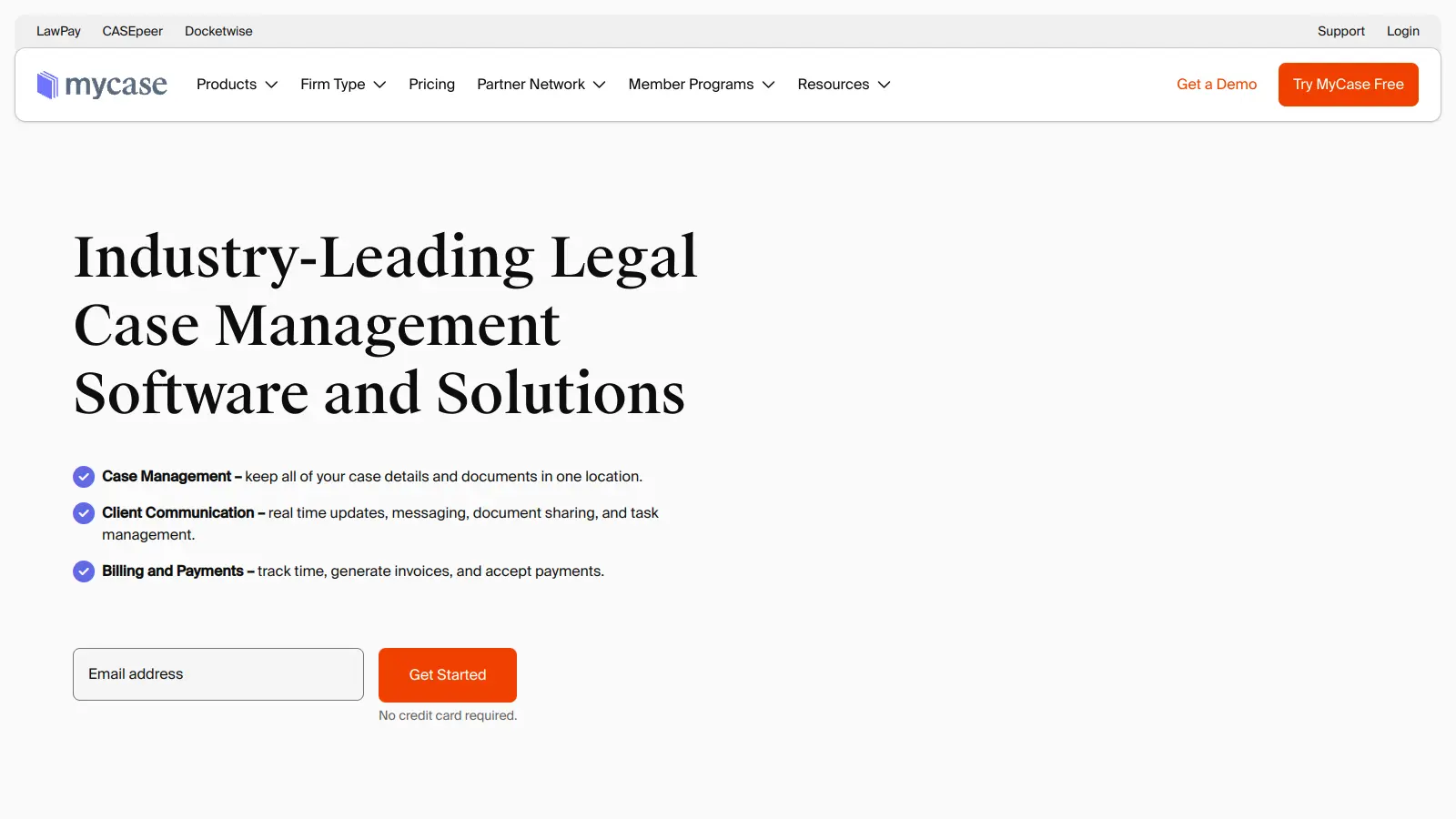
MyCase is a cloud-based law practice management software designed for solo and small to midsize law firms. It provides a platform for managing client communication, case workflow, billing, and document management. With features like client intake forms, eSignature, case tracking, secure client portals, AI-powered document summarization, and integrated payment solutions, MyCase helps law firms streamline their operations and improve efficiency across multiple practice areas.
best deal
Try MyCase Free for 10 Days - No Credit Card Required

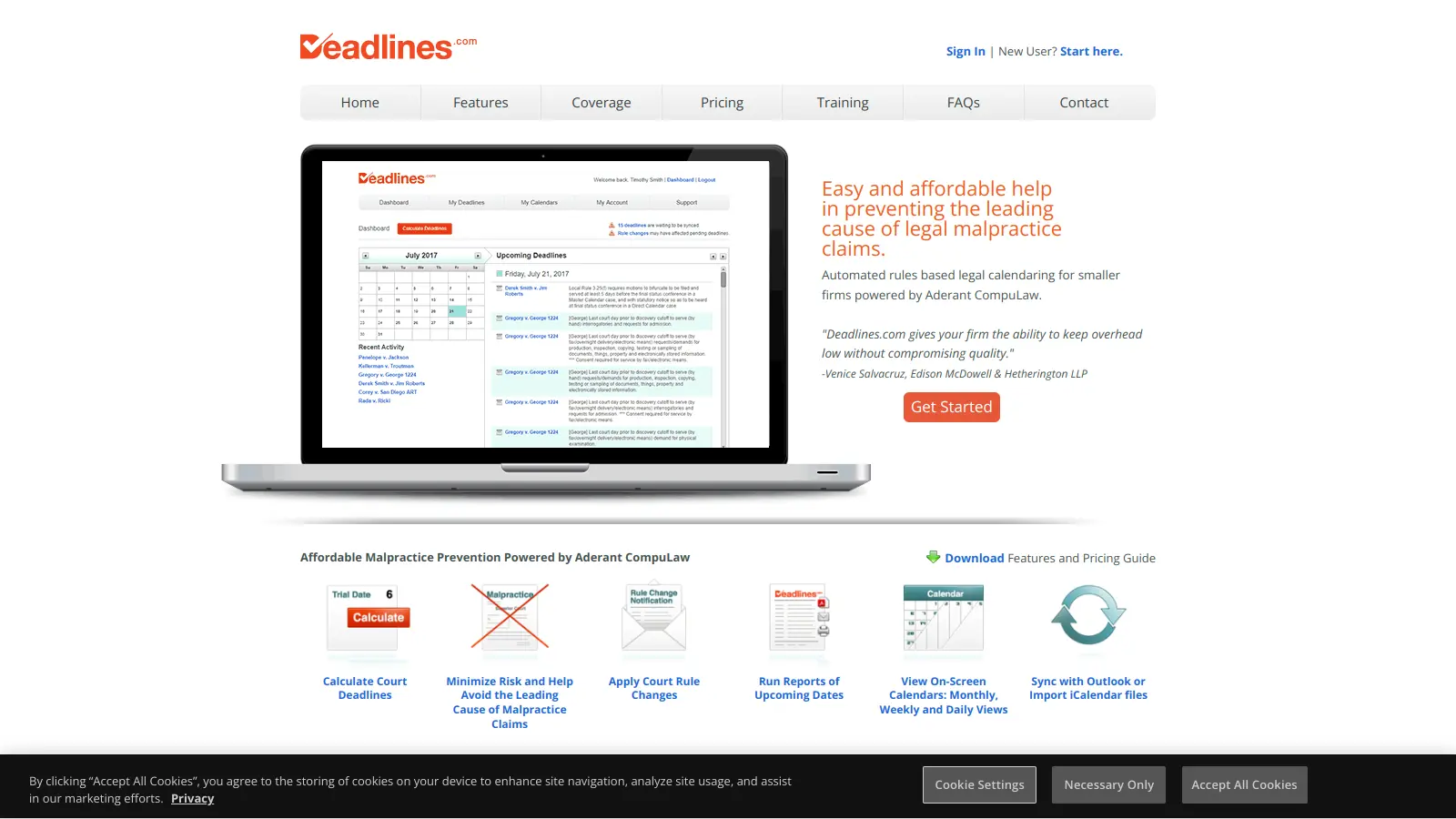
Deadlines.com is a legal calendaring tool powered by Aderant CompuLaw that helps law firms manage court deadlines and rules effectively. It offers features like automated deadline calculation, court rule change notifications, reporting, mobile access, and calendar sync capabilities. Designed for firms of all sizes, it reduces malpractice risks, ensures court rule compliance, and provides an affordable solution for tracking critical legal dates.
best deal
Try Deadlines starting at $15 per case per month to avoid missed legal deadlines

Harvey AI is an AI platform built for legal professionals, offering AI-powered legal research, contract analysis, document drafting, and clause extraction. Trained on legal datasets, it helps lawyers automate complex workflows, enhance research capabilities, and improve efficiency across multiple practice areas.
best deal
Join the waitlist to explore Harvey AI's legal solutions starting at approximately $500 per lawyer annually

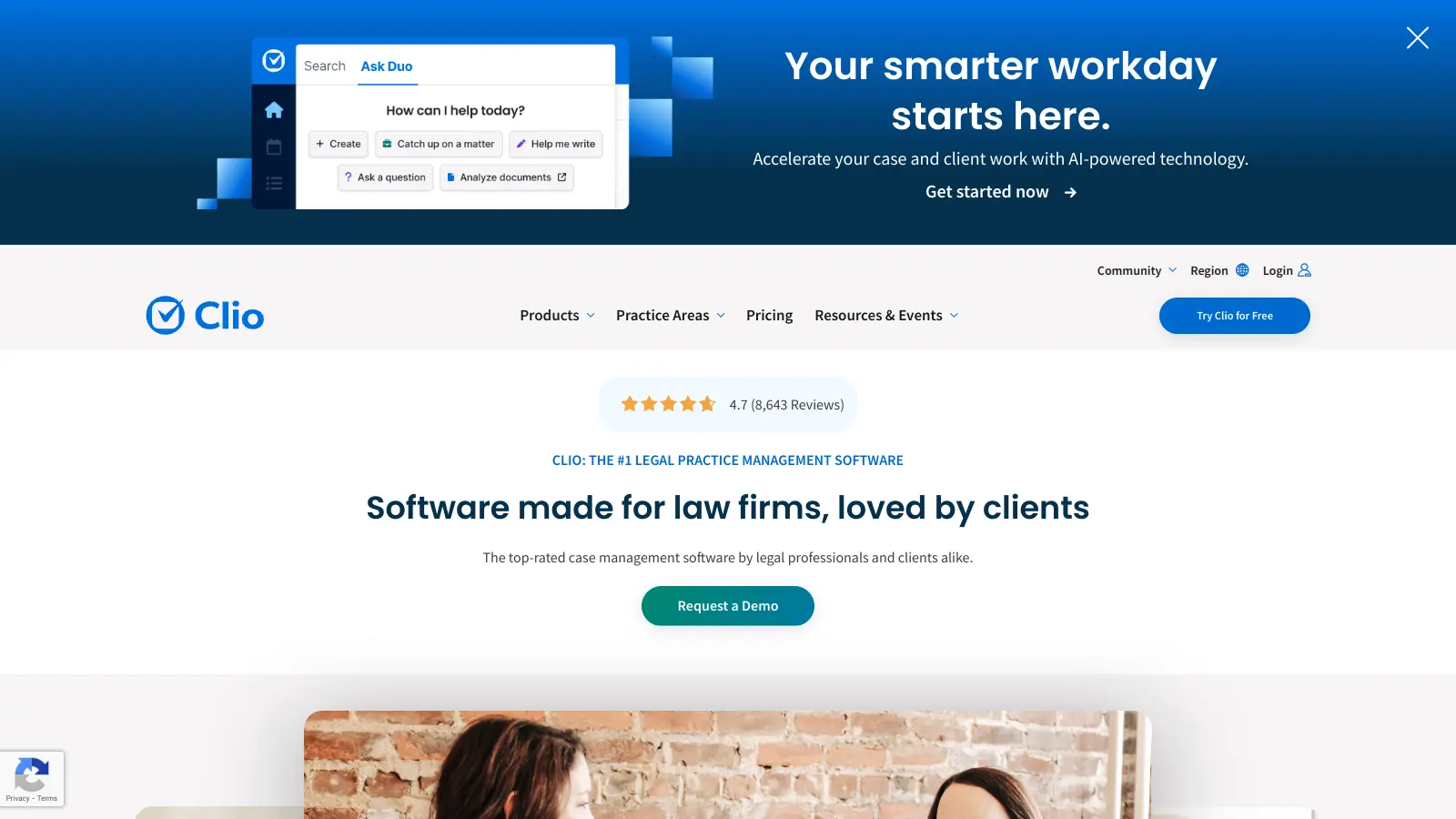
Clio is a cloud-based legal practice management software that streamlines law firm operations. It offers features for case management, billing, document automation, client intake, and collaboration. The platform provides AI tools like Clio Duo for automating tasks, tracking finances, engaging clients, managing documents, and integrating with other software.
best deal
Get 15% bundle savings and try Clio free before committing to a plan

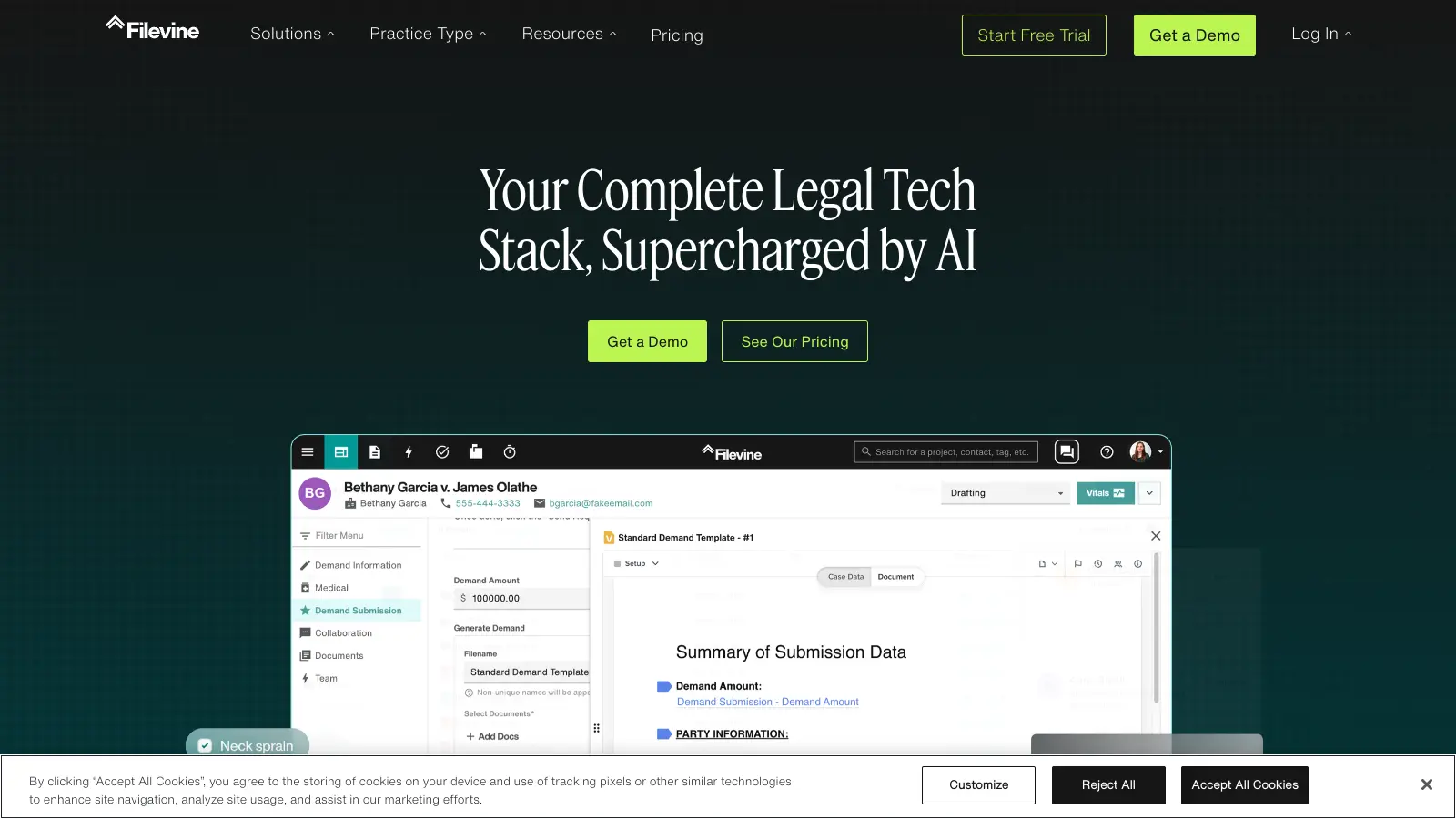
Filevine is an AI-powered legal management platform designed for case, matter, and project management. It automates case workflows, analyzes and summarizes documents, manages depositions, and ensures compliance for law firms. The platform features customizable solutions with document management, AI-driven document review and drafting, secure client communication, integrations, and advanced reporting tools.
best deal
Free trial available — test Filevine's AI-powered legal management platform before you commit

Luminance is an AI-powered legal technology platform that automates contract management, review, drafting, and negotiation using its proprietary Large Language Model. Founded in 2015 by Cambridge mathematicians, it serves over 1,000 organizations worldwide including law firms, corporate legal teams, and global consultancies. The platform offers deep document analysis, integration with Microsoft Word, and AI-driven features that reduce contract processing time while ensuring compliance and data security.
best deal
Get Your Personalized Luminance Quote And See How AI Legal Tools Can Transform Your Contract Management