Best ServiceTitan Alternatives in 2026: For Every Budget
7 alternatives reviewedlast reviewed 5 april 2026
Editorial note:this was originally published in april of 2026
ServiceTitan is the dominant name in field service management for HVAC, plumbing, and electrical contractors, but it comes with enterprise-level pricing, a lengthy onboarding process, and a contract structure that doesn't suit every business. If you're a smaller operation, a solo contractor, or a growing company that needs something running within weeks rather than months, you may need a different option.
This page covers 7 alternatives chosen for their real-world fit with trades businesses: we looked at pricing transparency, mobile usability in the field, scheduling depth, and how easy each platform is to adopt without a dedicated IT team. You'll find obvious competitors like Jobber and Housecall Pro alongside less obvious picks for specific situations.
We collect first-hand reviews from people who use these tools every day — what works, what doesn't, whether it's worth paying for. We research pricing, features, and comparisons so that feedback has real context behind it. For this guide, we prioritised tools with transparent pricing, practical mobile apps for field technicians, and credible scheduling depth for trades businesses. Read our full research methodology.
looking for a ServiceTitan alternative?
tell us what you're considering and why — it helps others in the same position.
What is ServiceTitan?
ServiceTitan is a cloud-based field service management platform built specifically for residential and commercial trades businesses: HVAC, plumbing, electrical, roofing, and similar contractors. It covers scheduling, dispatch, work order management, invoicing, payments, customer history, marketing automation, and reporting in a single system.
The platform is designed for established contractors running multiple technicians across multiple jobs daily. It integrates with QuickBooks and other accounting tools, provides a technician-facing mobile app, and includes a customer-facing booking experience. Its reporting tools are among the deepest in the category.
People look for alternatives primarily because of cost (pricing is not public and typically requires a demo, with contracts reported in the thousands per month), the onboarding timeline (implementation can take several months), and complexity that exceeds what smaller teams actually need. Some businesses also find the contract terms restrictive when their situation changes.
Field service platform with a built-in phone system and lead tracking for service businesses.
Service businesses with high inbound call volume
PaidFrom $225/mo (Standard, up to 5 users)
vs ServiceTitanBetter than ServiceTitan for contractors with fewer than ten technicians who need to be operational within days, not months, and can't justify a four-figure monthly bill.
our top pick
1
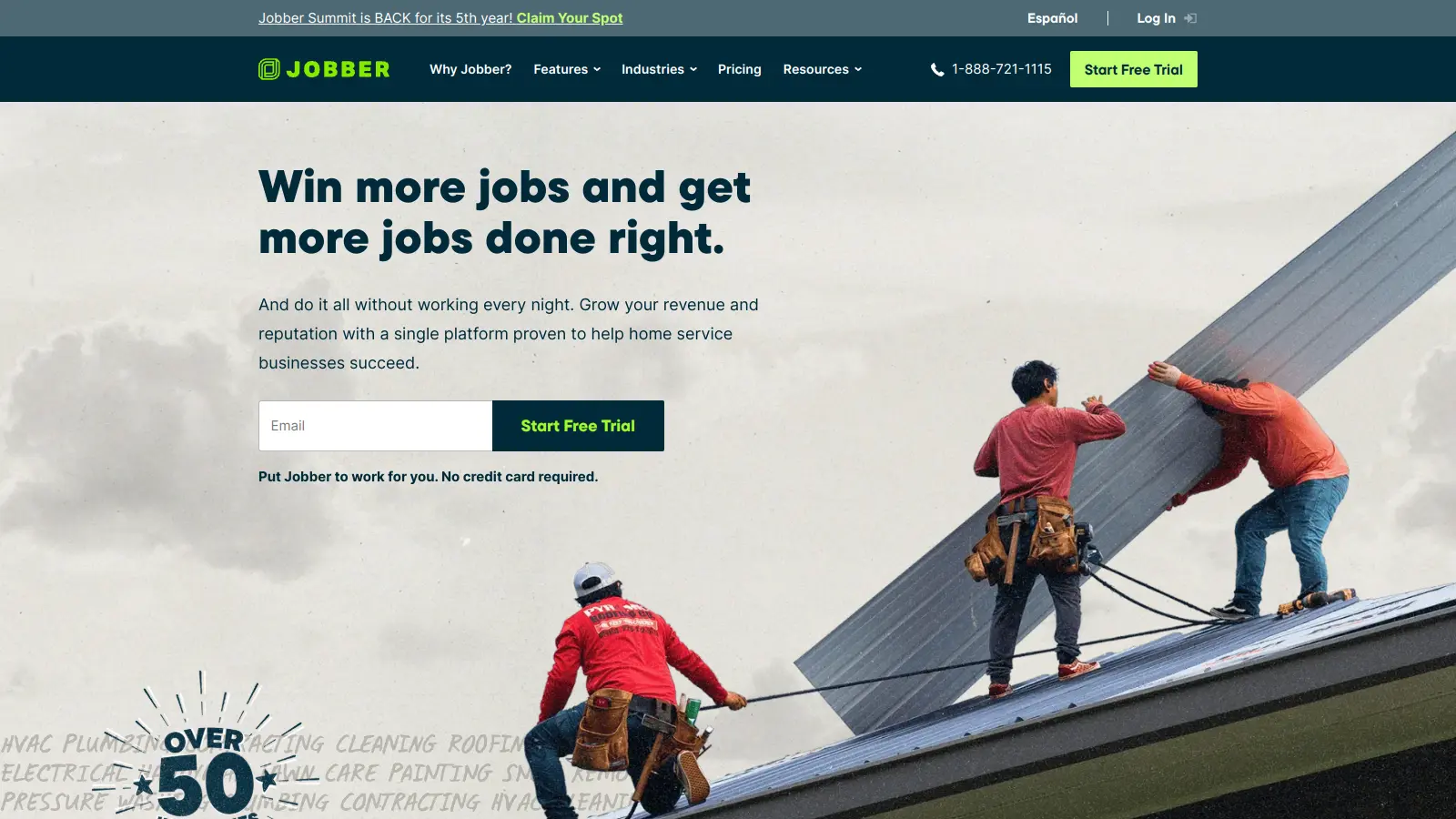
Jobber
Field service software that small trades teams can actually afford and use from day one.
Paid
Best for · Small trades businesses (1-20 technicians)Pricing · From $49/mo (Core plan, single user)
Jobber covers scheduling, quoting, invoicing, and client management for home service businesses. It's built for teams of one to around twenty people, with a clean mobile app that lets technicians access job details and collect payment on-site. The interface is significantly simpler than ServiceTitan's, which is a genuine advantage for businesses without a dedicated office manager.
vs ServiceTitanBetter than ServiceTitan for residential contractors who want automated customer follow-ups and online booking without navigating a complex enterprise setup or a sales process.
2
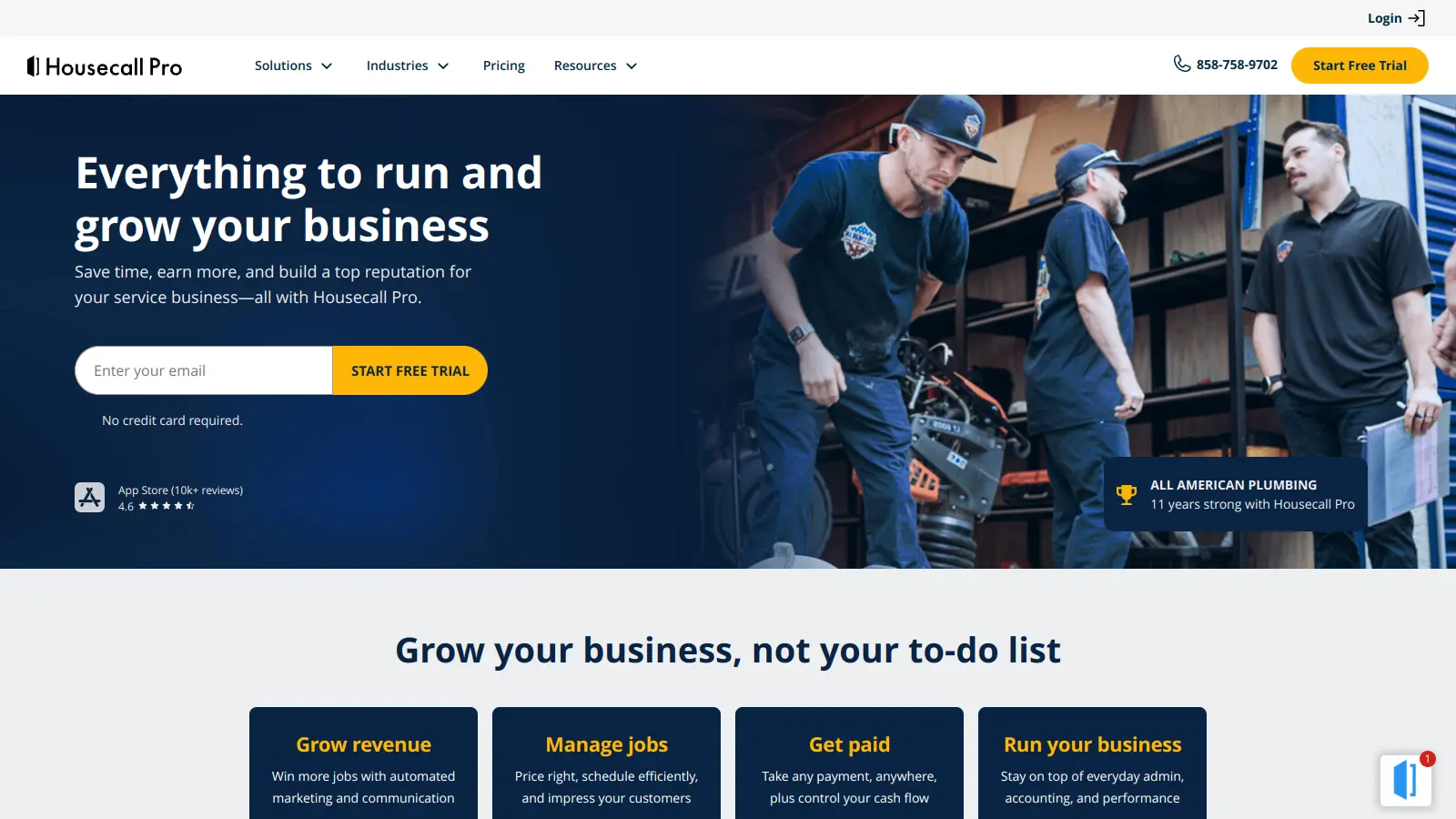
Housecall Pro
Scheduling, payments, and customer messaging built for residential service crews.
Paid
Best for · Residential service contractors (1-15 technicians)Pricing · From $79/mo (Basic, up to 1 user)
Housecall Pro handles job scheduling, dispatch, automated follow-up texts, and in-app payment processing for residential service contractors. It includes a consumer-facing booking widget and automated review requests after job completion. The platform targets the same HVAC and plumbing market as ServiceTitan but at a lower price point and with a much faster setup.
Pros
✓Automated review requests after job completion
✓In-app payment processing with no hardware required
✓Consumer booking widget embeds on your website
Cons
✗Advanced reporting only available on higher tiers
vs ServiceTitanBetter than ServiceTitan for contractors whose accounting runs on QuickBooks Desktop and who need a deep, native sync rather than a third-party workaround.
3
FieldEdge
HVAC and plumbing dispatch software with deep QuickBooks Desktop integration.
Custom
Best for · HVAC and plumbing contractors using QuickBooks DesktopPricing · Pricing on request (demo required)
FieldEdge is field service management software aimed specifically at HVAC, plumbing, and electrical contractors. It has a long-standing native integration with QuickBooks Desktop, which distinguishes it from competitors that only connect to QuickBooks Online. The dispatch board gives office staff real-time technician location and job status without needing a separate GPS subscription.
Pros
✓Native QuickBooks Desktop sync, not just Online
✓Real-time technician GPS built into the base product
✓Service agreement tracking with renewal reminders
Cons
✗Pricing is not published, making comparison shopping harder
✗Interface looks dated compared to newer competitors
vs ServiceTitanBetter than ServiceTitan for mid-size contractors who want predictable monthly costs that don't scale linearly with every technician added to the team.
4
Service Fusion
All-in-one field service management with flat-rate pricing and no per-user fees.
Paid
Best for · Growing trades businesses with 5+ techniciansPricing · From $225/mo (Starter, unlimited users)
Service Fusion is a field service platform covering dispatch, work orders, invoicing, and customer history. Its flat-rate pricing model (no per-technician charge) makes it cost-predictable for businesses adding headcount. It includes GPS fleet tracking and a technician mobile app at tiers that would cost significantly more on a per-seat model elsewhere.
Pros
✓Unlimited users at every pricing tier
✓Built-in GPS fleet tracking without add-on fees
✓Customer payment portal included in base plan
Cons
✗Reporting tools lack the depth of ServiceTitan
✗Mobile app gets mixed reviews for reliability on Android
vs ServiceTitanBetter than ServiceTitan for commercial-focused contractors whose clients expect a documented service history portal and need approval workflows for multi-site accounts.
5
ServiceTrade
Field service software built specifically for commercial service contractors.
Paid
Best for · Commercial HVAC, fire protection, and mechanical contractorsPricing · From $79/mo per technician (billed annually)
ServiceTrade targets commercial service contractors in HVAC, fire protection, refrigeration, and mechanical sectors. It provides online customer service portals where commercial clients can track job history, approve quotes, and view service reports, which is a feature set aligned with the accountability requirements of commercial accounts rather than residential homeowners.
Pros
✓Customer-facing service history portal for commercial clients
✓Quote approval workflow built for multi-stakeholder accounts
✓Strong attachment tools for photos and service documents
Cons
✗Per-technician pricing gets expensive at scale
✗Less suitable for residential-only service businesses
vs ServiceTitanBetter than ServiceTitan for enterprise service businesses already using Salesforce CRM who need field operations connected directly to customer account data and complex asset tracking.
6
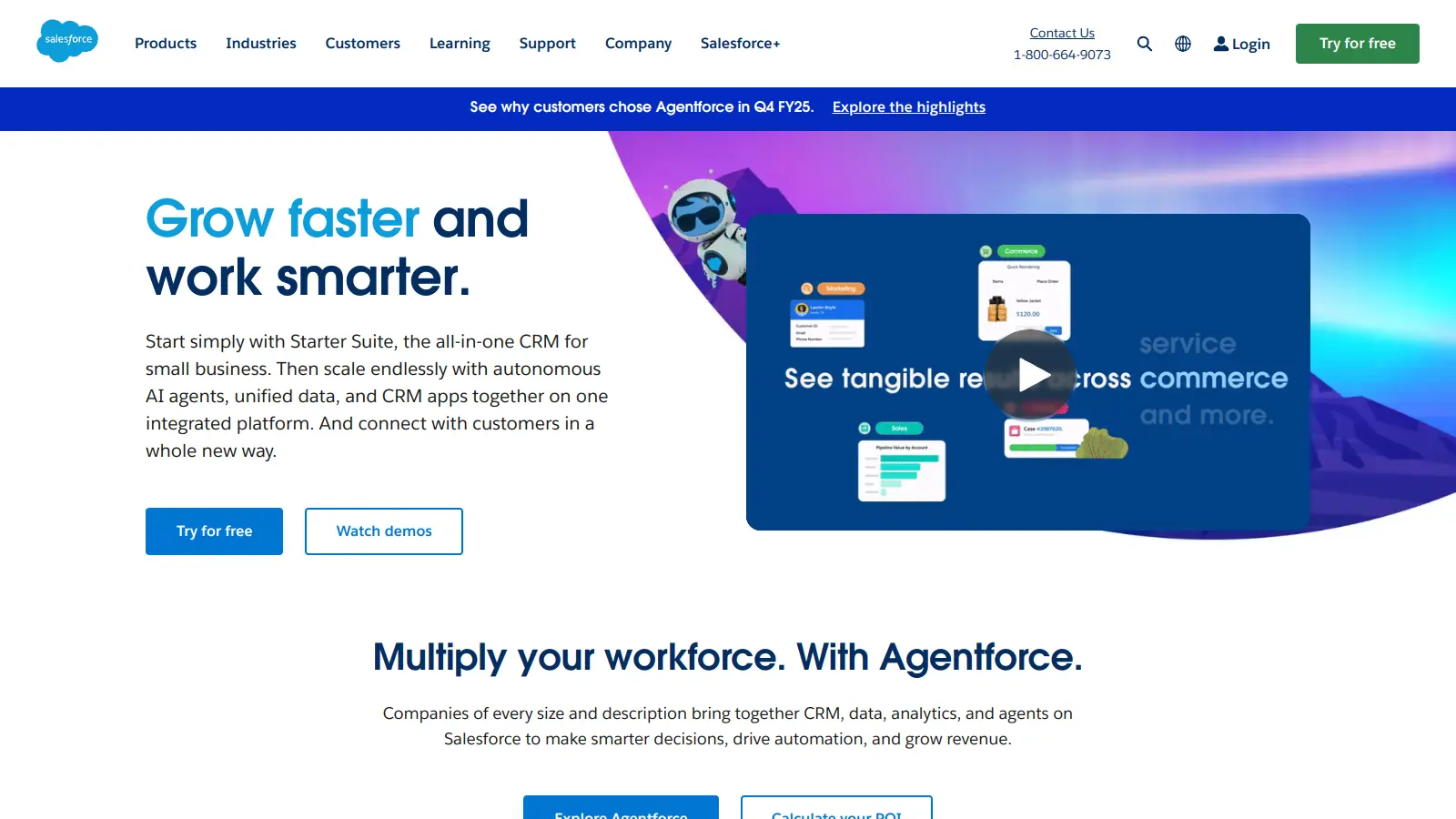
Salesforce Field Service
Enterprise field service management connected to the full Salesforce CRM platform.
Paid
Best for · Enterprise service organisations (50+ technicians)Pricing · From $25/user/mo (Field Service add-on requires Service Cloud base)
Salesforce Field Service is a component of the Salesforce platform that handles scheduling, dispatch, work orders, and technician management alongside the full Salesforce CRM and Service Cloud. It's built for large or complex service operations that need to connect field activity with customer cases, asset management, and AI-driven scheduling optimisation across hundreds of technicians.
Pros
✓Integrates directly with Salesforce CRM and Service Cloud
vs ServiceTitanBetter than ServiceTitan for small service businesses that book most of their work over the phone and want call recordings and lead tracking without paying for a separate CRM and phone system.
7
Workiz
Field service platform with a built-in phone system and lead tracking for service businesses.
Paid
Best for · Service businesses with high inbound call volumePricing · From $225/mo (Standard, up to 5 users)
Workiz includes scheduling, invoicing, and technician dispatch alongside a built-in VoIP phone system that records calls and ties them to job records. This makes it a practical option for businesses that rely heavily on inbound phone bookings and want call recordings linked to customer history without adding a separate phone tool. It targets locksmiths, garage door companies, junk removal, and similar service trades.
Pros
✓Built-in VoIP phone with call recording per job record
✓Lead source tracking shows which channels generate revenue
✓Fast setup compared to enterprise competitors
Cons
✗Less suited to complex multi-division HVAC or plumbing operations
✗Reporting depth doesn't match ServiceTitan or Salesforce Field Service
Some of these platforms are built for solo operators or teams under five technicians. Others handle multi-location operations with dozens of field staff. Choosing a tool that's sized correctly for you avoids both overpaying and outgrowing your software within a year.
Check what's actually included at each pricing tier
Several competitors advertise a low entry price but gate core features like GPS tracking, QuickBooks sync, or automated follow-ups behind higher tiers. Read the pricing page carefully before booking a demo, and ask specifically which tier includes the features you use daily in ServiceTitan.
Test the mobile app before committing
Your technicians will live in the mobile experience, not the desktop dashboard. Request a trial with the actual mobile app, not just a guided walkthrough, and have a field technician try creating a work order, capturing a photo, and collecting a signature. That test reveals more than any feature comparison chart.
Ask about data migration and onboarding time
Switching field service platforms is disruptive. Some vendors offer white-glove data migration for customer records, job history, and pricing books. Others leave that to you. Get a realistic onboarding timeline in writing before signing anything.
Confirm accounting integration depth
QuickBooks is the default for most trades businesses, but the quality of integrations varies. Some tools sync invoices and payments in real time. Others do a nightly batch export. If your bookkeeper depends on up-to-date job costs, that difference matters a lot.
frequently asked questions
Cost is the most common factor. ServiceTitan's pricing is not public, but reported monthly costs for small to mid-size contractors often run $500 to $1,500 or more per month depending on features and technician count. For businesses with fewer than five technicians, that spend is hard to justify when lighter tools cover 80% of the same workflows at a fraction of the price.
There are no fully free platforms that match ServiceTitan's feature depth, but some tools like Jobber and Housecall Pro have free trials, and a few have entry-level tiers under $50 per month. These are appropriate for solo operators or very small teams, not multi-technician operations needing advanced dispatch and reporting.
It depends heavily on how much historical data you need to migrate and whether the new vendor provides support for it. Moving to a simpler platform like Jobber can take a few weeks if you import customer records manually. Switching to an enterprise-level alternative like Salesforce Field Service can take three to six months. Plan the transition during a slower season if possible.
Housecall Pro and Jobber consistently get positive feedback for their mobile experiences, particularly for ease of invoicing and payment collection in the field. FieldEdge and Service Fusion are also well-regarded for technician-facing mobile tools. The weakest mobile experiences tend to come from older platforms not originally built with mobile-first use in mind.
Most do, but the depth varies. ServiceTrade is specifically built for commercial service contractors. Salesforce Field Service handles complex commercial environments well. Jobber and Housecall Pro are predominantly used by residential contractors, though they can handle smaller commercial accounts.
tools for humans
toolsforhumans editorial team
Reader ratings and community feedback shape every score. Since 2022, ToolsForHumans has helped 600,000+ people find software that holds up after launch. The picks here come from that.