Professional Services Automation Psa Platform+2 more

CareCloud
best deal
Start with CareCloud Central at $349/month per provider for modern practice management
redeem now
CareCloud
best deal
Start with CareCloud Central at $349/month per provider for modern practice management
redeem nowWe start with direct ratings from our readers, then look at what real users are saying in practitioner forums and community spaces. We pair that with search demand data and profession-level persona analysis.
Editorial note: this was originally published in september of 2024
quick take
based on real user feedback, community sentiment, pricing value, and fit for target audience. see our full methodology
used CareCloud? we'd love to know your thoughts
reader ratings shape our score
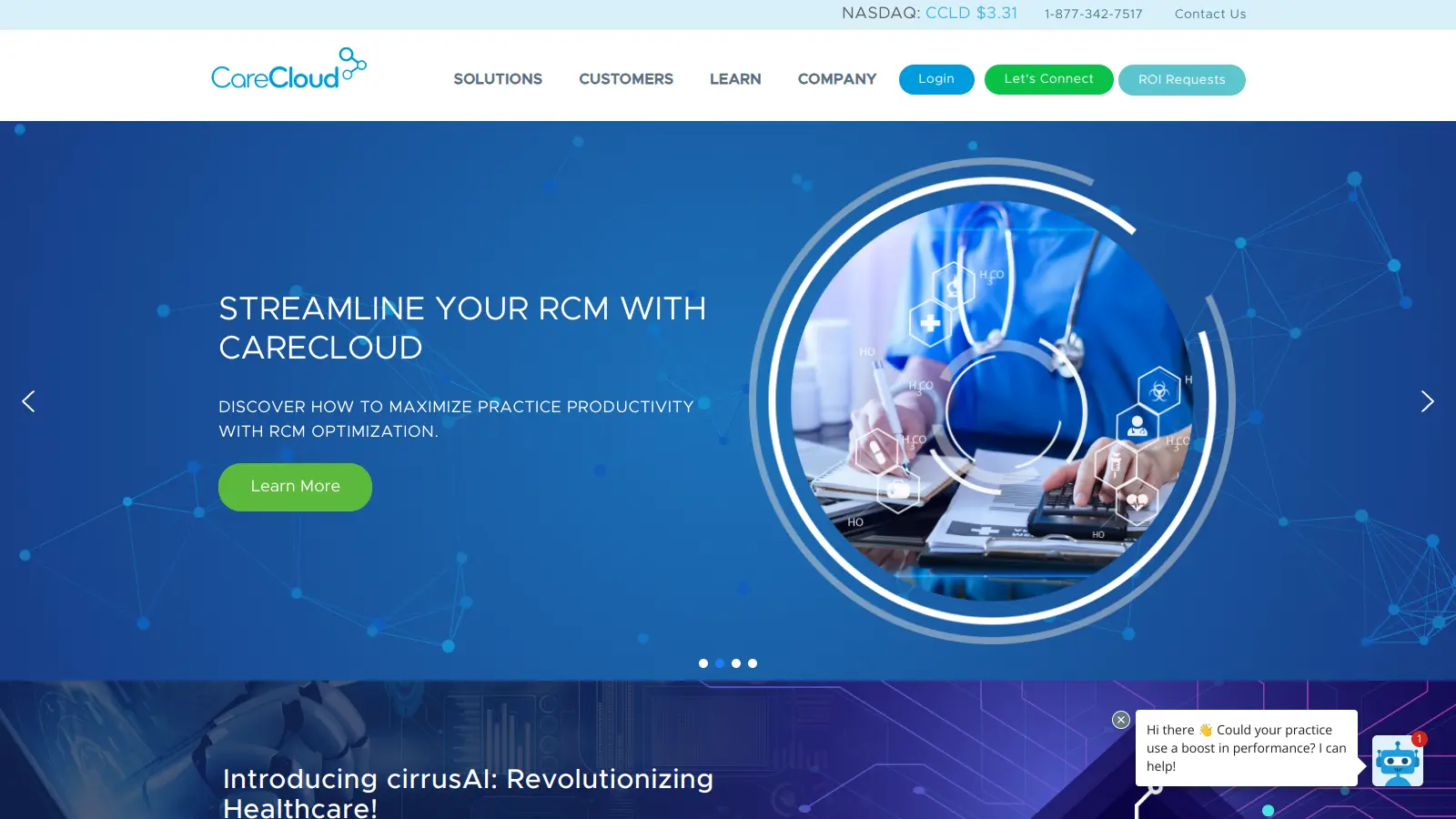
CareCloud is a cloud-based healthcare management platform that combines clinical, operational, and financial tools to help medical practices run more smoothly. The platform brings together Electronic Health Records (EHR), Practice Management, and Revenue Cycle Management in one integrated system.
Healthcare providers can manage patient records, schedule appointments, process billing, and conduct virtual visits through a single interface. The system includes specialized tools for different medical specialties, letting practices customize their workflows to match their specific needs. CareCloud serves more than 40,000 providers across the United States.
Beyond the core features, CareCloud offers a patient portal called Breeze where people can schedule visits, message their doctors, and pay bills online. The platform includes cirrusAI, an AI-powered clinical documentation tool that generates real-time notes from patient conversations and integrates them directly into the EHR. Business analytics tools help practices track their performance and spot areas for improvement.
Pricing starts at $349 per provider monthly for CareCloud Central, which covers practice management features. CareCloud Complete, which includes both practice management and EHR capabilities, costs $629 per provider monthly. The platform also offers CareCloud Concierge, a revenue cycle management service that charges between 3% to 7% of practice collections.
monthly search interest
2.4k/mo now
CareCloud's search volume has held in a narrow band between roughly 2,900 and 4,400 monthly searches for nearly four years, with no meaningful growth. The recent drop to 2,400 in late 2025 is the first time it's consistently fallen below that floor. This is a mature, stable platform with a settled user base rather than one attracting new practices at scale. The hype phase is long gone, which means you're evaluating the real product with a real track record.
Whether CareCloud is worth it depends almost entirely on your practice's size and which systems you're replacing. Pick your role below to see the honest breakdown for your situation.
overall sentiment
select your role to see what people like you are saying
Practice Manager
positiveIf you're managing a multi-provider practice and spending too much time chasing billing errors and coordinating schedules manually, CareCloud's automation genuinely reduces that load. The mobile app for remote oversight is a real plus. Just know that the onboarding takes longer than expected, and at $629 per provider per month for the full package, you need enough providers and patient volume to make the cost proportionate.
strengths
concerns
Healthcare Administrator
mixedCareCloud's centralized data across locations and HIPAA-compliant cloud infrastructure are real strengths for multi-site coordination. The problem is that legacy EHR integration is unreliable enough to require workarounds, and performance dips during peak hours at exactly the wrong moment. If your existing systems are already entrenched, expect a difficult rollout rather than a clean transition.
strengths
concerns
Tech-Forward Clinician
positiveThe AI-assisted charting and built-in telehealth are genuinely useful if you want to reduce documentation time and see virtual patients without a separate platform. The mobile app works well for accessing records between appointments. Watch out for sync delays on the app and the learning curve if your team isn't already comfortable with cloud-based systems.
strengths
concerns
Specialty Medical Provider
mixedCareCloud's configurable templates and specialty-specific workflows make it more adaptable than generic EHR platforms for specialties with unique documentation needs. That said, customization has limits, and getting templates set up for your specific workflows takes time upfront. If your specialty has complex billing requirements, the RCM tools are worth evaluating closely before committing.
strengths
concerns
“At $629 per provider per month, a three-provider practice is looking at over $22,000 a year before setup fees, which is serious money for a tool that still has performance issues under load.”
Community discussion around CareCloud is thin in the public domain, with the most accessible review data coming from commercial review platforms where the tool sits at 3.6 out of 5 across over 100 reviews. The pattern of criticism is consistent: billing and scheduling automation get genuine praise, but performance slowdowns during peak hours, integration headaches with legacy EHR systems, and unpredictable customer support response times come up repeatedly. The pricing also draws complaints at $629 per provider per month for the Complete plan, which adds up fast for any practice with more than two or three providers. A percentage-based RCM option (3% to 7% of collections) sounds flexible but can quietly cost more than the flat fee once a practice hits meaningful revenue.
It depends on which plan you're actually committing to. The Complete plan at $629 per provider per month is only worth it if you're fully replacing both your EHR and practice management systems and have the patient volume to justify the cost. For a single-provider practice, that's over $7,500 a year just in subscription fees before setup costs. The Concierge RCM option at 3% to 7% of collections can work out cheaper for lower-revenue practices, but high-volume practices will almost always pay less with a flat-fee alternative. The Central plan at $349 per provider is more defensible if you only need scheduling and billing without EHR.
Practice managers running multi-provider outpatient clinics who want automated billing, scheduling, and patient intake in one place get the clearest benefit. Tech-forward clinicians who want telehealth and AI-assisted charting built into the same system they use for scheduling also have a solid case for it. It's less suited to solo practitioners or small practices where the per-provider pricing makes the cost hard to absorb.
Two problems come up consistently. First, performance degrades during peak hours, which means slowdowns exactly when you're busiest. Second, integration with legacy EHR systems is unreliable and often requires workarounds that eat into the time savings the platform is supposed to deliver. Setup and onboarding take longer than most practices expect, so the productivity gains are delayed. Customer support is responsive in some cases and slow in others, with no predictability on which you'll get.
Tebra targets independent practices at a lower price point and is generally faster to set up. CareCloud has a more complete feature set, particularly for multi-location practices that need centralized data and performance analytics. If you're a solo practitioner or a two-provider clinic, Tebra is the more proportionate choice. If you're running a mid-sized practice with multiple locations and need real revenue cycle management depth, CareCloud's broader toolset starts to justify the premium. Don't pick CareCloud purely for the EHR if practice management is your actual pain point.
Longer than their sales process will suggest. Onboarding involves migrating patient records, configuring templates for your specialty, and training staff who may not be familiar with cloud-based systems. Practice managers consistently flag that the initial setup delays push back the productivity gains by weeks or months. Budget for at least two to three months before the system is running the way you need it, and factor that downtime cost into whether the platform is actually worth the switch from what you're already using.
toolsforhumans editorial team
Reader ratings and community feedback shape every score. Since 2022, ToolsForHumans has helped 600,000+ people find software that holds up after launch. how we research →
is this your tool?
claim your listing to update details, respond to our review, or upgrade to a featured partnership.
claim this listing →
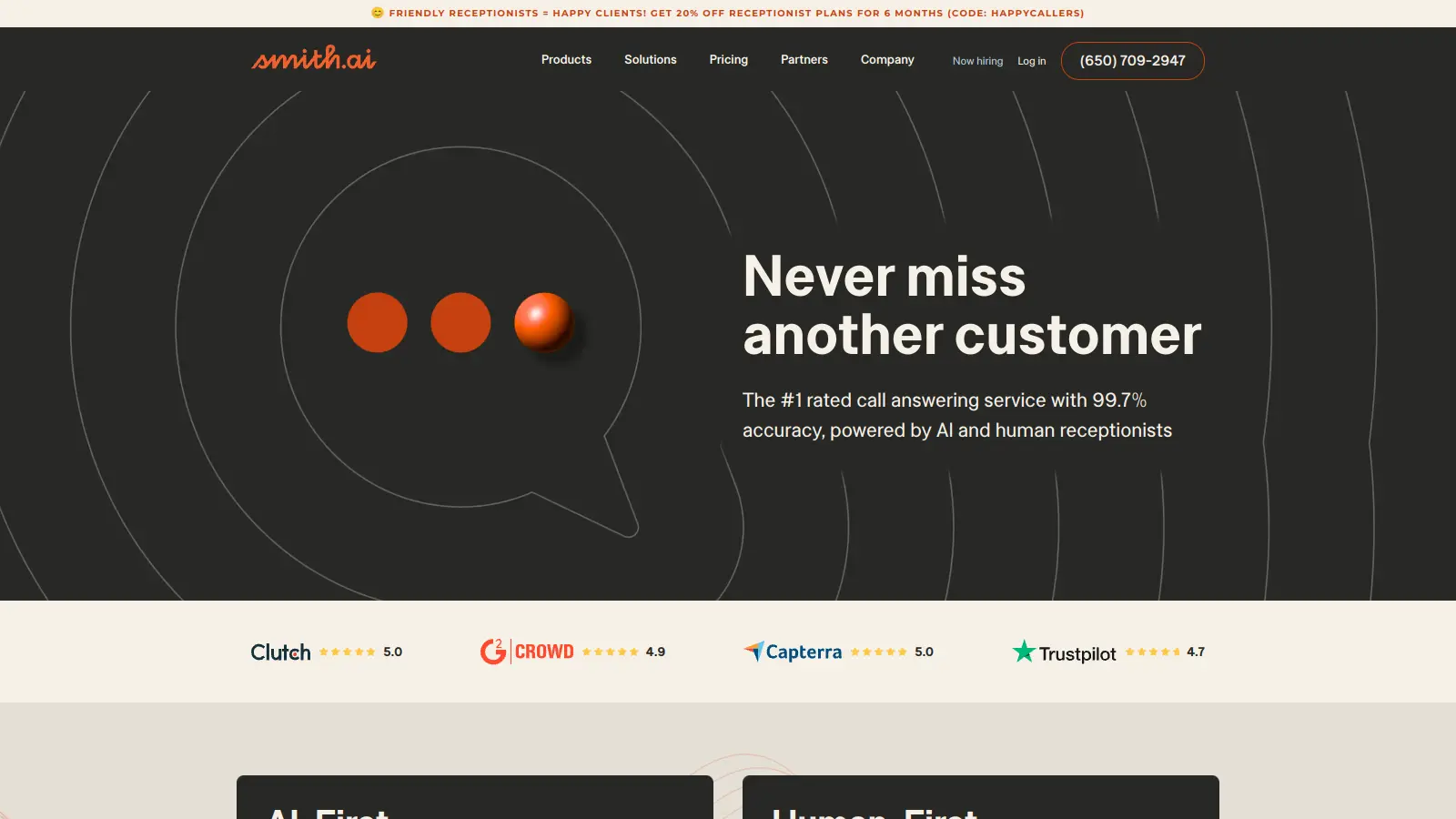
Smith.ai is a virtual receptionist service that combines AI-powered automation with live human agents to handle 24/7 call answering, web chat, SMS, lead qualification, and appointment scheduling. It integrates with CRMs and business tools to manage customer communications without in-house staff.
best deal
AI Receptionist starts at $95/month for 60 calls with month-to-month billing and no long-term contract.

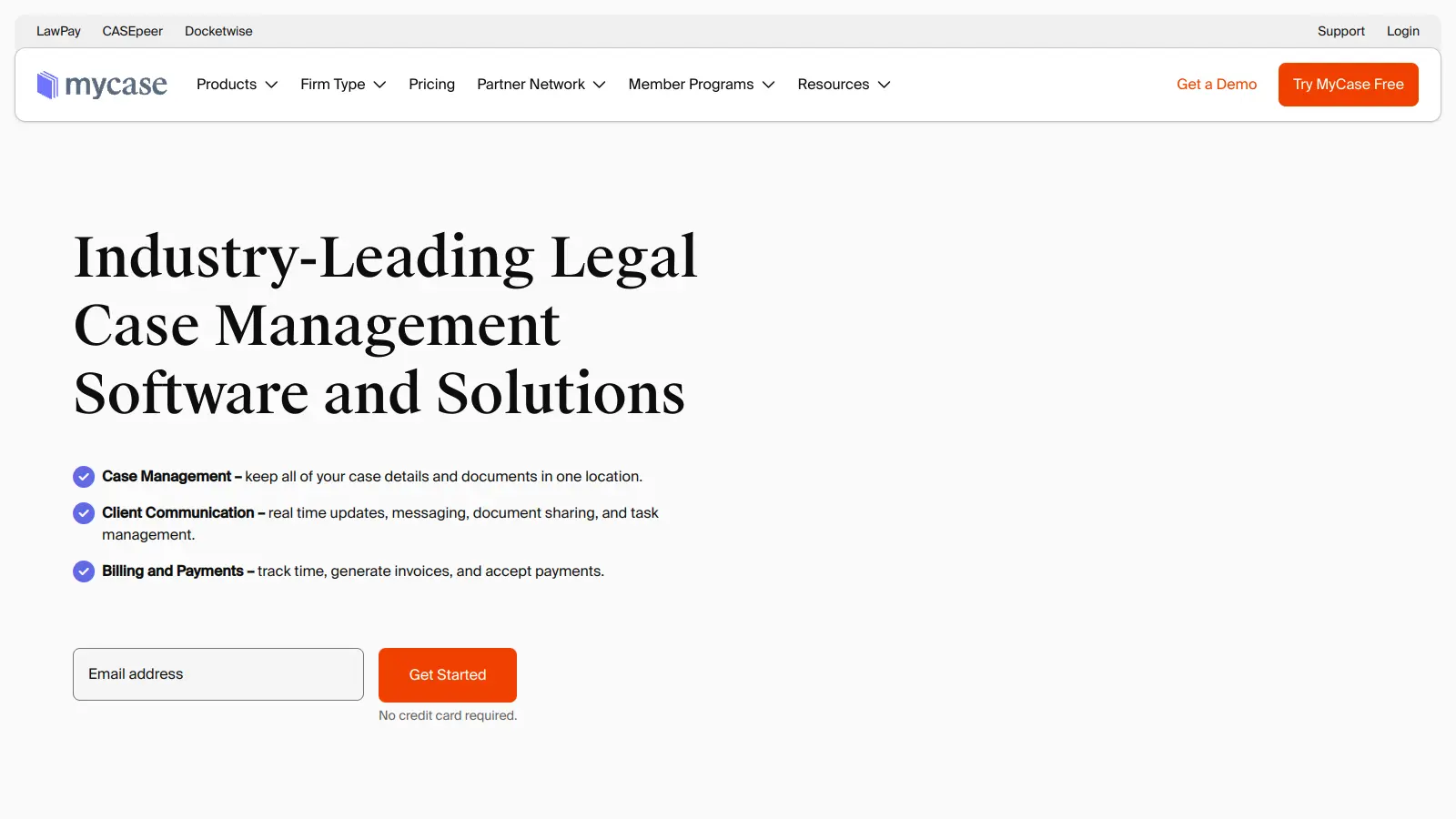
MyCase is a cloud-based law practice management software designed for solo and small to midsize law firms. It provides a platform for managing client communication, case workflow, billing, and document management. With features like client intake forms, eSignature, case tracking, secure client portals, AI-powered document summarization, and integrated payment solutions, MyCase helps law firms streamline their operations and improve efficiency across multiple practice areas.
best deal
Try MyCase Free for 10 Days - No Credit Card Required

Square is a payment processing and business management platform that offers multi-channel payment solutions, point-of-sale systems, inventory management, and analytics. It supports credit cards, digital wallets, and bank transfers, provides integrated hardware, enables e-commerce integration, and ensures secure transactions with PCI compliance. The platform now includes Square AI, a conversational AI assistant that analyzes business data and provides insights.
best deal
Try Square Plus Free for 30 Days - No Credit Card Required

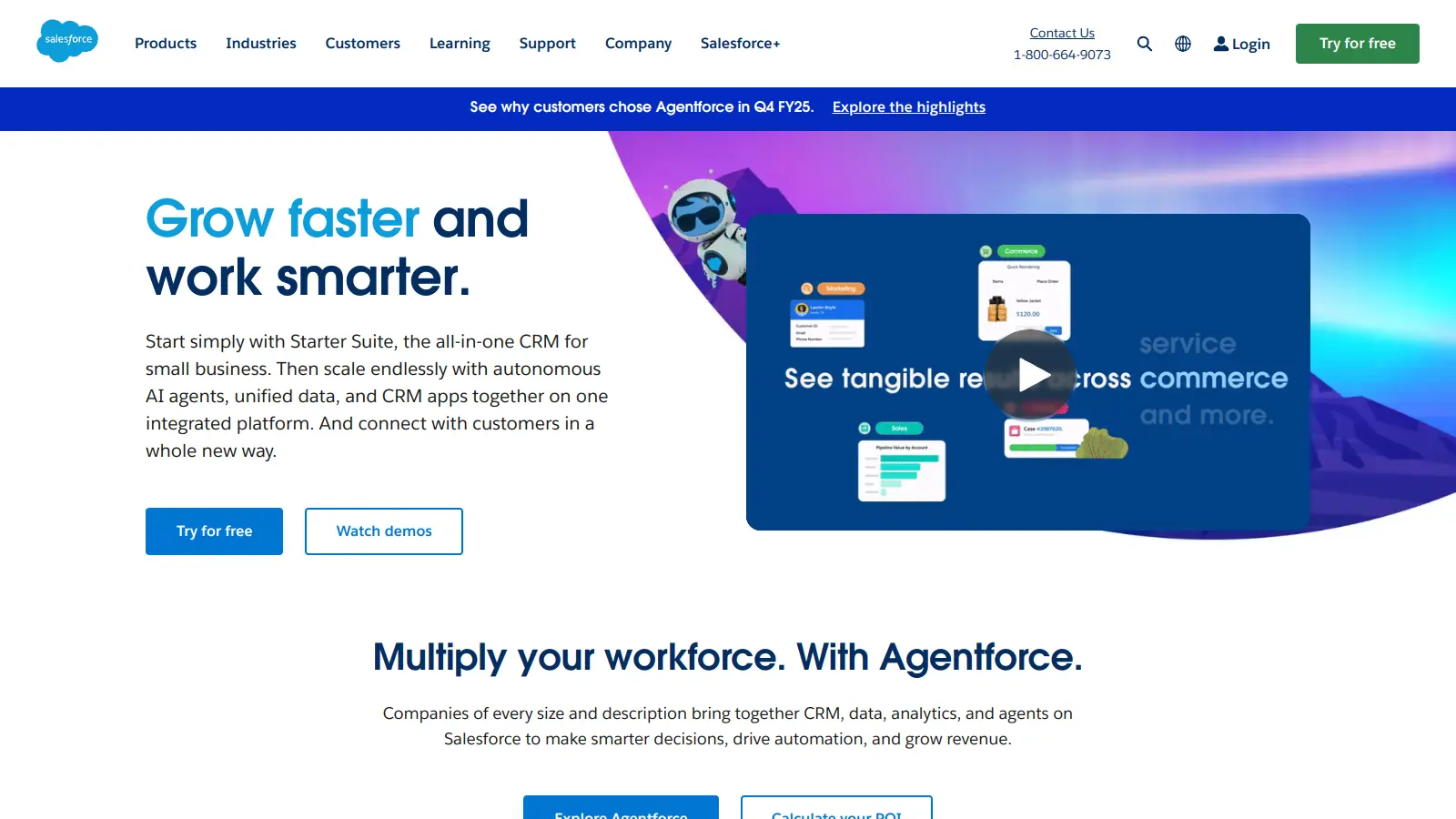
Salesforce is a cloud-based Customer Relationship Management (CRM) platform that helps businesses automate sales processes and manage customer relationships through SaaS delivery. It offers tools powered by AI, enabling companies to manage customer data, automate workflows, and gain insights across multiple departments. The platform supports businesses of all sizes with scalable solutions that enhance efficiency, improve customer relationships, and drive revenue growth.
best deal
Start with Salesforce Starter Suite for $25/month per user and access core CRM features across Sales Cloud, Service Cloud, and Platform.

Gradescope is a comprehensive digital grading platform that streamlines assessment for various assignment types, including exams, homework, and programming assignments. Developed by UC Berkeley instructors, it reduces manual grading time through AI-powered tools, enables consistent feedback, supports multiple graders, and provides detailed performance analytics. The platform integrates with learning management systems and offers features like dynamic rubrics, annotation, and anonymous grading to enhance educational assessment efficiency.
best deal
Get started with Gradescope for just $1 per student and streamline your grading process

Polaris PSA is a professional services automation tool that helps service organizations manage projects, resources, and financials. It uses AI to capture real-time data, provide recommendations, and enable proactive decision-making. The platform includes automatic time tracking, resource matching, and integrations with Salesforce and 100+ work apps.
best deal
Free Trial Available for Polaris PSA