Project Management Software+2 more

Planbox
best deal
Get a custom innovation platform demo for your specific business needs
redeem now
Planbox
best deal
Get a custom innovation platform demo for your specific business needs
redeem nowWe start with direct ratings from our readers, then look at what real users are saying in practitioner forums and community spaces. We pair that with search demand data and profession-level persona analysis.
Editorial note: this was originally published in september of 2024
quick take
based on real user feedback, community sentiment, pricing value, and fit for target audience. see our full methodology
used Planbox? we'd love to know your thoughts
reader ratings shape our score
Planbox is a cloud-based innovation management platform that helps organizations handle their innovation processes from start to finish. The platform combines AI-powered tools with collaborative features to support idea generation, development, and implementation across various industries.
At its core, the system offers four main modules: Innovation Central for idea management, Agile Central for project tracking, Portfolio Central for innovation oversight, and Discovery Central for insight gathering. Users can submit and evaluate ideas, manage projects using Kanban boards, and track progress through detailed analytics dashboards.
The platform serves businesses of all sizes, from startups to large enterprises, particularly in sectors like healthcare, energy, and financial services. Companies can customize the tool to fit their specific needs, thanks to its modular design and open API for integration with existing systems.
While pricing isn't publicly listed and varies based on organizational needs, Planbox offers demos and custom quotes for interested companies. The recent merger with HYPE Innovation has expanded its capabilities, particularly in AI-powered features and global reach.
Notable users include Whirlpool, Novartis, and ExxonMobil, who use the platform to streamline their innovation processes and engage employees in collaborative problem-solving.
monthly search interest
110/mo now
Planbox held steady between 260 and 320 monthly searches from early 2022 through late 2023, then dropped consistently through 2024 and has stabilised around 110 to 170. This pattern suggests a tool that benefited from broad enterprise interest in AI-powered innovation platforms and is now attracting a smaller, more intentional audience. The hype phase is over, which means what you're evaluating now is the actual product rather than a trend-driven spike.
Whether Planbox is worth the sales process depends almost entirely on what role you're in and what scale you're operating at. Pick your role below to see the honest breakdown.
overall sentiment
select your role to see what people like you are saying
Innovation Leader
positiveIf you're running a formal innovation programme across a large organisation, Planbox's end-to-end coverage from idea capture through portfolio analytics is genuinely built for your job. The AI-assisted prioritisation is the headline feature, but the honest caveat is that there's limited independent evidence of how well it performs in practice. Worth a demo if you're already evaluating enterprise platforms; harder to justify if you're still figuring out whether you need dedicated tooling at all.
strengths
concerns
Project Manager
mixedThe Kanban boards and real-time collaboration features work for agile tracking inside an innovation context, but Planbox isn't trying to replace Jira or Asana and it shows. If your project management sits inside a broader innovation workflow you're already running in Planbox, the Agile Central module makes sense. If you just need a project management tool, you'll get more depth and a bigger support community elsewhere for less money.
strengths
concerns
Executive/C-Level
mixedThe ROI dashboards and portfolio performance metrics are designed to give you strategic oversight without needing to dig into project-level detail. That's the right instinct for a platform at this price point. The problem is that without substantial public case studies from comparable organisations, building the internal business case is harder than it should be. Ask for customer references before committing to a contract.
strengths
concerns
Cross-functional Team Member
mixedAs a contributor rather than an owner of the innovation process, your main touchpoint is the idea submission and collaboration layer. That's functional, but it's also the part of the platform you'd only encounter if your organisation has already bought in at the enterprise level. You don't choose Planbox; your organisation does. If it's already in place, the collaborative features are straightforward to use.
strengths
concerns
“The absence of independent user reviews isn't a red flag about the product, but it does mean you can't validate it without going through a sales process, and that's a real cost before you've spent a penny.”
Community discussion around Planbox is thin. The only substantive source in this category is a buyer's guide from a competing vendor, which lists Planbox among innovation management platforms but doesn't offer independent user testimony. Across commercial review platforms, Planbox has very little presence, which itself signals something: this is an enterprise tool sold through direct consultation, not a product that attracts organic word-of-mouth at scale. The pricing model, which requires contacting sales for a quote, keeps casual users out entirely, so you won't find the volume of reviews you'd see for a self-serve SaaS tool. What commentary does exist focuses on Planbox's positioning as an end-to-end innovation platform, from idea capture through portfolio management, with the AI-assisted prioritization cited as the core differentiator. The absence of critical user feedback is notable but not necessarily damning: it's more a reflection of the market segment than a red flag about the product itself.
There's no published price to evaluate directly. Planbox requires a sales consultation to get a quote, with costs varying based on which modules you select: Innovation Central, Agile Central, or Portfolio Central. That structure works in your favour if you only need one component, but if you need all three, enterprise innovation management platforms typically run into five or six figures annually. Whether that's worth it depends entirely on the scale of your innovation programme and whether you have dedicated staff to run it. If you're a small team experimenting with idea management, this is almost certainly overkill.
Innovation Leaders managing organisation-wide programmes get the clearest value: the AI-powered idea prioritisation and portfolio analytics are built for that role. Project Managers running agile workflows inside an innovation context will find the Kanban boards and collaboration features useful, though dedicated agile tools do that piece better in isolation. Executives and C-level stakeholders get visibility through the performance metrics and ROI dashboards, but without recent case studies to benchmark against, the business case is harder to build than it should be.
First, the lack of publicly available user reviews makes independent validation almost impossible before you enter a sales process. Second, the pricing model requires a full sales consultation just to understand costs, which creates friction for anyone trying to do a quick competitive evaluation. Third, if your primary need is agile project management rather than innovation management, tools like Jira or Asana offer more depth and far more community support at a lower price. Finally, the modular structure means you may end up paying for capabilities you don't use if your needs don't map cleanly to the way Planbox bundles its features.
HYPE Innovation is the most direct competitor and has higher market visibility, which means more independent reviews and case studies to evaluate before committing. Both platforms offer end-to-end innovation management with idea capture, portfolio oversight, and analytics. If your priority is being able to validate the platform through existing customer evidence before signing a contract, HYPE has more public material to work with. Choose Planbox if you've already received a compelling demo and the specific modules align with your workflow. Choose HYPE if you want more pre-sale transparency and a larger peer reference network.
Probably not as a full replacement. The Agile Central module covers Kanban boards, real-time collaboration, and burndown charts, which handles the basics for innovation-specific project tracking. But if your Project Managers are already embedded in Jira or Asana with established workflows and integrations, the switching cost isn't justified by what Planbox's agile layer adds. It works best when your agile activity is directly tied to an innovation pipeline you're already managing in Planbox, not as a standalone replacement for mature project management tooling.
toolsforhumans editorial team
Reader ratings and community feedback shape every score. Since 2022, ToolsForHumans has helped 600,000+ people find software that holds up after launch. how we research →
is this your tool?
claim your listing to update details, respond to our review, or upgrade to a featured partnership.
claim this listing →
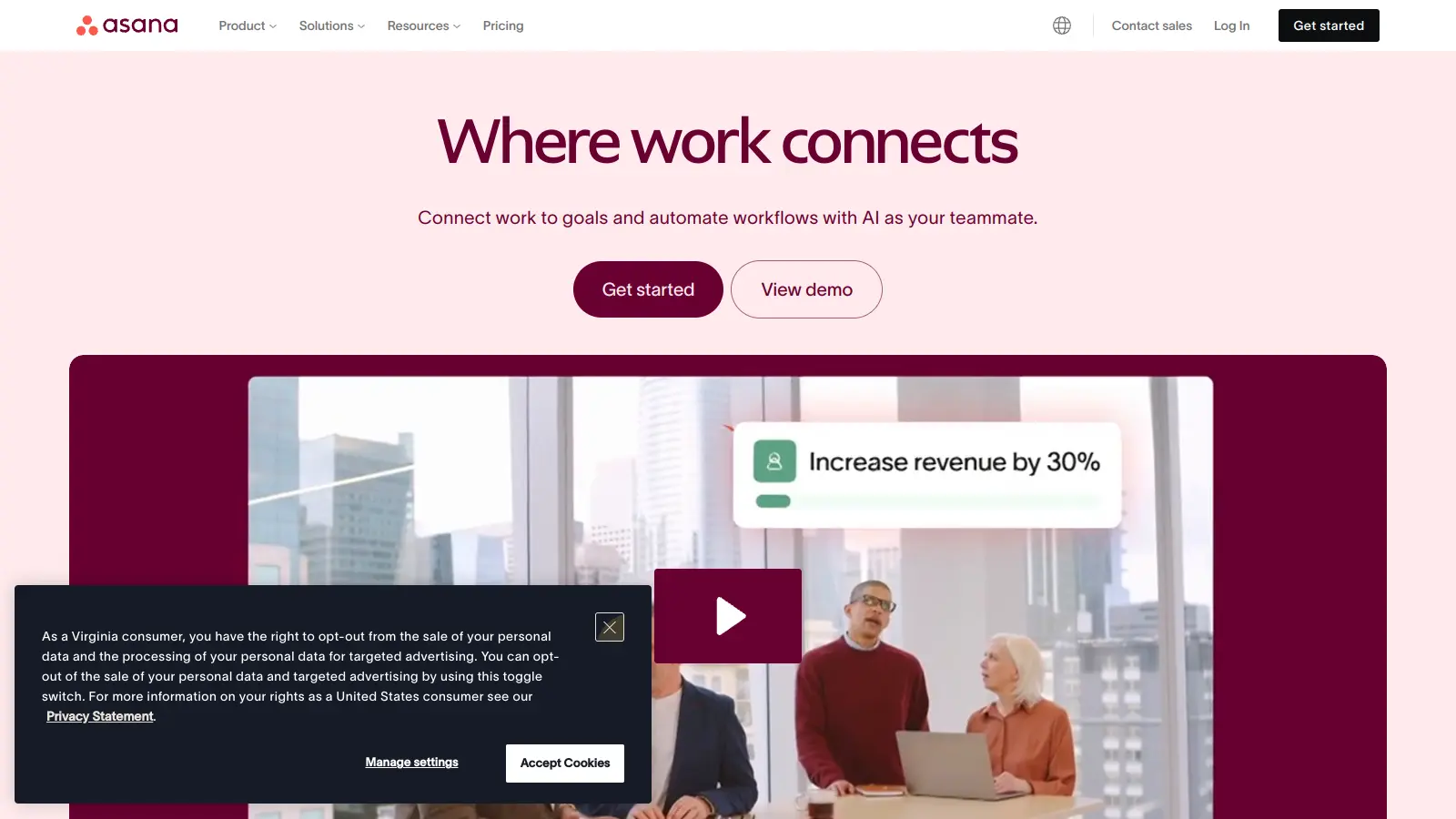
Asana is a web-based project management platform that enables teams to organize, track, and collaborate on work. It offers task management, multiple project views (lists, boards, timelines), AI features for automating workflows, communication tools, progress tracking, and integrations with over 200 apps. Available in free and paid plans, Asana supports teams of all sizes with flexible project visualization options.
best deal
Try Asana free with the Personal Plan for 1-2 users, or start a 30-day free trial of paid plans to test AI features and advanced workflows.

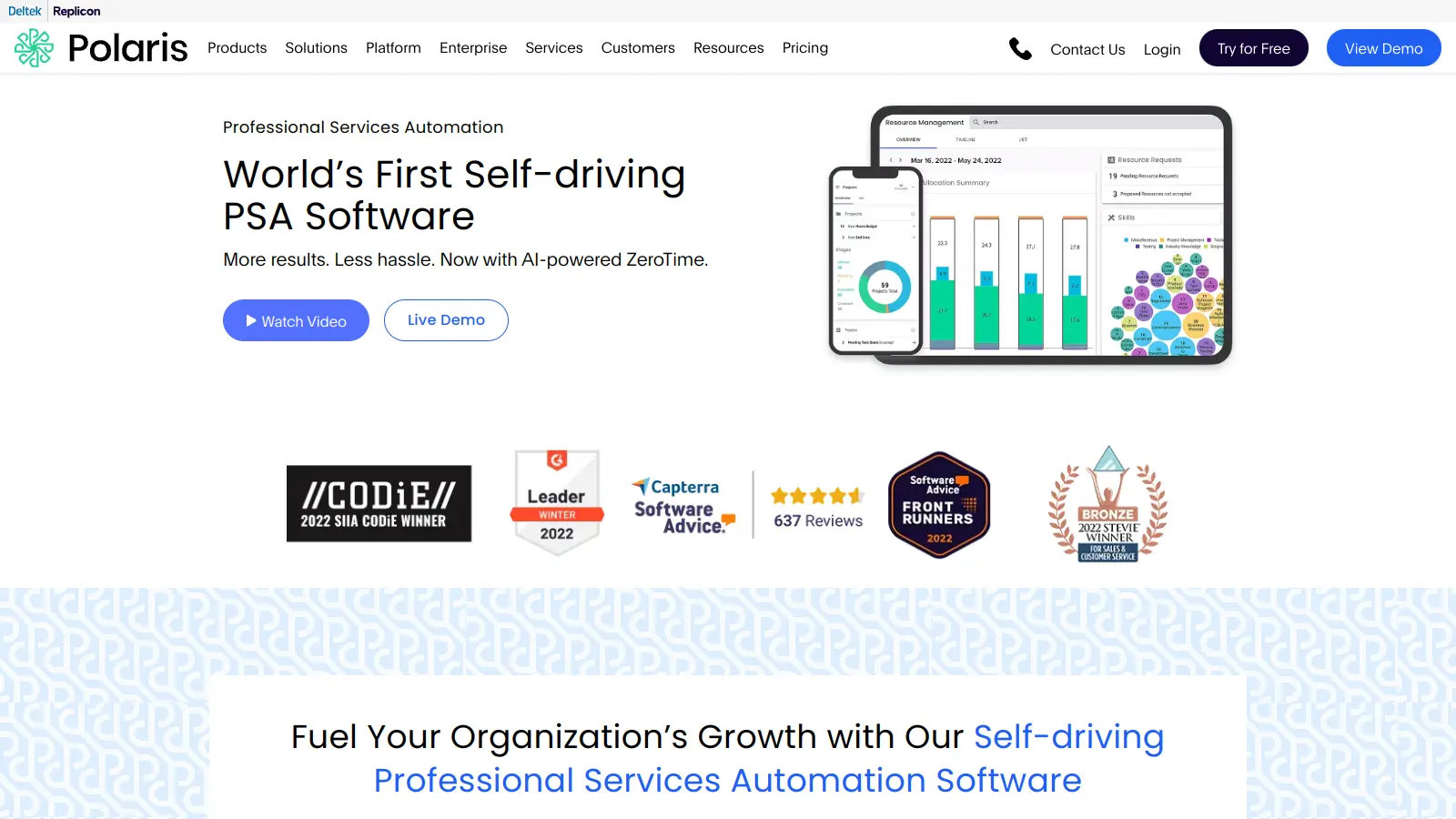
Polaris PSA is a professional services automation tool that helps service organizations manage projects, resources, and financials. It uses AI to capture real-time data, provide recommendations, and enable proactive decision-making. The platform includes automatic time tracking, resource matching, and integrations with Salesforce and 100+ work apps.
best deal
Free Trial Available for Polaris PSA

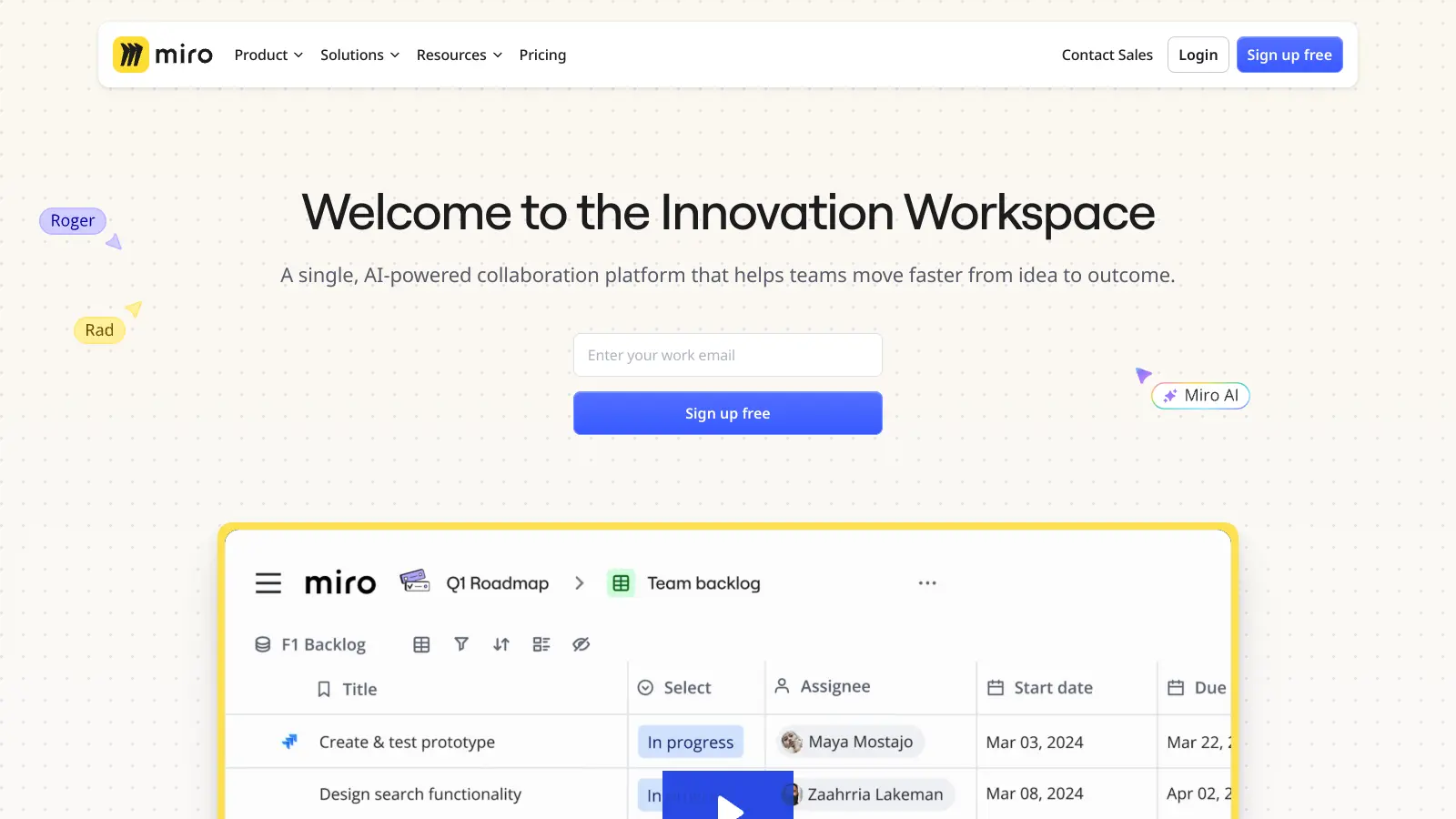
Miro is an AI-powered visual collaboration platform with an infinite canvas for teams to brainstorm, plan, design, and manage projects. It includes real-time collaboration tools, AI features for automating tasks like organizing sticky notes and generating user stories, and integrations with 250+ apps.
best deal
Explore Miro's free plan with unlimited team members, 3 boards, 5 Talktracks, and 10 AI credits monthly

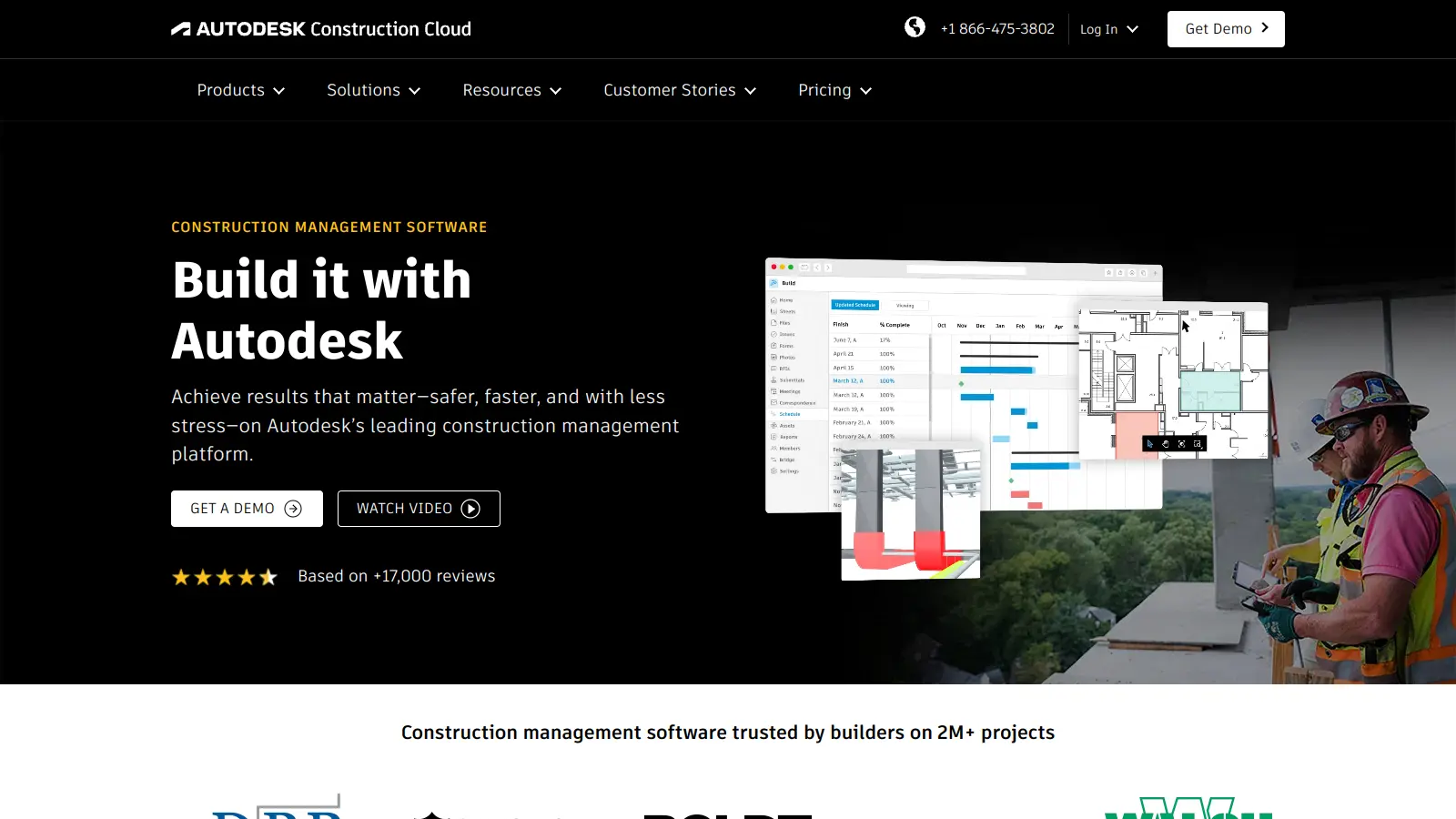
Autodesk Construction Cloud is a construction management platform that connects project teams from design to operations. It offers AI-powered workflow automation, document management, model coordination, and project management tools, letting construction professionals collaborate securely, reduce risks, and deliver projects on time and on budget through cloud-based web and mobile interfaces.
best deal
Free access available for educators through Autodesk Education Plan

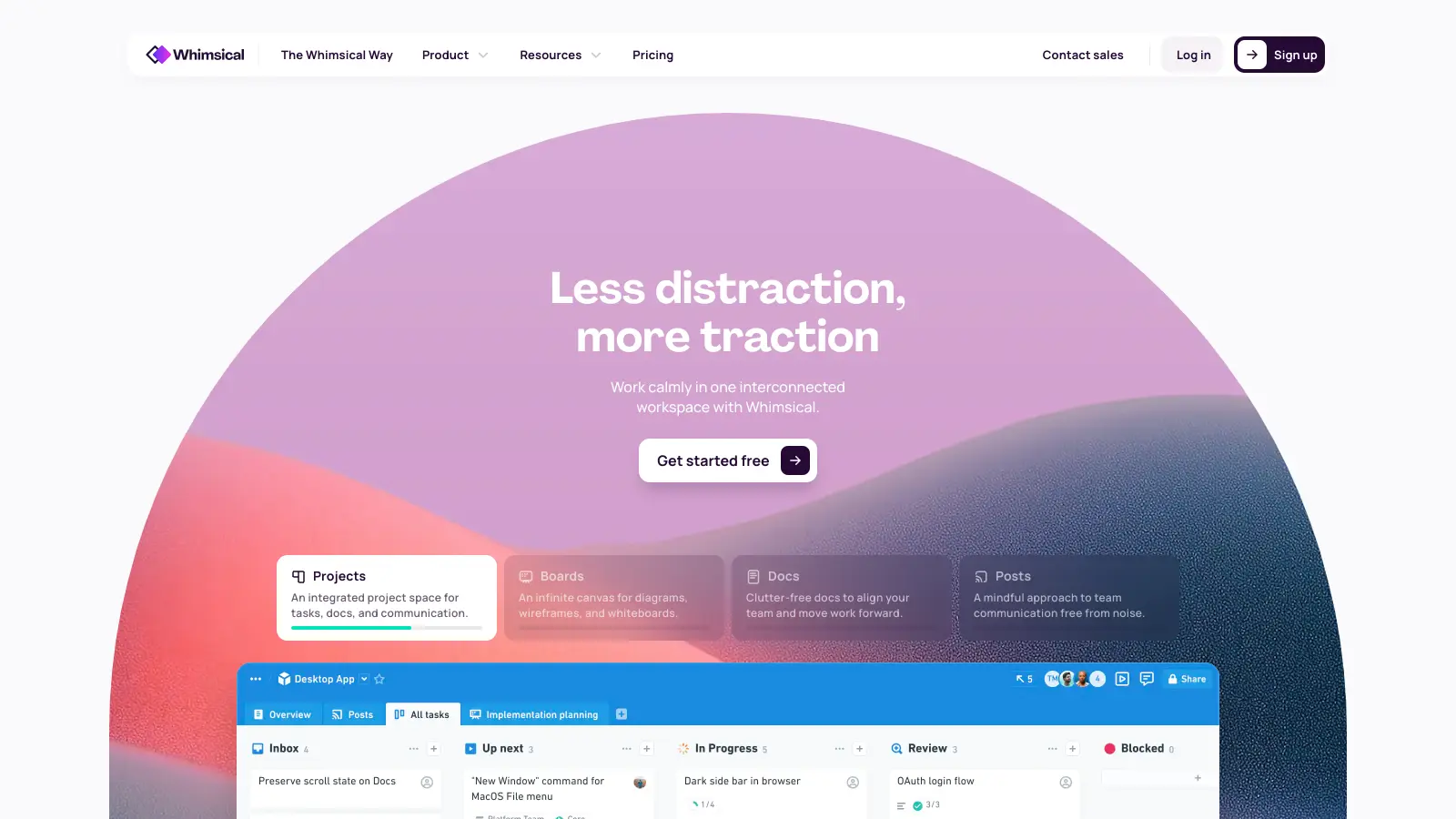
Whimsical is a collaborative visual workspace that helps teams brainstorm, plan, and execute ideas through integrated tools like flowcharts, wireframes, mind maps, and docs. It offers real-time collaboration, AI-powered assistance, and an intuitive interface for project management, with pricing plans ranging from free to enterprise-level solutions.
best deal
Start with Whimsical's Free Plan - No credit card required. Get unlimited workspace members, 3 team boards, unlimited docs, and 100 AI actions to visualize your ideas today.

Houzz Pro is business management software for professionals in construction, remodeling, and design. It features AutoMate, a suite of AI tools that automate takeoffs, estimates, scheduling, expense tracking, and voice-activated project management, helping businesses create branded proposals, manage projects, and build their online presence through 3D floor planning and targeted advertising.
best deal
Try Houzz Pro free for 30 days, then $249/month for Pro plan with full features