Best Synthesia Alternatives in 2026: For Every Budget & Use Case
7 alternatives reviewedlast reviewed 22 march 2026
Editorial note:this was originally published in march of 2026
Synthesia is a solid AI avatar video platform, but it's not the right fit for every situation. The avatar library gets repetitive, the pricing climbs quickly at higher volumes, and it can't actually show your product in action. If any of those are your problem, this page is for you.
The tools below cover a range of use cases: product demo videos, marketing clips, training content, and screen-based tutorials. Each pick was chosen based on pricing transparency, how well it fits specific workflows, and how easy it is to switch from Synthesia.
You'll find 7 alternatives here, including obvious picks like HeyGen and a few less-talked-about tools worth knowing about.
We collect first-hand reviews from people who use these tools every day — what works, what doesn't, whether it's worth paying for. We research pricing, features, and comparisons so that feedback has real context behind it. For this page, prioritisation was given to tools offering comparable AI video generation capabilities with publicly available pricing information. Read our full research methodology.
looking for a Synthesia alternative?
tell us what you're considering and why — it helps others in the same position.
What is Synthesia, and why do people look for alternatives?
Synthesia is a cloud-based AI video platform that turns written scripts into presenter-style videos using AI avatars and text-to-speech voices. It supports 160+ languages, includes 240+ pre-built avatars, and lets teams produce video content without cameras, studios, or editing software. It's widely used for corporate training, internal communications, and marketing videos.
The most common reasons people look for alternatives come down to four things: cost at volume (the per-video pricing adds up fast for teams producing content regularly), avatar fatigue (the same AI faces appear across thousands of companies' videos), the inability to demonstrate software interfaces directly, and the lack of a meaningful free tier for smaller teams or solo creators.
Some users also find that avatar-led videos don't suit every content type. Step-by-step product tutorials, screen recordings, and documentation-style content often need a different tool entirely.
Converts long-form video or scripts into short branded clips
Content creators repurposing long video into short clips
PaidFrom $19/mo
vs SynthesiaBetter than Synthesia when you want a custom avatar cloned from your own face rather than picking from a generic stock library.
our top pick
1
HeyGen
AI avatar videos with custom face-cloning and voice replication
Freemium
Best for · Marketers and founders who want a branded AI presenterPricing · From $29/mo
HeyGen lets you create videos with AI avatars, including custom avatars built from your own video footage. It supports 40+ languages, offers a talking photo feature for turning a single image into a speaking presenter, and includes a video translation tool that re-lips videos in other languages. It's the closest like-for-like Synthesia competitor with a stronger custom avatar story.
Pros
✓Custom avatar creation from your own footage
✓Video translation with automatic lip-sync
✓Free tier available for testing
Cons
✗Free plan limited to 1 watermarked video per month
vs SynthesiaBetter than Synthesia when you need to record real software workflows rather than have an AI presenter describe them in the abstract.
2
Loom
Screen and webcam recording with async video messaging
Freemium
Best for · Product teams and customer success managersPricing · Free; paid from $15/mo
Loom is a screen and camera recording tool built for async communication and product walkthroughs. It lets you record your screen, face, or both, then share via link in seconds. It added AI features for auto-generated summaries, transcripts, and filler-word removal. It's not an avatar platform, but it's far better than Synthesia for anyone who needs to show actual software in action.
Pros
✓Records actual product UI with no editing required
✓AI transcript and summary generated automatically
✓Generous free plan with unlimited videos
Cons
✗No AI avatars or text-to-video features
✗Video editing tools are basic compared to dedicated editors
vs SynthesiaBetter than Synthesia when your goal is turning an existing article or blog post into a social video, not building a scripted presenter video from scratch.
3
Lumen5
Turns blog posts and text into social-ready video clips
Freemium
Best for · Content marketers repurposing written contentPricing · Free; paid from $29/mo
Lumen5 converts written content, including blog posts and article URLs, into short-form videos using AI-selected stock footage, text overlays, and background music. It's not an avatar tool; it's a content repurposing platform. The free tier is functional enough for basic social content, and paid plans start at $29 per month for branded output.
Pros
✓Converts article URLs into video in minutes
✓Large stock media library included
✓Free plan with no credit card required
Cons
✗No AI avatars or human presenter option
✗Output style is template-driven and can look repetitive
vs SynthesiaBetter than Synthesia when you want stock-footage-based videos from a text prompt without paying for avatar-based production at scale.
4
InVideo AI
Text-to-video with stock footage, voiceover, and scene editing
Freemium
Best for · Social media creators and small marketing teamsPricing · Free; paid from $25/mo
InVideo AI generates videos from a text prompt or script, assembling scenes from a large stock footage library with AI voiceover and background music. You describe what you want in plain language and the tool builds a rough cut you can edit scene by scene. It supports 50+ languages and is aimed at social media creators and marketing teams who want fast turnaround without avatar-style presenters.
Pros
✓Prompt-to-video in minutes with AI scene assembly
✓16 million+ stock clips and images included
✓Lower starting price than Synthesia
Cons
✗No photorealistic AI avatar option
✗AI-assembled scenes sometimes miss the intended tone
vs SynthesiaBetter than Synthesia for teams that already use Canva and want to consolidate design and video production into one subscription rather than paying for both.
5
Canva
Design platform with video creation, templates, and AI tools built in
Freemium
Best for · Teams already using Canva for design and brandingPricing · Free; Pro from $15/mo
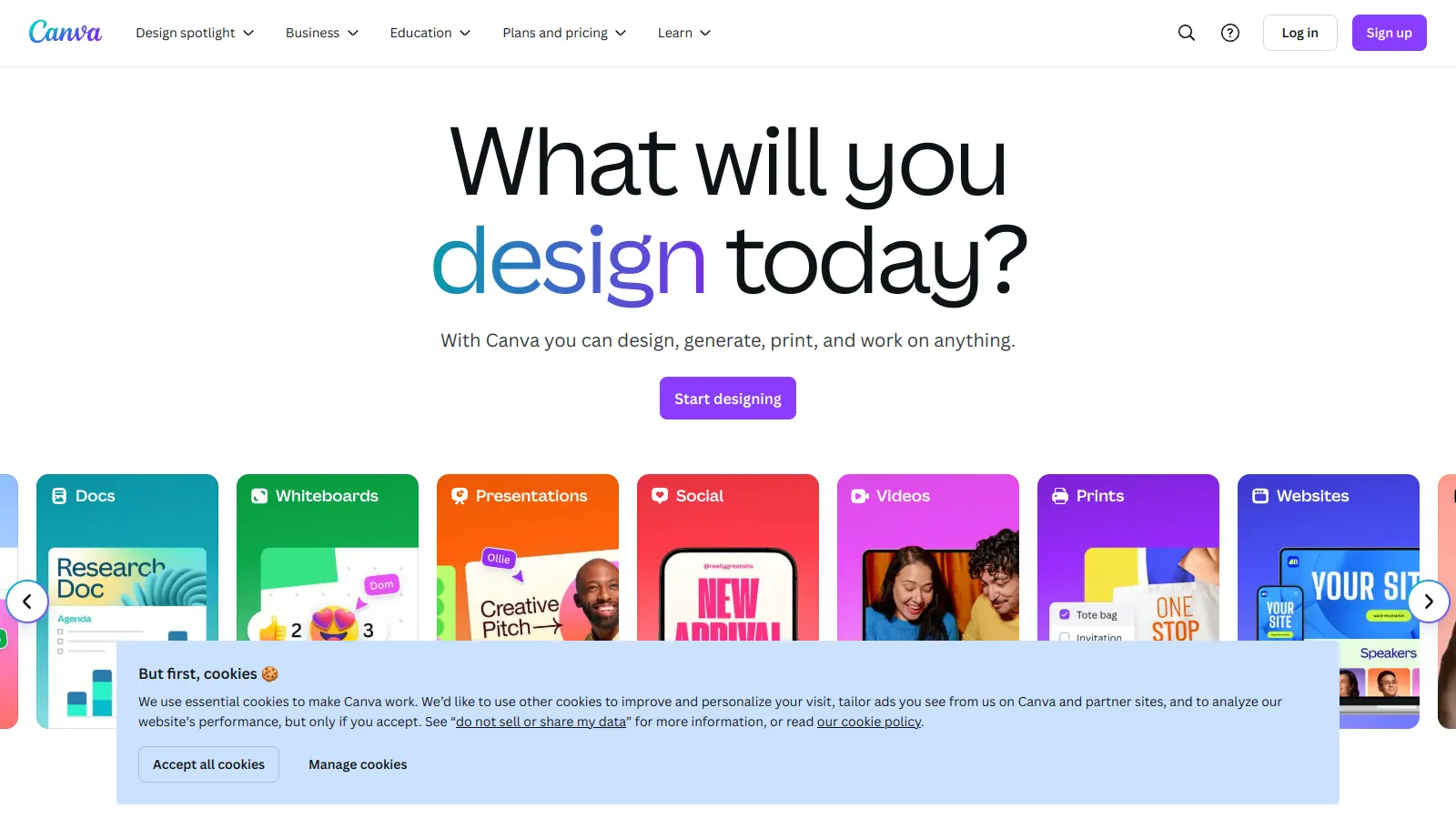
Canva is primarily a design platform, but its video creation tools are substantial enough to cover many Synthesia use cases. It has presentation-to-video export, a talking AI presenter feature called Talking Photo, background removal, and a large template library. For teams already using Canva for design, adding video production to the same tool avoids paying for a separate platform entirely.
Pros
✓Combines design and video in one tool
✓Strong free tier with no watermark on most exports
✓Huge template library across video formats
Cons
✗AI avatar features are limited compared to Synthesia or HeyGen
✗Not built for long-form training video production
vs SynthesiaBetter than Synthesia when you're a SaaS team that needs to show users exactly how to use your product, not just have an avatar explain it in general terms.
6
Clueso
Turns screen recordings into polished product videos and help docs
Custom
Best for · SaaS product teams building help content and onboarding flowsPricing · Pricing on request
Clueso is designed specifically for product teams that need to create tutorials, onboarding videos, and help documentation from screen recordings. You record your workflow, and Clueso generates a professionally edited video with zoom effects, annotations, and optional AI narration. It also outputs written documentation alongside the video, which is useful for teams maintaining a help center.
Pros
✓Generates video and written docs from one recording
vs SynthesiaBetter than Synthesia when you already have recorded video content and need to edit and repurpose it efficiently rather than generate new avatar-based videos from scratch.
7
Pictory
Converts long-form video or scripts into short branded clips
Paid
Best for · Content creators repurposing long video into short clipsPricing · From $19/mo
Pictory is a video editing and repurposing tool that works from existing content: you can drop in a long video, a script, or a blog post and it cuts or assembles a shorter, shareable clip. It's popular with podcasters, YouTubers, and content teams who produce long video and need short-form cuts for social. AI voiceover and auto-caption features are included on paid plans.
Pros
✓Turns long video into short clips automatically
✓Auto-captions included on all paid plans
✓Works from existing video, no re-recording needed
Do you need to show your product or just explain it?
Synthesia's avatars can narrate, but they can't click through a UI or show a real workflow. If your videos need to demonstrate software, look for screen-capture-first tools like Loom or Clueso instead of another avatar platform.
How many videos do you produce per month?
Synthesia charges per seat or per video count depending on the plan. If you're producing dozens of videos monthly, check whether alternatives offer unlimited exports or flat-rate pricing. A tool that costs less per video will save real money at scale.
Do you need multilingual output?
Synthesia's 160-language support is one of its strongest features. If multilingual voiceovers are critical, confirm that any alternative you consider matches that language count or at least covers the specific languages your team needs.
How much does avatar realism matter?
Some alternatives, like HeyGen, let you create a custom avatar cloned from your own video footage. Others use stock presenters similar to Synthesia. If brand consistency or a recognizable face matters, prioritize tools with custom avatar creation.
What's your actual budget?
Several strong alternatives have free tiers or start below $20 per month. If Synthesia's $18+ monthly cost is a concern, there are capable tools at lower price points, though usually with watermarks or export limits on free plans.
frequently asked questions
Prices range from free (with watermarks or export limits) to $30-$50 per month for mid-tier plans. Tools like Lumen5 and Canva have usable free tiers, while HeyGen starts around $29/month for its creator plan. Custom or enterprise pricing is common for teams needing high video volume or API access.
Yes. Canva has a free plan with basic video features, and Lumen5 offers a free tier for simple content. Most avatar-focused tools like HeyGen offer free trials but restrict exports or add watermarks on free plans. Fully free, unrestricted options are rare in this category.
The most common complaint is pricing relative to output quality, especially for teams producing high volumes of shorter videos. The second most common reason is needing to show actual product interfaces, which avatar-only platforms can't do. Some teams also switch because Synthesia's avatars start to look generic when used across hundreds of videos.
Synthesia doesn't offer a direct export of project files in an editable format, so migration means re-creating videos in the new platform rather than importing existing projects. The scripts are easy to move over, but you'll need to rebuild layouts and re-select avatars or voice styles in whatever tool you switch to.
Yes. Tools like Loom and Clueso are designed specifically for screen-based product content. They let you record your actual product interface and add annotations, voiceover, or AI-generated narration on top, which is something avatar-focused platforms can't replicate.
tools for humans
toolsforhumans editorial team
Reader ratings and community feedback shape every score. Since 2022, ToolsForHumans has helped 600,000+ people find software that holds up after launch. The picks here come from that.