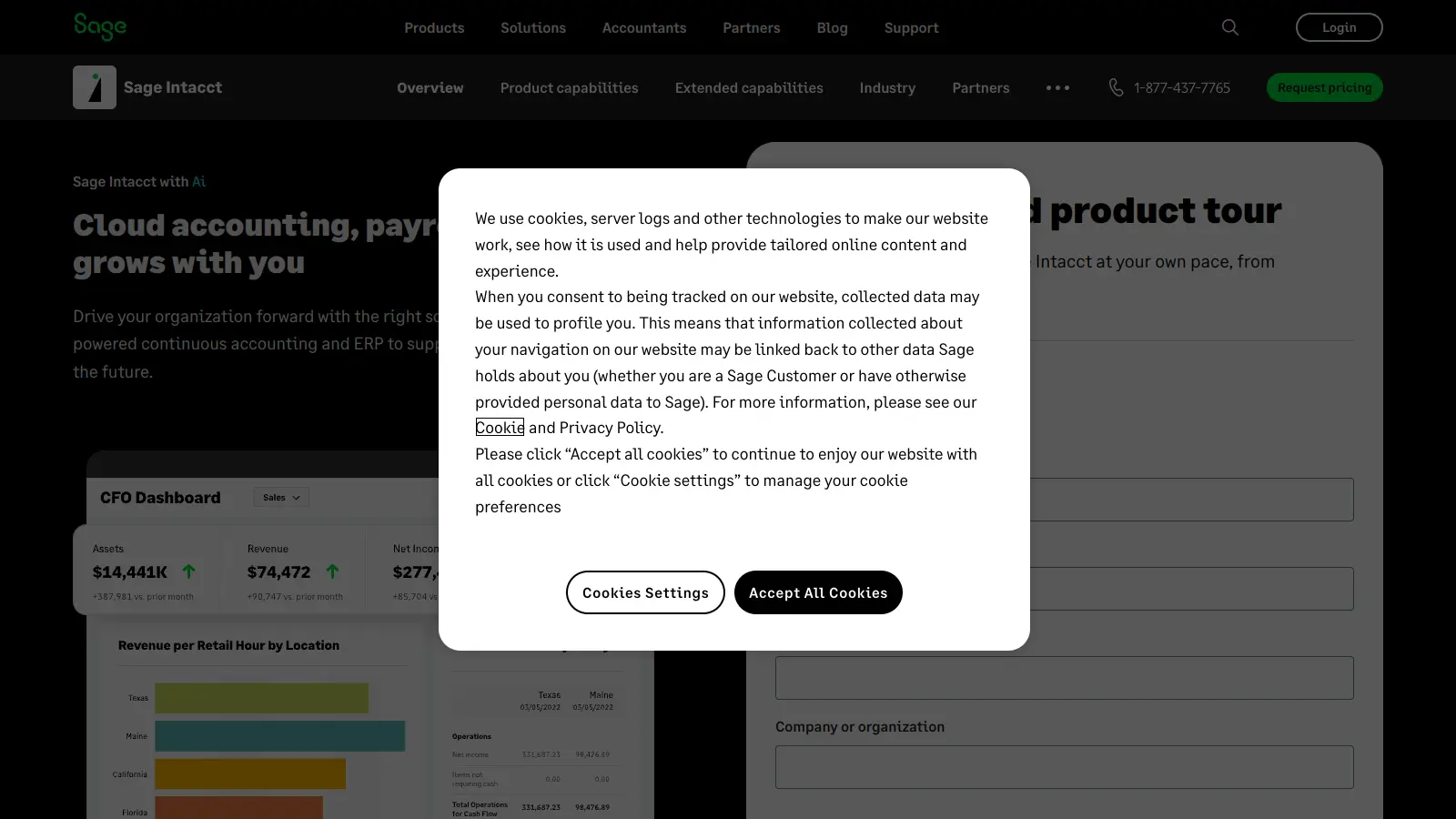
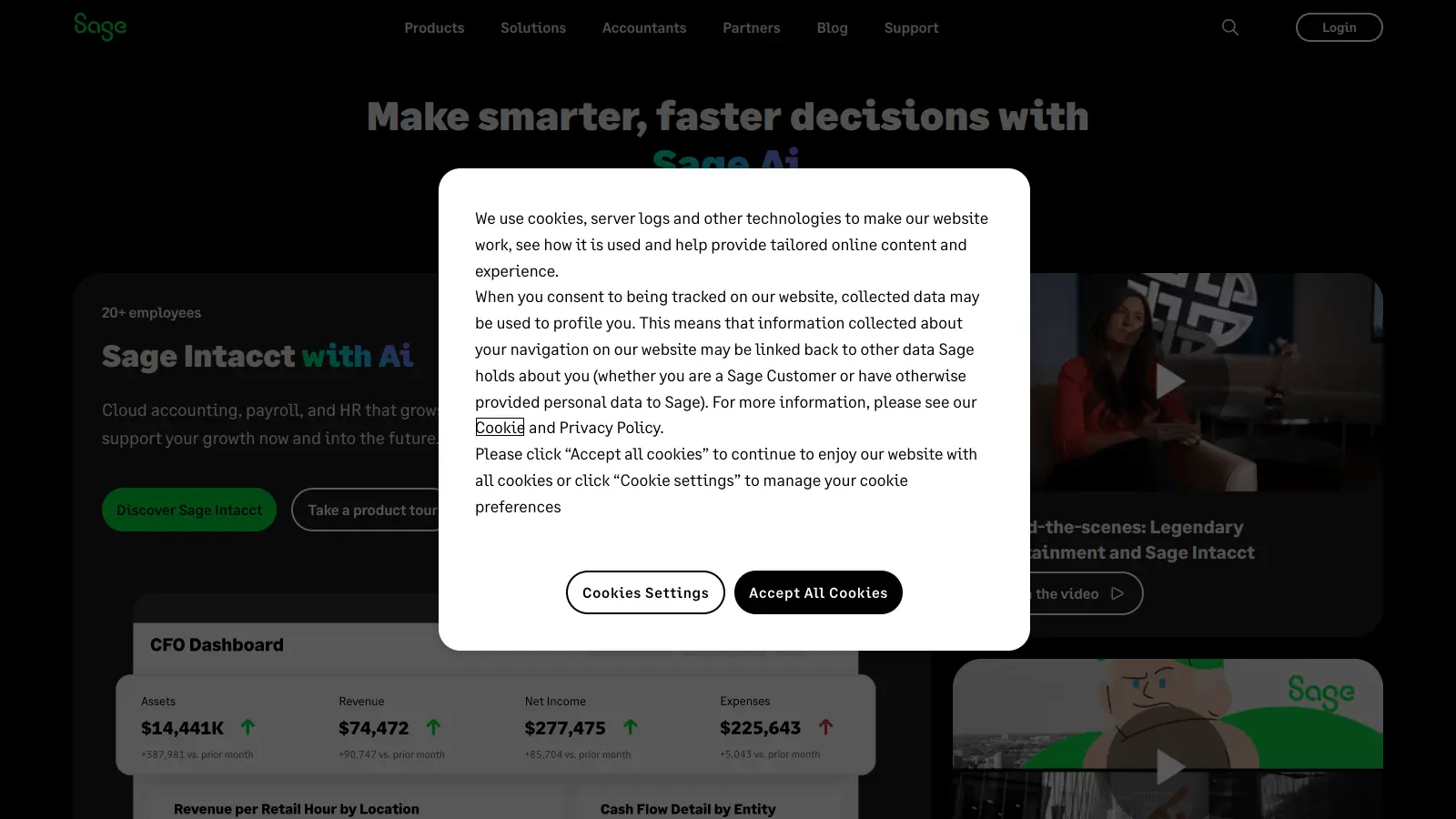
Sage Intacct is a cloud-based accounting and ERP software that helps growing businesses automate their financial processes. It's built for companies that have moved beyond basic tools like QuickBooks and need more capability for multi-entity operations, complex reporting, and automation.
The platform combines core accounting functions with features like multi-entity consolidations, project accounting, and AI-powered automation. Users can manage everything from basic bookkeeping to complex operations across multiple locations and currencies. Customizable dashboards and multi-dimensional reporting help teams track what matters to them.
Integration capabilities allow Sage Intacct to work with popular business applications like Salesforce through APIs and the Sage Marketplace. The software runs entirely in the cloud, which means teams can access their financial data from anywhere without on-premise installations. Updates happen automatically on a quarterly basis.
Pricing starts at around $8,300 yearly for basic features, but costs vary based on the number of users and chosen modules. The platform is well-suited for mid-sized businesses with annual revenue over $4 million, companies operating internationally, or organizations backed by venture capital. Implementation costs and complexity should be factored in, with most setups requiring partner assistance.
Sage Intacct targets mid-sized businesses with annual revenue over $4 million that need consolidated reporting, automated workflows, and real-time financial visibility across multiple entities or currencies.
Sage Intacct serves industries including professional services, nonprofits, healthcare, hospitality, wholesale distribution, and e-commerce where these financial capabilities are needed.
Sage Intacct receives praise for its automation capabilities, particularly around accounts payable, accounts receivable, and general ledger processes. Users appreciate the highly customizable dashboards and reporting, cloud-based accessibility, and strong dimensional reporting for multi-entity businesses. The integrations with other business tools work well once configured, and many find the interface user-friendly after the initial learning period.
The cost is very expensive, especially for smaller businesses. The learning curve is steep and initial implementation is complex, which frustrates many users. Customer support response times get criticized. Native reporting flexibility is limited without add-ons. Performance can lag with large datasets. The platform relies heavily on implementation partners, which adds to the total cost of ownership.
Sage Intacct pricing typically starts around $8,300 annually for core financials with two users, with average costs ranging between $15,000 to $35,000 based on your company's needs. The final price depends on several factors including how many users you need, which modules you select, and the complexity of your implementation. Additional modules like project accounting or order management can add $3,000 to $10,000 annually. For the most accurate pricing, request a custom quote directly from Sage or an authorized partner who can tailor a package to your specific requirements.
What companies is Sage Intacct best for?Sage Intacct works best for growing mid-sized businesses that have outgrown basic accounting software like QuickBooks. It's well-suited for companies with annual revenue of $4 million or more, organizations operating across multiple entities or locations, and businesses that need consolidated financial reporting. Industries that commonly benefit include professional services, nonprofits, healthcare, wholesale distribution, and e-commerce. If your company needs multi-currency support, consolidated reporting, or project accounting, Sage Intacct is likely a good fit.
How long does it take to implement Sage Intacct?Most Sage Intacct implementations take between 3-6 months from start to finish. Simpler setups with fewer customizations might complete in as little as 8-10 weeks, while complex multi-entity organizations could take 6+ months. The timeline depends on your organization's size, the modules you're implementing, your data migration needs, and your team's availability for the project. The platform relies heavily on implementation partners, so working with an experienced partner is important to keep the process on track.
How does Sage Intacct compare to QuickBooks or NetSuite?Sage Intacct sits between QuickBooks and NetSuite in capability and cost. It's built for companies that have outgrown QuickBooks and need multi-entity consolidations, advanced automation, and dimensional reporting. Compared to NetSuite, Sage Intacct typically costs less and focuses specifically on financial management rather than full ERP functionality. NetSuite offers broader operational capabilities with built-in CRM and e-commerce, while Sage Intacct excels at accounting-focused features with strong customization. Your choice depends on whether you need primarily financial management or full ERP capabilities.
What training is required for Sage Intacct users?Sage Intacct has a steep learning curve, particularly during initial implementation. Finance teams typically need formal training to understand the platform's capabilities and workflows. Non-finance team members often struggle with the complexity, so role-specific training is important. Most implementations include training sessions from your implementation partner, and Sage offers documentation and support resources. The interface becomes more user-friendly once people understand the system, but plan for a significant onboarding period.


Our newsletter comes with exclusive discounts, trials and practical insights from within the industry