We start with direct ratings from our readers, then look at what real users are saying in practitioner forums and community spaces. We pair that with search demand data and profession-level persona analysis.
Editorial note:this was originally published in august of 2024
quick take
✓Best for: enterprise teams connecting multiple systems across hybrid cloud and on-premise environments
✗Skip if: your integration needs are simple or your budget is under $2k/month
£Best value: Professional Plan at ~$2,000/month for teams running 3+ active enterprise integrations
★★★½★3.8/ 5 — editorial rating
based on real user feedback, community sentiment, pricing value, and fit for target audience. see our full methodology
used Boomi? we'd love to know your thoughts
reader ratings shape our score
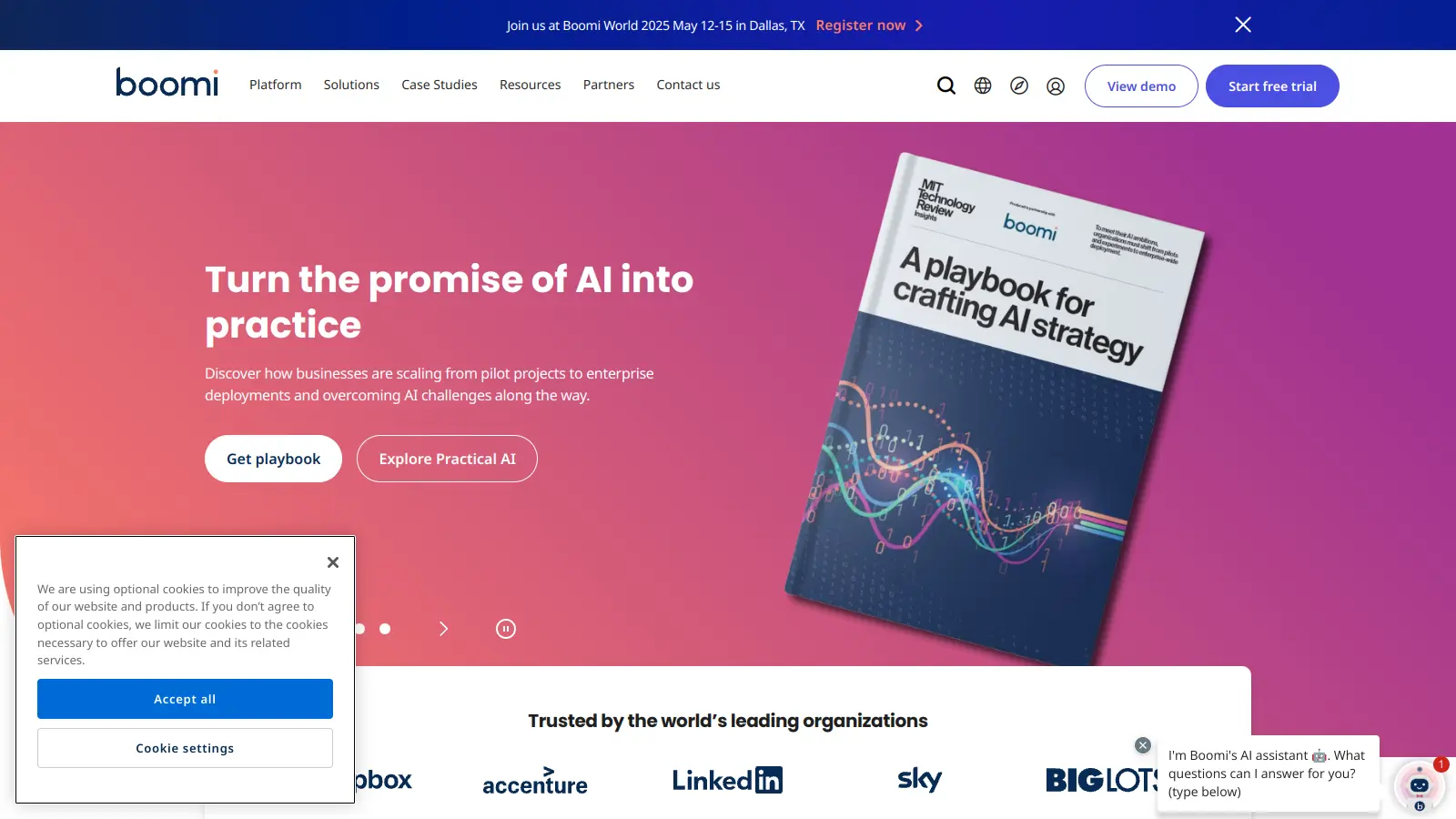
Boomi is an integration platform as a service (iPaaS) that helps businesses connect their applications, data, and workflows. Founded in 2000 in Wayne, Pennsylvania, it offers tools for API management, master data management, and workflow automation.
The platform uses a low-code/no-code approach, making it accessible to users without deep technical skills. You can build integrations through a visual interface without needing extensive coding knowledge, and now Boomi AI lets you generate integrations and APIs using natural language commands. More advanced users can dive deeper into customization options.
At its core, Boomi connects different systems and applications so data flows between them. It includes hundreds of pre-built connectors for popular business applications, tools for managing APIs, features for keeping data consistent across systems, and new capabilities for managing AI agents through tools like Agentstudio, Agent Designer, and Agent Control Tower.
The platform offers several pricing tiers, starting from $99 per month for basic integration needs, with enterprise plans available for larger organizations. Each tier adds more features and capabilities, such as advanced security options and additional processing power.
Whether you need to automate workflows, manage APIs, ensure data accuracy across your organization, or orchestrate AI agents, Boomi provides the tools to handle these tasks. Its cloud-based nature means you can access and manage your integrations from anywhere, while also having the option for on-premises or hybrid deployment if needed.
how popular is Boomi?
monthly search interest
9.9k/mo now
peak interest33k/moFeb 2024
searches now10k/moFeb 2026
1-month change−18%vs prev month
The February 2024 spike to 33,100 monthly searches looks like a one-off event, likely tied to a product announcement or industry recognition moment, rather than genuine sustained growth. Before and after that spike, Boomi sits in a slow, gradual decline from the mid-14,000s in 2022 down to the 9,900 to 12,100 range in late 2025. This is a mature platform with a stable but shrinking search audience, which means you're getting a battle-tested product with a large existing user base, not a tool in active growth or innovation hype.
who is Boomi for?
Whether Boomi is worth it depends heavily on what you're trying to do with it and what your team looks like. Pick your role below to see the honest breakdown for your situation.
overall sentiment
select your role to see what people like you are saying
Integration Specialist
positive
If you're spending time writing custom code to connect enterprise systems, Boomi's pre-built connector library will cut that significantly. The visual designer is genuinely faster for standard integrations. That said, complex scenarios will push you into trial-and-error territory, and when something breaks in production, slow support response times become your problem to manage.
strengths
Extensive pre-built connector library reduces time to connect systems
Visual design interface enables faster integration development than custom coding
Strong support for hybrid, cloud, and on-premise environments
Reliable scalability for enterprise-grade deployments
concerns
Runtime bugs and stability issues impact production reliability
Learning curve steepens significantly for complex integrations beyond standard use cases
Slow customer support response times when critical issues arise
IT Leader
mixed
Boomi handles hybrid cloud and on-premise environments well and the compliance capabilities are real. The problem is cost: at $2,000 to $4,000+ per month before usage fees, the budget conversation is unavoidable, and support SLAs don't match the operational risk level of an enterprise platform. Pressure-test the support tier before you commit.
strengths
Robust support for hybrid cloud and on-premise deployments
Enterprise-level security and compliance capabilities
Reduces IT overhead by enabling citizen integrators and business analysts
Handles scalability requirements for large organizations
concerns
High pricing model that accumulates quickly across teams and use cases
Slow customer support response times create operational risk
Runtime stability issues require dedicated monitoring and incident management
Citizen Integrator / Business Analyst
positive
For routine automation and standard workflow connections, Boomi's low-code interface actually delivers. You can build real integrations without writing code, and the AI commands help you move faster. The ceiling hits sooner than the marketing suggests though: anything non-standard will require a specialist, so make sure one is in reach before you hit that wall.
strengths
Low-code interface makes integration accessible without programming skills
Natural language AI commands simplify workflow creation
Reduces dependency on IT teams for routine automation tasks
Quick time-to-value for standard integration scenarios
concerns
Customization limitations hit hard in advanced use cases
Learning curve becomes steep when moving beyond simple integrations
Limited recourse when hitting platform constraints without IT specialist support
Data Manager
mixed
Boomi Data Hub and Data Integration cover the core data governance and pipeline use cases at enterprise scale. If you're managing master data across multiple systems or building ELT pipelines, the toolset is capable. The cost structure means you'll need to justify it against the volume of data work you're actually running.
strengths
Master data management capabilities enable consistent data across systems
Supports synchronized 360-degree data views across enterprise
Automates data synchronization processes reducing manual effort
Reliable for maintaining data integrity in hybrid environments
concerns
Runtime stability issues pose risk during critical data operations
High pricing makes it expensive for data management-focused initiatives
Slow support response times when data sync issues emerge
what users are saying
“The support complaints are consistent enough to be a real concern, not just noise, and for an enterprise platform where something breaking in production is a business problem, slow response times are a structural risk worth pricing in.”
Community reviews for Boomi are broadly positive in terms of functional capability, with verified user feedback across review platforms consistently landing around 4.5 stars from hundreds of reviewers. The recurring praise centres on the pre-built connector library and the visual designer, which genuinely do reduce the time it takes to connect enterprise systems compared to writing custom integrations from scratch. The independent analysis from oneio.cloud flags that Boomi is owned by private equity (Francisco Partners and TPG Capital since 2021), which is worth knowing if you're evaluating long-term vendor stability and pricing trajectory. Critical themes that surface across review platforms include high and escalating costs, support response times that don't match enterprise expectations when something breaks in production, and a learning curve that gets steep fast once you move beyond standard use cases.
Our take: Boomi is a legitimate enterprise integration platform that earns its strong ratings on core functionality. But the price is a serious conversation: even the base Professional tier starts around $2,000 a month, and costs accumulate quickly across teams. The support complaints are consistent enough to be a real concern, not just noise. If you're an IT leader evaluating this seriously, pressure-test the support SLAs before signing. If your integration needs are less complex or your budget is tighter, MuleSoft or even a lighter tool like Zapier for simpler workflows will serve you better without the enterprise overhead.
features
Integration Platform as a Service (iPaaS): Hundreds of pre-built connectors that help businesses connect applications and data sources, with a visual drag-and-drop interface that makes integration accessible to both technical and non-technical users.
API Management: Tools for deploying, securing, and managing APIs throughout their entire lifecycle, with developer portals and built-in gateway capabilities for integration.
Master Data Management: Synchronizes and manages critical data across different systems, ensuring consistency and accuracy while providing data discovery and preparation tools for synchronized 360-degree views.
Workflow Automation: Low-code platform called Flow that enables users to create custom workflows, build apps, enhance team collaboration, and automate complex business processes with minimal technical expertise.
AI Agent Management: Complete suite including Agentstudio, Agent Designer, Agent Garden, and Agent Control Tower for orchestrating and managing AI agents across your organization.
Boomi AI and Boomi Suggest: Natural language AI commands for generating integrations and APIs, plus AI-guided data mapping and recommendations to speed up development and reduce errors.
Event Streams: Supports real-time data processing and integration, allowing businesses to respond to changing data with event-driven architecture.
B2B/EDI Management: Tools for managing business-to-business transactions and electronic data interchange for supply chain and partner integrations.
Enterprise Security: Industry-leading security features including FedRAMP, SOC 1/2, ISO 27001, and HIPAA compliance, with flexible deployment options across cloud, on-premises, and hybrid environments using modular AtomSphere architecture.
pricing
Pay-As-You-Go Plan starts at $99/month plus usage fees, includes basic workflow, visual designer, connector network, unlimited users, and data transformation capabilities.
Professional Plan typically begins at $2,000/month, offers multiple environments, standard connectors, and basic support for comprehensive back-office and front-office integration.
Pro Plus Plan starts around $4,000/month, provides advanced workflow, services enablement, parallel processing, and additional connectors for real-time integration needs.
Enterprise Plan commences at approximately $8,000/month, designed for large organizations with multi-cloud requirements, including advanced security, message queuing, enterprise connectors, and premier support.
Enterprise Plus Plan requires custom pricing, offering advanced capabilities for complex, high-volume enterprise integrations with additional support and resources.
A 30-day free trial is available with access to Boomi Enterprise Platform, core integration features, low-code development, data mapping tools, basic API management, and learning resources.
All paid plans require annual contracts, and additional costs may include Premier support tiers, enterprise connectors, and extra Atom Workers for increased processing capacity.
frequently asked questions
It depends on scale. At $2,000 to $4,000 a month for the Professional or Pro Plus tiers, Boomi only makes financial sense for mid-to-large enterprises running multiple complex integrations across hybrid environments. If you're connecting more than a handful of systems, managing data pipelines across cloud and on-premise infrastructure, and have a team that can actually use the platform, the ROI is real. For smaller teams or simpler use cases, you're paying enterprise pricing for functionality you won't fully use.
Integration Specialists who need to move fast with pre-built connectors will get the most out of it. IT Leaders managing hybrid infrastructure at scale also find the compliance and governance features genuinely useful. Business Analysts and Citizen Integrators can get real value from the low-code interface for routine automation, though they'll hit a wall on anything complex and need a specialist nearby to resolve it.
Two limitations come up consistently. First, support is slow: when something breaks in production, slow response times create real operational risk, and that's a structural problem for an enterprise platform. Second, pricing escalates quickly. The base $99/month pay-as-you-go plan covers very little, and by the time you're running the integrations Boomi is actually designed for, you're at $2,000+ per month before usage fees. Customisation also hits hard limits in advanced scenarios, requiring specialist intervention to get past them.
Both are enterprise iPaaS platforms, but they target slightly different profiles. MuleSoft skews more developer-first and requires stronger technical teams to implement well, but gives you more flexibility in complex custom scenarios. Boomi's lower-code approach makes it accessible to business analysts and non-developers, which reduces IT dependency for routine automation. If your team is technical and you need deep customisation, MuleSoft wins. If you want faster time-to-value and citizen integrator capability alongside your technical team, Boomi is the better call.
For standard use cases, yes. The visual designer and natural language AI commands let Business Analysts and Citizen Integrators build and automate workflows without programming. The honest caveat is that this only holds for straightforward integrations. Once you're dealing with non-standard connectors, complex data transformations, or edge cases in enterprise systems, you'll need an Integration Specialist to step in. Don't expect the low-code promise to extend all the way to your most complex requirements.
tools for humans
toolsforhumans editorial team
Reader ratings and community feedback shape every score. Since 2022, ToolsForHumans has helped 600,000+ people find software that holds up after launch. how we research →
is this your tool?
claim your listing to update details, respond to our review, or upgrade to a featured partnership.
★★★★★3.8based on real user feedback, community sentiment, pricing value, and fit for target audience. see our full methodology
Zapier
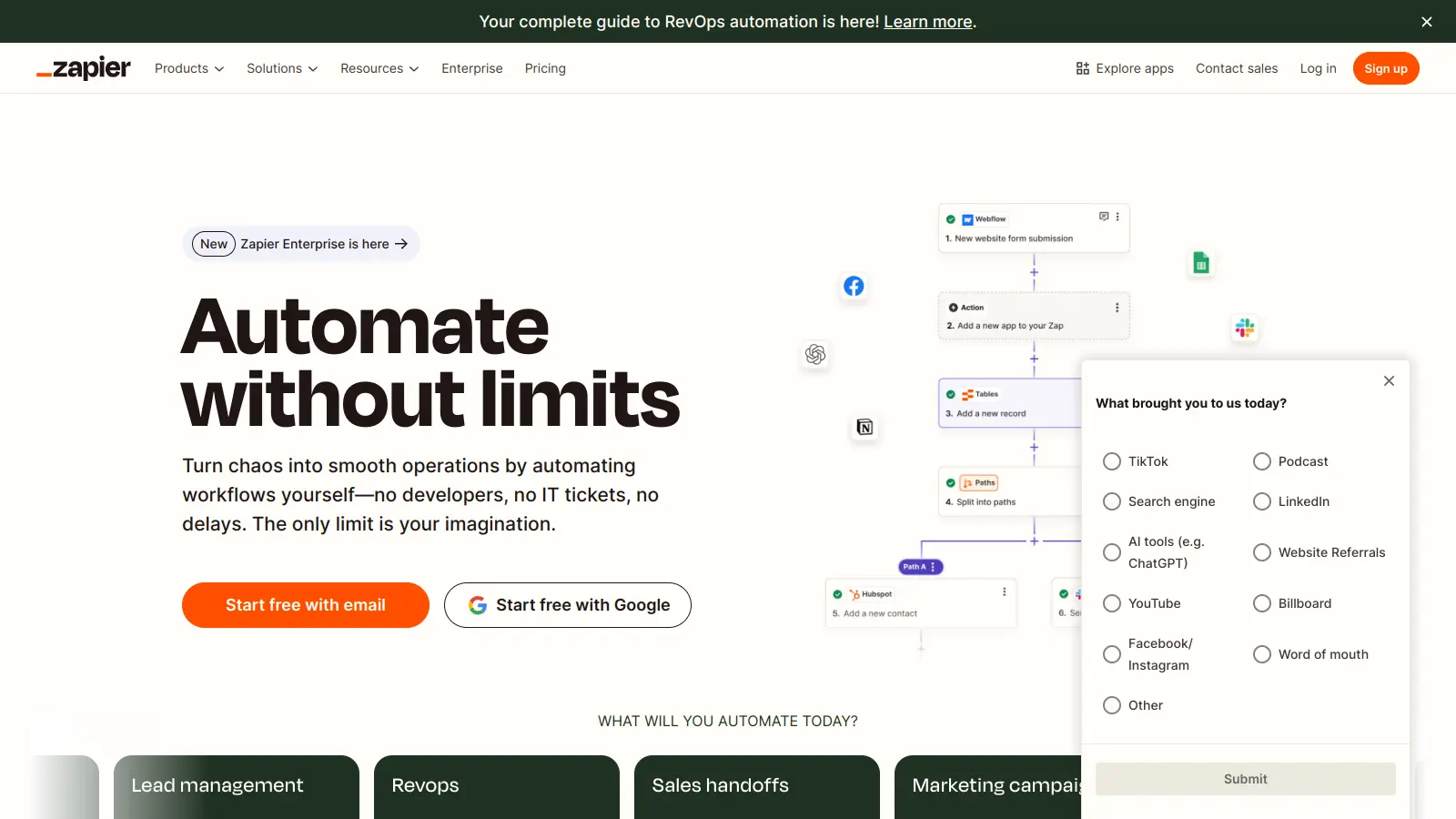
Zapier is a no-code automation platform that connects over 8,000 apps, enabling users to create automated workflows called "Zaps" without coding. It integrates different services, automating repetitive tasks through customizable triggers, multi-step processes, and real-time data transfer. Pricing ranges from free to enterprise tiers.
★★★★★3.5based on real user feedback, community sentiment, pricing value, and fit for target audience. see our full methodology
Cleo
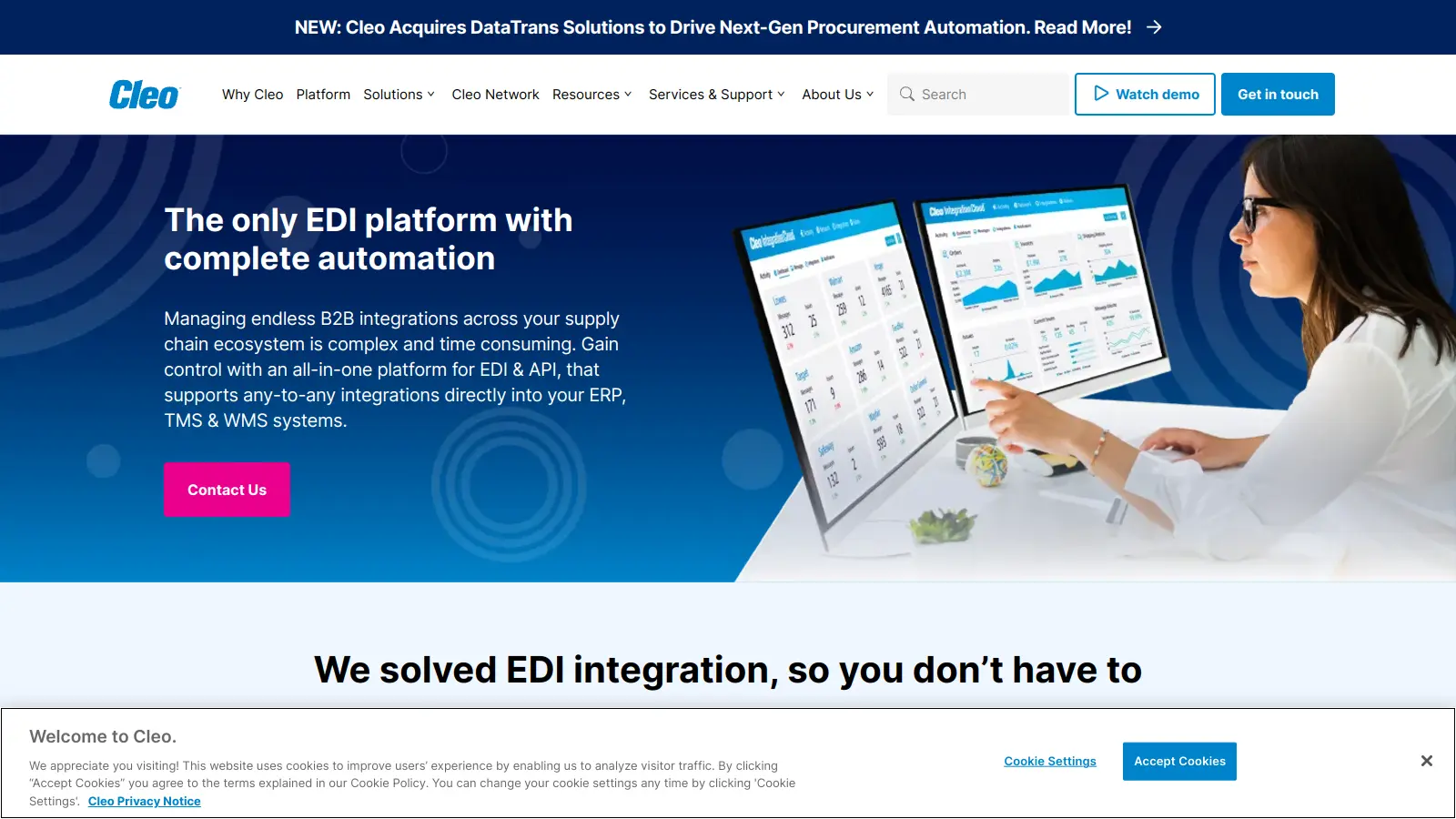
Cleo is an AI-powered financial management app that helps users track spending, set budgets, save money, and build credit. It offers a conversational chat-based interface with features like expense categorization, automated savings, cash advances, and a playful AI financial coach.
★★★★★3.5based on real user feedback, community sentiment, pricing value, and fit for target audience. see our full methodology
Replicate
Replicate is a user-friendly AI platform that enables developers to run, deploy, and scale open-source machine learning models through a simple API. It offers access to various AI models, one-line deployment, model customization, performance monitoring, and flexible pricing based on compute time usage. The platform supports multiple programming languages and provides tools for efficient AI model integration across different applications.
★★★★★3.8based on real user feedback, community sentiment, pricing value, and fit for target audience. see our full methodology
LlamaIndex
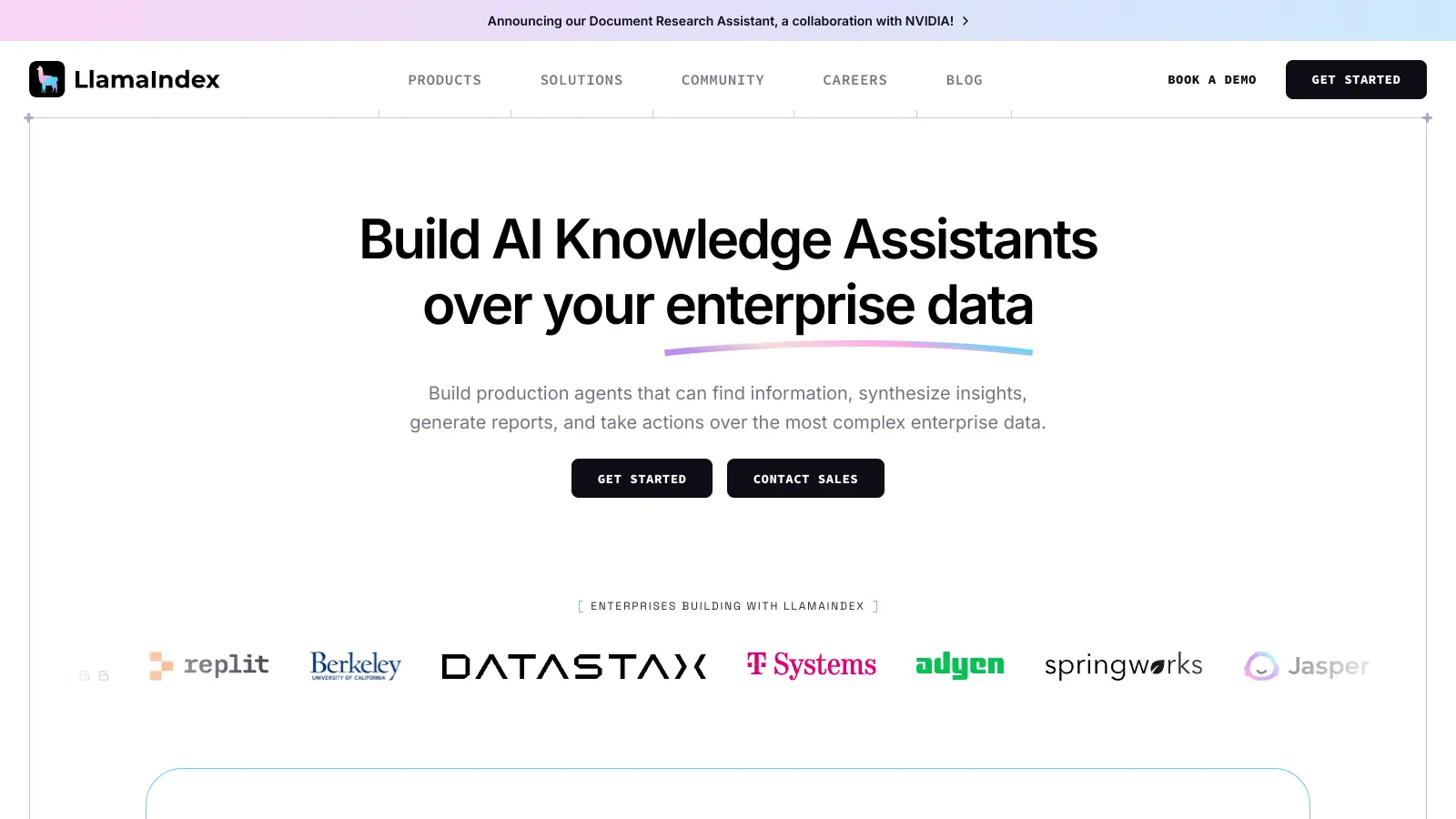
LlamaIndex is an open-source data orchestration framework that simplifies integrating large language models (LLMs) with external data sources. It provides tools for data ingestion, indexing, and querying, enabling developers to build AI applications like chatbots, document Q&A systems, and knowledge agents by connecting LLMs with structured, semi-structured, and unstructured data from over 160 sources.
★★★★★3.8based on real user feedback, community sentiment, pricing value, and fit for target audience. see our full methodology
Runware
Runware is an AI platform that gives developers access to over 300,000 AI models through a single API for real-time generative media creation. Using custom hardware and a Sonic Inference Engine, it generates images, videos, and other media with costs up to 10x lower and speeds 30-40% faster than traditional infrastructure, starting at $0.0006 per image.
★★★★★3.0based on real user feedback, community sentiment, pricing value, and fit for target audience. see our full methodology
Superflows AI
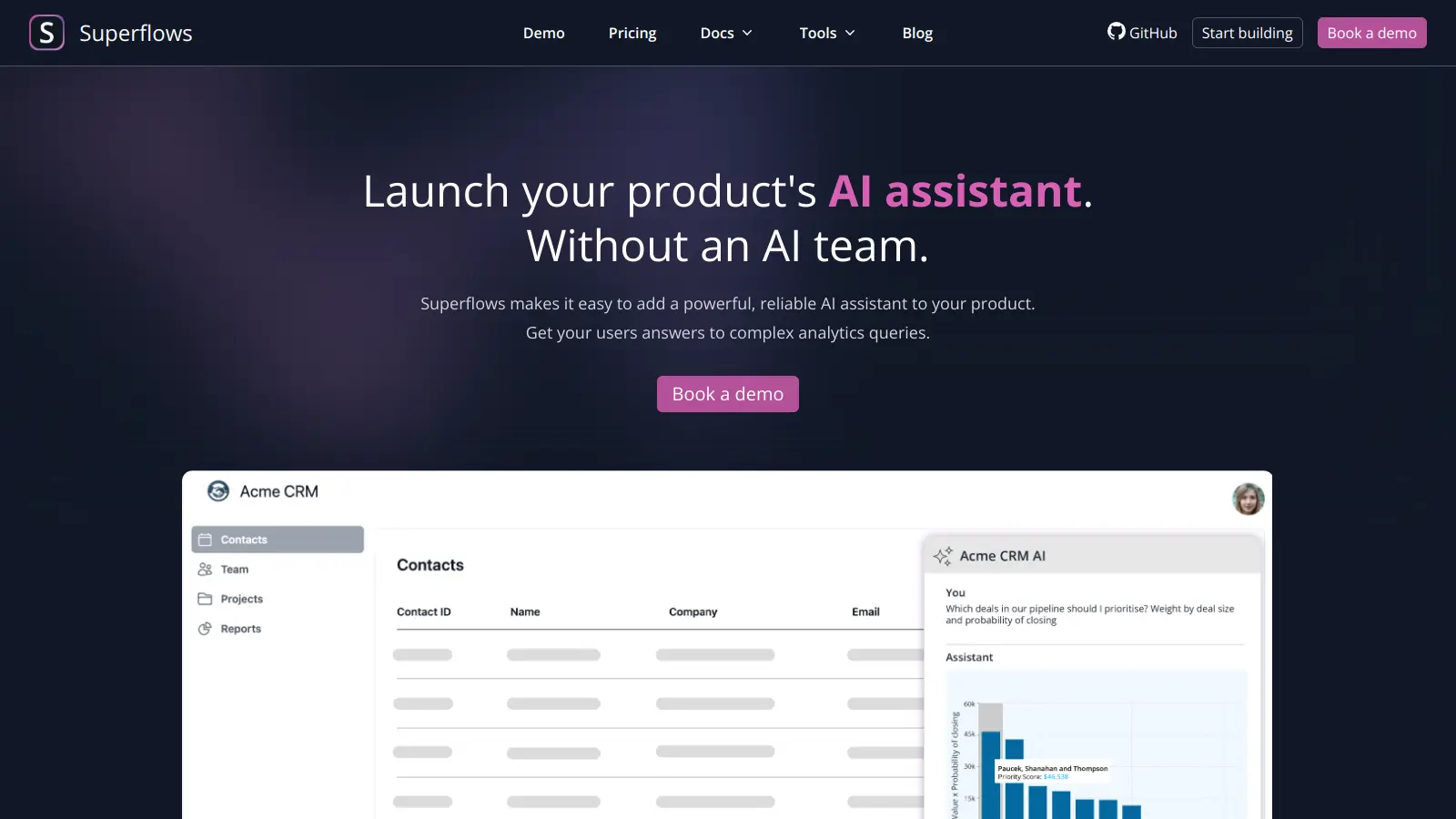
Superflows is an AI platform that helps SaaS companies integrate AI copilots and assistants into their products without needing a dedicated AI team. It enables natural language interactions with software, providing instant analytics insights, data visualization, and the ability to perform product actions.