Supply Chain Management Software+2 more

ShipBob
best deal
Get started with ShipBob for $5/month bin storage + first 4 picks free
redeem now
ShipBob
best deal
Get started with ShipBob for $5/month bin storage + first 4 picks free
redeem nowWe start with direct ratings from our readers, then look at what real users are saying in practitioner forums and community spaces. We pair that with search demand data and profession-level persona analysis.
Editorial note: this was originally published in august of 2024
quick take
based on real user feedback, community sentiment, pricing value, and fit for target audience. see our full methodology
used ShipBob? we'd love to know your thoughts
reader ratings shape our score
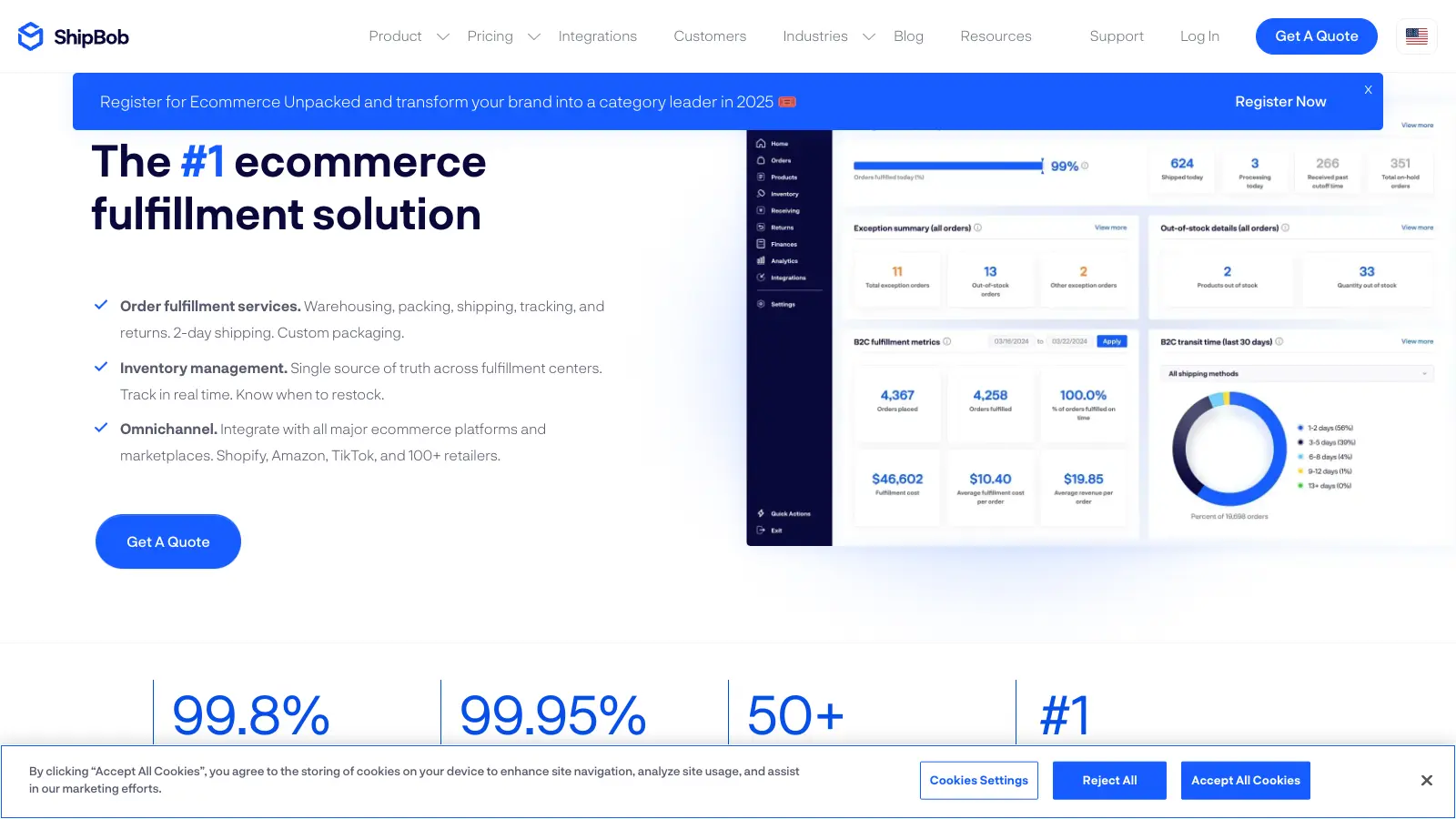
ShipBob is a fulfillment service that helps online stores manage their inventory, shipping, and order processing. Since 2014, they've grown from a small startup to a global operation with over 60 fulfillment centers across six countries.
The platform connects with popular online shopping platforms like Shopify, Amazon, and TikTok Shop. This makes it simple for businesses to keep track of orders from different sales channels in one place. Their system handles everything from storing products to packing boxes and shipping them to customers.
Small businesses can use ShipBob to offer faster shipping options without building their own warehouse network. The service includes real-time inventory tracking, custom packaging options, and tools to predict when you'll need to restock products. They also provide analytics to help businesses make smarter decisions about where to store inventory and how to reduce shipping costs.
Pricing isn't publicly listed and varies based on business needs. ShipBob charges for storage space, picking and packing orders, and shipping costs. They work with both small online retailers and larger companies that ship thousands of orders each month.
monthly search interest
14.8k/mo now
ShipBob's search volume spent most of 2022-2023 in a stable 12,000-15,000/month band with no clear growth, then spiked sharply in late 2024, peaking at 22,200 in December before retreating to its earlier baseline. That December spike almost certainly reflects Q4 ecommerce operators searching for fulfillment alternatives after peak season problems, rather than genuine brand growth. The return to pre-spike levels suggests ShipBob has a stable, loyal core audience rather than a growing one — it's a known quantity in the 3PL space, not a tool riding current momentum.
Whether ShipBob is worth it varies a lot depending on your order volume, sales channels, and where you're shipping. Pick your role below to see the honest breakdown for your situation.
overall sentiment
select your role to see what people like you are saying
Growing Ecommerce Entrepreneur
positiveIf you're shipping 300-500+ orders a month and tired of managing your own warehouse space, ShipBob removes that overhead without requiring you to negotiate carrier rates yourself. The Shopify integration is genuinely good. The catch: per-unit costs at lower volumes are high enough that self-fulfillment often still wins on price until you're past that threshold.
strengths
concerns
Multi-Channel Seller
positiveThe centralised dashboard covering Shopify, Amazon, and TikTok Shop is ShipBob's strongest card for sellers running multiple storefronts. Automated reorder alerts and real-time stock visibility reduce the manual coordination that kills multi-channel operations. That said, inventory discrepancies pop up often enough that you'll want a regular reconciliation process built into your workflow.
strengths
concerns
International Expansion Brand
mixedSix countries and 250+ destinations is a real network, and it's a legitimate shortcut for DTC brands that want international reach without setting up overseas 3PL relationships from scratch. The friction shows in the gaps: certain regions have thin coverage, and when inventory discrepancies hit across international shipments, resolution is slow. If your expansion targets are North America and Western Europe, this works well. For Asia-Pacific or LATAM, you may need a backup partner.
strengths
concerns
Seasonal/Subscription Business Operator
mixedShipBob can handle the volume swings of a subscription model or seasonal spike, but the support structure doesn't always keep pace. During Q4, response times slow and fulfillment accuracy dips according to consistent community feedback. If your whole year depends on December, build your ShipBob workflow early, stress-test it in September, and don't assume summer performance predicts winter performance.
strengths
concerns
“When something goes wrong internationally or during Q4, the support structure doesn't scale as well as the warehouse network does.”
Online reviews for ShipBob sit at a 3.6-3.8 range across multiple platforms, which is about right for a fulfillment service that genuinely works for a lot of sellers but creates real problems for others. The most consistent criticism centres on billing surprises: merchants report that the published per-pick and storage rates look manageable upfront, but the total invoice at the end of the month regularly comes in higher than projected, particularly for lower-volume sellers who don't have the order density to offset receiving and storage fees. BBB complaint threads flag inventory discrepancies, lost shipments, and frustratingly slow resolution times when things go wrong. Peak season support is a recurring theme, with sellers reporting that wait times balloon exactly when fulfillment accuracy matters most. On the positive side, the Shopify integration is consistently praised as one of the strongest in the 3PL space, and merchants scaling from 200 to 2,000+ orders per month frequently cite ShipBob as the reason they didn't have to hire a warehouse manager.
It depends heavily on your order volume. At $35 for the first two hours of receiving plus $0.25 per pick after the first four, low-volume sellers can find their effective per-order cost significantly higher than self-fulfillment. If you're shipping 500+ orders per month, ShipBob's carrier bulk discounts and multi-warehouse distribution start to offset those fees meaningfully. Below that threshold, the math rarely works in your favour.
Growing Ecommerce Entrepreneurs scaling past 200-300 monthly orders who want to get out of self-fulfillment without hiring logistics staff get the most from ShipBob. Multi-Channel Sellers running Shopify alongside Amazon or TikTok Shop also benefit from the centralised inventory dashboard. It's a poor fit for sellers just starting out or anyone whose volume is too inconsistent to justify ongoing storage fees.
Two stand out. First, inventory discrepancies: merchants report regular counts that don't match the dashboard, which requires manual reconciliation and creates real headaches for Multi-Channel Sellers managing stock across platforms. Second, the onboarding process is slow and bureaucratic — new merchants frequently report delays getting their first inventory received and processed, which is a serious problem if you're trying to hit a launch date or capitalise on a seasonal window.
ShipBob wins on integrations, particularly for Shopify-first brands, and has a stronger presence in North America. Shipwire has historically had better coverage in Asia-Pacific and EMEA for established brands with complex international routing needs. If you're primarily selling in the US, Canada, and EU and want a smoother Shopify setup, go with ShipBob. If you need deep Asia-Pacific fulfilment or are already at enterprise scale with custom carrier agreements, Shipwire is worth evaluating.
This is the biggest real-world concern for Seasonal and Subscription Business Operators. The honest answer is: sometimes. ShipBob has improved its Q4 capacity in recent years, but reviews consistently show that support response times and fulfillment accuracy slip during October-December. If you're running a subscription box or a product with a heavy gift-season skew, stress-test your ShipBob setup well before November and have a contingency plan. Don't assume the network that handles your July volume will handle your December volume at the same service level.
toolsforhumans editorial team
Reader ratings and community feedback shape every score. Since 2022, ToolsForHumans has helped 600,000+ people find software that holds up after launch. how we research →
is this your tool?
claim your listing to update details, respond to our review, or upgrade to a featured partnership.
claim this listing →
ShipHero is a warehouse management system (WMS) that uses AI to optimize picking processes and warehouse operations for direct-to-consumer brands and 3PL providers. It offers inventory management, order fulfillment, shipping optimization, and analytics tools with integrations to major eCommerce platforms and carriers.
best deal
Try ShipHero starting at $499/month with AI path optimization that reduces walking distance by 20-30%

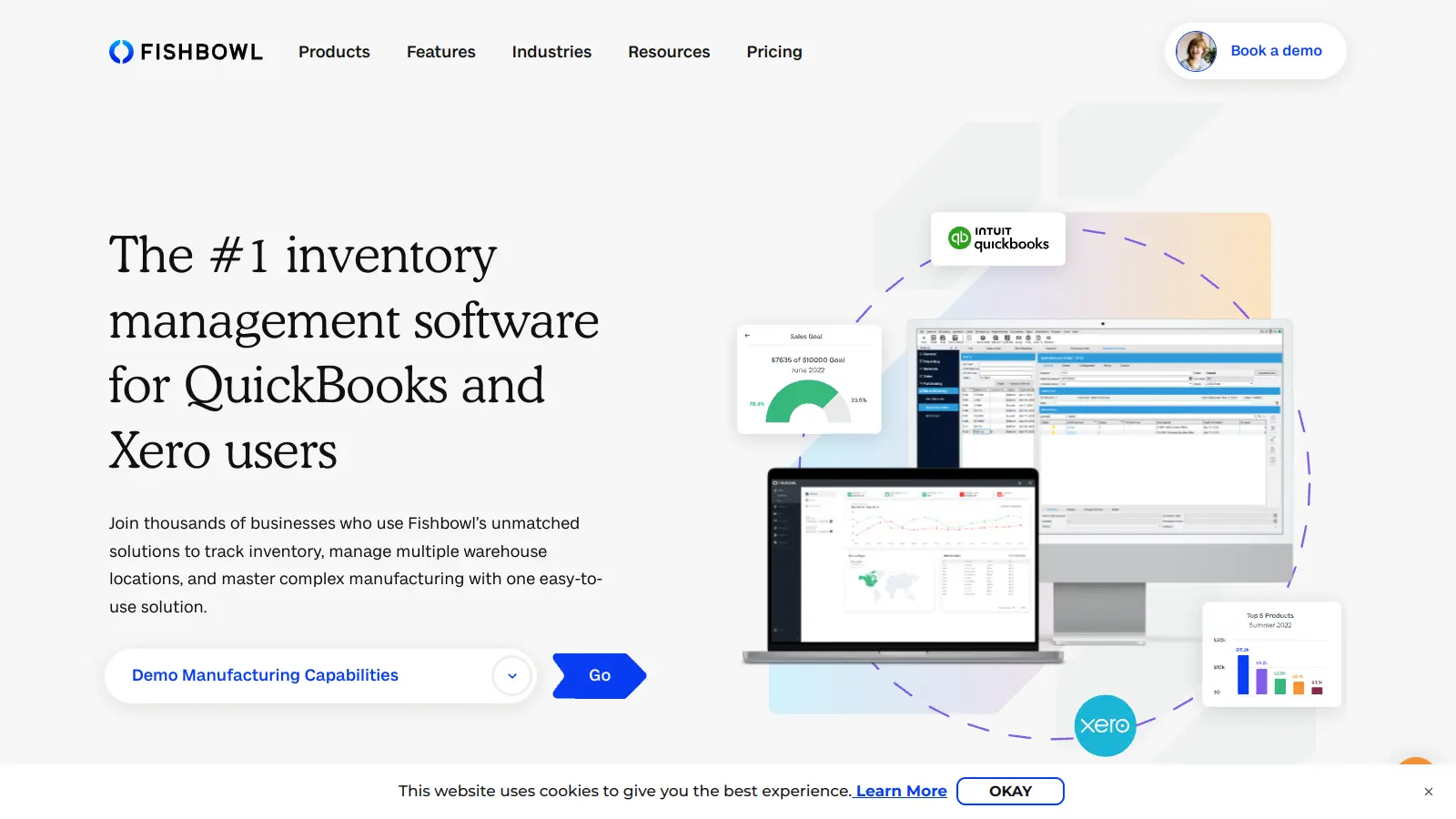
Fishbowl is cloud-based inventory management software that helps businesses track inventory across multiple locations, manage warehousing and manufacturing operations, and handle order fulfillment. It integrates with accounting systems like QuickBooks, Xero, and NetSuite, offering barcode scanning, work orders, automated reordering, and AI-driven forecasting for small and mid-sized businesses.
best deal
Try Fishbowl Today - Free Trial Available, Then $229/Month for Essentials Plan

SPS Commerce is a cloud-based supply chain management platform that specializes in EDI solutions, automating data exchange for products, inventory, orders, shipments, payments, and sales between retailers, suppliers, and trading partners. The platform connects over 50,000 customers through a central hub with pre-built integrations to 400+ systems.
best deal
Start with SPS Commerce for just $20/month to automate your supply chain operations

Anaplan is a cloud-native, AI-powered platform that connects enterprise data to deliver predictive, prescriptive, and generative insights for optimized decision-making across planning, budgeting, forecasting, and operational processes. It provides a unified environment with collaborative tools, embedded intelligence, enterprise scalability, and robust security.
best deal
Get your custom Anaplan pricing quote for business planning - starts from $87,494/year

Zendrop is a dropshipping platform that automates order fulfillment, product sourcing, and inventory management for e-commerce stores. It connects merchants with vetted suppliers, offers access to over a million products, and handles everything from automated order processing to fast US-based shipping. The platform includes AI tools, custom branding options, and integrations with Shopify and other e-commerce platforms to help entrepreneurs run their online stores efficiently.
best deal
Get $40 off your first month on the Plus plan (bringing it to $39) or try any paid plan free for 3 days

Logiwa is a cloud-based warehouse management system (WMS) designed for eCommerce and direct-to-consumer businesses. It offers inventory management, order fulfillment, barcode scanning, and AI-driven optimization. The system integrates with over 240 platforms, supports multi-warehouse operations, and provides real-time analytics to improve warehouse efficiency and productivity.
best deal
Get Started with DTC Launch: Custom Pricing For Growing eCommerce Businesses